알렉산드르 데이네카의 초상화

갤러리 엄선, 가장 유명한 알렉산드르 데이네카 작품 100선

11월 2026 업데이트 · 인기 점수 기준 순위 (각 작품의 검색, 방문 및 주문 수) · 384점의 알렉산드르 데이네카 작품 (당사 카탈로그 기준)

요약하자면

알렉산드르 데이네카가 남긴 모든 원작 중 가장 유명한 작품은 Mother (1932)입니다. 그 뒤를 이어 Maiden (1954)와 Crimean Pioneers (1934)가 뒤를 잇습니다. 알렉산드르 데이네카의 작품 384점을 보유하고 있습니다. 갤러리는 세계가 가장 찬사하는 100점을 엄선하여 각 작품의 제작 연도, 소장 미술관 및 작품에 담긴 이야기를 함께 소개합니다.

1899 – 1969, 쿠르스크 Socialist realism

알렉산드르 데이네카의 베스트 작품 10선: 갤러리 선정

1
Mother (1932) 의 알렉산드르 데이네카

Mother

1932 · Oil On Canvas

A woman holds a child against her chest. The baby is a small weight, a soft presence pressed into the center of the frame. She is the anchor of the composition. Her face carries the stillness of a long afternoon. Around them, the world continues in the periphery. Two figures linger in the background, shadows of a larger gathering, yet they remain distant. The focus remains on the tactile connection…

2
Maiden (1954) 의 알렉산드르 데이네카

Maiden

1954 · Oil On Canvas

Aleksandr Deyneka’s Maiden is more than just a painting; it is a vibrant celebration captured on canvas, a moment of pure, unbridled joy set against the stark beauty of a Russian winter. The eye is immediately drawn to the central figure—a maiden whose spirit seems to radiate warmth despite the surrounding snowscape. Her striking red dress acts as an immediate focal point, a bold splash of color that defies the…

3
Crimean Pioneers (1934) 의 알렉산드르 데이네카

Crimean Pioneers

1934 · Oil On Canvas

To stand before Aleksandr Deyneka's Crimean Pioneers is to step directly into the vibrant, idealized heart of the early Soviet era. This painting is far more than a mere depiction of two boys on a balcony; it is a carefully constructed tableau vivant, saturated with the potent spirit of Socialist Realism. The scene captures a moment of youthful contemplation against the vast expanse of a brilliant blue sky. Notice the…

4
After the battle (1944) 의 알렉산드르 데이네카

After the battle

1944 · Oil

We are looking at After the battle, a work from 1944 by Aleksandr Deyneka. This piece emerged during a period of profound transformation, reflecting the specific aesthetic and ideological currents of its time. The artist, Aleksandr Deyneka, was a central figure in the development of the socialist realism style, a movement that sought to capture the spirit and the social realities of the era through a structured and monumental lens.

5
Operating margin (1929) 의 알렉산드르 데이네카

Operating margin

1929 · Lithograph

The artwork presents a monochromatic scene rendered in shades of gray, black, and white. A central female figure stands vertically, positioned against the backdrop of a large factory building. Her posture is upright, facing the viewer. Below her, several infants are scattered across the foreground. To the left, a man sits in a partially shadowed area. The factory structure is composed of geometric shapes that contrast with the organic forms…

6
Morning (1933) 의 알렉산드르 데이네카

Morning

1933 · Charcoal

The artwork presents a monochrome study of the human form, rendered in shades of gray that range from near-white highlights to deep blacks. A female figure occupies the center of the composition, kneeling and facing slightly to the left. Her arms are raised, creating a sense of stretching or physical support. The figure's musculature is defined by strong, directional lighting that enters from the left side of the frame, casting…

7
Who will defeat whom (1932) 의 알렉산드르 데이네카

Who will defeat whom

1932 · Oil

This large-scale mural, titled Who will defeat whom, was executed by Aleksandr Deyneka in 1932. It captures a moment of significant transition, presenting a scene that moves with a sense of forward momentum. The work is a product of a period defined by rapid industrialization and shifting social structures, reflecting the energy of a nation in flux.

8
Girl with book (1934) 의 알렉산드르 데이네카

Girl with book

1934 · Oil On Canvas

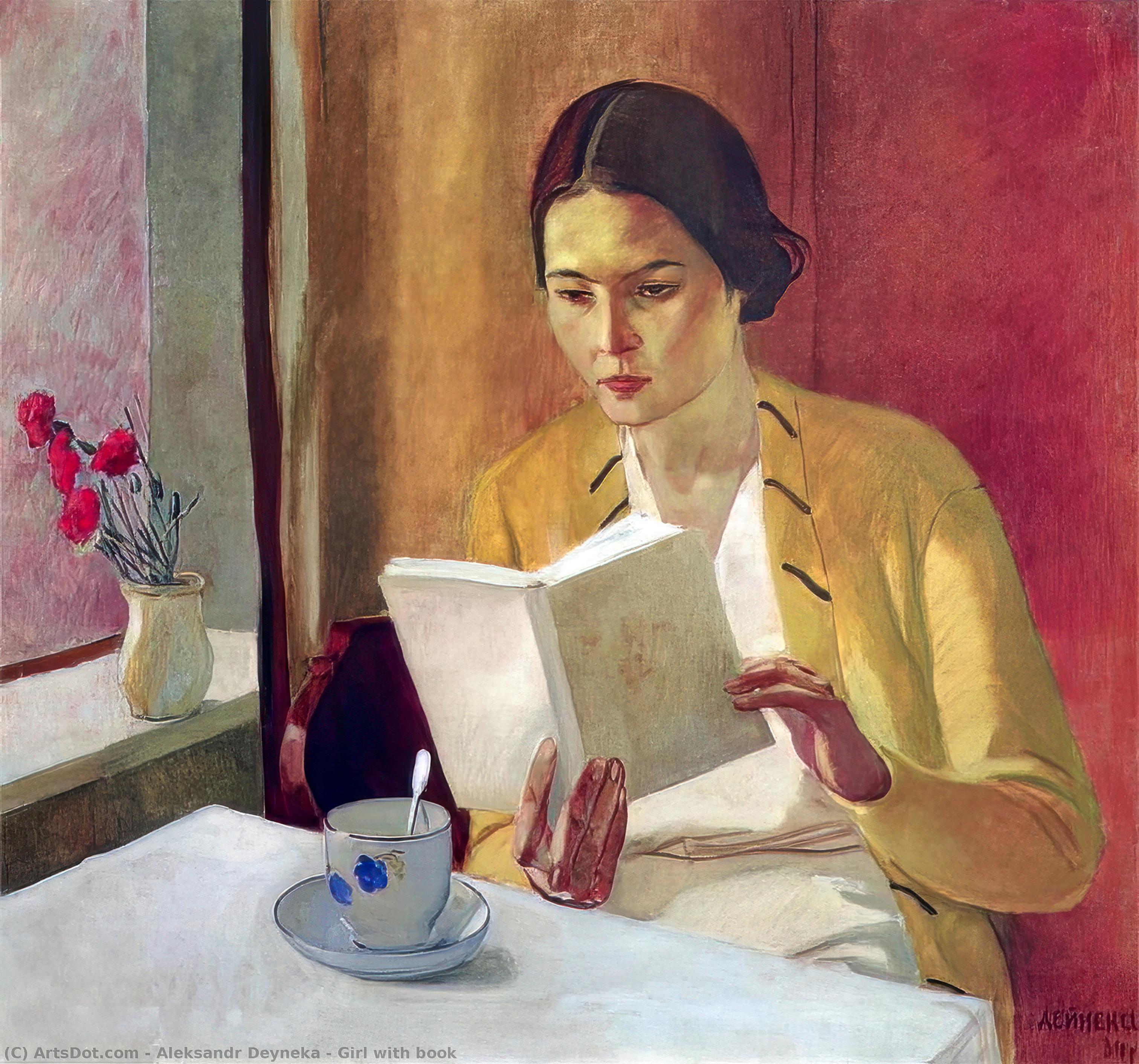
In the vast and often turbulent tapestry of twentieth-century art, there exist rare moments of profound stillness that capture the very essence of human contemplation. Aleksandr Deyneka’s 1934 masterpiece, Girl with Book, is precisely such a moment. This evocative portrait invites the viewer into a private sanctuary, far removed from the industrial clamor and political shifts of the Soviet era. The scene depicts a young woman seated at a dining…

9
Day off (1949) 의 알렉산드르 데이네카

Day off

1949 · Oil On Canvas

In this 1949 work, we find ourselves observing a private, unhurried moment between two women. They move through a garden, their presence marked by a sense of ease and companionship. Dressed in bathing suits, they appear to have just come from the water, perhaps a nearby beach or a local swimming area, seeking the shade of the greenery. The atmosphere is defined by a certain stillness, the kind found in…

10
Defence of Sevastopol (1942) 의 알렉산드르 데이네카

Defence of Sevastopol

1942 · Oil On Canvas

The painting titled Defence of Sevastopol was executed by the artist Aleksandr Deyneka. This work was created in 1942. It is an oil on canvas that depicts the Battle of Sevastopol during World War II. The scene focuses on the military engagement occurring on the Eastern Front.

알렉산드르 데이네카 컬렉션이 계속됩니다, 11부터 100까지

11In the south (1966) 의 알렉산드르 데이네카In the south1966 12New York (1935) 의 알렉산드르 데이네카New York1935 13Seaside (1957) 의 알렉산드르 데이네카Seaside1957 14Running girl (1941) 의 알렉산드르 데이네카Running girl1941 15Noon (1932) 의 알렉산드르 데이네카Noon1932 16The road to Mount Vernon (1935) 의 알렉산드르 데이네카The road to Mount Vernon1935 17Locomotive. In the Donbas (1924) 의 알렉산드르 데이네카Locomotive. In the Donbas1924 18On building new plants (1926) 의 알렉산드르 데이네카On building new plants1926 19Noon (Dream) (1932) 의 알렉산드르 데이네카Noon (Dream)1932 20American landscape (1935) 의 알렉산드르 데이네카American landscape1935 21Philadelphia. Old Square (1935) 의 알렉산드르 데이네카Philadelphia. Old Square1935 22Go to war (1944) 의 알렉산드르 데이네카Go to war1944 23Expanse (1944) 의 알렉산드르 데이네카Expanse1944 24Berlin. Tiergarten (1945) 의 알렉산드르 데이네카Berlin. Tiergarten1945 25Moscow. Landscape (1952) 의 알렉산드르 데이네카Moscow. Landscape1952 26Friends (1962) 의 알렉산드르 데이네카Friends1962 27'Picture for children's book ''The Electrician''' (1930) 의 알렉산드르 데이네카'Picture for children's book ''The Electrician'''1930 28Red-winged giant (1937) 의 알렉산드르 데이네카Red-winged giant1937 29Boys (1935) 의 알렉산드르 데이네카Boys1935 30Pioneer (1934) 의 알렉산드르 데이네카Pioneer1934 31Conquerors of Space (1961) 의 알렉산드르 데이네카Conquerors of Space1961 32Good morning (1960) 의 알렉산드르 데이네카Good morning1960 33Boy (1914) 의 알렉산드르 데이네카Boy1914 34Portrait of a student (1916) 의 알렉산드르 데이네카Portrait of a student1916 35Portrait of an old man (1916) 의 알렉산드르 데이네카Portrait of an old man1916 36Theater (1921) 의 알렉산드르 데이네카Theater1921 37Female figure (1921) 의 알렉산드르 데이네카Female figure1921 38Portrait of a Woman (1922) 의 알렉산드르 데이네카Portrait of a Woman1922 39Female figure (1922) 의 알렉산드르 데이네카Female figure1922 40Pop dance (1922) 의 알렉산드르 데이네카Pop dance1922 41Portrait of a Woman (1921) 의 알렉산드르 데이네카Portrait of a Woman1921 42Cabaret (1921) 의 알렉산드르 데이네카Cabaret1921 43Portrait of Mother (1920) 의 알렉산드르 데이네카Portrait of Mother1920 44End (1926) 의 알렉산드르 데이네카End1926 45We took. Raise production (1924) 의 알렉산드르 데이네카We took. Raise production1924 46Decided unanimously (1925) 의 알렉산드르 데이네카Decided unanimously1925 47In the workplace (1925) 의 알렉산드르 데이네카In the workplace1925 48Sportsground. At the finish line (1927) 의 알렉산드르 데이네카Sportsground. At the finish line1927 49In the Donbas. Picture from magazine ''At the bench'' (1924) 의 알렉산드르 데이네카In the Donbas. Picture from magazine ''At the bench''1924 50Skiers. Cover for magazine Krasnaya Niva (1927) 의 알렉산드르 데이네카Skiers. Cover for magazine Krasnaya Niva1927 51The girl in the mirror (1927) 의 알렉산드르 데이네카The girl in the mirror1927 52The old man and a boy. Figure for ''At the bench'' (1924) 의 알렉산드르 데이네카The old man and a boy. Figure for ''At the bench''1924 53With change (1927) 의 알렉산드르 데이네카With change1927 54Portrait of a Man (1924) 의 알렉산드르 데이네카Portrait of a Man1924 55Football. Picture for ''Red cornfield'' (1927) 의 알렉산드르 데이네카Football. Picture for ''Red cornfield''1927 56Donbass (1924) 의 알렉산드르 데이네카Donbass1924 57Imperishable (1924) 의 알렉산드르 데이네카Imperishable1924 58Portrait of a Woman (1923) 의 알렉산드르 데이네카Portrait of a Woman1923 59Fist (1925) 의 알렉산드르 데이네카Fist1925 60NEP-typen, Illustration for ''At the bench'' (1926) 의 알렉산드르 데이네카NEP-typen, Illustration for ''At the bench''1926 61The warm water (1924) 의 알렉산드르 데이네카The warm water1924 62The city (1928) 의 알렉산드르 데이네카The city1928 63Portrait of a Girl (1923) 의 알렉산드르 데이네카Portrait of a Girl1923 64Tennis (1923) 의 알렉산드르 데이네카Tennis1923 65Football (1923) 의 알렉산드르 데이네카Football1923 66Picture for magazine (1925) 의 알렉산드르 데이네카Picture for magazine1925 67A worker at the loom. Picture for ''At the bench'' (1925) 의 알렉산드르 데이네카A worker at the loom. Picture for ''At the bench''1925 68Female figures. Etching (1923) 의 알렉산드르 데이네카Female figures. Etching1923 69Longing for a graceful life. Picture for ''Searchlight'' (1927) 의 알렉산드르 데이네카Longing for a graceful life. Picture for ''Searchlight''1927 70Tennis (1928) 의 알렉산드르 데이네카Tennis1928 71The Model in front of a mirror (1928) 의 알렉산드르 데이네카The Model in front of a mirror1928 72Golden youth. Picture for magazine ''Searchlight'' (1928) 의 알렉산드르 데이네카Golden youth. Picture for magazine ''Searchlight''1928 73Skates (1927) 의 알렉산드르 데이네카Skates1927 74In the theater box (1925) 의 알렉산드르 데이네카In the theater box1925 75Father complained himself (1925) 의 알렉산드르 데이네카Father complained himself1925 76Run. Magazine 'Spotlight' (1928) 의 알렉산드르 데이네카Run. Magazine 'Spotlight'1928 77Worker and peasant (1927) 의 알렉산드르 데이네카Worker and peasant1927 78Before going into mine (1925) 의 알렉산드르 데이네카Before going into mine1925 79African hunters (1927) 의 알렉산드르 데이네카African hunters1927 80The Model (1932) 의 알렉산드르 데이네카The Model1932 81At work. Magazine Cover ''Red Panorama'' (1930) 의 알렉산드르 데이네카At work. Magazine Cover ''Red Panorama''1930 82Advertising magazine cover ''Give.'' (1929) 의 알렉산드르 데이네카Advertising magazine cover ''Give.''1929 83Civil aviation. Panels for the factory kitchen (1932) 의 알렉산드르 데이네카Civil aviation. Panels for the factory kitchen1932 84City (1929) 의 알렉산드르 데이네카City1929 85Why Janie ran away and returned (1929) 의 알렉산드르 데이네카Why Janie ran away and returned1929 86Order restored (1929) 의 알렉산드르 데이네카Order restored1929 87Tennis. Paper (1931) 의 알렉산드르 데이네카Tennis. Paper1931 88Cross (1932) 의 알렉산드르 데이네카Cross1932 89Picture for children book ''In the cloud'' (1930) 의 알렉산드르 데이네카Picture for children book ''In the cloud''1930 90Country landscape with cows (1933) 의 알렉산드르 데이네카Country landscape with cows1933 91Farmer (1930) 의 알렉산드르 데이네카Farmer1930 92Milkmaids (1929) 의 알렉산드르 데이네카Milkmaids1929 93Vacationers children (1933) 의 알렉산드르 데이네카Vacationers children1933 94Stadium (1935) 의 알렉산드르 데이네카Stadium1935 95When finally the war ended. Illustration to the book (1934) 의 알렉산드르 데이네카When finally the war ended. Illustration to the book1934 96Berlin. On the stairs (1945) 의 알렉산드르 데이네카Berlin. On the stairs1945 97Sketch Hall building Narkomzem (1934) 의 알렉산드르 데이네카Sketch Hall building Narkomzem1934 98Negro burlesque (1935) 의 알렉산드르 데이네카Negro burlesque1935 99Seaplanes (1934) 의 알렉산드르 데이네카Seaplanes1934 100Pop dance (1935) 의 알렉산드르 데이네카Pop dance1935

알렉산드르 데이네카의 시대별 명작

Early Period

1925 – 1929 · 3개의 작품이 이 목록에 포함됨

알렉산드르 데이네카의 시선을 사로잡은 주제들

이 오리지널 작품들에서 가장 자주 등장하는 네 가지 주제와 그 정수를 보여주는 대표작들.

알렉산드르 데이네카의 시대별 걸작: 시대를 정의하는 오리지널 작품들

연대별 작품 수

그 시대를 정의하는 오리지널 작품을 만나보려면 연대를 선택하세요.

알렉산드르 데이네카의 작품에 관한 컬렉터들의 질문

알렉산드르 데이네카의 가장 대표적인 작품은 무엇인가요?정답 확인하기

Mother (1932). 다음은 Maiden (1954)와(과) Crimean Pioneers (1934)입니다.

Mother이(가) 제작되었을 당시 알렉산드르 데이네카의 나이는 몇 살이었나요?정답 확인하기

33세: Mother은(는) 1932년 작품이며, 알렉산드르 데이네카은(는) 1899년에 태어났습니다.

알렉산드르 데이네카의 가장 유명한 작품 10가지는 무엇인가요?정답 확인하기

Mother, Maiden, Crimean Pioneers, After the battle, Operating margin, Morning, Who will defeat whom, Girl with book, Day off 및 Defence of Sevastopol. 위 순위는 각 작품의 제작 연도와 소장 박물관을 나타냅니다.

알렉산드르 데이네카 작가가 남긴 작품은 몇 점인가요?정답 확인하기

저희 카탈로그에는 1914년부터 1966년 사이의 알렉산드르 데이네카 작가의 작품 384점이 수록되어 있습니다.

알렉산드르 데이네카의 가장 유명한 작품들은 어느 연도에 그려졌나요?정답 확인하기

1920s 동안: 이 페이지의 총 100점의 작품 중 52점이 해당 시기에 제작되었으며, 그중 Operating margin점입니다.

알렉산드르 데이네카의 첫 번째와 마지막 유명 원작은 무엇인가요?정답 확인하기

이 페이지에서 가장 오래된 작품은 Boy (1914)이며, 가장 최근 작품은 In the south (1966)입니다.

알렉산드르 데이네카 작가가 가장 자주 선택한 주제는 무엇인가요?정답 확인하기

이 페이지의 100점의 작품에 걸쳐 있는 Women (7), Portraits (7) 및 Soviet art (6)

알렉산드르 데이네카 작가가 가장 많이 사용한 기법은 무엇인가요?정답 확인하기

이 페이지의 총 100점의 작품 중 10점의 Oil On Canvas

알렉산드르 데이네카은(는) 어떤 미술 사조에 속하나요?정답 확인하기

이 페이지의 원작들을 기준으로 볼 때, Socialist realism

알렉산드르 데이네카: 생애와 작품 세계

Aleksandr Deyneka (1899-1969): A Life Forged in Revolution – The Artistic Journey of Aleksandr Deyneka

Aleksandr Aleksandrovich Deyneka, born in 1899 in the provincial Russian city of Kursk, was an artist inextricably linked to the tumultuous currents of the twentieth century. His life and work mirrored the dramatic shifts of his nation – from the waning days of Tsarist Russia through the fervor of revolution, the industrialization of the Soviet era, and the shadow of war. Deyneka wasn’t merely a recorder of these events; he was an active participant, shaping and being shaped by the ideological forces that swept across his homeland. His early life offered little hint of the artistic prominence to come. He initially pursued studies at a railway college, simultaneously attending art workshops – a practical grounding that would later inform the dynamic energy and structural clarity present in his compositions. This period was cut short by the upheaval of 1917, propelling him towards Moscow and enrollment at Vkhutemas, the Higher State Artistic and Technical Workshops, a crucible of avant-garde thought and experimentation. It was here, under the tutelage of Vladimir Favorsky, that Deyneka honed his skills in graphic arts and printmaking, absorbing the principles of constructivism and developing a keen understanding of form and space.

The Dawn of Modernism: Early Influences and Artistic Formation

Deyneka’s artistic journey began amidst the intellectual ferment of the Russian avant-garde. He absorbed the ideas of artists like Kazimir Malevich and Vladimir Tatlin, embracing the radical experimentation that characterized these movements—a rejection of traditional aesthetics in favor of geometric abstraction and monumental sculpture. This formative period instilled in him a conviction that art could serve as a vehicle for social transformation, shaping his subsequent artistic endeavors. His initial explorations focused on graphic design and printmaking, mastering techniques like etching and linocut – skills he would later utilize to produce striking visual statements reflecting the spirit of his time. The influence of Constructivism is palpable in his early works—a deliberate simplification of form and a prioritization of structural elements that foreshadowed his later stylistic developments. He sought to express ideas directly through visual means, rejecting decorative embellishments in favor of clarity and precision.

The Embrace of Socialist Realism: Adapting to the Soviet Aesthetic

As Stalin consolidated power and Socialist Realism became the officially sanctioned style, Deyneka skillfully navigated the complexities of the Soviet artistic landscape. Initially aligned with groups like OST (Society of Easel Artists), he embraced modernist principles while simultaneously responding to the demands of the regime—a delicate balance that allowed him to continue creating impactful work without compromising his artistic integrity. This wasn’t simply acquiescence; rather, it was a strategic maneuver that recognized the importance of maintaining institutional support for his art. His paintings of the 1930s – particularly Collective Farmer on a Bicycle (1935) – exemplify this adaptation—celebrating labor, athleticism, and the promise of a new socialist society. The painting is not merely a depiction of rural life; it’s an embodiment of forward momentum, a visual manifesto of progress and optimism. He skillfully utilized color palettes and compositional techniques to convey emotion and reinforce ideological messages—a testament to his ability to communicate complex ideas through accessible imagery.

Monumental Visions: Public Art Commissions and Artistic Expression

Deyneka’s ambition extended beyond easel paintings into monumental works and public art commissions—demonstrating his versatility and mastery of different artistic mediums. He created large-scale canvases depicting historical events – The Defense of Petrograd (1928) being a prime example – imbued with dramatic intensity and a sense of epic scale. These weren’t simply illustrations of battles; they were attempts to capture the spirit of revolutionary struggle, transforming historical moments into mythic narratives. His involvement with the *Windows of ROSTA* project—producing propaganda posters for the Soviet state—further solidified his reputation as an artist capable of engaging directly with social and political themes. He skillfully employed visual language to disseminate ideological messages while maintaining a distinctive artistic voice—a remarkable feat considering the constraints imposed by the regime.

Legacy and Enduring Influence: A Pioneer of Constructivism and Beyond

Aleksandr Deyneka passed away in 1969, leaving behind a vast body of work that continues to resonate today. His paintings, mosaics, and graphic designs offer a compelling window into the Soviet experience – its aspirations, contradictions, and artistic achievements. He is categorized as a “1A - world famous artist” in the United Artists Rating—a testament to his enduring international recognition. Exhibitions dedicated to his work, such as those held at the Gallery for Russian Arts and Design in London, continue to introduce new audiences to his art. Deyneka’s influence can be seen in subsequent generations of artists who sought to engage with social and political themes through powerful visual imagery—a legacy that transcends stylistic boundaries and celebrates the transformative potential of artistic expression. His ability to blend modernist techniques with socially conscious subject matter makes him a uniquely important figure in the history of twentieth-century art, a golden boy whose work continues to provoke thought and inspire awe.