아돌프 호엔슈타인의 초상화

세상에 단 하나뿐인, 가장 유명한 아돌프 호엔슈타인 작품 24선

11월 2026 업데이트 · 인기 점수 기준 순위 (각 작품의 검색, 방문 및 주문 수) · 25점의 아돌프 호엔슈타인 작품 (당사 카탈로그 기준)

요약하자면

Gnà Lola (mezzo soprano) (1890)은(는) 아돌프 호엔슈타인의 작품 중 가장 많은 관심을 받는 회화입니다. 그다음 시선은 Mimi's Costume For Act I Of La Boheme For The Premiere Performance와 Set Design For Act 2 Of Puccini's Opera Tosca로 향합니다. 우리 카탈로그에 수록된 아돌프 호엔슈타인의 작품 25점 중, 가장 유명한 24점을 소개합니다. 각 작품은 제작 연도, 소장 박물관, 그리고 시대를 초월해 사랑받는 이유와 함께 독창적인 원작으로 제시됩니다.

1854 – 1928, 상트페테르부르크 Art nouveau 최다 소장처: Teatro dell'Opera di Roma

갤러리의 시선으로 선정한 아돌프 호엔슈타인의 명작 Top 10

1
Gnà Lola (mezzo soprano) (1890) 의 아돌프 호엔슈타인

Gnà Lola (mezzo soprano)

1890 · Watercolor

Gnà Lola (mezzo soprano) is a costume design sketch by Adolfo Hohenstein. Created about 1890, the work functions as a visual blueprint for the character of the same name, a mezzo soprano. The sketch provides a detailed study of the attire intended for the stage, specifically tailored to the requirements of theatrical performance.

2
Mimi's Costume For Act I Of La Boheme For The Premiere Performance 의 아돌프 호엔슈타인

Mimi's Costume For Act I Of La Boheme For The Premiere Performance

Painting

The scene unfolds through Mimi's Costume For Act I Of La Boheme For The Premiere Performance, a work that captures a specific moment of theatrical history. This piece is the creation of Adolfo Hohenstein, an artist whose life began in Saint Petersburg, Russia, in 1854. His creative spirit traveled through the cultural landscapes of Vienna and Milan, eventually leading him to become a central figure in the visual language of…

3
Set Design For Act 2 Of Puccini's Opera Tosca 의 아돌프 호엔슈타인

Set Design For Act 2 Of Puccini's Opera Tosca

Watercolor

Set Design For Act 2 Of Puccini's Opera Tosca is a watercolor illustration by Adolfo Hohenstein. The work functions as a visual blueprint for the theatrical environment, focusing on purely architectural and decorative elements. It establishes the physical parameters of the stage through a detailed rendering of an opulent interior space.

4
Tosca - Sketch of Act III (1899) 의 아돌프 호엔슈타인

Tosca - Sketch of Act III

1899 · Drawing · Teatro dell'Opera di Roma, 로마

In the delicate, evocative strokes of Adolf Hohenstein’s 1899 sketch for Act III of Tosca, we are transported to a moment where theatrical drama meets the timeless majesty of the Eternal City. This piece is far more than a mere preparatory study; it is a window into the soul of Puccini’s operatic masterpiece. Hohenstein, a master of capturing the intersection between human emotion and architectural scale, presents a panoramic view…

아돌프 호엔슈타인의 유명 작품, 11~24번

아돌프 호엔슈타인의 시대별 명작

아돌프 호엔슈타인의 시선을 사로잡은 주제들

이 오리지널 작품들에서 가장 자주 등장하는 네 가지 주제와 그 정수를 보여주는 대표작들.

아돌프 호엔슈타인의 원작을 소장하고 있는 미술관

이 페이지에 있는 작품을 가장 많이 소장하고 있는 1개의 미술관

소장 미술관 도시 아돌프 호엔슈타인의 작품 이 목록의 작품들
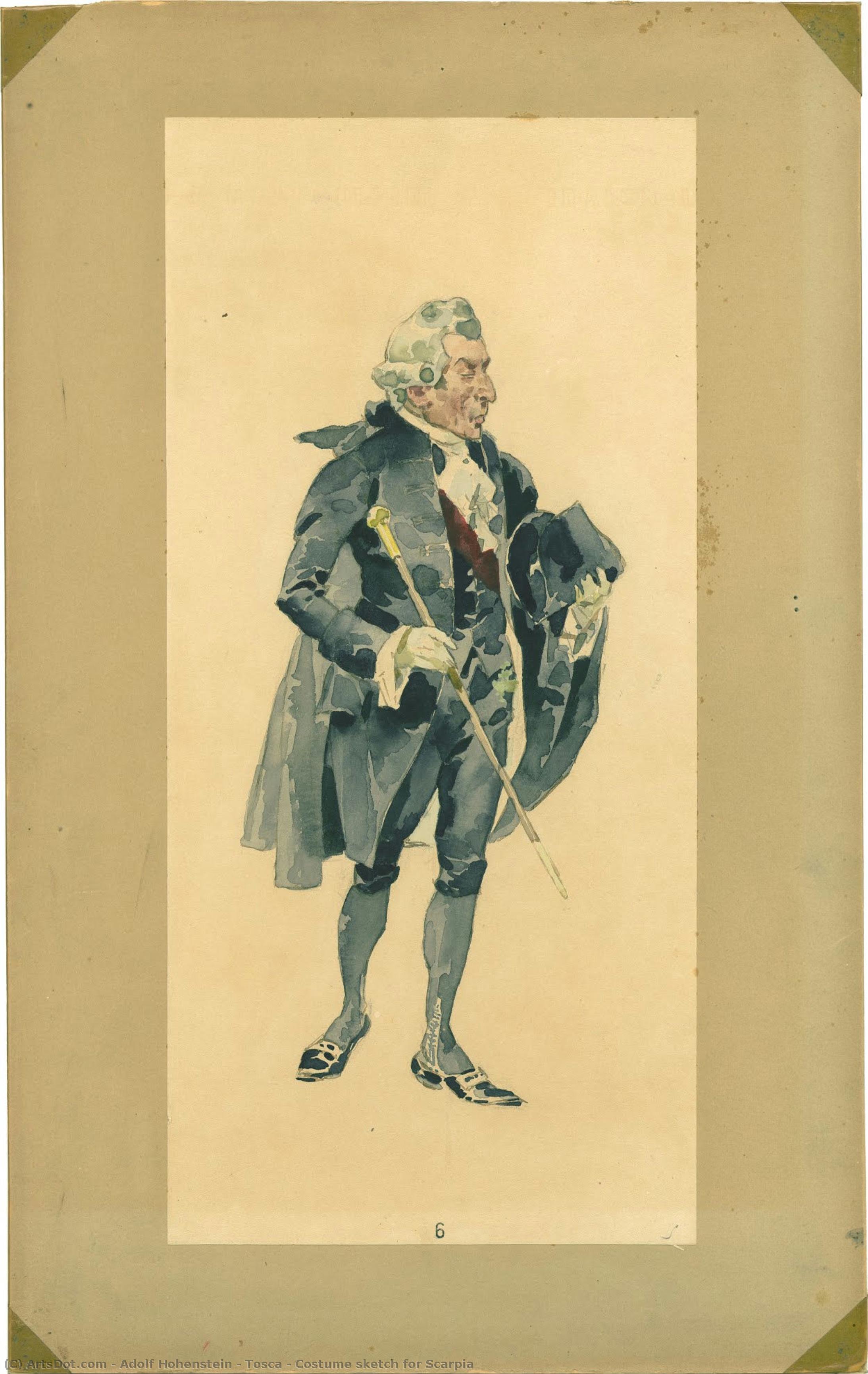
Teatro dell'Opera di Roma, 로마Teatro dell'Opera di Roma 로마 3 Tosca - Sketch of Act III, Tosca - Costume sketch for Scarpia, Tosca - Costume sketch for Floria Tosca

아돌프 호엔슈타인의 연대기: 각 작품의 독창적인 원화

여기에 표시된 아돌프 호엔슈타인의 원작들은 1890년부터 1899년까지 약 10년의 기간에 걸쳐 있으며, 연도별로 작품의 흐름을 따라가며 감상할 수 있습니다.

연도별 작품 수

연도를 선택하여 원작을 확인해 보세요.

아돌프 호엔슈타인의 작품: 갤러리에 문의하기

아돌프 호엔슈타인의 가장 대표적인 작품은 무엇인가요?정답 확인하기

Gnà Lola (mezzo soprano) (1890). 다음은 Mimi's Costume For Act I Of La Boheme For The Premiere Performance와(과) Set Design For Act 2 Of Puccini's Opera Tosca입니다.

아돌프 호엔슈타인 작가는 몇 세에 Gnà Lola (mezzo soprano)을(를) 제작했을까요?정답 확인하기

36세: Gnà Lola (mezzo soprano)은(는) 1890년 작품이며, 아돌프 호엔슈타인은(는) 1854년에 태어났습니다.

아돌프 호엔슈타인의 작품 중 가장 유명한 10가지 명작은 무엇인가요?정답 확인하기

Gnà Lola (mezzo soprano), Mimi's Costume For Act I Of La Boheme For The Premiere Performance, Set Design For Act 2 Of Puccini's Opera Tosca, Tosca - Sketch of Act III, A Square, on the right the exterior of Osteria della Giarrettiera, Tosca - Costume sketch for Scarpia, Tosca - Costume sketch for Floria Tosca, Costume design for a servant girl from the Opera, The Image Describe A Poster Drawn By Adolf Hohenstein 및 Le Villi Act Ii. 위 순위는 각 작품의 제작 연도와 소장 박물관을 나타냅니다.

아돌프 호엔슈타인의 작품은 몇 점인가요?정답 확인하기

저희 카탈로그에는 1890년부터 1899년 사이의 아돌프 호엔슈타인 작가의 작품 25점이 수록되어 있습니다.

가장 유명한 아돌프 호엔슈타인의 원작은 어디에서 볼 수 있나요?정답 확인하기

대부분 Teatro dell'Opera di Roma (로마)에 소장되어 있습니다. 위의 박물관 목록에서 전체 목록을 확인하실 수 있습니다.

아돌프 호엔슈타인의 가장 유명한 작품들은 어느 시기에 제작되었나요?정답 확인하기

1899 동안: 이 페이지의 총 24점의 작품 중 3점이 해당 시기에 제작되었으며, 그중 Tosca - Sketch of Act III점입니다.

아돌프 호엔슈타인의 유명 작품 중 가장 먼저 그려진 작품과 가장 나중에 그려진 작품은 무엇인가요?정답 확인하기

이 페이지에서 가장 오래된 작품은 Gnà Lola (mezzo soprano) (1890)이며, 가장 최근 작품은 Tosca - Sketch of Act III (1899)입니다.

아돌프 호엔슈타인 작가는 어떤 주제를 주로 다루었나요?정답 확인하기

이 페이지의 24점의 작품에 걸쳐 있는 Poster (4), Urban landscape (2) 및 Clothing (2)

아돌프 호엔슈타인 작가가 가장 많이 사용한 재료는 무엇인가요?정답 확인하기

이 페이지의 총 24점의 작품 중 2점의 Watercolor

아돌프 호엔슈타인의 작품은 어떤 미술 사조에 속하나요?정답 확인하기

이 페이지의 원작들을 기준으로 볼 때, Art nouveau

Teatro dell'Opera di Roma에서 어떤 아돌프 호엔슈타인의 원화를 볼 수 있나요?정답 확인하기

Tosca - Sketch of Act III, Tosca - Costume sketch for Scarpia 및 Tosca - Costume sketch for Floria Tosca: Teatro dell'Opera di Roma, 로마은(는) 이 페이지에 있는 작품 중 3점을 소장하고 있습니다.

아돌프 호엔슈타인: 작가의 초상화

The Architect of Italian Elegance

Born in Saint Petersburg, Russia, to German parents, Adolf Hohenstein emerged as a transformative figure whose creative reach extended far beyond the boundaries of a single medium. Though his roots were in the Russian Empire, his artistic soul was forged in the vibrant cultural landscapes of Vienna and Milan. As a painter, illustrator, advertiser, and set designer, he possessed a rare ability to weave together the theatrical and the graphic, ultimately earning him the prestigious title of the father of Italian poster art. His journey from the imperial atmosphere of his birthplace to the heart of the Italian Stile Liberty—the local expression of Art Nouveau—is a testament to a life lived at the intersection of diverse European traditions.

Hohenstein’s career was defined by an extraordinary versatility that allowed him to command both the grand stage and the intimate printed page. His early years in Vienna provided a foundation of classical training, while his travels through India offered him unique perspectives on decoration and ornamentation. However, it was his move to Milan in 1879 that would forever alter the course of graphic design history. Settling in this burgeoning metropolis, he became an essential collaborator for the legendary musical publisher Giulio Ricordi. Within the Ricordi Graphical Workshops, Hohenstein acted as a visionary, translating the soaring emotions of opera into striking visual narratives. His hand was instrumental in creating the iconic posters for masterpieces such as Puccini’s Tosca and Madama Butterfly, works that required a delicate balance of dramatic tension and aesthetic grace.

A Legacy of Line and Light

The artistry of Hohenstein is characterized by a profound command over atmosphere and the evocative power of the line. Whether he was designing elaborate costumes and sets for La Scala or crafting advertisements for brands like Campari, his work breathed with a rhythmic vitality. In his poster designs, one finds a masterful use of flowing, organic shapes and a vibrant color palette that could capture the public's imagination instantly. He had a singular talent for world-building; even in a single sketch or a promotional print, he could evoke the heavy, cloud-swept skies of Rome or the glamorous allure of a modern cityscape.

His contributions to the visual language of his era cannot be overstated. Beyond the realm of fine art, his work as an advertiser and illustrator helped define the commercial aesthetic of the early 20th century. His achievements include:

  • Pioneering Graphic Design: Establishing the foundations of the Italian poster movement through highly decorative and emotionally resonant illustrations.
  • Theatrical Mastery: Creating immersive environments for opera through meticulous set and costume designs that complemented the musical drama of composers like Verdi and Puccini.
  • Art Nouveau Exponent: Serving as a leading figure of the Stile Liberty, integrating classical revivalism with the modern, flowing aesthetics of the period.

Ultimately, Adolf Hohenstein remains a seminal figure whose influence resonated through the evolution of graphic design in Italy and beyond. His ability to bridge the gap between high culture—the opera house and the theater—and the everyday experience of the public through posters and postcards ensures his place in the pantheon of great illustrators. He did not merely decorate the world; he redesigned how it was seen, leaving behind a legacy of elegance, drama, and enduring beauty.