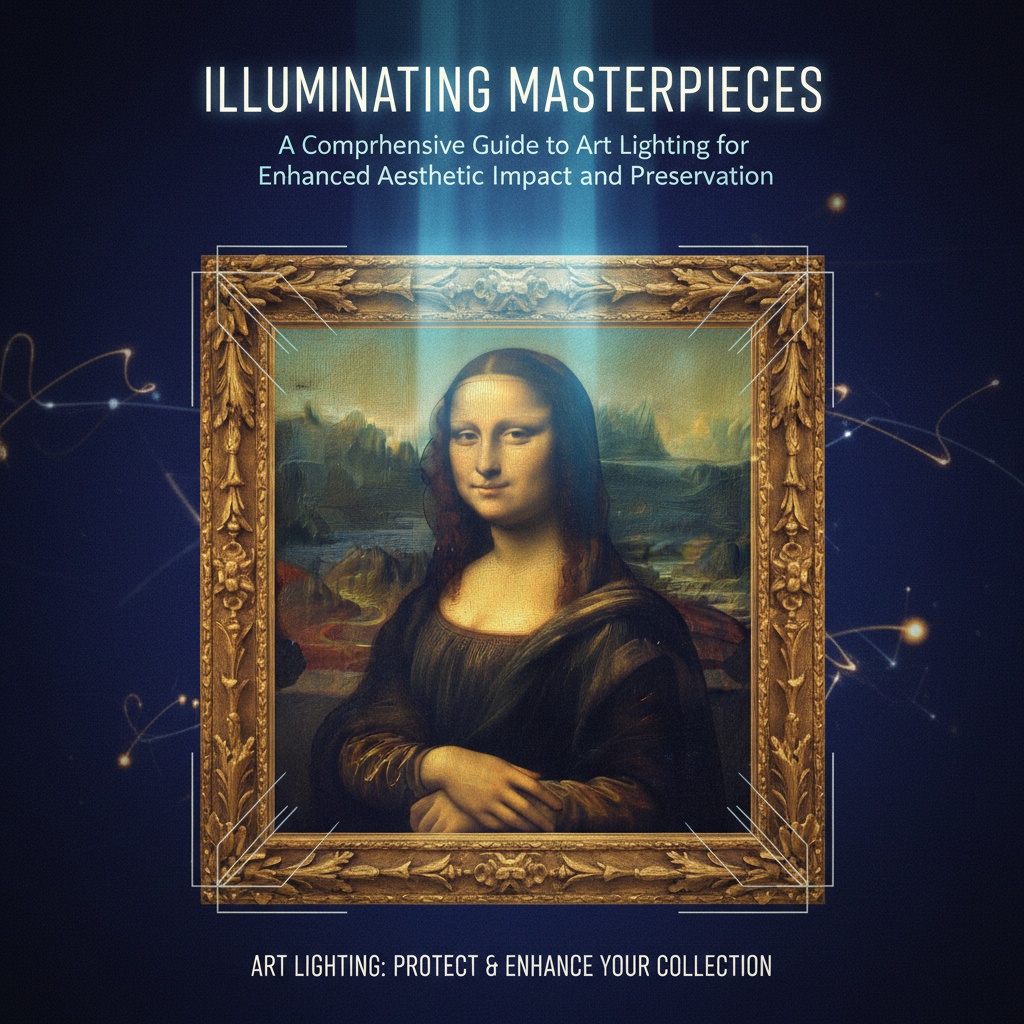
The Science of Seeing: Understanding Light’s Impact on Art
For centuries, artists have not merely *represented* light; they've sought to capture its very essence – the ephemeral dance between illumination and shadow that defines our perception of reality. From the luminous skies of Turner to the dramatic chiaroscuro of Caravaggio, light isn’t simply a visual element; it is the lifeblood of painting, sculpting form, evoking emotion, and guiding the viewer's eye. But what happens when we attempt to recreate or preserve this delicate interplay? The answer lies in understanding the fundamental science of seeing, and how different wavelengths of light interact with both the artwork itself and our own human perception.
The earliest cave paintings were born from firelight, a flickering, warm glow that undoubtedly influenced their composition and mood. As artists gained mastery over pigments and techniques, they began to manipulate light more consciously – using glazing to create depth, employing sfumato to soften edges, and strategically placing highlights to draw attention to key elements. The Renaissance obsession with realism hinged on accurately depicting the fall of light upon surfaces, a pursuit that led to groundbreaking discoveries in perspective and anatomy. Yet, even then, the limitations of available illumination shaped their artistic choices. Natural daylight, while beautiful, is inherently variable – shifting throughout the day and changing with the seasons. This variability presented challenges for both artists and those who sought to preserve their work.
Today, we have a far greater understanding of the electromagnetic spectrum and its impact on materials. Different types of light—incandescent, fluorescent, LED—emit varying wavelengths that affect how we perceive color, form, and texture. Artificial lighting offers control, but it also introduces potential risks. The key is to mimic natural daylight conditions as closely as possible without exposing the artwork to harmful radiation. This requires a nuanced approach, considering not only the intensity of the light (measured in lux) but also its color temperature (measured in Kelvin), which dictates whether it appears warm and inviting or cool and clinical.
Color Fidelity & CRI: Choosing Lights That Reveal True Beauty
The human eye is remarkably adept at discerning subtle variations in color, a gift that artists have long exploited to create captivating illusions of depth and realism. However, this sensitivity also means we are acutely aware when colors appear distorted or inaccurate. This is where the concept of Color Rendering Index (CRI) becomes paramount. CRI measures a light source’s ability to accurately reproduce an object's true colors compared to a standard reference light – ideally, natural sunlight.
A CRI of 100 represents perfect color rendering, though such lights are rarely achievable in practice. A CRI of 80 or above is generally considered acceptable for museums and galleries, but discerning collectors often prioritize sources exceeding 90+. Lights with lower CRIs can wash out colors, creating a flat, lifeless appearance that diminishes the artwork’s impact. Imagine viewing a vibrant Impressionist landscape under a light source that renders blues muted and reds dull – the experience is profoundly compromised.
The advent of LED technology has revolutionized art lighting, offering energy efficiency, long lifespan, and increasingly high CRI values. However, not all LEDs are created equal. It’s crucial to verify the CRI specification before purchasing any fixture, as lower-quality LEDs can still exhibit significant color distortion. Beyond CRI, consider the correlated color temperature (CCT). Warm white lights (2700-3000K) create a cozy atmosphere and are often preferred for traditional paintings, evoking a sense of intimacy and warmth. Cool white lights (4000-5000K), on the other hand, offer greater clarity and are well-suited for modern art, emphasizing sharp lines and geometric forms.
Protecting Your Investment: Minimizing Light Damage & Preservation Strategies
While light is essential for appreciating art, it’s also a potent force of degradation. Prolonged exposure to light, particularly ultraviolet (UV) radiation and infrared (IR) radiation, can cause irreversible damage – fading pigments, yellowing varnishes, weakening materials, and even structural deterioration. Protecting your artwork requires a proactive approach, understanding the risks and implementing preventative measures.
UV radiation is the primary culprit in light-induced damage, breaking down molecular bonds within pigments and causing colors to fade over time. Natural sunlight contains significant amounts of UV, making it particularly harmful. Even artificial lights emit some level of UV, though LEDs generally produce far less than traditional incandescent or fluorescent bulbs. To mitigate these risks, use UV-filtering glass or acrylic for framing – a relatively inexpensive investment that can significantly extend the lifespan of your artwork.
Positioning artwork away from direct sunlight is crucial, as is installing window films that block harmful UV rays. Limiting overall exposure time by using timers or dimmers to reduce light levels when the artwork is not being viewed is also highly effective. Regularly monitoring light levels with a lux meter ensures they remain within safe thresholds – different materials have varying sensitivities; textiles are more vulnerable than oils, for example. Consider rotating artwork on display to distribute light exposure evenly and prevent localized fading.
Fixture Focus: Selecting the Right Lighting for Different Artwork Types
The choice of lighting fixture significantly impacts both the aesthetic presentation and preservation of art. Track lighting offers unparalleled flexibility, allowing you to direct light precisely where it’s needed – ideal for highlighting specific features or creating dramatic effects. Recessed lighting provides a clean, minimalist look but may lack adjustability. Picture lights are perfect for individual paintings, drawing attention to their details, but can create harsh shadows if not positioned correctly.
Fiber optic lighting delivers concentrated illumination without UV or infrared radiation, making it an excellent choice for extremely sensitive materials, though it requires specialized installation and is often more expensive. LEDs have become the industry standard due to their energy efficiency, long lifespan, and low heat emission. When selecting fixtures, consider factors such as beam angle (the width of the light spread), dimming capabilities, and compatibility with existing electrical systems. Avoid lights that produce excessive heat, as this can damage sensitive materials and accelerate deterioration.
Installation & Positioning: Maximizing Impact, Minimizing Risk
Proper installation is just as important as choosing the right fixtures. Avoid shining light directly onto the artwork, as this can create glare and hotspots, obscuring details and potentially causing damage. Instead, use indirect lighting or angled spotlights to illuminate the surface evenly. Maintain a distance of at least 30 inches between the light source and the artwork to prevent overheating.
Consider the surrounding environment; dark walls will absorb more light than light-colored walls, requiring adjustments to intensity. Use adjustable fixtures to fine-tune the angle and beam width for optimal illumination. Regularly inspect lights for dust accumulation, as this can reduce their efficiency and alter color temperature. Ensure that all electrical connections are secure and comply with safety regulations. A thoughtful approach to installation not only enhances the aesthetic presentation but also safeguards your investment.
Museum-Quality Standards: Best Practices for Long-Term Art Care
Museums worldwide adhere to strict lighting guidelines to protect their collections, a testament to the importance of careful illumination in preserving cultural heritage. The Getty Conservation Institute recommends light levels of 50-300 lux for sensitive materials such as textiles, watercolors, and pastels – significantly lower than typical room lighting. Oils can tolerate higher levels, up to 500 lux, but even then, exposure times should be limited.
Regularly rotating artwork on display is crucial to reduce overall light exposure. Use UV filters on all windows and light fixtures, and implement a lighting control system that allows you to adjust intensity and duration. Consult with a professional conservator for specific recommendations tailored to your collection – they can assess the materials, identify potential risks, and develop a customized preservation plan.
Ultimately, art lighting is not merely about illuminating an object; it’s about creating an environment that honors its history, preserves its beauty, and allows future generations to experience its power. At OriginalUniqueArt.com, we are committed to providing museum-quality reproductions and expert guidance to help you curate a collection that will inspire and endure.