Unveiling History Through Art: Beyond Dates and Battles
 Michael Sadler, Professor of History and Administration of Education
Admire Michael Sadler by Héléna Arsène Darmesteter (1908). A refined portrait of a distinguished academic. Hand-painted reproduction available – exquisite detail & historical significance.
For too long, the study of history has been confined to textbooks and timelines—a recitation of dates, battles, and political figures. But what if we could step *inside* the past, not merely read about it? This is precisely the power of art history. It offers a direct conduit to understanding civilizations, their values, anxieties, and aspirations, in ways that written accounts often cannot. Consider the portraits of the Renaissance: they are not simply likenesses of wealthy patrons; they are meticulously constructed statements about status, piety, and familial lineage. The sumptuous fabrics, the carefully chosen symbols—a pomegranate representing fertility, a dog signifying fidelity—speak volumes about the societal ideals of the time. To truly grasp the Florentine Republic, one must look beyond Machiavelli and examine the art commissioned by the Medici family, for within those canvases lies a visual narrative of power, ambition, and cultural patronage.
The Dutch Masters provide another compelling example. Their seemingly mundane depictions of everyday life—a kitchen still life, a tavern scene—are in fact rich with symbolism reflecting the burgeoning mercantile spirit of the 17th century. The gleaming surfaces of pewter and glass weren’t merely exercises in technical skill; they represented prosperity and material wealth. Even the arrangement of objects held hidden meanings, often alluding to themes of mortality or religious devotion. Art isn't a passive reflection of history; it actively *shapes* our understanding of it.
The Power of Visual Literacy: Reading Between the Brushstrokes
Visual literacy is the ability to interpret, negotiate, and make meaning from information presented in the form of an image, extending the meaning of literacy, which commonly signifies interpretation of a written or printed text. Visual literacy is ...
We live in an age saturated with images—a constant barrage of visual information vying for our attention. Yet, how often do we truly *see*? How often do we critically analyze the messages embedded within these images? This is where visual literacy becomes paramount. It’s not enough to simply recognize a painting; it's about deciphering its underlying meaning, understanding its historical context, and recognizing the artist’s intent. The ability to 'read' an image—to decode its symbolism, analyze its composition, and interpret its emotional impact—is a skill that extends far beyond the art world.
Think of propaganda posters from World War II: they weren’t simply aesthetically pleasing designs; they were carefully crafted tools designed to manipulate public opinion. Analyzing these images requires understanding the historical context, recognizing the use of rhetorical devices, and identifying the biases inherent in the message. Similarly, comparing different artistic representations of a single event—a realistic depiction versus a stylized interpretation—encourages nuanced thinking and challenges preconceived notions. The work of John Debes, who formally defined visual literacy in 1969, reminds us that seeing is not merely a passive act but an active process of integration with other sensory experiences.
Art as Primary Source: Direct Connections to Past Cultures
Art history is an academic discipline devoted to the study of artistic production and visual culture throughout human history. Art historians use a historical method or a philosophy, such as historical materialism or critical theory, to analyze artwo...
Unlike written texts, which are often filtered through layers of interpretation and bias, artworks offer a more immediate connection to the past. An ancient Egyptian tomb painting isn’t just a beautiful depiction of daily life; it's a window into their beliefs about the afterlife, their social hierarchy, and their artistic conventions. The hieroglyphs aren’t merely decorative elements; they are a complex system of communication that reveals insights into their language and mythology. Medieval illuminated manuscripts provide another compelling example—they reveal not only religious devotion but also artistic techniques, social customs, and even economic conditions (the cost of materials like gold leaf). Examining these works requires understanding the historical context, recognizing the symbolism embedded within each image, and appreciating the craftsmanship involved.
The study of art history is fundamentally about engaging with primary sources—visual artifacts that offer direct insights into past cultures. It’s about moving beyond secondary interpretations and forming your own conclusions based on careful observation and analysis. This approach fosters a deeper understanding of historical events and challenges the notion of a single, definitive narrative.
Interdisciplinary Bridges: Connecting Art to Literature, Science & More
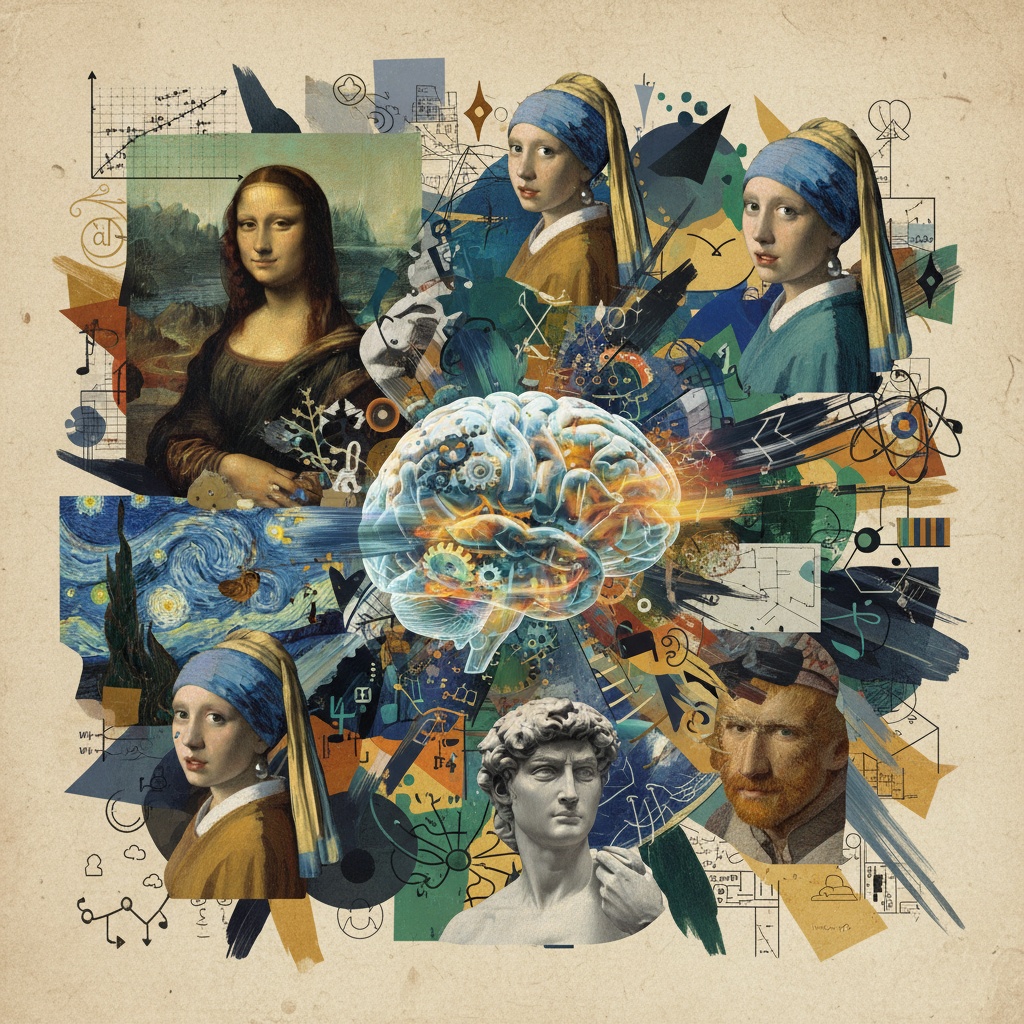
The beauty of art history lies in its inherent interdisciplinary nature. It’s not confined to a single field of study; it intersects with literature, science, philosophy, and countless other disciplines. Consider the connection between Romantic poetry and Romantic painting—the shared themes of nature, emotion, and individualism are strikingly evident. Analyzing works by artists like Caspar David Friedrich alongside poems by William Wordsworth reveals a common sensibility and a profound appreciation for the sublime. The principles of perspective in Renaissance art can be seamlessly integrated with mathematical concepts such as geometry and proportion. The study of color theory—how colors interact and evoke emotions—can be linked to scientific principles of light and optics.
Furthermore, art provides a unique platform for exploring cultural connections. Examining African masks alongside traditional folktales reveals the symbolic meaning embedded within each form. Integrating art with literature can enhance comprehension by providing visual representations of characters, settings, and themes. This holistic approach to learning fosters deeper understanding and appreciation across multiple disciplines.
Art and Ideology: Propaganda, Protest, and Social Commentary
Throughout history, art has been used as a powerful tool for shaping political ideologies—a means of legitimizing power, promoting social agendas, and challenging the status quo. Rulers have commissioned artworks to glorify their achievements and project an image of strength and authority. Analyzing Roman imperial sculptures reveals the deliberate construction of an idealized leadership persona. Similarly, examining Soviet Realist paintings demonstrates the use of art as a tool for ideological control—a means of suppressing dissent and promoting communist values.
However, art can also be used as a form of resistance. The satirical cartoons of Honoré Daumier challenged the social norms and political corruption of 19th-century France. The protest songs and murals of the Civil Rights Movement provided a powerful voice for marginalized communities. Examining artwork produced during times of conflict—Guernica by Pablo Picasso—reveals the devastating consequences of war and injustice. Art historians analyze these works within their historical context, considering not only the artist’s intentions but also the political climate and social forces at play.
Amplifying Marginalized Voices: Reclaiming Narratives Through Art
Historically, traditional art canons have often excluded the voices and perspectives of women, people of color, and other underrepresented groups. Feminist art history emerged in the 1970s as a response to this exclusion, challenging patriarchal structures and reclaiming female artistic traditions. Linda Nochlin’s seminal essay, “Why Have There Been No Great Women Artists?” sparked a crucial conversation about systemic biases within the art world. Similarly, examining African American art reveals a rich cultural heritage that has been historically overlooked—a vibrant tapestry of creativity and resilience.
The artwork produced during the Harlem Renaissance provided a powerful expression of Black identity and creativity. Indigenous art offers insights into traditional beliefs, social customs, and environmental stewardship. By incorporating these diverse perspectives into the curriculum, educators can challenge preconceived notions and foster a more inclusive understanding of history. Art provides a platform for amplifying marginalized voices and promoting social justice—a means of reclaiming narratives that have been historically silenced.