Constructivism/Suprematism · 1923
Small composition (모홀리 나기, 1923)
모홀리 나기 (1895–1946) 작가의 Small composition 1923년에 제작되었습니다. Constructivism/Suprematism 운동에 속합니다. Acrylic On Canvas(으)로 제작되었습니다. Dessau-Roßlau, Deutschland에 위치한 바우하우스 드레스라우 미술관에 소장되어 있습니다. 크기는 24 × 30 cm입니다.
- 1923
- Acrylic On Canvas
- 24 × 30 cm
- 바우하우스 드레스라우 미술관, Dessau-Roßlau

 미리보기

 수작업 유화 작품
 공유하기
 공유하기
 학습용 요약본


 다운로드
 유사 작품 더 보기
 X-레이
 슬라이드 쇼 보기
 질의응답

 통계 정보
Small composition 요약
- 제목
- Small composition
- 작가
- 모홀리 나기 (1895–1946)
- 작가 출생지
- 바치-카얄라, 헝가리
- 제작 연도
- 1923
- 매체
- Acrylic On Canvas
- 크기
- 24 × 30 cm
- 전시 장소
- 바우하우스 드레스라우 미술관, Dessau-Roßlau, Deutschland
- 주제
- abstract art, geometric shapes, line composition, modern design, spatial relationships, color harmony
Small composition은(는) 무엇을 묘사하고 있나요?
László Moholy-Nagy’s “Small Composition”: A Pioneering Leap into Abstract Form
“Small Composition,” created in 1923 by László Moholy-Nagy, isn't merely a painting; it’s a crystallized moment of artistic revolution. Emerging from the fertile ground of Constructivism and deeply influenced by the radical experimentation of the Bauhaus school, this work represents a pivotal shift in how artists approached representation – moving beyond mimetic accuracy to explore the inherent power of form, line, and color as autonomous elements of visual language. The piece, rendered in watercolor and gouache on paper, immediately captivates with its dynamic geometry, a carefully orchestrated balance between order and chaos that speaks volumes about the artist’s evolving philosophy.
At first glance, “Small Composition” appears strikingly abstract, yet closer inspection reveals a sophisticated system of relationships. A central axis line bisects the canvas, acting as a silent guide to the placement of several key shapes: a vibrant blue crescent moon, a bold yellow circle, and a striking red rectangle. These aren’t simply decorative elements; they are deliberately positioned to create a sense of spatial depth and visual tension. The overlapping forms suggest movement and interaction, inviting the viewer to actively engage with the composition and decipher its underlying structure. The flatness of the medium – watercolor and gouache on paper – further emphasizes this interplay of form, creating an illusion of three-dimensionality through careful layering and line weight.
The Bauhaus Legacy and the Embrace of Technology
To fully appreciate “Small Composition,” it’s crucial to understand its context within the broader artistic landscape of the early 20th century. Moholy-Nagy's time at the Bauhaus in Weimar was transformative, exposing him to a radical new approach to design that sought to integrate art with industry and technology. The Bauhaus championed functionalism, believing that art should serve a purpose beyond mere aesthetics – it should improve people’s lives through innovative design solutions. This ethos is powerfully reflected in “Small Composition,” which can be seen as an exploration of the principles of geometric abstraction, a technique favored by Constructivist artists like Piet Mondrian and Kazimir Malevich.
However, Moholy-Nagy wasn't simply replicating these movements; he was pushing them forward. He recognized the potential of photography – a relatively new medium at the time – to challenge traditional notions of representation. His early experiments with photograms (photographs created without a camera) demonstrated his fascination with chance and accident, suggesting that art could emerge from unexpected combinations of light and shadow. “Small Composition” can be interpreted as an extension of this exploration, utilizing the principles of photography—particularly its ability to capture fleeting moments and manipulate perception—to create a dynamic and visually arresting composition.
Symbolism and Emotional Resonance
While ostensibly abstract, "Small Composition" is rich in subtle symbolism. The dominant blue crescent moon could represent intuition or dreams, while the bold yellow circle might symbolize energy or enlightenment. The red rectangle, often associated with stability and structure, provides a grounding element to the composition. The deliberate use of color—each hue carefully chosen for its emotional impact—further enhances the work’s expressive power. It's not about depicting recognizable objects; it’s about evoking feelings and ideas through pure form and color.
Beyond these specific symbols, “Small Composition” resonates with a sense of dynamism and forward momentum. The intersecting lines and overlapping shapes create a feeling of movement and transformation, suggesting that the artwork is constantly evolving before the viewer's eyes. It’s a testament to Moholy-Nagy’s belief that art should be an active force—capable of stimulating thought, provoking emotion, and ultimately transforming our perception of the world.
A Reproduction Worthy of Display
Reproductions of “Small Composition” offer a remarkable opportunity to bring this pioneering artwork into any interior space. The vibrant colors and dynamic composition will add a touch of modern sophistication while simultaneously evoking the spirit of artistic innovation. Consider framing the reproduction in a minimalist style to allow the artwork’s inherent beauty to shine through, or opt for a bold statement piece that commands attention. “Small Composition” is more than just a print; it's an invitation to engage with the transformative power of abstract art.
Small composition은(는) 어느 미술관에 소장되어 있나요?
바우하우스 드레스라우 미술관
Dessau-Roßlau, Deutschland
건축의 혁명과 예술의 조화: 바우하우스 디샤우 박물관 소개 바우하우스 디샤우 박물관은 독일 디샤우 로스라우에 위치한 곳으로, 건축과 디자인 역사상 가장 중요한 이념적 전환을 상징하는 바우하우스 운동의 유산을 기념하고 교육하는 공간입니다. 바우하우스 학교의 창립가 발터 그로피우스의 천재적인 리더십 아래 설립된 이후 박물관은 단순한 전시 공간을 넘어 건축과 디자인의 원리를 탐구하며 미래 세대에 영감을 불어넣는 데 기여해 왔습니다. 특히 디샤우 로스라우에 위치한 바우하우스 건물을 중심으로 이 건물 자체가 예술 작품으로 여겨지며 현대 건축의 새로운 지평을 열었습니다.

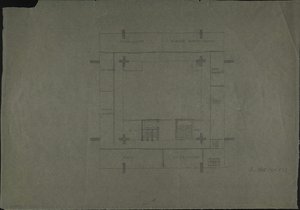

Small composition의 고해상도 이미지

모홀리 나기, Small composition (1923), 바우하우스 드레스라우 미술관. 퍼블릭 도메인
Small composition에 관한 질문과 답변
"Small composition"의 원작은 어느 박물관에 소장되어 있나요?
Small composition의 원작은 바우하우스 드레스라우 미술관, Dessau-Roßlau, Deutschland에서 만나보실 수 있습니다.
"Small composition"은(는) 언제 제작되었나요?
모홀리 나기의 "Small composition"은(는) 1923년에 제작되었습니다.
"Small composition"은 어떤 기법으로 제작되었나요?
"Small composition"은(는) Acrylic On Canvas 기법으로 제작되었습니다.
원작 "Small composition"의 크기는 어떻게 되나요?
"Small composition" 원작의 크기는 24 x 30 cm입니다. 원작의 규격은 복제본 사이즈를 선택하실 때 유용한 참고 자료가 됩니다.
모홀리 나기의 "Small composition"에는 어떤 모습이 담겨 있나요?
"Small composition"에 담긴 소재는 abstract art, geometric shapes, line composition, modern design, spatial relationships, color harmony, early 20th century, minimalist form입니다.
모홀리 나기의 "Small composition"은(는) 퍼블릭 도메인인가요?
모홀리 나기의 "Small composition"의 저작권 정보: 해당 작품은 퍼블릭 도메인 - 저작권 보호 기간이 만료되었습니다 상태입니다. 이는 이미지 복제 가능 여부를 결정하는 기준이 됩니다.
"Small composition"을(를) 만든 작가는 누구인가요?
"Small composition"의 작가는 모홀리 나기입니다.
"Small composition"은(는) 어떤 화풍에 속하나요?
모홀리 나기의 "Small composition"과(와) 관련된 미술 사조는 Constructivism/Suprematism입니다. 이러한 분류를 통해 해당 작품을 관련 작가 및 예술 작품들과 함께 파악할 수 있습니다.
Small composition은(는) 모홀리 나기의 예술적 경력 중 어느 시기에 해당하나요?
"Small composition"은(는) 모홀리 나기의 Early Modern를 잘 보여주는 작품입니다.
아티스트 모홀리 나기 소개

1895–1946, 헝가리
모홀리 나기
라슬로 모홀로이-나기: 현대 미술과 바우하우스의 선구자 출생: 헝가리, 박스-카얄라 (1895년) 사망: 1946년 라슬로 모홀로이-나기는 헝가리가 배출한 매우 영향력 있는 화가이자 사진작가, 조각가, 그리고 디자이너였습니다. 그는 바우하우스 학교에 남긴 중대한 공헌과 더불어 구성주의, 타이포그래피, 사진, 그리고 키네틱 아트 분야에서 개척자적인 업적을 남긴 것으로 가장 잘 알려져 있습니다. 그의 예술 철학은 기술과 산업을 예술 속에 통합하는 데 집중되어 있었으며, 현대 세계를 포용하는 창의성의 새로운 비전을 옹호했습니다. 초기 생애와 예술적 영감 유년 시절과 가족: 헝가리 박스보로드에서 유대인 가정의 아들 라슬로 바이스로 태어난 그는 이후 모홀로이-나기라는 성을 채택했습니다.
모홀리 나기의 다른 작품들
 Untitled, Dessau
 Untitled\n\nUntitled1939
 Untitled
 Hilla Rebay1924

Small composition 관련 에세이
 기하학적 추상 미술을 정의한 명작 10가지 | OriginalUniqueArt.com몬드리안, 말레비치 등 거장들의 기하학적 추상 미술 명작 10선을 만나보세요. 각 작품의 예술사적 의미와 색채, 구성을 탐구하고 OriginalUniqueArt.com에서 고품질 아트 프린트를 소장하세요. 지금 바로 온라인 컬렉션을 확인하세요!
 De Stijl and Bauhaus: Distinguishing Two Pillars of Modern DesignMaster the distinctions between De Stijl and Bauhaus design. Explore the history of these modern pillars now.
 Geometry with Purpose: Distinguishing Suprematism from ConstructivismMaster the differences between Suprematism and Constructivism with our expert guide. Discover the soul of the Russian avant-garde now.