Symbolism · 1903
Art (자크 말체브스키, 1903)
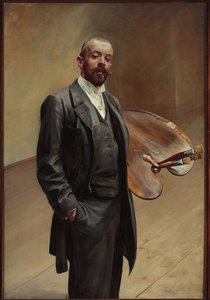
자크 말체브스키 (1854–1929) 작가의 Art 1903년에 제작되었습니다. Symbolism 운동에 속합니다. Oil On Canvas(으)로 제작되었습니다. Wrocław, Poland에 위치한 National Museum in Wrocław에 소장되어 있습니다. 크기는 70 × 98 cm입니다.
- 1903
- Oil On Canvas
- 70 × 98 cm
- National Museum in Wrocław

 미리보기

 수작업 유화 작품
 공유하기
 공유하기
 학습용 요약본


 다운로드
 유사 작품 더 보기
 X-레이
 슬라이드 쇼 보기
 질의응답

 통계 정보
Art 요약
- 제목
- Art
- 작가
- 자크 말체브스키 (1854–1929)
- 작가 출생지
- 라돔, 폴란드
- 제작 연도
- 1903
- 매체
- Oil On Canvas
- 크기
- 70 × 98 cm
- 전시 장소
- National Museum in Wrocław, Wrocław, Poland
- 운동성
- Symbolism
- 제작 시기
- 19th Century
- 주제
- symbolism, polish art, mythology, portraiture, national identity, allegory
Art은(는) 무엇을 묘사하고 있나요?
Identification of the Artwork and Artist
Art is an oil on canvas painting executed by Jacek Malczewski in 1903. The work belongs to the Symbolist movement, a style in which Malczewski established himself as a central figure. His practice often integrated themes of national identity and folklore into complex allegorical compositions.
Malczewski was a Polish symbolist painter. His approach frequently utilized mythological and religious motifs to explore psychological and existential states. This specific work, created at the turn of the twentieth century, reflects the artist's characteristic use of symbolic imagery to communicate ideas beyond literal representation.
Composition and Visual Elements
The composition is tightly framed, focusing the viewer's attention on the faces and upper bodies of the clustered figures. This arrangement creates a sense of intimacy and shared experience among the subjects, though the overall placement feels somewhat chaotic yet deliberate. A large, golden horse dominates the background, its head acting as a visual anchor that stabilizes the grouping of humans in the foreground.
The color palette is dominated by earthy tones, including browns, beiges, and muted greens. These base colors are contrasted by the vibrant golden hue of the horse and subtle touches of red in the hair and clothing of the figures. Lighting is diffused and soft, appearing to emanate from multiple sources without creating harsh shadows or strong contrasts. This gentle illumination contributes to the dreamlike quality of the scene.
The perspective is somewhat flattened due to the close-up framing, which limits the sense of spatial recession. Depth is achieved primarily through the layering of figures and the placement of the equine subject in the background. Organic and rounded shapes define the human forms and the natural contours of the horse, avoiding sharp angles or geometric structures.
Technique and Material Composition
Executed in oil on canvas, the work utilizes a method of blended brushstrokes to achieve its specific visual effects. The application of paint involves a visible layering process, which contributes to the depth and richness of the composition. This layering allows for a subtle transition between the earthy tones of the background and the more luminous highlights found on the figures and the equine subject.
The surface texture appears relatively smooth, a result of the extensive blending of the oil paints. This technique softens the edges of the forms, particularly in the rendering of hair and the drape of clothing. Consequently, the lines defining the facial features remain somewhat indistinct, contributing to a dreamlike quality. The interplay of light and shadow is achieved through these soft transitions rather than through harsh, high-contrast edges.
Related Works by Jacek Malczewski
The artist's exploration of symbolic and allegorical themes is evident in several other compositions. His 1901 work, Self-portrait with the Vistula in the Background, offers a different perspective on his relationship with the Polish landscape. Other significant pieces include Chimera 1 and the Thanatos series, which further investigate the psychological and spiritual dimensions central to his practice.
Malczewski also drew heavily from folklore and mythology to construct his visual language. This is particularly evident in his collection titled Bajki (Fables). These works, alongside his various symbolic studies, demonstrate the breadth of his engagement with national and universal motifs.
Art은(는) 어느 미술관에 소장되어 있나요?
National Museum in Wrocław
Wrocław, Poland
The Architecture of the National Museum in Wrocław The National Museum in Wrocław occupies a former Silesian regency building situated on the banks of the Odra river. Constructed between 1883 and 1886, the structure reflects the architectural language of the late 19th century. Its Neo-Renaissance design provides a formal setting for the collections housed within its three floors.


Art의 고해상도 이미지

자크 말체브스키, Art (1903), National Museum in Wrocław. 퍼블릭 도메인
Art에 관한 질문과 답변
"Art"의 원작은 어느 박물관에 소장되어 있나요?
자크 말체브스키의 "Art"은(는) National Museum in Wrocław, Wrocław, Poland에 전시되어 있습니다. 박물관 목록은 복제품이 아닌 원작을 기준으로 합니다.
자크 말체브스키의 "Art"에는 어떤 기법이 사용되었나요?
자크 말체브스키의 "Art"에는 어떤 모습이 담겨 있나요?
자크 말체브스키의 "Art"은(는) 퍼블릭 도메인인가요?
"Art"은(는) 어떤 화풍에 속하나요?
"Art"은(는) Symbolism 양식의 작품입니다. 이 사조는 해당 작품이 속한 예술적 전통을 나타냅니다.
아티스트 자크 말체브스키 소개
1854–1929, 폴란드
자크 말체브스키
폴란드의 갈망으로 물든 삶 1854년, 당시 러시아의 지배 아래 있던 폴란드 공로스(Congress Poland)의 도시 라돔에서 태어난 야첵 말체브스키는 단순한 화가 그 이상이었습니다. 그는 폴란드 민족 정체성을 시각적으로 구현한 존재였으며, 자결권을 갈망하던 한 국가의 깊은 목소리였습니다. 그의 삶의 궤적과 예술적 비전은 독립을 향한 로맨틱한 이상과 불가분하게 연결되어 있었습니다. 이러한 정신은 그의 아버지 유리아 말체브스키로부터 깊이 심어졌는데, 그는 헌신적인 애국자로서 어린 야첵에게 폴란드의 문화와 문학, 그리고 역사에 대한 변함없는 사랑을 길러주었습니다.
자크 말체브스키의 다른 작품들
 Self-portrait in armor with violin.1908
 Madonna and Children1897
 Portrait of artist's sister Helene with lute1906
 The Artist's death1909
Art 관련 에세이
 19th century Polish painters19th-century Polish art comes alive through the masterpieces of Jan Matejko and Jacek Malczewski. View the full collection online at Origin…
 Masterpieces of the Soil: The Top 25 Jean-François Millet ArtworksImmerse yourself in the soul of French Realism with our curated list of the top 25 Jean-François Millet artworks. From iconic peasant scene…
 20th century Polish painters20th-century Polish painters like Tamara de Lempicka, Sigmar Polke, and Aleksandra Ekster define an era. Find museum-quality reproductions …