
 실제 크기로 보기
 Print
Print 보내기
보내기 공유하기
공유하기
 가이드 보기

 이미지 다운로드
 유사 작품 더 보기
 X-레이
X-레이 슬라이드 쇼 보기
 Q&A
Q&A 통계 정보
통계 정보The First Animals
 Acrylic On Canvas
- WallArt
- Cubism
 1913
1913- Modern
 39.0 x 46.0 cm
Franz Marc’s Vision of Early Animal Life
Franz Marc's The First Animals stands as a cornerstone of German Expressionism, embodying the movement’s core tenets: subjective emotion and inner reality. Created in 1913, this oil painting measuring 39 x 46 cm exemplifies Marc's revolutionary approach to art, firmly rooted in Cubist principles.
Artistic Context and Style
Expressionism arose as a reaction against the academic conventions of its time, prioritizing emotional intensity over objective representation. Marc’s unwavering dedication to conveying feeling through color and abstract forms aligns perfectly with this ethos. The First Animals brilliantly captures the spirit of Expressionism, featuring two horses prominently positioned in the foreground alongside birds soaring above.
The painting’s palette is remarkably rich and diverse—blues, reds, yellows, and purples intertwine to establish a vibrant atmosphere. Crucially, Marc utilizes Cubist techniques, fracturing forms into geometric planes that offer multiple perspectives simultaneously. This bold departure from traditional realism was groundbreaking, signaling a fundamental shift in artistic sensibilities.
Symbolism and Interpretation
Within The First Animals, the horses are arranged in a deliberate manner—one horse stands adjacent to another—creating an intriguing visual dynamic. Above them, birds symbolize freedom and vitality, mirroring Marc’s fascination with the harmonious coexistence of animals within their natural environment.
Marc's oeuvre consistently explores themes of conflict and beauty intertwined within nature. The First Animals serves as a poignant representation of the genesis of life—a celebration of organic rhythm and an invitation for contemplation.
Artistic Legacy
Franz Marc’s influence on subsequent generations of artists is undeniable. His distinctive style and thematic focus on animals cemented his place in art history, inspiring countless creatives. The First Animals remains a testament to Marc’s innovative vision—a masterpiece blending Cubist innovation with profound emotional expression.
OriginalUniqueArt offers exceptional reproductions of Marc's paintings, including The First Animals, Horse Asleep, and Picture with Cattle. These meticulously crafted reproductions capture the essence of Marc’s original works.
For a deeper understanding of Expressionism and Cubism, explore Top 5 Famous Expressionism Artists of All Time on OriginalUniqueArt. And delve into the broader evolution of painting with The History of Painting on Wikipedia.
The First Animals by Franz Marc is a captivating artwork that exemplifies Marc’s artistic genius—a harmonious blend of vibrant color, geometric abstraction, and symbolic representation that continues to resonate with audiences today.
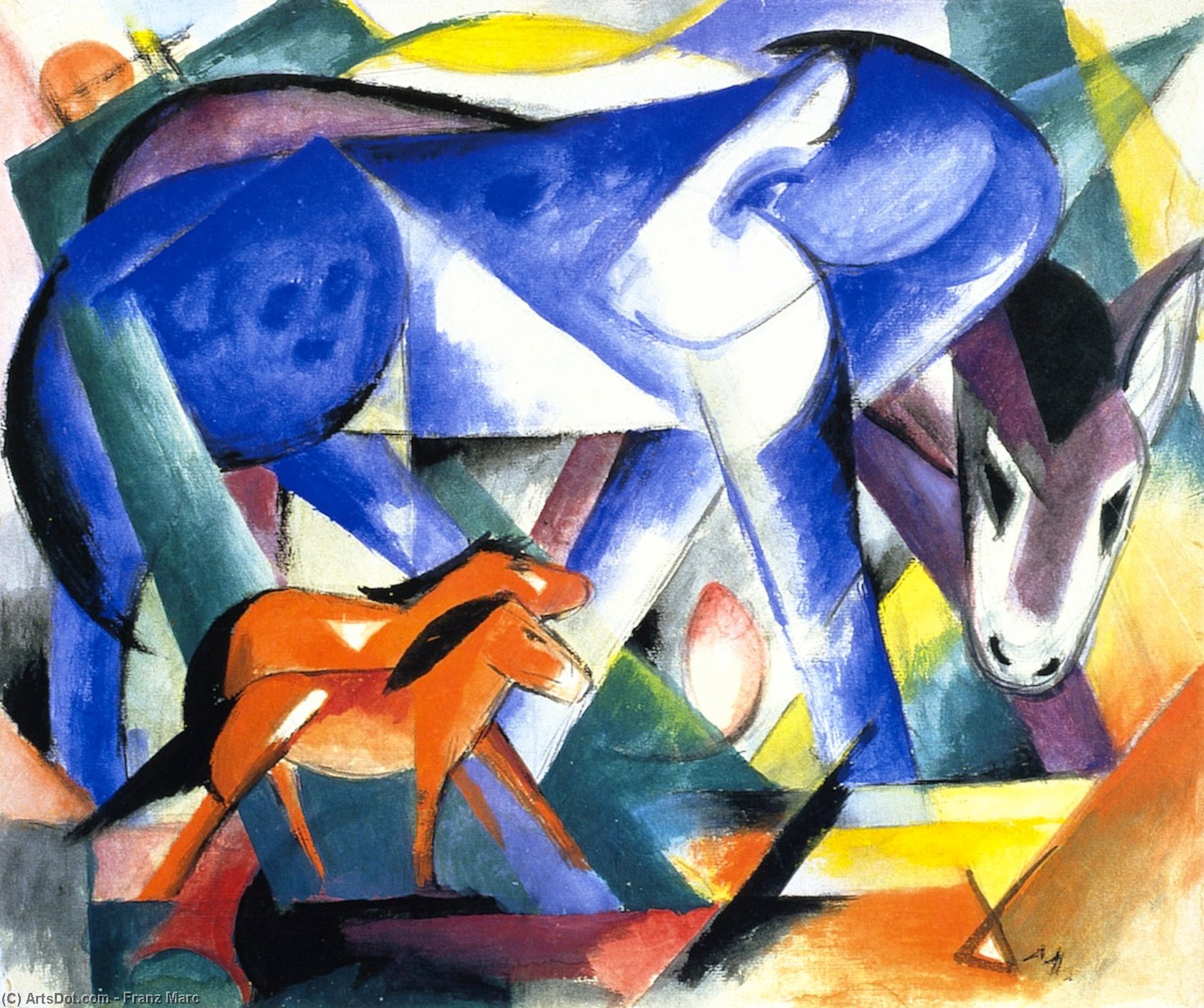
Photo Description: The painting depicts two horses in the foreground, positioned side-by-side, creating a dynamic perspective. Above them fly birds—one on the left and another near the top right—adding movement and symbolizing freedom. The palette is rich with blues, reds, yellows, and purples, generating an energetic atmosphere.
Size: 39 x 46 cm
Date: 1913
질의응답
"The First Animals"에는 어떤 분위기와 감정이 어우러져 있나요?
"The First Animals"에서는 Calm 분위기와 함께 Spiritual 감정이 느껴집니다.
프란츠 마크의 "The First Animals"은 강렬한 대비를 사용하나요, 아니면 부드러운 조화를 이루고 있나요?
"The First Animals"에서는 Statement 대비와 Discordant Palette 조화가 어우러져 있습니다.
"The First Animals"이(가) 프란츠 마크의 가장 인기 있는 작품 중 하나인가요?
"The First Animals"은(는) Iconic 등급으로 분류됩니다.
프란츠 마크 (1880 – 1916)
Franz Marc는 독일 표현주의의 선구자로서 그의 대표작과 예술적 스타일을 강조하며 미술사에서 중요한 위치를 차지합니다. 그는 자연과의 깊은 연결과 영적인 의미를 전달하기 위해 동물 그림에 강렬한 색상을 사용했으며, 특히 황소와 같은 동물을 통해 인간의 본질과 정신 세계를 탐구했습니다. 그의 작품은 현대 미술사에 대한 영감을 불어넣고 있으며 오늘날에도 감동과 사색을 불러일으키는 예술가로 기억됩니다.
이 작품에 대하여
- 제목: The First Animals
- 작가: 프란츠 마크
- 제작 연도: 1913
- 원작 크기: 39.0 x 46.0 cm
- 형식: Landscape
- 저작권 상태: 퍼블릭 도메인
- 동세: Cubism
- 재료 및 기법: Acrylic On Canvas
- 창작 시기: Mature Period
- 주요 색상: Steel Blue
주요 정보
- Influences: Van Gogh
- Dimensions: 39 x 46 cm
- Medium: Oil on canvas
- Artistic style: Abstract Expressionism
- Notable elements or techniques: Cubist style; Bold colors; Geometric forms
- Year: 1913