Fauvism · 1923
Nude (앙드레 드랭, 1923)
앙드레 드랭 (1880–1954) 작가의 Nude 1923년에 제작되었습니다. Fauvism 운동에 속합니다. Oil On Canvas(으)로 제작되었습니다. 크기는 44 × 58 cm입니다.
- 1923
- Oil On Canvas
- 44 × 58 cm

 미리보기

 수작업 유화 작품
 공유하기
 공유하기
 가이드 보기


 다운로드
 유사 작품 더 보기
 X-레이
 슬라이드 쇼 보기
 질의응답

 통계 정보
Nude: 핵심 정보
Nude은(는) 무엇을 묘사하고 있나요?
Identification of the Nude by André Derain
In this 1923 work, titled Nude, André Derain turns his attention to the quietude of the human form. The painting presents a nude female figure, captured in a moment of stillness that invites a closer, more intimate observation. It is a study of presence and form, rendered with a focus on the essential character of the subject.
The artist, André Derain, approaches the figure with a sense of restraint. Rather than relying on the loud, unmixed hues of his earlier Fauvist period, this piece reflects a more disciplined sensibility. The subject is seated and facing forward, occupying the central space of the composition. There is a certain gravity to her pose, suggesting a state of introspection or perhaps a quiet contemplation of her surroundings.
This work belongs to a period in the artist's career where structure and form began to take precedence. The figure is defined by simplified shapes and a deliberate use of line. It is a direct encounter with the subject, stripped of unnecessary distraction, allowing the viewer to focus entirely on the weight and volume of the female form as it exists within the frame.
Composition and Visual Elements
The figure is centrally positioned within the frame, creating a quiet sense of balance that draws the eye immediately to the subject. She is seated in a moment of stillness, her pose defined by arms crossed and resting upon her legs. This arrangement suggests a state of introspection or perhaps a simple, unhurried relaxation. The composition avoids complex spatial arrangements, opting instead for a relatively flat perspective that lacks a strong sense of depth, keeping the viewer's attention fixed on the immediate presence of the form.
There is a deliberate simplification in how the human form is rendered. The artist employs simplified geometric shapes to represent the body, using curves to trace the silhouette while sharper angles define the features of the face, such as the nose and eyebrows. This structural approach gives the figure a certain weight and presence despite the lack of environmental detail. The background remains largely undefined, which serves to isolate the subject and emphasize the contours of her body.
The palette is strictly monochromatic, relying on a controlled range of shades including gray, white, and black. Rather than using color to create volume, the artist uses subtle variations in tone to model the figure. Strong, visible brushstrokes define the contours of the body and the facial features. These lines are not blended into smooth transitions; instead, they retain an individual character that adds a tactile energy to the surface. The interplay between these textured strokes and the softer areas of the skin creates a visual rhythm that is both disciplined and expressive.
Technique and Material Details
This work is an oil on canvas, executed with a deliberate and tactile approach to the medium. The artist employs visible brushstrokes that remain unblended in many areas, creating a surface defined by its physical texture. These marks are not merely marks of application but are essential to the structural definition of the figure, providing a sense of energy and movement across the form.
There is a clear evidence of layering and careful blending used to achieve subtle tonal variations. This technique allows for a nuanced transition between light and shadow, giving the subject a sense of volume and presence. The interplay of these layers creates a depth that relies on the weight of the paint rather than a reliance on linear perspective. The result is a surface where the materiality of the oil paint is as much a part of the composition as the subject itself.
고해상도 Nude

앙드레 드랭, Nude (1923). 퍼블릭 도메인
Nude에 관한 질문
앙드레 드랭의 "Nude"의 기법은 무엇인가요?
"Nude"은(는) Oil On Canvas 기법으로 제작되었습니다.
원작 "Nude"의 크기는 어떻게 되나요?
"Nude" 원작의 크기는 44 x 58 cm입니다. 원작의 규격은 복제본 사이즈를 선택하실 때 유용한 참고 자료가 됩니다.
앙드레 드랭의 "Nude"에는 어떤 소재가 등장하나요?
앙드레 드랭의 "Nude"의 이미지를 자유롭게 복제할 수 있나요?
앙드레 드랭의 "Nude"은(는) 어떤 미술 사조에 속하나요?
"Nude"은(는) Fauvism 양식의 작품입니다. 이 사조는 해당 작품이 속한 예술적 전통을 나타냅니다.
Nude은(는) 앙드레 드랭의 예술적 경력 중 어느 시기에 해당하나요?
아티스트 앙드레 드랭 소개
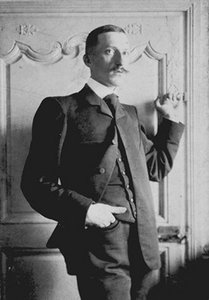
1880–1954, 프랑스
앙드레 드랭
초기 생애와 예술적 여정의 시작 1880년, 프랑스 이블린 지역의 평온한 마을 샤투에서 앙드레 드랭은 세상에 첫발을 내디뎠습니다. 그의 유년 시절은 일 드 프랑스의 고요한 풍경 속에서 형성되었으며, 주변 세계에 대한 타고난 호기심은 그곳에서 깊게 뿌리를 내리기 시작했습니다. 1895년에 이르러 그는 이미 독학을 시작하며, 정형화된 교육보다는 자신의 눈으로 시각적 세계를 이해하고자 노력했습니다. 이러한 자기 주도적인 탐구의 시간은 아카데미의 엄격한 규율이 그의 예술적 본능을 구속하기 전, 자신만의 독특한 시각을 발전시킬 수 있는 소중한 토대가 되었습니다.
앙드레 드랭의 다른 작품들
 bathers1907
 London Bridge1906
 Charing Cross from sw1906
 Landscape at L'Estaque1906
Nude 관련 에세이
 Anatomy, Idealism, and Realism: A History of the Female Nude in PaintingExplore the technical evolution of the female nude from Renaissance anatomy to Impressionist light. Trace art history with our expert guide.
 The Eloquent Form: A Historical & Aesthetic Exploration of the Nude in ArtExplore the captivating history of the nude in art! From ancient Greece to modern masters, discover its evolving symbolism, techniques & en…
 모딜리아니 최고작 25선: 예술혼과 섬세한 감성의 걸작들 | OriginalUniqueArt모딜리아니 최고작 25선을 만나보세요. 파리 화가 모딜리아니의 예술혼과 섬세한 감성이 담긴 명화들을 OriginalUniqueArt에서 감상하고, 특별한 인테리어 데코를 완성해보세요. 유화, 초상화, 누드 작품 등 다양한 걸작을 온라인으로 탐험하세요.