Romanticism · 1800
Architecture with Figures (위베르 로베르, 1800)
위베르 로베르 (1733–1808) 작가의 Architecture with Figures 1800년에 제작되었습니다. Romanticism 운동에 속합니다. Oil On Paper(으)로 제작되었습니다. 코펜하겐, 덴마크에 위치한 Statens Museum For Kunst에 소장되어 있습니다. 크기는 86 × 106 cm입니다.
- 1800
- Oil On Paper
- 86 × 106 cm
- Statens Museum For Kunst, 코펜하겐

 미리보기

 수작업 유화 작품
 공유하기
 공유하기
 학습용 요약본


 다운로드
 유사 작품 더 보기
 X-레이
 슬라이드 쇼 보기
 질의응답

 통계 정보
Architecture with Figures 요약
- 제목
- Architecture with Figures
- 작가
- 위베르 로베르 (1733–1808)
- 작가 출생지
- 파리, 프랑스
- 제작 연도
- 1800
- 매체
- Oil On Paper
- 크기
- 86 × 106 cm
- 전시 장소
- Statens Museum For Kunst, 코펜하겐, 덴마크
- 운동성
- Romanticism
- 제작 시기
- 19th Century
- 주제
- architecture, figures, columns, ruins, sky, stone
Architecture with Figures은(는) 무엇을 묘사하고 있나요?
Identification of Architecture with Figures
Architecture with Figures is a painting by the French artist Hubert Robert. This work dates to about 1800. The artist, who was a member of the school of Romanticism, produced this piece during a period of significant transition in French art. Robert's background in both sculpture and painting informs the structural presence of the subjects within this composition.
The artwork depicts a scene of monumental classical ruins. The subject matter focuses on three figures—a standing man, a seated woman, and an older seated figure—who interact near a stone basin or altar. These figures are positioned amidst large-scale architectural elements, including massive columns and an arched structure. The scene is set under a vast, cloudy sky, with an obelisk visible in the distance to establish depth.
The visual presentation of the work relies on a monochromatic palette. It utilizes various shades of grey, black, and white to define the forms. This approach emphasizes the interplay of light and shadow across the textures of weathered stone, smooth marble, and soft fabric. The composition uses strong vertical lines from the columns and the obelisk to contrast with the curved lines of the arches and the draped clothing of the figures.
The Composition and Visual Elements
The composition is organized around large-scale architectural elements that establish a sense of monumental scale. On the right side, massive columns rise vertically, while an arched structure on the left side of the frame creates a boundary for the central scene. These structural components frame a central group of three figures positioned near a stone basin or altar. This group consists of a standing man, a seated woman, and an older seated figure engaged in interaction. In the background, an obelisk is placed in the distance, contributing to the receding perspective and the depth of the scene.
The color palette is monochromatic, utilizing various shades of grey, black, and white. This lack of hue emphasizes the interplay of light and shadow across the various surfaces. Dramatic lighting originates from a directional source, casting deep shadows and creating bright highlights on the textures of the weathered stone, the smooth marble, and the soft fabric of the draped clothing. The arrangement of lines reinforces the structural order, using strong verticality through the columns and the obelisk, contrasted by the curved lines of the classical arches and the organic forms of the figures and scattered flowers.
Technique and Artistic Method
The medium of this work appears to be a monochrome painting, likely executed in oil or wash on paper. The artist employs fine brushwork to render the intricate details of the architectural elements and the folds of the drapery. These precise strokes define the textures of the weathered stone and the soft surfaces of the fabric worn by the figures.
Robert frequently utilized the alla prima technique in his practice. This method involves applying paint in a direct and spontaneous manner. Such an approach allows for a sense of immediacy in the execution of the composition. The application of pigment creates a clear distinction between the solid, geometric forms of the columns and the more organic, fluid shapes of the human figures and scattered flowers.
The Artistic Style of Hubert Robert
Hubert Robert is noted for his landscape paintings and his development of the capriccio. These works consist of semi-fictitious, picturesque depictions of ruins located in Italy and France. His approach to these subjects involves a specific method of blending careful observation with a heightened imagination. This combination allows for the construction of theatrical atmospheres within the landscape. He often uses atmospheric perspective to soften distant horizons, which creates a sense of depth and space.
The artist's technique is characterized by a versatility that moves between the precision of a draftsman and the fluid touch of a painter. He frequently employed the alla prima technique, applying paint in a direct and spontaneous manner. This method contributes to the immediacy of his compositions. His work often utilizes light and shadow to manipulate the perception of space, using these elements to suggest a sense of history within the architectural forms.
Architecture with Figures은(는) 어느 미술관에 소장되어 있나요?
Statens Museum For Kunst
코펜하겐, 덴마크
Statens Museum For Kunst의 역사와 기원 Statens Museum For Kunst의 뿌리는 덴마크 군주들이 수집해 온 개인 예술 컬렉션으로 거슬러 올라갑니다. 이러한 왕실의 소장품들은 훗날 덴마크 최대 규모의 미술관이 되는 초석이 되었습니다. 이 기관의 근간이 왕실의 소장품에 닿아 있음에도 불구하고, 공식적인 설립은 두 개의 중요한 시점으로 기억됩니다.


Architecture with Figures의 고해상도 이미지

위베르 로베르, Architecture with Figures (1800), Statens Museum For Kunst. 퍼블릭 도메인
Architecture with Figures에 관한 질문과 답변
위베르 로베르의 "Architecture with Figures"의 원화는 어디에서 감상할 수 있나요?
Architecture with Figures의 원작은 Statens Museum For Kunst, 코펜하겐, 덴마크에서 만나보실 수 있습니다.
위베르 로베르의 "Architecture with Figures"은(는) 언제 제작되었나요?
위베르 로베르의 "Architecture with Figures"은(는) 1800년에 제작되었습니다.
위베르 로베르의 "Architecture with Figures"에는 어떤 기법이 사용되었나요?
위베르 로베르의 "Architecture with Figures"의 재료는 Oil On Paper입니다. 복제화는 이 기법 특유의 질감을 그대로 구현하는 것을 목표로 합니다.
위베르 로베르의 "Architecture with Figures"의 실제 크기는 어떻게 되나요?
위베르 로베르의 "Architecture with Figures"의 원작 크기는 86.0 x 106.0cm입니다. 복제화는 동일한 비율을 유지하면서 다른 크기로도 주문 가능합니다.
"Architecture with Figures"은(는) 어떤 내용을 담고 있나요?
위베르 로베르의 "Architecture with Figures"에 담긴 주제: architecture, figures, columns, ruins, sky, stone, drapery
위베르 로베르의 "Architecture with Figures"의 이미지를 자유롭게 복제할 수 있나요?
위베르 로베르의 "Architecture with Figures"은(는) 퍼블릭 도메인 - 저작권 보호 기간이 만료되었습니다 상태입니다. 이 상태에 따라 해당 작품 이미지의 복제 가능 여부가 결정됩니다.
"Architecture with Figures"의 작가는 누구인가요?
"Architecture with Figures"의 작가는 위베르 로베르입니다.
위베르 로베르의 "Architecture with Figures"은(는) 어떤 미술 사조에 속하나요?
"Architecture with Figures"은(는) Romanticism 양식의 작품입니다. 이 사조는 해당 작품이 속한 예술적 전통을 나타냅니다.
"Architecture with Figures"은(는) 위베르 로베르의 예술적 발전 단계 중 어느 시기를 나타냅니까?
"Architecture with Figures"은(는) 위베르 로베르의 Late Period를 잘 보여주는 작품입니다.
아티스트 위베르 로베르 소개
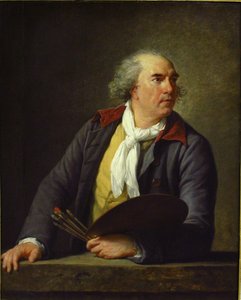
1733–1808, 프랑스
위베르 로베르
유년 시절, 가족 그리고 예술적 훈련 1733년 파리에서 태어난 위베르 로베르는 가족의 사회적 지위가 타인을 향한 헌신과 맞닿아 있던 세상에 발을 들였습니다. 그의 아버지 니콜라 로베르는 저명한 인물의 가문에서 직책을 맡고 있었는데, 이러한 인연은 훗날 젊은 위베르 로베르가 프랑스 상류 사회의 정점으로 나아가는 발판이 되었습니다. 이러한 초기 삶의 안정성은 그가 콜레주 드 나바르(Collège de Navarre)라는 체계적인 환경 속에서 정규 교육을 받을 수 있는 토대가 되었으며, 1751년 예수회 아래에서 학업을 마친 그는 시각 예술로 눈을 돌리기 전 이미 절제된 지적 배경을 갖춘 인물로 성장해 있었습니다. 하지만 그의 첫 행보가 처음부터 캔버스를 향했던 것은 아니었습니다.
위베르 로베르의 다른 작품들
 The Pont du Gard1787
 The Finding of the Laocoön1773
 Le port de Ripetta
 PROJET D'AMENAGEMENT DE LA GRANDE GALERIE DU LOUVRE

Architecture with Figures 관련 에세이
 Hubert Robert: Picturing Ruins, Preserving Memory – A Study of Romantic Antiquarianism & Artistic InnovationExplore the captivating world of Hubert Robert, master of Romantic landscape painting & 'capriccio' ruins. Discover his historical context,…
 Vedute and Capriccio: Distinguishing Topographical Views from Architectural FantasyMaster the difference between veduta and capriccio through expert art history analysis. Explore the masters of Italian landscape art today.
 French artworks of the 1880sFrench Impressionist masterpieces by Claude Monet, Pierre-Auguste Renoir, and Georges Seurat. Find museum-quality reproductions on Original…