Dutch Golden Age · 1632
Heraklith (게릿 도우, 1632)
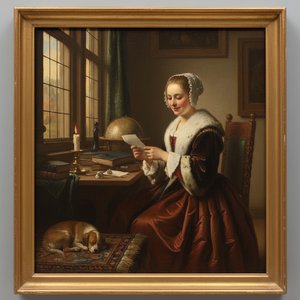
게릿 도우 (1613–1675) 작가의 Heraklith 1632년에 제작되었습니다. Dutch Golden Age 운동에 속합니다. Oil On Canvas(으)로 제작되었습니다. 상트페테르부르크, 러시아에 위치한 에르미타주 박물관에 소장되어 있습니다. 크기는 61 × 51 cm입니다.
- 1632
- Oil On Canvas
- 61 × 51 cm
- 에르미타주 박물관, 상트페테르부르크

 미리보기

 수작업 유화 작품
 공유하기
 공유하기
 학습용 요약본


 다운로드
 유사 작품 더 보기
 X-레이
 슬라이드 쇼 보기
 질의응답

 통계 정보
Heraklith 요약
- 제목
- Heraklith
- 작가
- 게릿 도우 (1613–1675)
- 작가 출생지
- 레이던, 네덜란드
- 제작 연도
- 1632
- 매체
- Oil On Canvas
- 크기
- 61 × 51 cm
- 전시 장소
- 에르미타주 박물관, 상트페테르부르크, 러시아
- 제작 시기
- Early Modern
- 주제
- portrait, scholar, globe, knowledge, wisdom, age
Heraklith은(는) 무엇을 묘사하고 있나요?
Heraklith: A Portrait of Scholarly Reflection
“Heraklith,” painted in 1632 by Gerrit Dou, stands as a testament to the Dutch Golden Age’s fascination with realism and psychological depth. More than just a depiction of an elderly man—likely a scholar or astronomer—it's a carefully constructed tableau designed to convey wisdom, contemplation, and the profound influence of knowledge.
- Subject Matter: The artwork portrays a dignified gentleman seated at a table before him, illuminated by candlelight. His gaze is downward, focused on a globe – a potent symbol representing exploration, scientific inquiry, and an awareness of the vastness of the universe.
- Style & Technique: Dou’s signature ‘fijnschilder’ style—characterized by meticulous detail and masterful chiaroscuro—is evident throughout. The artist employs subtle shading to sculpt the man's face and torso, creating a palpable sense of volume and texture. This technique elevates the portrait beyond mere representation, imbuing it with emotional resonance.
- Composition & Perspective: The oval frame lends an air of formality to the scene, while the shallow perspective draws the viewer’s eye directly to the central figure. Lines delineate facial features and clothing folds, guiding the gaze and reinforcing the composition's balance.
- Color Palette: Dominated by muted browns, creams, and dark reds, the color palette contributes to an atmosphere of solemn dignity. The subdued hues underscore the subject’s intellectual pursuits and evoke a feeling of quiet contemplation.
Exploring Dou’s Mastery of Light & Shadow
Gerrit Dou's unparalleled skill in chiaroscuro—the dramatic interplay between light and shadow—is arguably his most distinctive achievement. As seen prominently in “Heraklith,” this technique isn’t merely decorative; it serves to heighten the emotional impact of the portrait. The candlelight casts a soft glow upon the man’s face, highlighting wrinkles and emphasizing the contours of his features – details that reveal not only physical appearance but also the passage of time and experience.
- Symbolism: Beyond its aesthetic qualities, “Heraklith” carries significant symbolic weight. The globe represents intellectual curiosity and a desire to understand the world around us. It speaks to Dou’s belief in the transformative power of knowledge and invites viewers to consider the profound implications of scientific discovery.
- Historical Context: Painted during the Dutch Golden Age, “Heraklith” reflects the era's burgeoning interest in humanist ideals and its celebration of intellectual achievement. Dou’s work aligns with a broader artistic movement that sought to capture human psychology and emotion with unprecedented accuracy.
A Legacy of Detail & Emotion
"Heraklith" exemplifies Gerrit Dou’s dedication to capturing the essence of his subjects—both physically and psychologically. The artist's meticulous brushwork ensures that every nuance is rendered faithfully, creating a portrait that transcends mere likeness. It’s a piece that invites viewers to pause and contemplate the complexities of human experience, reminding us of the enduring beauty found in quiet reflection and intellectual pursuit.
- Collecting & Inspiration: Reproductions of “Heraklith” offer an opportunity to appreciate Dou's artistic genius and bring a touch of Dutch Golden Age elegance into any interior space. Explore similar artworks at WikiArt.org for further inspiration!
Heraklith은(는) 어느 미술관에 소장되어 있나요?
에르미타주 박물관
상트페테르부르크, 러시아
에르미타주 박물관의 기원과 역사 에르미타주 박물관의 역사는 1764년, 베를린의 상인 요한 에른스트 고츠코프스키로부터 225점의 회화 작품을 수집하며 그 서막을 올렸습니다. 대제 카트린이 이 컬렉션을 시작으로 러시아 상트페테르부르크에 박물관의 기틀을 마련하였으며, 이 초기 수집품들은 훗날 서구 유럽 예술의 방대한 보고가 될 핵심적인 토대가 되었습니다. 본래 황실 가족만을 위한 은밀한 안식처로 시작된 이 공간은 1852년에 이르러 비로소 대중에게 개방된 공공의 장소로 탈바꿈하였습니다.


Heraklith의 고해상도 이미지

게릿 도우, Heraklith (1632), 에르미타주 박물관. 퍼블릭 도메인
Heraklith에 관한 질문과 답변
"Heraklith"의 원작은 어느 박물관에 소장되어 있나요?
게릿 도우의 "Heraklith"의 기법은 무엇인가요?
원작 게릿 도우의 "Heraklith"의 크기는 어떻게 되나요?
게릿 도우의 "Heraklith"에는 어떤 모습이 담겨 있나요?
"Heraklith"에 담긴 소재는 portrait, scholar, globe, knowledge, wisdom, age, reflection, chiaroscuro입니다.
게릿 도우의 "Heraklith"의 이미지를 자유롭게 복제할 수 있나요?
게릿 도우의 "Heraklith"은(는) 어떤 미술 사조에 속하나요?
"Heraklith"은(는) Dutch Golden Age 양식의 작품입니다. 이 사조는 해당 작품이 속한 예술적 전통을 나타냅니다.
아티스트 게릿 도우 소개

1613–1675, 네덜란드
게릿 도우
유년 시절과 예술적 여정의 시작 게릿 도우는 1613년 4월 7일, 네덜란드 라이덴에서 태어났습니다. 그의 유년 시절은 빛과 유리가 일상의 중심을 이루는 환경 속에서 흘러갔습니다. 유리 세공사이자 유리 조각가였던 그의 아버지는 아들에게 예술적 감각의 씨앗을 심어준 첫 번째 스승이었습니다. 유리를 통해 투과되고 굴절되는 빛의 섬세한 움직임을 지켜보며 자란 경험은, 훗날 그가 빛을 다루는 독보적인 안목을 갖추는 데 결정적인 밑거름이 되었습니다.
게릿 도우의 다른 작품들
 A Fisherman's Wife1653
 Self-Portrait1640
 An Evening School1655
 Portrait of an old woman reading1635

Heraklith 관련 에세이
 Master of Shadows: The Top 25 Iconic Artworks by Gustave DoréExplore Gustave Doré's legendary engravings and dark Romanticism. Discover all masterpieces on OriginalUniqueArt.com.
 Master of Emotion: The 25 Greatest Artworks by Rogier van der WeydenImmerse yourself in the profound emotion of Rogier van der Weyden. Explore 25 iconic Early Netherlandish masterpieces, from intricate textu…
 Gerrit Dou: Intimacy & Light in the Dutch Golden AgeExplore the exquisite world of Gerrit Dou, a master of Dutch Golden Age painting. Discover his intimate genre scenes, signature use of ligh…