Art Nouveau
(86) (알폰스 무하)
알폰스 무하 (1860–1939) 작가의 (86) Art Nouveau 운동에 속합니다. Acrylic On Canvas(으)로 제작되었습니다.
- Acrylic On Canvas

 미리보기

 수작업 유화 작품
 공유하기
 공유하기
 학습용 요약본


 다운로드
 유사 작품 더 보기
 X-레이
 슬라이드 쇼 보기
 질의응답

 통계 정보
(86) 요약
- 제목
- (86)
- 작가
- 알폰스 무하 (1860–1939)
- 작가 출생지
- 브르노, 체코
- 매체
- Acrylic On Canvas
- 운동성
- Art Nouveau
- 제작 시기
- 19th Century
(86)은(는) 무엇을 묘사하고 있나요?
Alphonse Mucha’s “86”: A Symphony of Art Nouveau
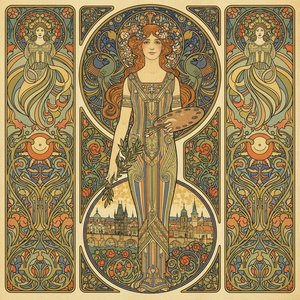
“86,” a captivating painting by Alphonse Maria Mucha, presents a scene brimming with feminine grace and vibrant energy – a quintessential embodiment of the artist's signature Art Nouveau style. This work, likely created around the early 20th century when Mucha was at the height of his fame, immediately draws the eye with its bold color palette: a luminous yellow background punctuated by striking red accents that lend an almost theatrical intensity to the composition. The painting depicts a group of women, their figures rendered in flowing robes and adorned with elaborate floral headdresses – a recurring motif in Mucha’s oeuvre – suggesting a scene of leisure, perhaps a gathering of friends or a salon setting. Scattered throughout are several chairs, strategically placed to guide the viewer's eye and contribute to the overall sense of movement and dynamism.
The Masterstroke of Art Nouveau
Alphonse Mucha’s artistic legacy rests firmly within the framework of Art Nouveau, a style that rejected academic traditions in favor of organic forms, flowing lines, and an emphasis on beauty. Influenced by artists like Pierre-Auguste Renoir and Gustave Moreau, Mucha developed his own distinctive approach – one characterized by idealized female figures, intricate floral designs, and a deliberate sense of movement. “86” exemplifies these qualities perfectly. Note the sinuous curves of the women’s garments, mirroring the natural world; the delicate rendering of the flowers in their hair, each petal meticulously crafted with an almost obsessive attention to detail; and the overall feeling that the scene is perpetually caught in a graceful, flowing moment. Mucha's work was not merely decorative; it aimed to evoke a sense of wonder and enchantment, transporting the viewer to a realm of beauty and serenity.
Symbolism and Narrative
While the precise narrative of “86” remains somewhat open to interpretation, several symbolic elements contribute to its rich visual language. The abundance of women suggests themes of community, friendship, and perhaps even fertility – common motifs within Art Nouveau. The bird, subtly integrated into the composition, could represent freedom, joy, or a connection to nature. Mucha frequently employed such subtle symbols to add layers of meaning to his work, inviting viewers to engage in a deeper contemplation of its subject matter. The painting’s overall atmosphere is one of lively celebration and feminine power, reflecting Mucha's fascination with portraying idealized female beauty.
Hand-Painted Reproduction: Bringing Mucha to Life
OriginalUniqueArt offers a meticulously hand-painted reproduction of “86,” capturing the essence of Mucha’s original masterpiece. Each reproduction is created by skilled artisans, employing traditional oil painting techniques to faithfully recreate the vibrant colors and intricate details of the artwork. The result is a stunning piece of art that will enhance any interior space while celebrating the enduring legacy of Alphonse Mucha. Available in various sizes, this reproduction provides an accessible way to own a significant work of Art Nouveau history. Order yours today and experience the magic of Mucha’s vision firsthand.
(86)의 고해상도 이미지
알폰스 무하, (86). 퍼블릭 도메인
(86)에 관한 질문과 답변
알폰스 무하의 "(86)"의 기법은 무엇인가요?
알폰스 무하의 "(86)"은(는) 퍼블릭 도메인인가요?
"(86)"은(는) 어떤 화풍에 속하나요?
"(86)"은(는) Art Nouveau 양식의 작품입니다. 이 사조는 해당 작품이 속한 예술적 전통을 나타냅니다.
아티스트 알폰스 무하 소개

1860–1939, 체코
알폰스 무하
알폰스 무하: 꿈결 같은 선과 슬라브 민족의 영혼을 담은 예술가 1860년 보헤미아의 작은 마을 이바나치체에서 태어난 알폰스 무하는 어린 시절부터 뛰어난 예술적 재능을 드러냈다. 프라하 미술 아카데미에 입학했지만, 전통적인 교육 방식에 만족하지 못하고 새로운 가능성을 찾아 1887년 파리로 떠났다. 당시 파리는 인상주의와 신인상주의 등 다양한 사조가 공존하며 격동적인 예술적 변화를 겪고 있었다. 무하는 이러한 환경 속에서 자신만의 독특한 스타일을 구축하기 시작했다.
알폰스 무하의 다른 작품들
 The Moon
 Nude
 The Apotheosis of the Slavs1926
 Stained-Glass Window in St. Vitus Cathedral
(86) 관련 에세이
 Alphonse Mucha: A Comprehensive Exploration of Art Nouveau's Master of Decorative SymbolismExplore the life & art of Alphonse Mucha, master of Art Nouveau! Discover his iconic posters, stunning illustrations, and the monumental Sl…
 르누아르 명작 25선: 빛과 색채로 물든 삶의 순간들 | OriginalUniqueArt빛과 색채의 마법사 르누아르! 인상주의 대표 화가 르누아르의 명작 25선을 만나보세요. '물랭 드 라 갈레트', '우산 속의 소녀들' 등 시대를 초월하는 아름다움을 OriginalUniqueArt에서 감상하고, 특별한 공간을 완성하세요. 지금 바로 …
 Feathered Masterpieces: The Enchanting World of Impressionist Bird ArtDiscover the ethereal beauty of Impressionist bird art. Explore how masters like Monet and Renoir captured light and motion through feather…