프린트 판매로 전환
 상세 보기
상세 보기







































 가로 또는 세로 중 어느 한 면이라도 105cm(약 41인치)를 초과하는 작품이나 복제화의 경우, 프레임은 분해된 키트 형태로 배송됩니다. 이는 안전한 배송을 보장하고 운송 중 발생할 수 있는 손상을 방지하기 위함입니다.


A Divine Encounter in the Spanish Baroque
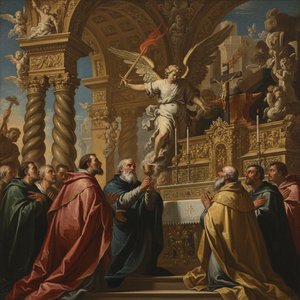
To stand before Alonso Cano’s “The Vision of St Bernard” is to be transported into the very heart of a seventeenth-century spiritual revelation. Completed around 1650, this monumental oil on canvas serves as a breathtaking masterclass in the Spanish Baroque style, capturing a moment where the earthly and the divine collide with startling intimacy. The painting depicts the profound miracle of the Lactatio Bernardi, wherein St. Bernard of Clairvaux receives a stream of milk from the Virgin Mary—a symbolic gesture of divine nourishment and theological truth. Cano does not merely present a religious icon; he constructs an immersive theatrical space that pulls the viewer through a tunnel-like architectural perspective, leading our eyes toward the luminous presence of the Virgin and the rapt devotion of the saint.
The composition is a triumph of dramatic illusion. Utilizing the powerful technique of chiaroscuro, Cano manipulates light and shadow to sculpt the figures with a palpable sense of weight and volume. A soft, celestial glow emanates from the Virgin Mary, casting a gentle radiance upon St. Bernard’s face, which captures the essence of his humility and spiritual ecstasy. This interplay of light does more than define form; it directs the emotional narrative, guiding the observer from the shadowed, earthly periphery into the radiant, sacred center. The meticulous rendering of textures—from the heavy, rhythmic folds of the saint's monastic robes to the delicate drapery of the Virgin—demonstrates a commitment to realism that grounds this supernatural event in a tangible, believable reality.
Symbolism and the Soul of the Baroque
Beyond its technical brilliance, the artwork is a rich tapestry of theological symbolism. The Virgin Mary stands as the embodiment of compassion and maternal grace, her presence acting as a conduit for divine mercy. St. Bernard, positioned in a posture of profound supplication, represents the human soul’s yearning for connection with the Creator. Interestingly, Cano offers a unique variation on this traditional theme; rather than a purely ethereal apparition, the saint receives his spiritual sustenance from a statue-like figure, adding a layer of complexity to the relationship between physical devotion and spiritual vision. This subtle tension between the material and the miraculous is what makes the piece so enduringly provocative.
For the discerning collector or interior designer, this painting offers much more than mere decoration; it provides a focal point of profound contemplative power. The deep, resonant tones and the dramatic use of perspective make it an ideal centerpiece for grand, classical interiors or sophisticated spaces seeking a sense of historical weight and intellectual depth. Whether viewed as a testament to the mastery of Alonso Cano or as a window into the fervent piety of the Spanish Golden Age, “The Vision of St Bernard” remains an evocative masterpiece that continues to inspire awe, making it a timeless acquisition for those who appreciate art that speaks to the eternal aspects of the human experience.
질의응답
알론소 카노의 "The Vision of St Bernard"을(를) 홈 데코에 어떻게 활용할 수 있을까요?
"The Vision of St Bernard"은(는) Accent 용도로 추천하며, Living Room 공간에 배치하기 좋습니다.
"The Vision of St Bernard"은(는) 알론소 카노의 예술 활동기 중 어느 시기에 해당하나요?
알론소 카노의 작품 활동 중 "The Vision of St Bernard"은(는) Mature Period 시기에 해당합니다. 이 시기는 작가의 다른 작품들과 비교해 보는 데 도움이 됩니다.
알론소 카노의 "The Vision of St Bernard"의 원화는 어디에서 볼 수 있나요?
알론소 카노의 "The Vision of St Bernard"의 원작은 프라도 미술관, Madrid, Spain에 소장되어 있습니다. 복제화(reproduction)를 통해 이 작품을 집에서도 감상하실 수 있습니다.
More about this painting
 실제 크기로 보기
 보내기
보내기 공유하기
공유하기
 상세 보기
상세 보기 가이드 보기

 이미지 다운로드
 유사 작품 더 보기
 X-레이
X-레이 슬라이드 쇼 보기
 Q&A
Q&A 통계 정보
통계 정보