Gaspare Diziani의 초상화

갤러리 엄선, 가장 유명한 Gaspare Diziani 작품 27선

10월 2026 업데이트 · 인기 점수 기준 순위 (각 작품의 검색, 방문 및 주문 수) · 27점의 Gaspare Diziani 작품 (당사 카탈로그 기준)

요약하자면

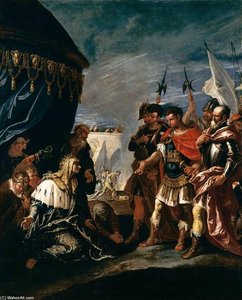
Gaspare Diziani가 남긴 모든 원작 중 가장 유명한 작품은 뉴욕의 메트로폴리탄 미술관에 소장된 Dawn (1738)입니다. 그 뒤를 이어 Laying Venus (1714)와 The Family of Darius before Alexander the Great (1728)가 뒤를 잇습니다. Gaspare Diziani의 작품 27점을 보유하고 있습니다. 갤러리는 세계가 가장 찬사하는 27점을 엄선하여 각 작품의 제작 연도, 소장 미술관 및 작품에 담긴 이야기를 함께 소개합니다.

1689 – 1767, Belluno 최다 소장처: 바이에른 주립 회화 컬렉션

Gaspare Diziani의 베스트 작품 10선: 갤러리 선정

1
Dawn (1738) 의 Gaspare Diziani

Dawn

1738 · Oil On Canvas · 메트로폴리탄 미술관, 뉴욕

Gaspare Diziani’s Dawn is an oil on canvas ceiling decoration created in 1738. The work functions as an allegorical representation of the morning, designed to crown the interior of a room. In this composition, the central figure of Dawn is surrounded by several cherubic putti. To the left, three putti engage in playful activities, including the carrying of a basket overflowing with flowers and foliage. On the right, a single…

Gaspare Diziani 컬렉션이 계속됩니다, 11부터 27까지

Gaspare Diziani의 시선을 사로잡은 주제들

이 오리지널 작품들에서 가장 자주 등장하는 네 가지 주제와 그 정수를 보여주는 대표작들.

Gaspare Diziani의 원작을 소장하고 있는 미술관

이 페이지에 있는 작품을 가장 많이 소장하고 있는 8개의 미술관

소장 미술관 도시 Gaspare Diziani의 작품 이 목록의 작품들
바이에른 주립 회화 컬렉션, 뮌헨바이에른 주립 회화 컬렉션 뮌헨 3 The Family of Darius before Alexander the Great, Joseph Is Sold by His Brothers, Joseph Interprets the Dreams of Pharaoh
Statens Museum For Kunst, 코펜하겐Statens Museum For Kunst 코펜하겐 2 Monk, Praying Monk
국립 미술관, 스톡홀름국립 미술관 스톡홀름 2 The Family of Darius Pleading to Alexander, The Adoration of the Lamb. Study
부다페스트 미술관, 부다페스트부다페스트 미술관 부다페스트 2 Adoration of the Magi, Adoration of the Magi
메트로폴리탄 미술관, 뉴욕메트로폴리탄 미술관 뉴욕 1 Dawn
바르샤바 국립 박물관, 바르샤바바르샤바 국립 박물관 바르샤바 1 Moses trampling on the Pharaoh’s crown
Gemäldegalerie, 베를린Gemäldegalerie 베를린 1 Christ before Pilate
로스앤젤레스 카운티 미술관, 로스앤젤레스로스앤젤레스 카운티 미술관 로스앤젤레스 1 The Assumption of the Virgin

Gaspare Diziani의 시대별 걸작: 시대를 정의하는 오리지널 작품들

연대별 작품 수

그 시대를 정의하는 오리지널 작품을 만나보려면 연대를 선택하세요.

Gaspare Diziani의 작품에 관한 컬렉터들의 질문

Gaspare Diziani의 가장 대표적인 작품은 무엇인가요?정답 확인하기

Dawn (1738), 메트로폴리탄 미술관, 뉴욕. 다음은 Laying Venus (1714)와 The Family of Darius before Alexander the Great (1728)입니다.

Dawn이(가) 제작되었을 당시 Gaspare Diziani의 나이는 몇 살이었나요?정답 확인하기

49세: Dawn은(는) 1738년 작품이며, Gaspare Diziani은(는) 1689년에 태어났습니다.

Gaspare Diziani의 가장 유명한 작품 10가지는 무엇인가요?정답 확인하기

Dawn, Laying Venus, The Family of Darius before Alexander the Great, Monk, Praying Monk, Moses trampling on the Pharaoh’s crown, Joseph Is Sold by His Brothers, Joseph Interprets the Dreams of Pharaoh, The Family of Darius Pleading to Alexander 및 sketch for a plafond - painting. 위 순위는 각 작품의 제작 연도와 소장 박물관을 나타냅니다.

Gaspare Diziani 작가가 남긴 작품은 몇 점인가요?정답 확인하기

저희 카탈로그에는 1714년부터 1757년 사이의 Gaspare Diziani 작가의 작품 27점이 수록되어 있습니다.

Gaspare Diziani의 걸작은 어느 박물관에 전시되어 있나요?정답 확인하기

대부분 바이에른 주립 회화 컬렉션 (뮌헨), Statens Museum For Kunst (코펜하겐) 및 국립 미술관 (스톡홀름)에 소장되어 있습니다. 위의 박물관 목록에서 전체 목록을 확인하실 수 있습니다.

Gaspare Diziani의 가장 유명한 작품들은 어느 연도에 그려졌나요?정답 확인하기

1750s 동안: 이 페이지의 총 27점의 작품 중 7점이 해당 시기에 제작되었으며, 그중 Joseph Is Sold by His Brothers점입니다.

Gaspare Diziani의 첫 번째와 마지막 유명 원작은 무엇인가요?정답 확인하기

이 페이지에서 가장 오래된 작품은 Laying Venus (1714)이며, 가장 최근 작품은 Christ before Pilate (1757)입니다.

Gaspare Diziani 작가가 가장 자주 선택한 주제는 무엇인가요?정답 확인하기

이 페이지의 27점의 작품에 걸쳐 있는 Religious (4), Woman (2) 및 Clouds (2)

Gaspare Diziani 작가가 가장 많이 사용한 기법은 무엇인가요?정답 확인하기

이 페이지의 총 27점의 작품 중 2점의 Oil

바이에른 주립 회화 컬렉션에는 어떤 Gaspare Diziani의 작품이 전시되어 있나요?정답 확인하기

The Family of Darius before Alexander the Great, Joseph Is Sold by His Brothers 및 Joseph Interprets the Dreams of Pharaoh: 바이에른 주립 회화 컬렉션, 뮌헨은(는) 이 페이지에 있는 작품 중 3점을 소장하고 있습니다.

Gaspare Diziani: 생애와 작품 세계

The Radiant Legacy of Gaspare Diziani

In the luminous era of the late Baroque and the burgeoning Rococo, Gaspare Diziani emerged as a painter of profound technical assurance and dramatic flair. Born in the serene town of Belluno, Italy, his artistic journey began under the guidance of Antonio Lazzarini, a foundation that would eventually lead him to the heart of the Venetian art world. As he moved toward Venice, Diziani immersed himself in the prestigious studios of Gregorio Lazzarini and the influential Sebastiano Ricci. These early mentors provided him with the tools to master the sweeping movements and emotional depth characteristic of his era, allowing him to develop a style that resonated with both religious fervor and aristocratic elegance.

Diziani’s career was marked by a remarkable ability to navigate the shifting tides of 18th-century aesthetics. While his work shared the stage with contemporaries like Giambattista Tiepolo, Diziani carved out a unique space through his versatility and command over both canvas and fresco. His early period, spanning roughly between 1710 and 1720, saw him contributing significant works to sacred spaces, such as the Mary Magdalene for the church of Santo Stefano in Belluno and the Entry into Jerusalem for San Teodoro in Venice. These religious commissions allowed him to explore the interplay of light and shadow, a hallmark of the late Baroque that would later soften into the more delicate, ornamental textures of the Rococo.

A Master of Light and Grandeur

The breadth of Diziani’s influence extended far beyond the borders of the Republic of Venice. His reputation for excellence carried him to the courts of Dresden and Munich, demonstrating a reach that transcended local boundaries and touched the great cultural centers of Europe. This international presence is perhaps best exemplified by the sheer scale of his ambition; one of his most monumental achievements remains the largest painting housed within the Hermitage Museum in St. Petersburg, a testament to his ability to command vast, immersive spaces.

Beyond his grand canvases, Diziani’s artistry was deeply rooted in the decorative traditions of his time. His skill in fresco painting is evident in his work on the Life of Saint Helena at the Scuola del Vin, where he transformed architectural surfaces into narrative windows of spiritual intensity. Whether working on a small-scale preparatory sketch or a massive ceiling piece, his hand was characterized by a certain celerity and technical confidence that captured the very essence of the Rococo spirit—a blend of grace, movement, and light.

The enduring significance of Gaspare Diziani lies in his role as a bridge between eras. He successfully synthesized the dramatic tension of the Baroque with the airy, ornamental beauty of the Rococo, leaving behind a body of work that continues to fascinate scholars and art lovers alike. Through his mastery of color and composition, he helped define the visual language of an age of splendor.