


1


10월 2026 업데이트 · 인기 점수 기준 순위 (각 작품의 검색, 방문 및 주문 수) · 61점의 Filippo De Pisis 작품 (당사 카탈로그 기준)
요약하자면
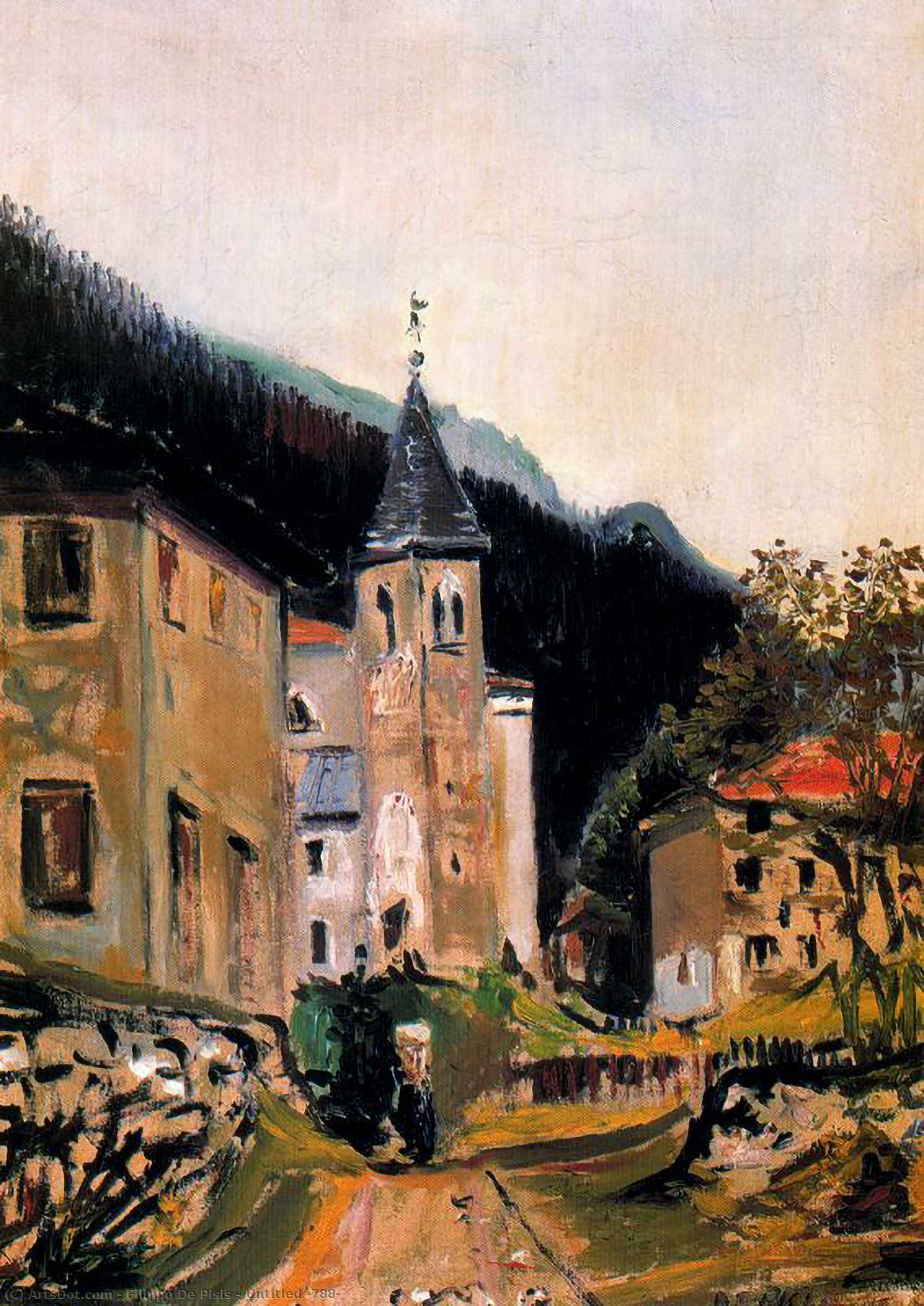
갤러리가 선정한 Filippo De Pisis의 대표작은 Untitled (839)입니다. Untitled (529)와 Untitled (788)가 더해져 누구나 한눈에 알아볼 수 있는 완벽한 트리오를 완성합니다. Filippo De Pisis의 작품 61점 중, 갤러리는 가장 유명한 60점을 아래와 같이 소개합니다. 각 작품은 제작 연도, 소장 미술관 및 작품의 특징을 포함한 독창적인 원작입니다.



In the quiet intimacy of Filippo de Pisis’s Still Life with Mushrooms, we are invited into a world where the mundane is elevated to the level of poetry. Created in 1934, this exquisite composition serves as a masterclass in the art of the fleeting moment. The painting captures a scattered collection of mushrooms, their organic forms resting with a delicate randomness across the canvas. Some lie solitary on the ground,…


 Untitled (742)
12
 Untitled (997)
13
 Untitled (864)
14
 Untitled (599)
15
 Untitled (858)
16
 Untitled (904)
17
 Untitled (822)
18
 Untitled (929)
19
 Untitled (798)
20
 Untitled (125)
21
 Untitled (464)
22
 Untitled (124)
23
 Untitled (525)
24
 Untitled (401)
25
 Untitled (191)
26
 Untitled (702)
27
 Untitled (662)
28
 Still Life with Shell1930
29
 Strawberries. Still Life1939 · Galleria d'Arte Moderna Achille Forti
30
 Untitled (347)
31
 Untitled (132)
32
 Untitled (309)
33
 Untitled (553)
34
 Untitled (436)
35
 Untitled (160)
36
 Untitled (492)
37
 Untitled (217)
38
 Untitled (802)
39
 Untitled (211)
40
 Untitled (818)
41
 Untitled (762)
42
 Untitled (776)
43
 Untitled (704)
44
 Untitled (432)
45
 Untitled (391)
46
 Untitled (853)
47
 Untitled (353)
48
 Untitled (668)
49
 Untitled (167)
50
 Untitled (851)
51
 Untitled (957)
52
 Untitled (238)
53
 Untitled (739)
54
 Untitled (551)
55
 Untitled (406)
56
 Untitled (468)
57
 Untitled (220)
58
 Untitled (461)
59
 Untitled (567)
60
 Untitled (976)
이 오리지널 작품들에서 가장 자주 등장하는 네 가지 주제와 그 정수를 보여주는 대표작들.
이 페이지에 있는 작품을 가장 많이 소장하고 있는 2개의 미술관
| 소장 미술관 | 도시 | Filippo De Pisis의 작품 | 이 목록의 작품들 |
|---|---|---|---|
 Galleria d'Arte Moderna Achille Forti |
Verona | 2 | Still life with Mushrooms, Strawberries. Still Life |
 뉴사우스웨일스 주립 미술관 |
시드니 | 1 | Flowers |
1930년부터 1939년까지의 약 10년이라는 시간은 Filippo De Pisis에게 충분한 시간이었습니다. 갤러리는 그 세월을 따라 유명한 원작들을 하나씩 차례대로 선보입니다.
연도를 선택하여 원작을 확인해 보세요.

In the quiet intimacy of Filippo de Pisis’s Still Life with Mushrooms, we are invited into a world where the mundane is elevated to the level of poetry. Created in 1934, this exquisite composition serves as a masterclass in the art of the fleeting moment. The painting captures a scattered collection of mushrooms, their organic forms resting with a delicate randomness across the canvas. Some lie solitary on the ground,…

Untitled (839). 다음은 Untitled (529)와(과) Untitled (788)입니다.
Untitled (839), Untitled (529), Untitled (788), Flowers, Untitled (620), Untitled (313), Still life with Mushrooms, Untitled (805), Untitled (699) 및 Untitled (586). 위 순위는 각 작품의 제작 연도와 소장 박물관을 나타냅니다.
저희 카탈로그에는 1930년부터 1939년 사이의 Filippo De Pisis 작가의 작품 61점이 수록되어 있습니다.
대부분 Galleria d'Arte Moderna Achille Forti (Verona) 및 뉴사우스웨일스 주립 미술관 (시드니)에 소장되어 있습니다. 위의 박물관 목록에서 전체 목록을 확인하실 수 있습니다.
이 페이지에서 가장 오래된 작품은 Still Life with Shell (1930)이며, 가장 최근 작품은 Strawberries. Still Life (1939)입니다.
이 페이지의 60점의 작품에 걸쳐 있는 Still life (6), Italian art (6) 및 Flowers (2)
이 페이지의 원작들을 기준으로 볼 때, Impressionism 및 Post-impressionism
Still life with Mushrooms 및 Strawberries. Still Life: Galleria d'Arte Moderna Achille Forti, Verona은(는) 이 페이지에 있는 작품 중 2점을 소장하고 있습니다.
Born Luigi Filippo Tibertelli in the historic Italian city of Ferrara, Filippo De Pisis was an artist who refused to be confined by a single medium. To understand his canvas, one must first understand his soul as a poet; he viewed the world through a lens of literary sensitivity, where every shadow and light flicker held a narrative weight. His early years in Italy were marked by a profound intellectual curiosity, studying literature and philosophy in Bologna. It was here that he encountered the haunting, dreamlike visions of Giorgio De Chirico, an encounter that would plant the seeds of Metaphysical influence within his burgeoning style. This duality—the precision of a scholar and the wandering eye of a flâneur—defined his approach to art, allowing him to capture not just the physical reality of a subject, but its emotional resonance.
His journey was one of constant movement across the great cultural capitals of Europe. Moving to Rome in 1919 and later settling in Paris in 1925, De Pisis immersed himself in the vibrant, avant-garde pulse of the interwar period. In Paris, his brushwork began to shed its more rigid, metaphysical origins, absorbing the light and movement of French Impressionism. He moved within the same circles as Georges Braque and André Derain, and his style evolved into something uniquely his own: a technique often described as pittura a zancapi mosca—a "fly-wing" style of painting characterized by rapid, fragmented, and nervous brushstrokes. This method allowed him to achieve an airy, almost mirage-like quality, where objects seemed to vibrate with life before dissolving back into the atmosphere.
The heart of De Pisis’s oeuvre lies in his ability to find the eternal within the ephemeral. He possessed a singular talent for elevating the mundane—a simple arrangement of mushrooms, a bowl of strawberries, or a vase of foxgloves—into profound meditations on existence. His still lifes are never merely static arrangements; they are imbued with what he called "pathetic pleasure-pain," a bittersweet recognition of beauty's fleeting nature. Through muted pastel hues and a masterful command of Venetian light, he created compositions where the boundaries between objects and their surroundings blur, suggesting a deep, spiritual interconnectedness between all things.
His fascination with Venice provided much of his most luminous subject matter. The city’s architectural grandeur and its misty, maritime atmosphere served as the perfect stage for his expressive explorations. Whether depicting the rhythmic movement of a seascape or the quiet intimacy of a street scene, De Pisis utilized a broken brushstroke technique that captured the very essence of light hitting water or stone. This period of his work represents a pinnacle of Italian Post-Impressionism, where the artist’s technical skill met an almost obsessive devotion to capturing the "secret spirit" of the moment.
Despite the disruptions of World War II and his eventual return to Italy, De Pisis never lost the cosmopolitan spirit that had defined his youth. His life was famously eccentric, marked by a dandyish lifestyle and an insatiable appetite for the beauty found in the smallest details—even claiming that a discarded feather on a street could spark a masterpiece. This radical openness to the world ensured that his work remained perpetually fresh, avoiding the stagnation that often plagues established masters.
Today, the significance of Filippo De Pisis rests in his unique position as a bridge between the structured metaphysical movements of the early 20th century and the more spontaneous, emotive expressions of later decades. His legacy is found in:
He remains a celebrated figure in the annals of Italian art, remembered not just as a painter of scenes, but as a chronicler of the ephemeral soul.
