보야르냐 모로조바
바실리 수리코프는 1887년, 보야르냐 모로조바를 화폭에 담아냈습니다. 이 캔버스는 17세기 러시아 정교회의 대분열이 불러온 깊은 긴장의 순간을 포착하고 있습니다. 얼어붙은 듯한 움직임의 중심에는 페오도시아 모로조바가 오스트로그(ostrog)로 압송되고 있습니다. 그녀는 겨울의 인파 속에서 나무와 그림자로 이루어진 작은 배와 같은 썰매, 즉 썰매-로즈발니(sledge-rozvalnyh)에 몸을 싣고 있습니다.
요약하자면
바실리 수리코프가 남긴 모든 원작 중 가장 유명한 작품은 모스크바의 트레티야코프 미술관에 소장된 보야르냐 모로조바 (1887)입니다. 그 뒤를 이어 스트렐치 처형의 아침 (1881)와 Townswoman (also known as A. Yemelyanova, née Schreider) (1902)가 뒤를 잇습니다. 바실리 수리코프의 작품 285점을 보유하고 있습니다. 갤러리는 세계가 가장 찬사하는 100점을 엄선하여 각 작품의 제작 연도, 소장 미술관 및 작품에 담긴 이야기를 함께 소개합니다.
바실리 수리코프는 1887년, 보야르냐 모로조바를 화폭에 담아냈습니다. 이 캔버스는 17세기 러시아 정교회의 대분열이 불러온 깊은 긴장의 순간을 포착하고 있습니다. 얼어붙은 듯한 움직임의 중심에는 페오도시아 모로조바가 오스트로그(ostrog)로 압송되고 있습니다. 그녀는 겨울의 인파 속에서 나무와 그림자로 이루어진 작은 배와 같은 썰매, 즉 썰매-로즈발니(sledge-rozvalnyh)에 몸을 싣고 있습니다.
1881년 바실리 수리코프가 그려낸 "스트렐치 처형의 아침"은 역사 화풍을 대표하는 기념비적인 걸작입니다. 이 캔버스는 러시아 제국을 뒤흔들었던 격동의 정치적 격변기를 생생하게 포착하고 있습니다. 작품의 중심에는 표트르 대제의 권위에 맞서 봉기했으나 결국 실패로 끝난 정예 화기 보병 부대, 즉 반란을 일으킨 스트렐치 군사들의 처형 장면이 무겁게 자리 잡고 있습니다.
Vasili Ivanovich Surikov’s “Townswoman,” painted in 1902, isn't merely a portrait; it’s an arresting study in quiet strength and understated dignity. The canvas immediately draws the eye to its subject – a woman seated with a remarkable composure, her hands crossed before her chest, radiating an aura of self-assuredness that belies the simplicity of her attire. She wears a richly patterned scarf, a traditional head covering signifying modesty and respect,…
A massive column of Russian troops navigates a treacherous mountain pass during the winter of 1799. The scene captures the descent from the Panix ridge, a grueling segment of the Swiss campaign where soldiers faced extreme cold and vertical terrain. Amidst the chaos of the descent, General Alexander Suvorov appears on a white horse, maintaining a calm presence to steady his men. The composition uses a vertical orientation to emphasize…
Vasili Ivanovich Surikov's "Stretlets Bidding Farewell to the People," painted in 1879, isn’t merely a historical depiction; it’s a profound meditation on injustice, loyalty, and the enduring spirit of a nation grappling with change. Housed within the hallowed halls of the Tretyakov Gallery in Moscow, this monumental canvas—measuring 57 x 33 centimeters—captures a pivotal, yet often overlooked, moment in Russian history: the execution of Streltsy, elite soldiers within the Tsar’s…
Vasili Ivanovich Surikov’s “A Tartar Horseman,” completed in 1894, is more than just a depiction of a man riding a horse; it's an immersive journey into the heartland of Russia during the late nineteenth century. Housed prominently at the Tretyakov Gallery in Moscow—a testament to its enduring significance—the painting exemplifies Surikov’s masterful approach to Russian Realism.
In the vertical portrait titled "Foreigner" by Vasily Surikov, the composition focuses primarily on a single male figure that fills most of the frame. The subject is depicted in an elaborate period costume, positioned in a way that creates a sense of intimacy through the lack of significant depth in the background. He is captured in a contemplative pose, holding a finger to his lips in a gesture that suggests…
A Portrait of Siberian Resilience: Vasily Ivanovich Surikov’s “Siberian Belle” Vasili Ivanovich Surikov (1848-1916) stands as one of the most revered figures in Russian art history, a painter whose canvases transcend mere visual representation to embody profound explorations of Russia's spirit. Born in Krasnoyarsk, Siberia—a landscape steeped in hardship and tradition—Surikov’s formative years instilled within him an unwavering dedication to portraying the realities of rural Russian society with unflinching honesty.…
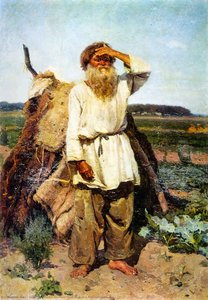
In the vast landscape of Russian Realism, few moments feel as intimate or as profoundly human as Vasily Ivanovich Surikov’s 1882 masterpiece, Old Man in a Kitchen Garden. This evocative oil on canvas invites the viewer into a private, silent world, far removed from the grand, sweeping historical dramas for which Surikov is often celebrated. Here, the focus shifts from the clash of empires to the quiet dignity of the…
The oil on canvas work titled Belshazzar's Feast was executed by the artist Vasily Surikov. This specific piece was completed in 1874. It is categorized as a religious painting, focusing on a scene from the biblical narrative found in the Book of Daniel.
이 오리지널 작품들에서 가장 자주 등장하는 네 가지 주제와 그 정수를 보여주는 대표작들.
이 페이지에 있는 작품을 가장 많이 소장하고 있는 2개의 미술관
| 소장 미술관 | 도시 | 바실리 수리코프의 작품 | 이 목록의 작품들 |
|---|---|---|---|
| 모스크바 | 15 | 보야르냐 모로조바, 스트렐치 처형의 아침, Townswoman (also known as A. Yemelyanova, née Schreider) | |
| Yekaterinburg | 1 | Wife of the bearded archer (Etude for the picture morning of the execution of the Strelitz," 1881)" |
그 시대를 정의하는 오리지널 작품을 만나보려면 연대를 선택하세요.
Vasili Ivanovich Surikov's "Stretlets Bidding Farewell to the People," painted in 1879, isn’t merely a historical depiction; it’s a profound meditation on injustice, loyalty, and the enduring spirit of a nation grappling with change. Housed within the hallowed halls of the Tretyakov Gallery in Moscow, this monumental canvas—measuring 57 x 33 centimeters—captures a pivotal, yet often overlooked, moment in Russian history: the execution of Streltsy, elite soldiers within the Tsar’s…
A massive column of Russian troops navigates a treacherous mountain pass during the winter of 1799. The scene captures the descent from the Panix ridge, a grueling segment of the Swiss campaign where soldiers faced extreme cold and vertical terrain. Amidst the chaos of the descent, General Alexander Suvorov appears on a white horse, maintaining a calm presence to steady his men. The composition uses a vertical orientation to emphasize…
Vasili Ivanovich Surikov’s “Townswoman,” painted in 1902, isn't merely a portrait; it’s an arresting study in quiet strength and understated dignity. The canvas immediately draws the eye to its subject – a woman seated with a remarkable composure, her hands crossed before her chest, radiating an aura of self-assuredness that belies the simplicity of her attire. She wears a richly patterned scarf, a traditional head covering signifying modesty and respect,…
보야르냐 모로조바 (1887), 트레티야코프 미술관, 모스크바. 다음은 스트렐치 처형의 아침 (1881)와 Townswoman (also known as A. Yemelyanova, née Schreider) (1902)입니다.
39세: 보야르냐 모로조바은(는) 1887년 작품이며, 바실리 수리코프은(는) 1848년에 태어났습니다.
보야르냐 모로조바, 스트렐치 처형의 아침, Townswoman (also known as A. Yemelyanova, née Schreider), Suvorov Crossing the Alps, Stretlets Bidding Farewell to the People, A Tartar Horseman, Foreigner, Siberian Belle (also known as E. Rachkovskaya), Old Man in a Kitchen Garden 및 Belshazzar's Feast. 위 순위는 각 작품의 제작 연도와 소장 박물관을 나타냅니다.
저희 카탈로그에는 1865년부터 1915년 사이의 바실리 수리코프 작가의 작품 285점이 수록되어 있습니다.
대부분 트레티야코프 미술관 (모스크바) 및 Yekaterinburg Museum of Fine Arts (Yekaterinburg)에 소장되어 있습니다. 위의 박물관 목록에서 전체 목록을 확인하실 수 있습니다.
1870s 동안: 이 페이지의 총 100점의 작품 중 34점이 해당 시기에 제작되었으며, 그중 Stretlets Bidding Farewell to the People점입니다.
이 페이지에서 가장 오래된 작품은 Portrait of governor Zamyatnin (1865)이며, 가장 최근 작품은 Portrait of M. P. Konchalovsky in childhood (1915)입니다.
이 페이지의 100점의 작품에 걸쳐 있는 Men (15), Roads (9) 및 Portrait (8)
이 페이지의 총 100점의 작품 중 14점의 Oil On Canvas
이 페이지의 원작들을 기준으로 볼 때, Realism
보야르냐 모로조바, 스트렐치 처형의 아침 및 Townswoman (also known as A. Yemelyanova, née Schreider): 트레티야코프 미술관, 모스크바은(는) 이 페이지에 있는 작품 중 13점을 소장하고 있습니다.