Early Life and Artistic Awakening
André Dunoyer de Segonzac, born in Boussy-Saint-Antoine in 1884, embarked on a path initially charted by familial expectation – the rigorous discipline of the military academy. However, destiny had other plans for this sensitive soul. A burgeoning passion for drawing quickly eclipsed any ambition for a life within the armed forces. His parents, recognizing the strength of his artistic inclination, relented and allowed him to enroll at the free academy of Luc-
Olivier Merson in Paris. Yet, the academic constraints of
Merson’s style proved stifling; Segonzac yearned for an independent voice, a freedom from established masters. A period of military service followed, but it was his subsequent studies at the Académie de la Palette, alongside figures like
Jacques Émile Blanche, that began to shape his artistic foundations. Even there, he soon sought a solitary course, declaring 1906 as the true commencement of his creative journey. This early rejection of rigid formalism foreshadowed a career defined by its unique and powerfully individual expression. His first foray into the public sphere came with submissions to the Salon d'Automne in 1908, followed by the Salon des Indépendants the following year – initial steps toward establishing himself within the vibrant Parisian art scene.
Embracing Modernism and the Section d’Or
The early years of the 1910s witnessed Segonzac's full immersion into the burgeoning modernist movement. He became a pivotal member of the *Section d’Or*, a collective of artists exploring the mathematical principles underlying beauty and form, including
Albert Gleizes,
Jean Metzinger, and
Fernand Léger. This association wasn’t merely stylistic; it represented a deep intellectual engagement with
Cubism and its potential to revolutionize artistic representation. While not strictly adhering to any single school, Segonzac absorbed the Section d'Or’s fascination with
geometric abstraction and analytical approaches to composition. His work began to distill forms, emphasizing structure and spatial relationships, yet always retaining a distinctly personal touch—a robustness of line and an
earthy palette that set him apart. This period culminated in his inclusion in the landmark 1913 Armory Show in
New York, Chicago, and Boston, introducing his art to a wider international audience and solidifying his position as a leading figure within the avant-garde.
The Impact of War and Etching
The outbreak of World War I profoundly altered Segonzac’s artistic trajectory. Drafted into military service in 1914, he experienced firsthand the horrors of combat near Nancy and Bois-le-Prêtre. This experience wasn't merely a disruption; it became a defining subject matter for his art. He documented the realities of war with unflinching honesty—the desolate landscapes, the weariness of soldiers, the starkness of loss. Remarkably, he was transferred to Lucien-Victor Guirand
de Scévola’s pioneering camouflage section, applying his artistic sensibilities to practical military needs. This period saw a surge in war drawings, exhibited and published widely, earning him the Croix de Guerre for his service. Following the armistice, Segonzac discovered
etching—a medium that proved remarkably suited to his spontaneous drawing style. He embraced it wholeheartedly, producing over 1600 plates throughout his life, often illustrating poignant works like Roland Dorgelès’ *Wooden Crosses* in 1921.
Etching allowed him a directness and immediacy that resonated with the emotional weight of his wartime experiences.
A Unique Artistic Voice: Influences and Legacy
Throughout his career, Segonzac navigated a path independent of strict categorization, drawing inspiration from diverse sources while forging a uniquely personal aesthetic. The influence of
Gustave Courbet is palpable in his commitment to
realism and the depiction of
everyday life, particularly in his early landscapes and nudes. He also admired the structural rigor and coloristic sensibility of
Paul Cézanne, evident in his exploration of form and spatial depth. However, Segonzac never simply imitated these masters; he synthesized their lessons with his own temperament—a blend of robust draftsmanship,
earthy tones, and a profound sensitivity to human experience. His landscapes are not idyllic portrayals but rather powerful evocations of the
French countryside, imbued with a sense of solidity and quiet dignity. His nudes, similarly, eschew conventional idealization, presenting the
female form with an honest and unromanticized gaze. Anne Distel, chief curator of the Musée d'Orsay, rightly recognizes Segonzac as a significant figure whose work deserves continued attention for its originality and enduring emotional resonance. He left behind a substantial body of work—oil paintings, etchings, drawings—that continues to captivate viewers with its powerful simplicity and unwavering commitment to artistic truth.


 Statens Museum For Kunst
 시카고 미술관
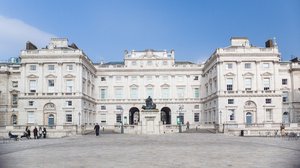 Courtauld Gallery
 피츠윌리엄 칼리지


