The Painter of Almond Eyes and Parisian Nights
Kees van Dongen, born Cornelis Theodorus Maria van Dongen in 1877, remains one of the most electrifying voices of the early twentieth century. Emerging from the somber, tonal traditions of the Hague School in his native Rotterdam, he underwent a radical metamorphosis upon arriving in Paris in 1897. This transition was not merely geographical but deeply psychological and aesthetic. Moving away from the muted landscapes that echoed the influence of Rembrandt, van Dongen found himself ensnively drawn to the neon pulse of Montmartre. He became a chronicler of the modern age, capturing the intoxicating, often decadent atmosphere of Parisian nightlife with a palette that felt as much like a sensory explosion as a visual medium.
The true breakthrough for van Dongen arrived with the 1905 Salon d'Automne, an exhibition that would forever change the trajectory of modern art. Alongside luminaries such as Matisse and Derain, he stood at the vanguard of the Fauvist movement. This "wild beast" style rejected the polite constraints of academic realism in favor of an audacious, uninhibited use of color. In his hands, pigments were not merely descriptive but emotional; crimson reds, emerald greens, and sapphire blues were applied with a confidence that mirrored the frantic energy of the city he loved. His work became a symphony of high-contrast hues, often punctuated by stark black outlines that lent his figures a striking, almost graphic intensity.
Sensuality and the Fauvist Gaze
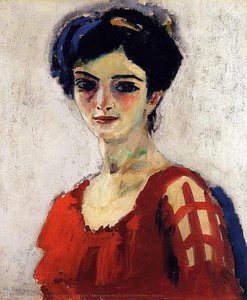
At the heart of van Dongen’s oeuvre lies an unparalleled ability to capture the allure of the human form, particularly through his celebrated portraits. He possessed a unique fascination with the "almond eyes" and the stylized, sensuous features of the women who populated the cafes and cabarets of Paris. These figures—often embodying a blend of elegance and mystery—were more than mere subjects; they were icons of a new, liberated femininity. In masterpieces such as Maria, one can witness the captivating gaze that defines his portraiture, where the subject's psychological depth is rendered through bold, expressive brushstrokes and a luminous skin tone that seems to glow from within.
His thematic explorations often drifted between the glamorous and the gritty. While some works celebrate the high-society allure of the era, others delve into the more shadowed corners of urban life. This duality allowed him to explore themes of:
- The intoxicating decadence of the Belle Époque.
- The psychological tension inherent in modern romantic encounters.
- The vibrant, often chaotic energy of the Parisian streetscape.
Legacy of a Modern Visionary
The historical significance of Kees van Dongen extends far beyond his technical mastery of color. He was a pivotal figure who helped bridge the gap between the late nineteenth-century Symbolist movement and the burgeoning abstraction of the twentieth century. By infusing his work with a sense of theatricality and psychological intrigue, he provided a visual language for the anxieties and excitements of a world in transition. His ability to blend the decorative beauty of Art Deco elements with the raw emotion of Expressionism ensured that his influence would resonate through subsequent generations of artists.
Today, van Dongen’s legacy is preserved in the halls of the world's most prestigious institutions, where his canvases continue to mesmerize viewers with their unapologetic vitality. Whether through the sweeping vistas of The Beach at Deauville or the intimate, haunting presence of Saida, his work remains a testament to the power of color to evoke the very essence of human desire and urban splendor. He did not merely paint Paris; he captured its soul, leaving behind a vibrant, indelible imprint on the history of modern art.