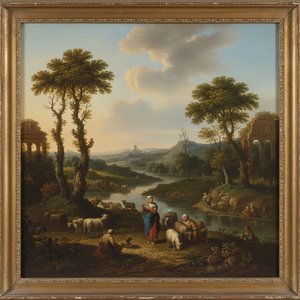
A Golden Light on the Italianate Landscape: The Life and Art of Jan Dirksz Both
Jan Dirksz Both, a name perhaps less immediately recognizable than some of his Dutch Golden Age contemporaries, nevertheless occupies a pivotal position in the development of landscape painting. Born in Utrecht sometime between 1610 and 1618, and passing away on August 9th, 1652, Both dedicated his life to capturing the beauty – and often, the imagined grandeur – of Italy. His canvases weren’t simply depictions of places; they were imbued with a romantic sensibility, a golden Mediterranean light that would come to define a particular strain within Dutch Italianate painting. He wasn't working in isolation, however. Both was part of a family of artists; his brother, Andries Both, also a painter, shared early training with him under their father, who worked as a glass-painter or glazier. This foundational experience likely instilled in them both an appreciation for color and light’s transformative power. The brothers' formal artistic education continued with Abraham Bloemaert, a prominent Utrecht Mannerist, before they embarked on a journey that would irrevocably shape their styles – a trip to Rome via France. While Gerrit van Honthorst is also suggested as having influenced Jan, it was the Roman landscape and the legacy of artists like Claude Lorrain that truly ignited his artistic vision.
From Utrecht to Rome: The Formation of a Landscape Vision
By 1638, both brothers had established themselves in Rome, but their artistic paths diverged. Andries focused on genre scenes reminiscent of Pieter van Laer, while Jan turned his attention to the landscapes that would become his signature subject. This wasn’t merely imitation; Both absorbed the essence of the Italian countryside – the rolling hills, the ancient ruins, the dramatic skies – and translated it onto canvas with a uniquely Dutch sensibility. He collaborated in 1639 with Herman van Swanevelt and Claude Lorrain on an ambitious project for the Buen Retiro Palace in Madrid, a testament to his growing reputation and skill. This collaboration highlights the international artistic network of the time and Both’s ability to work alongside established masters. However, it was not simply about replicating what he saw. Jan's landscapes were often expansive and imaginary, constructed from observations and memories, infused with an idealized vision of the Mediterranean world. He wasn’t a topographical painter; he was a creator of atmosphere, a weaver of light and shadow.
The Refinement of Style: Golden Light and Narrative Detail
Around 1646, Both returned to Utrecht, where he continued to refine his distinctive style. His landscapes became increasingly sophisticated, characterized by that signature golden light – a warm, enveloping glow that bathes the scenes in an almost ethereal quality. Landscape with Bandits Leading Prisoners (Museum of Fine Arts, Boston) exemplifies this period perfectly. The composition is dynamic, with a sweeping diagonal road drawing the eye into the distance. What sets Both apart isn’t just the technical skill – the rendering of trees, foliage, and figures – but the subtle interplay between realism and idealization. Touches of everyday life—the down-to-earth figures, detailed vegetation—contrast beautifully with the idyllic golden vista. He occasionally populated his landscapes with religious or mythological narratives, as seen in Judgement of Paris (London, National Gallery), where he collaborated with fellow Utrecht artist Cornelis van Poelenburch to paint the figures within the scene. This practice demonstrates a willingness to engage with broader artistic themes and a collaborative spirit that was common among Dutch artists.
Legacy and Influence: A Master of Atmosphere
The untimely death of Jan’s brother, Andries, in Venice while returning to Utrecht marked a personal loss, but did not diminish Both's dedication to his art. He continued to paint until his own passing in 1652, leaving behind a body of work that has captivated viewers for centuries.
Both’s influence can be seen in the works of later landscape painters who sought to capture the beauty and drama of the Italian countryside.
His use of light and atmosphere was particularly influential, inspiring artists to move beyond mere topographical representation towards a more emotive and evocative style.
He trained several pupils, including Barend Bispinck, Willem de Heusch, and Hendrick Verschuring, ensuring the continuation of his artistic legacy.
Today, Jan Dirksz Both’s paintings are held in prestigious collections around the world – from the Fitzwilliam Museum at Cambridge to the Hermitage in St. Petersburg, the Louvre in Paris, and the Rijksmuseum in Amsterdam—a testament to his enduring appeal and historical significance as a master of Dutch Italianate landscape painting. He wasn't simply depicting Italy; he was creating an idealized vision of it, bathed in a golden light that continues to enchant and inspire.
OriginalUniqueArt.com-ის რედაქციული გუნდის მიერ
ტესტი
თითოეულ კითხვაზე მხოლოდ ერთი სწორი პასუხია.
კითხვა 1:
იან ბოთი ძირითადად ცნობილია, რომელი ჟანრის შემოქმედებით?
კითხვა 2:
ვისთან ერთად იკეთებდა იან ბოთი პროექტს მადრიდის ბუენ რეტिरოს სასახლისთვის?
კითხვა 3:
რა არის ბოთის პეიზაჟების defining বৈশিষ্ট্য უტრეხტში დაბრუნების შემდეგ?
კითხვა 4:
ვინ იყო იან ბოთის ভাই?
კითხვა 5:
რა სახელწेულების მხატვრულ ჯგუფში იყვნენ რეგისტრირებული იან და ანდრიეს ბოთები?
Explore the captivating world of Nicolaes Berchem, a leading Dutch Golden Age painter. Discover his idyllic landscapes, masterful technique & lasting influence on art history. Learn more at OriginalUniqueArt.
ვისთან ერთად იკეთებდა იან ბოთი პროექტს მადრიდის ბუენ რეტिरოს სასახლისთვის?
ჰერმან ვან სვანეველტი და კლოড লორენი
არის თუ არა იან ბოთი-ის ნამუშევრები კვლავ საავტორო უფლებებით დაცული?
არა, ამ ხელოვანის ნამუშევრები საზოგადოებრივი სარგებლობისთვის ხელმისაწვდომია (public domain).
რა სტილში ქმნიდა იან ბოთი?
dutch golden age, baroque
რა არის ბოთის პეიზაჟების defining বৈশিষ্ট্য უტრეხტში დაბრუნების შემდეგ?
გავრცელებული, წარimaginary სცენები ხმელთაშუა ზღვის ოქროსფერი შუქით
რა ფერთა პალიტრას გამოყოფს იან ბოთი-ის შემოქმედებას?
მიწისფეროვანი, ნეიტრალური ტონები
რა სხვა სახელებით არის ცნობილი იან ბოთი?
იან დირკს ბოთი, Jan Dirksz Both
რა შემთხვევებისთვის არის რეკომენდებული იან ბოთი-ის ნამუშევრები?
სივრცეობის შეგრძნება
რა შემოქმედებითი პერიოდები გაიარა იან ბოთი-მა?
mature period
რა არის ArtsDot.com-ზე წარმოდგენილი იან ბოთი-ის 3 საუკეთესო ნახატი?
Southern rocky landscape with Mercury and Argus, Baptism of the Eunuch of Queen Candace, Roman Genre Scene with Card Players before the Temple of Saturn
რა სახელწेულების მხატვრულ ჯგუფში იყვნენ რეგისტრირებული იან და ანდრიეს ბოთები?