Filipp Malyavin პორტრეტი

59 ყველაზე ცნობილი Filipp Malyavin-ის ნახატი, თითოეული მათგანი უნიკალური

განახლდა ნოემბერი 2026 · დალაგებულია ჩვენი პოპულარობის ქულების მიხედვით (ძიება, ნახვა და შეკვეთები თითოეული ნამუშწაროსთვის) · 59 ნამუშევარი Filipp Malyavin ჩვენს კატალოგში

მოკლედ რომ ვთქვათ

Peasant Woman Dancing არის Filipp Malyavin მხატვრის ის ნამუშწარები, რომელიც ყველაზე მეტ ყურადღებას იქცევს. ამის შემდეგ, მზერა გადადის Turks (1895)-სა და Women's happiness (Women) (1900)-ზე. ჩვენს კატალოგში არსებული Filipp Malyavin-ის 59 ნამუშწაროდან ეს 59 ყველაზე ცნობილია; თითოეული მათგანი წარმოადგენს უნიკალურ ორიგინალს, რომელიც წარმოდგენილია წელით, მუზეუმითა და იმ მიზეზით, რის გამოც ის დღემდე ცოცხლობს.

1869 – 1940, Kazanka ყველაზე მეტი ნამشევრი: ტრესტიაკოვის სახელმწიფო გალერეა

Filipp Malyavin-ის 10 საუკეთესო ნამუშgeryო, გალერეის თcraftით

1
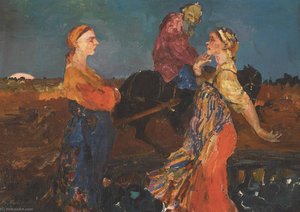
Peasant Woman Dancing ავტორის: Filipp Malyavin

Peasant Woman Dancing

Oil On Canvas

The canvas erupts in a sudden, frantic energy as a woman moves through a storm of pigment. She is enveloped in a chaotic explosion of fiery red, orange, and yellow hues that seem to pulse with a life of their own. Her voluminous drapery cascades downward, creating a sense of relentless movement that pulls the eye into the center of her dance. The background is not a place, but a…

2
Turks (1895) ავტორის: Filipp Malyavin

Turks

1895 · Pencil

In the artwork "Turks" by Filipp Malyavin, the composition is organized along a horizontal axis. The subject matter is ethnographic in nature, focusing on three figures identified as Turks. These individuals are depicted in traditional attire, likely representing people from the Ottoman Empire or the surrounding regions. The arrangement of the figures is side-by-side, with each person occupying roughly equal space within the frame. This placement creates a sense of…

3
Women's happiness (Women) (1900) ავტორის: Filipp Malyavin

Women's happiness (Women)

1900 · Oil

In Women's happiness (Women), Filipp Malyavin captures a profound sense of communal connection. Painted about 1900, this work focuses on a group of women gathered in a moment of shared joy. The subject matter centers on maternal and communal happiness, presenting a scene of intimacy that feels both immediate and deeply felt. There is a quiet strength in how these figures occupy the space together.

4
Nude female (1910) ავტორის: Filipp Malyavin

Nude female

1910 · Oil

In the vertical expanse of "Nude female" by Filipp Malyavin, a seated woman occupies the center of the frame. Her arms are raised behind her head, a gesture that creates a sense of movement and vulnerability within the composition. This classical nude subject is presented through a direct and intimate perspective, drawing the viewer into a private moment of stillness. The figure is framed by a background of deep reds…

6
Porträt der Else Prior Havemann. (1940) ავტორის: Filipp Malyavin

Porträt der Else Prior Havemann.

1940 · Oil

A seated woman faces the viewer directly in this 1940 oil portrait. She is rendered with a centered, three-quarter length composition that emphasizes her presence against a dark, atmospheric background. Her golden-blonde hair falls in waves around a pale face, marked by rosy cheeks and deep red lips. A light blue, sleeveless gown provides the primary color block, its surface defined by thick impasto strokes that suggest heavy fabric. A…

7
Laughing Peasant Woman ავტორის: Filipp Malyavin

Laughing Peasant Woman

Oil

Laughing Peasant Woman by Filipp Malyavin centers on a single, expressive subject: a woman’s face caught in a moment of genuine laughter. The composition focuses on the crinkling around her eyes and her open mouth, capturing a fleeting sense of joy and life. This focus on the individual's emotional state allows the viewer to engage directly with the character and vitality of the subject.

Filipp Malyavin-ის ცნობილი ნამუშევრები, 11-დან 59-მდე ნომრებით

Filipp Malyavin-ის ცნობილი სურათები, პერიოდების მიხედვით

სუბიექტები, რომლებმაც Filipp Malyavin-ის ყურადღება მიიპყრო

ამ ორიგინალებში ყველაზე ხშირად განმეორებადი არის 네 თემა, რომელთაგან თითოეულს თავისი საუკეთესო ნიმუში წარმოგვიდგება.

მუზეუმები, სადაც Filipp Malyavin-ის ორიგინალები ინახება

ამ გვერდზე წარმოდგენილი მხატვრობის შედეგების უმეტესობას 2 მუზეუმი ინახავს.

მუზეუმი ქალაქი Filipp Malyavin შემოქმედებაలు ამ სიიდან მოპოვებული ნახატები
ტრესტიაკოვის სახელმწიფო გალერეა, მოსკოვიტრესტიაკოვის სახელმწიფო გალერეა მოსკოვი 1 Whirlwind
სახელმწიფო რუსეთის მუზეუმი, სან-პეტერბურგისახელმწიფო რუსეთის მუზეუმი სან-პეტერბურგი 1 Peasant Women

Filipp Malyavin ათწლეულების განმავლობაში: თითოეულ დეკადესთვის ერთი უნიკალური ორიგინალი

ნამუშევრები ათწლეულების მიხედვით

შეარჩიეთ ათწლეული, რათა ნახოთ ის ორიგინალი ნამუშევარი, რომელიც მას განსაზღვრავს.

Filipp Malyavin-ის ნახატები: კითხვები გალერეისთვის

რა არის Filipp Malyavin-ის ყველაზე ცნობილი ნამუშწარებიდან ერთერთი?გაამჟღავნეთ პასუხი

Peasant Woman Dancing. შემდეგ მოდიან Turks (1895) და Women's happiness (Women) (1900).

Filipp Malyavin-ის რომელი 열ათმე ნახატია ყველაზე ცნობილი?გაამჟღავნეთ პასუხი

Peasant Woman Dancing, Turks, Women's happiness (Women), Nude female, Portrait of Alexandra Balashova, Porträt der Else Prior Havemann., Laughing Peasant Woman, Girl with a Book, Male Nude და A Girl. ზემოთ მოცემული რეიტინგი ასახავს თითოეულის შემოქმედების წელსა და მუზეუმს.

რამდენი ნამუშწარებია ცნობილი Filipp Malyavin-ის შემოქმედებიდან?გაამჟღავნეთ პასუხი

ჩვენს კატალოგში წარმოდგენილია 59 ნამუშწევრი Filipp Malyavin-ისგან, დათარიღებული 1895-დან 1940-მდე.

სად შეიძლება ყველაზე ცნობილი Filipp Malyavin-ის ორიგინალების ნახვა?გაამჟღავნეთ პასუხი

ძირითადად ტრესტიაკოვის სახელმწიფო გალერეა (მოსკოვი) და სახელმწიფო რუსეთის მუზეუმი (სან-პეტერბურგი)-ში. ზემოთ მოცემულ მუზეუმების ცხრილში ისინი ყველა listed.

რა პერიოდში შექმნა Filipp Malyavin-მა ყველაზე ცნობილი სურათები?გაამჟღავნეთ პასუხი

1900s-ში: ამ გვერდზე წარმოდგენილი 59 ნამუშწარwerksიდან 2 შეიქმნა მაშინ, მათგან Women's happiness (Women).

რომელი ცნობილი Filipp Malyavin ტილოა ყველაზე ადრეული და რომელი — ყველაზე გვიანდელი?გაამჟღავნეთ პასუხი

ამ გვერდზე ყველაზე ადრეული არის Turks (1895), ხოლო ყველაზე გვიანდელი — Porträt der Else Prior Havemann. (1940).

რა თემებს ანიჭებდა უპირატესობას Filipp Malyavin?გაამჟღავნეთ პასუხი

Russian art (6), Women (5) და Woman (5), ამ გვერდზე წარმოდგენილ 59 ნამუშწარეს შორის.

რა მასალებით ხატავდა ყველაზე ხშირად Filipp Malyavin?გაამჟღავნეთ პასუხი

Oil, ამ გვერდზე არსებული 59 ნამუშწაროსგან 5 ცალიდან.

Filipp Malyavin: მხატვრის პორტრეტი

The Soul of the Russian Soil: The Life of Filipp Malyavin

To understand the work of Filipp Andreevich Malyavin, one must first understand the raw, untamed spirit of the Russian countryside from which he emerged. Born in 1869 in the village of Kazanki to a humble peasant family, Malyavin’s early years were defined by the rhythms of rural life and an innate, almost primal connection to the earth. Even as a young child, his hands were never idle; he spent his days sculpting clay figurines of birds and animals, a practice that foreshadowed a lifetime of profound tactile expression. His journey from a penniless village boy to a celebrated figure in the Russian art world is nothing short of legendary, fueled by a spiritual fascination with the icons brought to his village by traveling monks.

This early exposure to the sacred art of icon painting would leave an indelible mark on his aesthetic DNA. Driven by a thirst for divine beauty, Malyavin traveled to Mount Athos in Greece at the age of sixteen, a pilgrimage funded by the very villagers who had witnessed his burgeoning talent. While he found himself disappointed to discover that the monks there primarily copied Russian icons rather than practicing a unique Athonite style, this period of monastic life served as a crucible for his development. As a novice, he mastered the art of murals and icons, learning how to use color not merely as decoration, but as a vessel for spiritual intensity and emotional weight.

From Monastic Silence to Academic Brilliance

The trajectory of Malyavin’s life shifted dramatically in 1891 through a chance encounter with Vladimir Beklemishev, a Russian sculptor and professor. Recognizing the raw genius within the young monk, Beklemishev facilitated Malyavin’s move to St. Petersburg, where he enrolled in the prestigious Academy of Arts. It was here that his peasant roots met the rigorous discipline of classical training. Studying under the legendary realist Ilya Repin, Malyavin began to synthesize his deep-seated knowledge of religious iconography with the burgeoning movements of modernism and realism.

Unlike many of his contemporaries who sought to escape their origins through academic refinement, Malyavin leaned into them. He utilized the technical prowess gained at the Academy to elevate the subject matter of the common folk. His work became a bridge between the sacred and the profane, applying the bold, emotive brushwork of a master to the vibrant, often chaotic energy of peasant life. This unique perspective allowed him to capture the essence of the Russian soul—a mixture of profound suffering and unbridled, ecstatic joy.

A Legacy of Color and Motion

Malyavin’s mature style is characterized by an almost violent use of color and a sense of kinetic energy that seems to burst from the canvas. He is perhaps most renowned for his masterpiece, Whirlwind, a painting that serves as a breathtaking metaphor for the turbulent history and spirit of Russia. In this work, the swirling masses of peasant women dancing are rendered with such vigorous brushstrokes and saturated hues that the viewer can almost hear the music and feel the wind of the movement.

His artistic significance lies in his ability to transcend mere portraiture or genre painting. Through his use of:

  • Bold, expressive palettes that utilize reds and deep earth tones to evoke passion and struggle;
  • Dynamic compositions that capture the rhythmic, often frenetic motion of folk celebrations;
  • A synthesis of styles blending the flat, symbolic power of icons with the textured realism of the late 19th century;
Malyavin created a visual language that was uniquely his own. Even as he moved toward the end of his life in Nice, France, his work remained anchored to the heartbeat of the Russian landscape, ensuring his place as one of the most evocative chroniclers of human vitality and cultural identity.