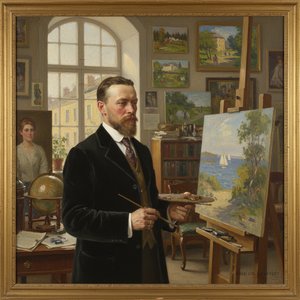
The Awakened Penelope Waits for the Return of Ulysses
Art period: მე-19 საუკუნე
Nationality: გერმანია
Also known as:
Eduard Julius Friedrich Bendemann
Eduard Jul. Friedr. Bendemann
professor eduard bendemann
E. J. Bendemann
Eduard J. F. Bendemann
Mediums: ფერწერა
Born: 1811, ბერლინი, გერმანია
Room fit: სასვლელი/კორიდორი
Eduard Bendemann: A Düsseldorf School Pioneer
Eduard Julius Friedrich Bendemann (1811 – 1889) stands as a prominent figure within the Düsseldorf School of Painting, an influential movement that championed academic realism and dramatic storytelling during the Romantic era. Born in Berlin to a family steeped in artistic tradition—his father was a banker and his mother descended from another banking lineage—Bendemann’s upbringing instilled in him a deep appreciation for visual art and nurtured his innate talent for capturing human emotion through meticulous observation and skillful technique.
His formative years were spent under the tutelage of Wilhelm von Schadow, arguably Düsseldorf's most celebrated painter, whose teachings profoundly shaped Bendemann’s artistic sensibilities. Schadow’s emphasis on anatomical accuracy, tonal gradation, and theatrical presentation served as a cornerstone for Bendemann’s subsequent oeuvre. This influence is palpable in his paintings, which consistently strive to convey profound psychological depth alongside breathtaking visual splendor.
Bendemann's artistic journey commenced with a dedication to studying anatomy and drawing—skills deemed essential for achieving the desired level of realism—before enrolling at Schadow’s academy in Düsseldorf. It was here that he honed his craft and began collaborating closely with fellow artists, fostering an environment conducive to experimentation and innovation within established conventions. Notably, Bendemann's artistic partnership with Franz Xavier Groß depicted biblical scenes, demonstrating a shared commitment to portraying religious narratives with dramatic intensity.
Bendemann’s stylistic hallmark is undeniably the Düsseldorf School’s characteristic approach: bold colors juxtaposed against subdued tonal backgrounds, creating an illusion of depth and atmosphere. He skillfully employed chiaroscuro—the interplay of light and shadow—to sculpt figures and imbue his canvases with palpable emotion. His compositions are dynamic and theatrical, mirroring the grandeur of historical events or the solemnity of religious iconography.
Among Bendemann’s most celebrated works include “Childhood,” “Wedding,” and “Gymnastic Games”—scenes rendered in meticulous detail that exemplify the Düsseldorf School's commitment to capturing fleeting moments of human experience with remarkable sensitivity. These paintings, currently housed in museums like Kunstpalast Düsseldorf and Bayerisches Nationalmuseum, offer invaluable insights into Bendemann’s artistic vision and his contribution to the broader artistic landscape of 19th-century Germany. His legacy continues to inspire artists today, cementing his place as a pivotal figure in German art history.
Bendemann’s artistic reputation grew steadily throughout his career, earning him recognition as a respected teacher and mentor at Düsseldorf Academy of Art. He instilled in his students the principles of academic realism and dramatic storytelling—values that would define the Düsseldorf School's aesthetic for decades to come. Furthermore, Bendemann’s paintings achieved considerable acclaim during his lifetime, securing commissions from prominent patrons and establishing him as one of Germany’s foremost artists. His works were exhibited extensively throughout Europe, garnering critical praise and bolstering his artistic stature.
Museum Collections
Bendemann's artwork finds its home in prestigious institutions across Germany, including Kunstpalast Düsseldorf and Bayerisches Nationalmuseum. These collections provide invaluable opportunities for scholars and enthusiasts alike to appreciate Bendemann’s artistic legacy firsthand. Visitors can examine masterpieces such as “Childhood,” “Wedding,” and “Gymnastic Games”—testaments to his unparalleled skill and dedication—and gain a deeper understanding of the Düsseldorf School's aesthetic ideals.
Further Exploration
For more comprehensive information on Eduard Bendemann’s life, work, and artistic contributions, consult Wikipedia (Wikipedia) or delve into the Düsseldorf School of Painting on Wikipedia.
OriginalUniqueArt.com-ის რედაქციული გუნდის მიერ
ტესტი
თითოეულ კითხვაზე მხოლოდ ერთი სწორი პასუხია.
კითხვა 1:
სად დაიბადა ედუარდ ბენდემანი?
კითხვა 2:
ვინ იყო ედუარდ ბენდემანის მენტორი ხელოვნებაში?
კითხვა 3:
რომელ მხატვრულ სტილსთან არის ძირითადად associated ედუარდ ბენდემანი?
კითხვა 4:
რა თემებს ასახავს ბენდემანის ტილოები ხშირად?
კითხვა 5:
რომელ მუზეუმში შეიძლება იხილოთ ბენდემანის ნამუშევრები?
Explore the life & work of Albert Edelfelt, a pioneering Finnish Realist painter who bridged Impressionism & national identity. Discover his masterpieces and lasting influence on art history.
Explore the rich history of Academic Art – its techniques, key masters like Bouguereau & Ingres, and influence on 19th-century painting. Discover this enduring tradition.