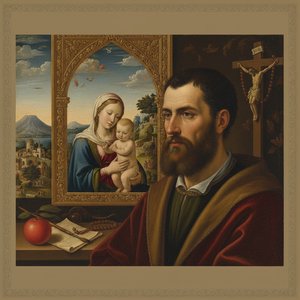
Antonello da Messina: Innovation, Devotion & the Sicilian Renaissance Master's Enduring Legacy
Antonello Gagini (also spelled Gaggini; Gazini; Gazzini), Italian sculptor, part of a family of sculptors, masons and architects. One branch of the family, which came from Bissone, Ticino, was active in Genoa from the 15th century. The Gagini workshop was organized along medieval lines: they produced works in collaboration, combining the skills of mason and sculptor. Their work was chiefly of a decorative and ornamental nature, figurative sculpture being of secondary importance. They remained active in Genoa until the 19th century. Antonello was the leading representative of the Sicilian branch of the family. He was trained as a sculptor in the studio of his father. Between 1504 and 1506 he appears to have been in Calabria and Rome, where he briefly worked as |
Early Life & Training
Antonello da Messina (born c. 1478 in Palermo, Sicily) emerged from a prominent family of sculptors and artisans deeply rooted in Sicilian tradition. His father, Pietro Gagini, established a workshop that served as a crucible for artistic innovation and upheld the legacy of medieval craftsmanship. Antonello’s formative years were spent absorbing techniques passed down through generations—a foundation crucial to his subsequent mastery of sculpture and painting. The influence of Byzantine art, particularly its monumental mosaics and stylized figures, undoubtedly shaped his initial aesthetic sensibilities.
The Venetian Period & Artistic Breakthrough
A pivotal moment in Antonello’s artistic journey arrived with his relocation to Venice around 1506. This move coincided with a burgeoning Renaissance fervor within the city—a hub of artistic experimentation and patronage. Here, he encountered luminaries like Giovanni Bellini and Andrea Mantegna, whose groundbreaking use of oil paint revolutionized artistic expression. Antonello swiftly embraced this new medium, transforming Venetian painting from tempera to olio, achieving unprecedented luminosity and depth. This stylistic shift cemented his reputation as a pioneer—one who decisively propelled Venetian art toward its zenith.
Notable Works & Artistic Style
Antonello’s oeuvre encompasses an impressive range of sculptural commissions and paintings, reflecting the diverse tastes of his patrons and showcasing his remarkable versatility. Among his most celebrated achievements is ‘Madonna del Buon Riposo,’ a breathtaking marble relief housed in the Cleveland Museum of Art—a testament to his meticulous attention to detail and profound understanding of classical ideals. The sculpture embodies serene beauty and conveys spiritual devotion through graceful drapery and exquisitely rendered figures. Furthermore, Antonello’s frescoes adorning Palazzo Abatellis in Palermo exemplify his masterful command of color and perspective, capturing the grandeur of Sicilian aristocratic life. His style is characterized by a harmonious blend of Byzantine influences and Venetian innovations—a distinctive aesthetic that distinguishes him from his contemporaries.
Influence & Legacy
Antonello da Messina’s artistic breakthroughs reverberated throughout Italy and beyond, establishing him as an influential figure in the Renaissance canon. He championed oil painting, elevating Venetian art to new heights of expressive power and inspiring subsequent generations of painters. His sculptural works—particularly those executed in Palermo—continue to captivate viewers with their elegance and technical brilliance. Antonello’s legacy extends far beyond his individual creations; he embodies the spirit of artistic innovation—a commitment to mastering new techniques while upholding enduring humanist values. He remains a cornerstone of Sicilian art history, ensuring that his contribution to the Renaissance continues to inspire admiration and scholarly inquiry.
Later Years & Death
Antonello’s final years were marked by continued artistic activity and unwavering devotion to his craft. Despite facing personal hardships—including financial difficulties—he persevered in pursuing excellence, producing sculptures that reflected both stylistic refinement and profound emotional resonance. He died in Palermo around 1536, leaving behind a legacy of unparalleled artistry and cementing his place as one of the most revered sculptors of his era.
Explore the groundbreaking art of Antonello da Messina, a pivotal figure of the Renaissance. Discover his innovative oil painting techniques, captivating portraits, and lasting influence on Italian masters. Learn more at OriginalUniqueArt.