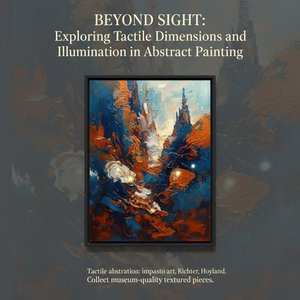
Introduction: The Allure of Surface – Beyond Sight in Art
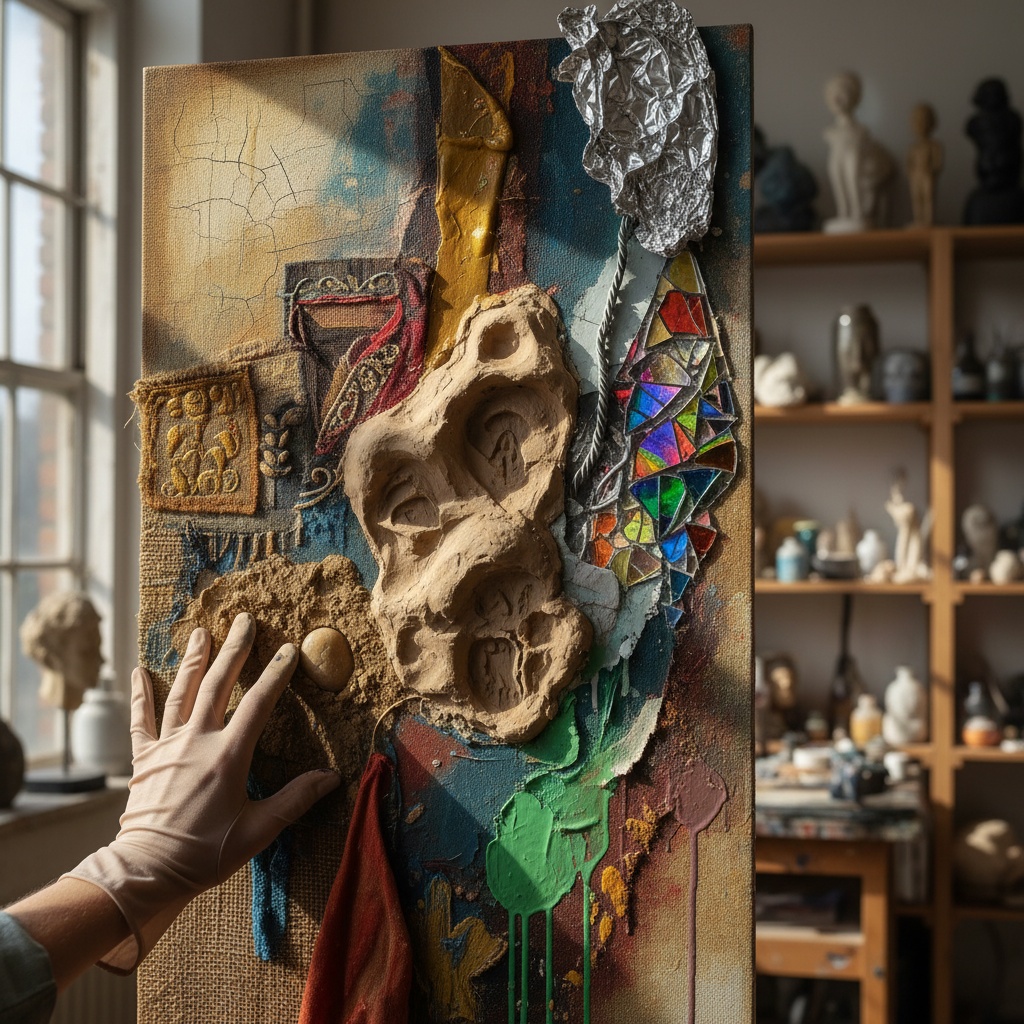
There exists a realm within art that transcends the purely visual, a subtle yet powerful dimension often felt rather than seen. It is the world of texture—the perceived surface quality of a work, an invitation to engage not just with color and form, but with the very physicality of creation. For centuries, artists have harnessed this evocative element, moving beyond mere representation to explore the emotional resonance and symbolic weight embedded within the tactile experience. To truly understand a painting is to consider not only what is depicted, but how it is depicted – the deliberate manipulation of paint, the subtle interplay of light and shadow across a textured surface, and the story that materiality itself can tell.
From Impasto to Tactility: A Historical Evolution of Texture in Painting
 Weaver Facing Left with Spinning Wheel
Explore Vincent van Gogh’s ‘Weaver Facing Left.’ This poignant oil painting captures rural labor & Van Gogh's signature impasto style. A powerful piece of art history – view now!
The conscious exploration of texture didn’t emerge fully formed; rather, it evolved gradually alongside artistic movements and technological advancements. While early examples exist – consider the subtle modeling of marble sculptures or the intricate patterns woven into tapestries – the 17th century witnessed a burgeoning interest in capturing realistic surface qualities through paint. Baroque masters like Rembrandt van Rijn employed impasto, applying thick layers of pigment to mimic the broken texture of light on skin, fabric, and precious objects. This wasn’t simply about illusionism; it was about conveying a sense of presence, of weight, of lived reality. Fast forward to the 19th century, and we find Vincent van Gogh pushing impasto to its expressive limits. His swirling brushstrokes in works like ‘Weaver Facing Left with Spinning Wheel’ aren't merely descriptive; they embody his emotional turmoil, transforming the canvas into a landscape of feeling. The texture becomes synonymous with the artist’s very being.
Physical vs. Visual Texture: Decoding the Language of Surfaces
It is crucial to distinguish between physical and visual texture. Physical texture, also known as tactile texture, refers to the actual surface variations – the raised ridges of impasto, the roughness of canvas, or the smoothness of polished wood. This invites a literal engagement with the artwork, though often discouraged in traditional gallery settings. Visual texture, however, is an illusion created through artistic techniques—the skillful rendering of light and shadow to suggest depth and materiality where none physically exists. Paul Klee’s ‘Love Song by the New Moon’, for example, utilizes layered oil paint and symbolic figures to create a complex visual texture that evokes a dreamlike atmosphere. The surface appears rich and varied, even though it is fundamentally flat. Understanding this distinction allows us to appreciate the artist's deliberate choices – whether they are inviting us to feel or simply to perceive.
Mastering Materiality: How Artists Employ Texture to Convey Meaning
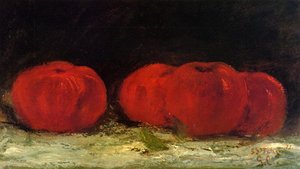 Red Apples
Explore Gustave Courbet’s ‘Red Apples,’ a vibrant Realist masterpiece capturing everyday beauty. Discover its composition, influence & legacy – a timeless still life.
The choice of materials profoundly impacts the texture and, consequently, the meaning of a work. Oil paint, with its slow drying time and inherent plasticity, lends itself beautifully to impasto and blending, allowing for nuanced gradations and expressive brushwork. Acrylics, on the other hand, offer faster drying times and greater versatility, enabling artists to build up layers quickly or create sharp, defined edges. Beyond the medium itself, the addition of gels, sand, or other materials can further alter the surface quality. Gustave Courbet’s ‘Red Apples’ exemplifies a masterful control of materiality; the simple subject matter is elevated through the vibrant texture and realistic depiction of the fruit's skin, celebrating everyday beauty with an almost tactile immediacy. The artist isn’t just painting apples; they are conveying their weight, ripeness, and inherent sensuality.
Texture as Subject: When the Surface Becomes the Focus
 Milton Resnick
Discover Milton Resnick (1917-2004), a key Abstract Expressionist known for monumental canvases, intensely layered pigment & unique explorations of scale and materiality.
In some instances, texture transcends its role as a descriptive element and becomes the primary subject of the artwork itself. Abstract Expressionists like Milton Resnick embraced monumental canvases and intensely layered pigment, prioritizing the physical act of painting and the resulting surface quality over representational imagery. Jean-Paul Riopelle similarly explored bold, textured canvases, often using palette knives to create dynamic compositions that emphasize the materiality of paint. These artists weren’t interested in depicting objects or scenes; they were exploring the inherent qualities of color, form, and texture itself – a radical departure from traditional artistic conventions.
The Enduring Legacy: Contemporary Explorations of Tactile Art
The exploration of texture continues to thrive in contemporary art. Artists are pushing boundaries with innovative materials and techniques, blurring the lines between painting, sculpture, and installation. From mixed-media works incorporating found objects to digital paintings that simulate tactile surfaces, the possibilities are endless. The enduring appeal of texture lies in its ability to connect us to the artwork on a visceral level, reminding us that art is not merely an intellectual pursuit but a deeply sensory experience. At OriginalUniqueArt.com, we celebrate this rich legacy by offering high-quality reproductions of masterpieces from across history, allowing you to appreciate the nuances of texture and materiality in your own home. Explore our collection today and discover the tactile soul of art.