Introduction
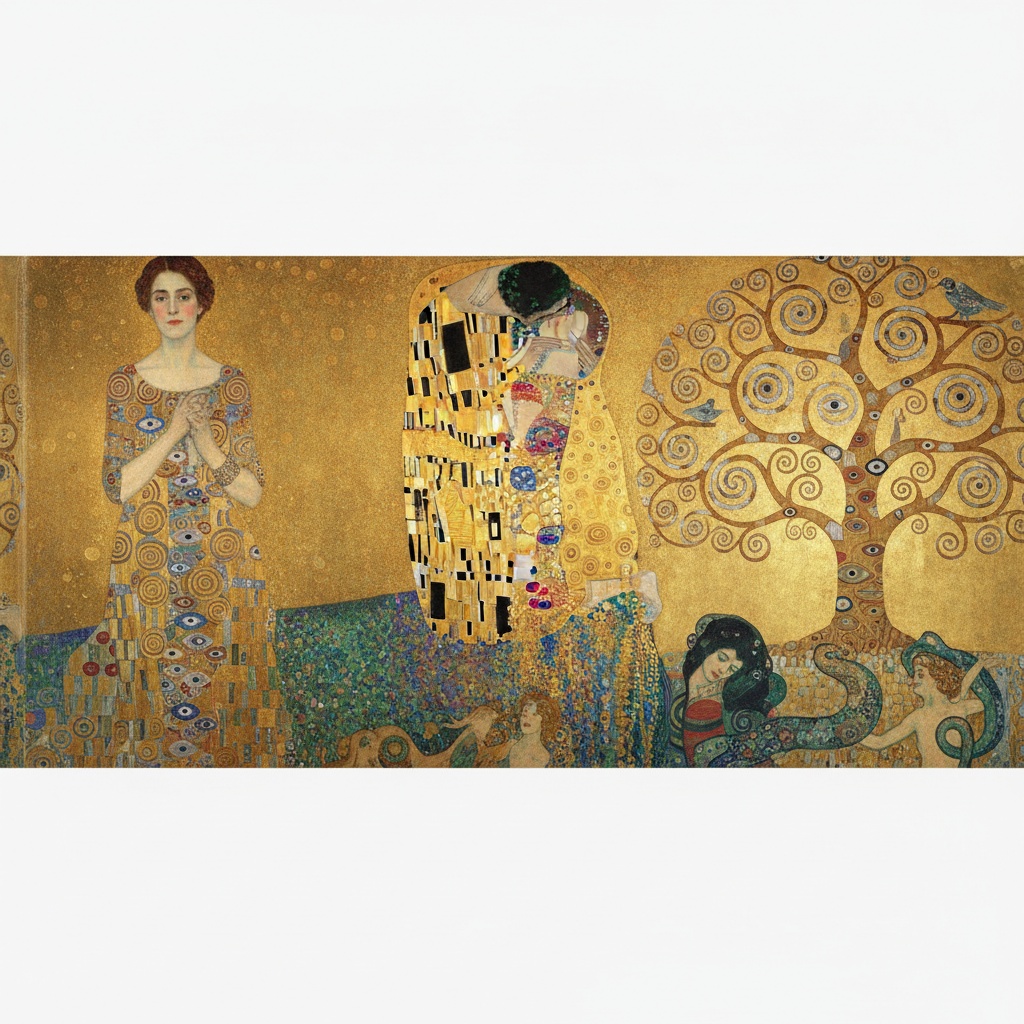
Step into a world where gold shimmers, dreams intertwine with reality, and the human form becomes an altar of beauty and mystery. Gustav Klimt’s art isn't merely a collection of paintings; it’s a portal to a specific moment in Viennese history – a vibrant, decadent era grappling with modernity while clinging fiercely to tradition.
Born in 1862, Klimt emerged during the height of the Austro-Hungarian Empire, a time of immense artistic and intellectual ferment. Vienna was a crossroads of styles: the grandeur of the Habsburg court mingled with the rebellious spirit of Symbolism and Art Nouveau. Klimt, deeply influenced by Japanese prints and Byzantine mosaics, developed a uniquely opulent visual language – one characterized by intricate patterns, rich colors, and an almost hypnotic allure.
His work reflects not just aesthetic beauty but also profound psychological depth. Klimt explored themes of love, desire, sexuality, and mortality with a boldness rarely seen in his time. He challenged conventional notions of femininity, portraying women as powerful, enigmatic figures—often adorned in shimmering robes that seem to both conceal and reveal.
Why do these paintings continue to resonate today? Because they tap into something fundamental about the human experience: our longing for beauty, our fascination with the unknown, and our enduring questions about love and identity. Klimt’s art speaks across generations, inviting us to lose ourselves in its intricate details and contemplate the mysteries of the soul.
Prepare to embark on a journey through some of Klimt's most iconic works – twenty-five paintings that capture the essence of his genius and offer a glimpse into a world both dazzlingly beautiful and profoundly unsettling. Let us begin…”
The kiss - Gustav Klimt
 The kiss - Gustav Klimt
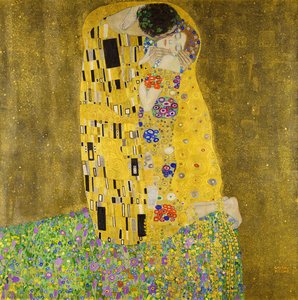
Step into a world where gold shimmers, dreams intertwine with reality, and the human form becomes an altar of beauty and mystery. Gustav Klimt’s *The Kiss* isn't merely a depiction of romantic love; it embodies a yearning for spiritual connection and transcendence, rendered with breathtaking beauty and opulent detail. This hand-painted reproduction allows you to experience the allure and emotional resonance of this iconic masterpiece within your own space.
Created during Klimt’s “Golden Phase” (roughly 1906-1909), *The Kiss* stands as a pinnacle of the Art Nouveau movement and the Austrian Secession. Rejecting the rigid academic traditions of the time, Klimt and his fellow Secessionists sought to create a ‘total work of art’ – blurring the lines between painting, architecture, and design. This ambition is vividly realized in *The Kiss* through its decorative richness, flattened perspective, and harmonious composition. The Secession aimed for an art that was modern, independent, and reflective of contemporary life, and Klimt became its most celebrated figure.
Klimt’s innovative technique is central to the painting's impact. The extensive use of gold leaf – inspired by Byzantine mosaics he encountered during his travels – isn’t merely decorative; it elevates the scene to an almost sacred realm, imbuing the figures with a luminous quality. This opulent surface interacts beautifully with vibrant hues within the patterned robes and the blossoming meadow below. The contrasting geometric patterns on the man's robe , representing masculinity and strength, are juxtaposed against the flowing floral motifs on the woman’s dress , symbolizing femininity and fertility. They kneel upon a patch of flowers, evoking themes of growth, life, and blossoming love. The enclosed space emphasizes intimacy and protection, creating a world apart from reality. The gold itself can be interpreted as representing spiritual union and divine connection.
The enduring appeal of *The Kiss* lies in its ability to evoke powerful emotions – tenderness, passion, and a sense of blissful unity. The flattened perspective and lack of realistic spatial depth contribute to the dreamlike quality, inviting viewers to lose themselves within the embrace. It’s a celebration of love in an age of rapid change, capturing a timeless moment of profound connection. *The Kiss* remains one of the most reproduced and beloved artworks of all time, continuing to inspire awe and wonder.
Portrait of Adele Bloch-Bauer I - Gustav Klimt
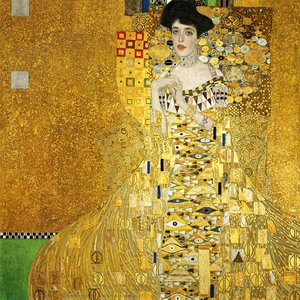 Portrait of Adele Bloch-Bauer I - Gustav Klimt
Unveiling a masterpiece that transcends mere portraiture – Gustav Klimt’s *Portrait of Adele Bloch-Bauer I* is an emblem of Viennese Secession, radiating with the allure and innovation of its era. This artwork stands as one of the Top 25 Klimt masterpieces, not just for its opulent beauty but for its profound exploration of feminine power and symbolic depth.
Completed in 1907, this iconic image captures Adele Bloch-Bauer I, a prominent figure in Viennese society, as an allegorical vision rather than a straightforward likeness. Klimt masterfully employed Art Nouveau’s flowing lines and decorative patterns to create a shimmering tapestry of gold leaf and geometric shapes – a visual embodiment of wealth, status, and spiritual significance.
The intricate layering of motifs—including the recurring eyes—suggests protection, awareness, or even a commentary on societal observation. The gold itself symbolizes divinity and immortality, elevating Adele to an almost iconographic status. Beyond its aesthetic brilliance, *Portrait of Adele Bloch-Bauer I* offers a glimpse into the anxieties and aspirations of fin-de-siècle Vienna – a period marked by rapid change and artistic experimentation.
Today, this portrait continues to captivate audiences with its blend of elegance, mystery, and symbolic richness. Its influence can be seen in contemporary luxury interiors and refined aesthetics, reflecting a timeless appreciation for beauty, legacy, and the enduring power of art. Klimt’s ability to infuse a single image with such profound meaning ensures that *Portrait of Adele Bloch-Bauer I* remains a cornerstone of Viennese art history and a testament to his artistic genius.
Bildnis Fritza Riedler, 1906 - Österreichische Galerie, Vienna - Gustav Klimt
 Bildnis Fritza Riedler, 1906 - Österreichische Galerie, Vienna - Gustav Klimt
Step into a world where elegance whispers and secrets shimmer – Gustav Klimt’s *Bildnis Fritza Riedler, 1906* is more than just a portrait; it's a frozen moment of Viennese society, radiating with the opulent spirit of the Vienna Secession. This artwork deserves its place among the Top 25 Klimt masterpieces, not only for its breathtaking beauty but also for its subtle exploration of power, observation, and the complexities of female identity.
Painted in 1906, this captivating image offers a glimpse into the world of Fritza Riedler, a prominent figure within Viennese high society. Klimt masterfully employed Art Nouveau’s flowing lines and decorative patterns to create an image that transcends simple likeness—a shimmering tapestry of gold leaf and geometric shapes, embodying wealth, status, and artistic innovation.
The composition centers on Riedler, seated formally within a richly decorated room. The repeating eye-like motifs adorning the chair are particularly striking – they can be interpreted as representing surveillance, judgment, or perhaps an awareness of being observed. Klimt’s deliberate use of flattened perspective and muted colors creates a sense of psychological complexity and restrained emotion, hinting at the woman's inner life beyond her outward appearance.
Klimt’s masterful technique—the meticulous layering of oil paint and gold leaf—elevates this portrait to an almost iconographic status. The shimmering surface isn’t merely decorative; it integrates seamlessly into the patterns and forms, unifying the composition and imbuing it with a sense of luxuriousness. OriginalUniqueArt faithfully reproduces this beauty, allowing you to experience Klimt's vision in your own space—a testament to his enduring legacy.
The Tree of Life - Gustav Klimt
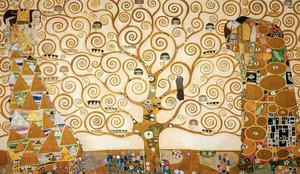 The Tree of Life - Gustav Klimt
Step into a realm where sunlight dances on shimmering gold – Gustav Klimt’s *The Tree of Life* is an invitation to contemplate the interconnectedness of all things, a visual hymn to life's enduring cycle. This artwork deserves its place among the Top 25 Klimt masterpieces, not just for its breathtaking beauty but for its profound exploration of spirituality and the harmony between humanity and nature.
Painted in 1909, this captivating work embodies the pinnacle of Art Nouveau and the Vienna Secession movement. Departing from traditional representational painting, Klimt prioritized decorative ornamentation, flowing lines, and a flattened perspective—creating an image that transcends mere landscape. The extensive use of gold leaf – a hallmark of his “Golden Phase” – imbues the artwork with an opulent, almost otherworldly quality.
The central motif – a magnificent tree brimming with life – serves as a powerful symbol of growth, connection, and the cyclical nature of existence. Within its branches are nestled figures, possibly representing souls or spirits intimately connected to the natural world. The inclusion of buildings suggests human civilization existing not in opposition to nature, but *within* it, fostering a sense of unity and belonging. Geometric shapes represent landforms, grounding the ethereal composition.
Klimt’s masterful technique—the meticulous layering of oil paint and gold leaf—elevates this painting to an iconographic status. The shimmering surface isn't merely decorative; it integrates seamlessly into the patterns and forms, unifying the composition and imbuing it with a sense of luxuriousness. *The Tree of Life* invites us to consider our place within the grand scheme of existence – a timeless reminder of nature’s enduring beauty and spiritual significance.
Danae - Gustav Klimt
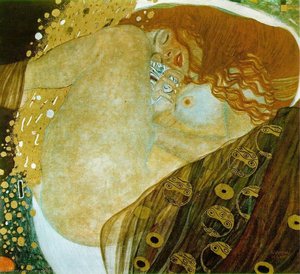 Danae - Gustav Klimt
Step into a world of shimmering intimacy – Gustav Klimt’s *Danae* is an arresting masterpiece that captures the essence of Art Nouveau elegance and profound human emotion. This artwork deserves its place among the Top 25 Klimt masterpieces, not just for its opulent beauty but for its evocative portrayal of love, desire, and the mysteries of the subconscious.
Painted in 1908, this captivating image embodies Klimt’s signature style during his celebrated “Golden Phase.” Departing from traditional representation, he prioritized decorative ornamentation, flowing lines, and a flattened perspective—creating an image that invites viewers to lose themselves in its dreamlike atmosphere. The extensive use of gold leaf – a hallmark of this period – imbues the artwork with an opulent, almost otherworldly quality.
The central figure, a reclining woman, is depicted with an ethereal grace, her long hair cascading around her body and creating a sense of movement. This intimate portrayal draws the viewer into a world of tranquility and introspection. Klimt’s masterful technique—the meticulous layering of oil paint and gold leaf—elevates this painting to an iconographic status. *Danae* reflects Klimt's fascination with mythological themes and his exploration of the human form, capturing a timeless moment of connection.
The artwork’s influence can still be felt today – its rich color palette and decorative patterns resonate with contemporary design sensibilities, informing everything from luxurious interiors to evocative fashion. *Danae* serves as a reminder that art has the power to transcend time, continuing to inspire awe and wonder through its beauty and emotional depth.”
Beethoven Frieze; The Arts, Choir of Angels, Embracing Couple - Gustav Klimt
 Beethoven Frieze; The Arts, Choir of Angels, Embracing Couple - Gustav Klimt
Step into a realm of shimmering spirituality – Gustav Klimt’s *Beethoven Frieze; The Arts, Choir of Angels, Embracing Couple* is an arresting triptych that transcends mere decoration, embodying the heart of his golden phase and redefining our understanding of beauty. This artwork deserves its place among the Top 25 Klimt masterpieces, not just for its opulent visual richness but for its profound exploration of human connection, artistic expression, and the eternal quest for meaning.
Painted in 1908, this triptych is a complex narrative woven with intricate patterns, rich textures, and a harmonious color palette. Klimt masterfully blends Symbolism and Art Nouveau—creating an image that invites viewers to contemplate life’s mysteries through the lens of art.
The composition unfolds across three panels: the left depicts elongated figures with flowing hair set against a backdrop of gold, while the central panel showcases faceless figures in a repetitive pattern. The right panel culminates in a single figure draped in golden fabric, surrounded by ornate patterns and a halo-like arch. Klimt’s signature style—fluid lines, gold leaf, and a focus on decorative elements—elevates this work to an iconographic status.
The artwork's influence continues to resonate today – its rich color palette and intricate designs inform contemporary design sensibilities, making it a timeless addition to any space. OriginalUniqueArt faithfully reproduces this beauty, allowing you to experience Klimt’s vision in your own home—a testament to his enduring legacy and the power of art to inspire.”
Water Serpents II (Bewegtes Wasser sfondo) - Gustav Klimt
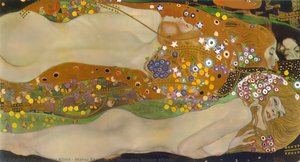 Water Serpents II (Bewegtes Wasser sfondo) - Gustav Klimt
Step into a realm of shimmering fluidity – Gustav Klimt’s *Water Serpents II (Bewegtes Wasser sfondo)* is an arresting artwork that captures the essence of Art Nouveau, inviting us to lose ourselves in its dreamlike beauty and symbolic depths. This captivating piece deserves its place among the Top 25 Klimt masterpieces, not just for its opulent visual richness but for its profound exploration of nature’s power and the mysteries of the subconscious.
Painted between 1904 and 1907, this triptych is a complex narrative woven with intricate patterns, rich textures, and a harmonious color palette. Klimt masterfully blends Symbolism and Art Nouveau—creating an image that invites viewers to contemplate life’s mysteries through the lens of art.
The composition unfolds across three panels: the left depicts elongated figures with flowing hair set against a backdrop of gold, while the central panel showcases faceless figures in a repetitive pattern. The right panel culminates in a single figure draped in golden fabric, surrounded by ornate patterns and a halo-like arch. Klimt’s signature style—fluid lines, gold leaf, and a focus on decorative elements—elevates this work to an iconographic status.
The artwork's influence continues to resonate today – its vibrant colors and intricate designs inform contemporary design sensibilities, making it a timeless addition to any space. OriginalUniqueArt faithfully reproduces this beauty, allowing you to experience Klimt’s vision in your own home—a testament to his enduring legacy and the power of art to inspire.”
Farm Garden with Crucifix - Gustav Klimt
 Farm Garden with Crucifix - Gustav Klimt
Step into a realm where vibrant nature intertwines with subtle spirituality – Gustav Klimt’s *Farm Garden with Crucifix*, painted in 1911, is an arresting artwork that captures the essence of Art Nouveau and invites us to contemplate the beauty and mystery of existence.
Klimt masterfully blends the expressive brushwork and vibrant color palettes of Post-Impressionism with his signature decorative style. Rejecting academic tradition, Klimt created a ‘total work of art’ – this piece exemplifies it, evoking an emotional response rather than simply representing reality.
The canvas pulsates with life, dominated by a rich tapestry of warm hues—fiery yellows, oranges, and reds exploding from the floral foreground. These are beautifully counterbalanced by cooler greens and blues in the foliage and sky, creating depth and visual harmony. Klimt’s technique – visible brushstrokes – brings the garden vividly to life.
At the heart of this floral paradise stands a central figure—likely a woman adorned in blue and red. Her contemplative pose invites questions: Is she lost in thought? The subtle inclusion of a crucifix nestled amongst the trees introduces a spiritual dimension, prompting reflection on faith, mortality, and the interplay between earthly beauty and divine presence. Klimt frequently employed symbolism, leaving space for individual interpretation.
This artwork’s influence continues to resonate today – its rich color palette and intricate designs inform contemporary design sensibilities. OriginalUniqueArt faithfully reproduces this beauty, allowing you to experience Klimt’s vision in your own home—a testament to his enduring legacy.”
Music I - Gustav Klimt
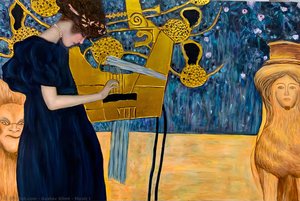 Music I - Gustav Klimt
Step into a realm of harmonious mystery – Gustav Klimt’s *Music I* is an arresting artwork that captures the essence of musical contemplation and spiritual depth, inviting us to lose ourselves in its intricate composition and rich symbolism.
Created in 1895, this masterpiece blends figurative elements with abstract motifs, creating a dreamlike atmosphere that transcends time. Klimt’s signature style—fluid lines, gold leaf, and a focus on decorative elements—elevates this work to an iconographic status.
The painting features three central figures: a woman in a dark dress playing an ornate golden harp, another figure with a blurred face on the left, and a third figure wearing a hat on the right. The background is filled with swirling patterns and stylized foliage that create a dynamic and otherworldly atmosphere. Klimt’s technique—smooth brushwork with attention to detail—brings the scene vividly to life.
The rich color palette – deep blues, warm golds, and earthy browns – highlights the golden harp, creating a striking contrast. The artwork is part of a series exploring themes of harmony and spirituality. It’s a captivating addition to any art collection or interior design project, its symbolism and vibrant colors making it a timeless piece.
OriginalUniqueArt faithfully reproduces this beauty, allowing you to experience Klimt’s vision in your own home—a testament to his enduring legacy.”
Allegory of 'Sculpture' - Gustav Klimt
 Allegory of 'Sculpture' - Gustav Klimt
Step into a realm where classical elegance meets symbolic depth – Gustav Klimt’s *Allegory of ‘Sculpture’*, painted in 1889, is an arresting artwork that invites us to explore its rich layers of meaning and exquisite craftsmanship.
This masterpiece seamlessly blends realism and symbolism, creating a dreamlike atmosphere. Klimt's signature style—fluid lines, gold leaf, and a focus on decorative elements—elevates this work to an iconographic status.
The composition features a nude female figure amidst classical architectural elements, dominated by a large, idealized statue of a woman. A dark-skinned male figure is positioned at the base, seemingly observing the scene. The central figure holds a small bird in her hand. Klimt’s technical prowess shines through—the use of light and shadow creates depth, while smooth textures contrast with detailed carvings.
The artwork is rich in symbolism: the bird suggests freedom or aspiration; the statue embodies idealized beauty; the dark-skinned figure adds a layer of mystery. Together, these elements create a narrative open to interpretation. “Allegory of ‘Sculpture’” evokes awe and wonder, transporting viewers to a realm where classical ideals meet modern interpretations.
This artwork's influence continues to resonate today – its ethereal quality inspires modern interiors and moods. OriginalUniqueArt faithfully reproduces this beauty, allowing you to experience Klimt’s vision in your own home—a testament to his enduring legacy.”
Birch Forest, 1903 - Vienna, Osterreichische Museum für Angewandte Kunst - Gustav Klimt
 Birch Forest, 1903 - Vienna, Osterreichische Museum für Angewandte Kunst - Gustav Klimt
Step into a realm of quiet contemplation – Gustav Klimt’s *Birch Forest*, painted in 1903, is an arresting artwork that captures the tranquil beauty of an autumn forest, inviting us to lose ourselves in its serene atmosphere and symbolic depth.
This masterpiece exemplifies Klimt's early Impressionist phase, showcasing his ability to blend realism with atmospheric effects. The loose, expressive brushwork creates a sense of movement and depth, while the play of light and shadow brings the forest scene to life – a testament to his mastery of color and composition.
The painting’s composition is structured around vertical birch trees that create a rhythmic pattern, guiding the viewer's eye through the scene. The foreground features a dense layer of fallen leaves in various shades of brown and orange, adding texture and depth. Klimt’s use of vibrant autumnal hues—ranging from muted greens and browns to fiery oranges—evokes the fleeting beauty of the season.
“Birch Forest” reflects Klimt's growing interest in nature and the cycles of life – themes that would become central to his later works. The artwork invites viewers to contemplate the passage of time and the enduring beauty of the natural world, a timeless conversation between culture and decor.
This artwork’s influence continues to resonate today – its serene atmosphere inspires modern environments and curated collections. OriginalUniqueArt faithfully reproduces this beauty, allowing you to experience Klimt’s vision in your own home—a testament to his enduring legacy.”
Poppy Field - Gustav Klimt
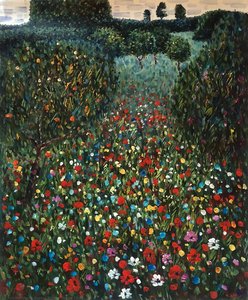 Poppy Field - Gustav Klimt
Step into a realm of vibrant joy – Gustav Klimt’s *Poppy Field*, painted in 1907, is an arresting artwork that captures the essence of nature’s beauty, inviting us to lose ourselves in its serene atmosphere and symbolic depth.
This masterpiece exemplifies Klimt’s golden phase, showcasing his ability to blend traditional techniques with innovative approaches. The painting reflects Klimt's mastery of transforming everyday scenes into extraordinary works of art – a testament to his vision.
*Poppy Field* is part of Klimt’s exploration of landscape painting during his golden phase, reflecting the artist’s interest in beauty and transience. The abundance of flowers symbolizes growth, beauty, and the fleeting nature of life, inviting viewers to contemplate existence. The archway could represent entry into a secluded space or a transition to another realm.
This artwork's influence continues to resonate today – its serene atmosphere inspires modern environments and curated collections. OriginalUniqueArt faithfully reproduces this beauty, allowing you to experience Klimt’s vision in your own home—a testament to his enduring legacy.”
Judith - Gustav Klimt
 Judith - Gustav Klimt
Step into a realm of opulent mystery – Gustav Klimt’s “Judith,” painted in 1901, is an arresting artwork that epitomizes the Art Nouveau movement's sensuality and power, securing its place among the world’s most captivating masterpieces.
This masterpiece exemplifies Klimt’s signature style—fluid lines, gold leaf, and a focus on decorative elements—creating a mesmerizing visual experience. The painting reflects Klimt’s mastery of transforming everyday scenes into extraordinary works of art – a testament to his vision.
“Judith” is part of Klimt’s exploration of landscape painting during his golden phase, reflecting the artist’s interest in beauty and transience. The artwork features a reclining nude woman adorned with gold leaf and intricate patterns, set within a richly decorated frame. This portrayal exudes strength and determination.
The artwork's influence continues to resonate today – its serene yet commanding presence inspires modern luxury interiors and curated collections. OriginalUniqueArt faithfully reproduces this beauty, allowing you to experience Klimt’s vision in your own home—a testament to his enduring legacy.”
Avenue of Schloss Kammer Park - Gustav Klimt
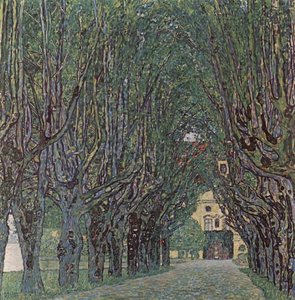 Avenue of Schloss Kammer Park - Gustav Klimt
Step into a realm of serene beauty – Gustav Klimt’s “Avenue of Schloss Kammer Park,” painted in 1912, is an arresting artwork that epitomizes the Art Nouveau movement's ability to capture tranquility and harmony, securing its place among the world’s most captivating masterpieces.
This masterpiece exemplifies Klimt’s mastery of the Art Nouveau style—fluid lines, organic forms, and a harmonious blend of nature and architecture. The painting reflects Klimt’s ability to transform everyday scenes into extraordinary works of art – a testament to his vision.
"Avenue of Schloss Kammer Park" is part of Klimt’s exploration of landscape painting during his later years, influenced by his travels and the beauty of the Austrian countryside. The artwork features a tree-lined path leading to a distant building, enveloped by lush foliage that creates a sense of seclusion and peace.
The artwork's influence continues to resonate today – its serene atmosphere inspires modern luxury interiors and curated collections. OriginalUniqueArt faithfully reproduces this beauty, allowing you to experience Klimt’s vision in your own home—a testament to his enduring legacy.”
Hope II - Gustav Klimt
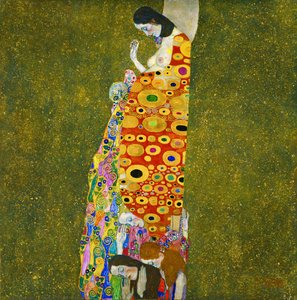 Hope II - Gustav Klimt
Step into a realm of shimmering mystery – Gustav Klimt’s “Hope II,” painted in 1908, is an arresting artwork that epitomizes the Art Nouveau movement's ability to capture intimacy and symbolic depth, securing its place among the world’s most captivating masterpieces.
This masterpiece exemplifies Klimt’s mastery of ornamental richness and symbolic exploration. The painting reflects Klimt’s ability to transform everyday scenes into extraordinary works of art – a testament to his vision.
"Hope II" is part of Klimt’s exploration of landscape painting during his later years, influenced by his travels and the beauty of the Austrian countryside. The artwork features a woman in a flowing robe adorned with numerous circular and oval shapes in vibrant colors – reds, blues, yellows, greens, and purples. Below her stands a kneeling figure, possibly a child or young man, also draped in similar patterned robes.
The artwork's influence continues to resonate today – its serene atmosphere inspires modern interiors and curated collections. OriginalUniqueArt faithfully reproduces this beauty, allowing you to experience Klimt’s vision in your own home—a testament to his enduring legacy.”
Compositional Sketch for - Gustav Klimt
 Compositional Sketch for - Gustav Klimt
Step into a realm of profound contemplation – Gustav Klimt’s *Compositional Sketch for Medicine*, painted in 1898, is an arresting artwork that epitomizes the Art Nouveau movement's ability to capture intimacy and symbolic depth, securing its place among the world’s most captivating masterpieces.
This masterpiece exemplifies Klimt’s mastery of ornamental richness and symbolic exploration. The painting reflects Klimt’s ability to transform everyday scenes into extraordinary works of art – a testament to his vision.
*Compositional Sketch for Medicine* reveals Klimt at a pivotal moment in his artistic development—a transitional study that foreshadowed the grandeur of his later works. It's a rare glimpse into Klimt’s creative process as he conceived of a monumental commission for the University of Vienna – a project ultimately deemed too provocative for its time.
At the heart of this composition lies Hygieia, the Greek goddess of health, instantly recognizable by her mistletoe wreath—a symbol of purification—and the bowl she holds. However, Klimt’s interpretation is far from a straightforward celebration of well-being. Above Hygieia floats a nude female figure, representing vulnerable life, caught between aspiration and despair. A grasping male arm symbolizes the inevitable approach of death, personified by a skull emerging from a shroud of darkness. A gaunt woman in red embodies sickness itself, creating a stark triad of existence: health, life, and their opposing forces.
The *Compositional Sketch* reveals Klimt at a pivotal moment in his artistic development—a transitional study that foreshadowed the grandeur of his later works. We see echoes of Baroque theatricality – evident in the dramatic poses and swirling figures—blended with the emerging sensibilities of Symbolism. The sweeping brushstrokes, particularly noticeable in the rendering of drapery and atmospheric effects, create a dynamic sense of movement.
OriginalUniqueArt faithfully reproduces this beauty, allowing you to experience Klimt’s vision in your own home—a testament to his enduring legacy.”
The friends after Gustav Klimt, plate 9, The work of Gustav Klimt - Gustav Klimt
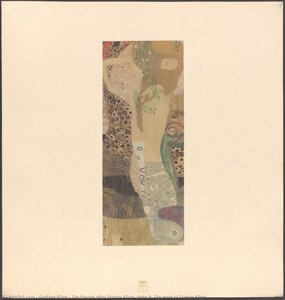 The friends after Gustav Klimt, plate 9, The work of Gustav Klimt - Gustav Klimt
Step into a realm of quiet intimacy – Gustav Klimt’s “The Friends,” painted in 1918, offers a poignant glimpse into the artist’s evolving style and enduring fascination with female companionship. This captivating artwork resonates with a delicate beauty and decorative richness that is quintessentially Klimt.
“The Friends” stands out as a testament to Klimt's ability to capture a fleeting moment of connection—a shared glance, a whispered secret—within the vibrant cultural landscape of Vienna at the turn of the century. It’s not merely a portrait; it’s an evocation of a mood, a suggestion of shared secrets and the delicate bonds between women.
By 1918, Klimt had already established himself as a leading figure in the Vienna Secession movement—a group of artists who rebelled against the conservative academic traditions of the time. “The Friends” builds upon this foundation but reveals a subtle shift towards greater painterly freedom. While gold remains present, it’s integrated more seamlessly into the overall composition, creating a luminous effect rather than dominating the surface.
OriginalUniqueArt faithfully reproduces this beauty, allowing you to experience Klimt’s vision in your own home—a testament to his enduring legacy.”
Schreitende - Gustav Klimt
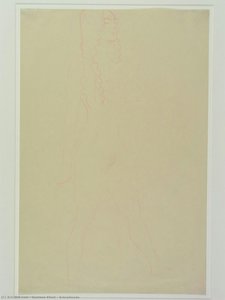 Schreitende - Gustav Klimt
Step into a realm of quiet contemplation – Gustav Klimt’s “Schreitende,” painted in 1918, offers a poignant glimpse into the artist’s evolving style and enduring fascination with female companionship. This captivating artwork resonates with a delicate beauty and decorative richness that is quintessentially Klimt.
“Schreitende” stands out as a testament to Klimt’s ability to capture a fleeting moment of connection—a shared glance, a whispered secret—within the vibrant cultural landscape of Vienna at the turn of the century. It’s not merely a portrait; it’s an evocation of a mood, a suggestion of shared secrets and the delicate bonds between women.
This preparatory sketch reveals Klimt's foundational skills honed at the Kunstgewerbeschule (School of Applied Arts) and during his collaborative work with his brother Ernst and Franz von Matsch as part of the Künstlercompagnie. The figure’s pose and proportions likely informed later works, demonstrating how Klimt meticulously planned compositions before applying the opulent details that define his signature style.
OriginalUniqueArt faithfully reproduces this beauty, allowing you to experience Klimt’s vision in your own home—a testament to his enduring legacy.”
38.La vírgen, 1913 - Gustav Klimt
 38.La vírgen, 1913 - Gustav Klimt
Step into a realm of profound femininity – Gustav Klimt’s *La Vírgen*, painted in 1913, is a captivating masterpiece that transcends mere representation, offering instead a profound exploration of womanhood, life, and interconnectedness through its intricate composition and opulent aesthetic. This work invites contemplation and rewards repeated viewing, securing its place among the world's most compelling artworks.
*La Vírgen* stands as a testament to Klimt’s ability to capture a fleeting moment of connection—a shared glance, a whispered secret—within the vibrant cultural landscape of Vienna at the turn of the century. It’s not merely a portrait; it’s an evocation of a mood, a suggestion of shared secrets and the delicate bonds between women.
This preparatory sketch reveals Klimt's foundational skills honed at the Kunstgewerbeschule (School of Applied Arts) and during his collaborative work with his brother Ernst and Franz von Matsch as part of the Künstlercompagnie. The figure’s pose and proportions likely informed later works, demonstrating how Klimt meticulously planned compositions before applying the opulent details that define his signature style.
OriginalUniqueArt faithfully reproduces this beauty, allowing you to experience Klimt’s vision in your own home—a testament to his enduring legacy.”
Lady with Fan - Gustav Klimt
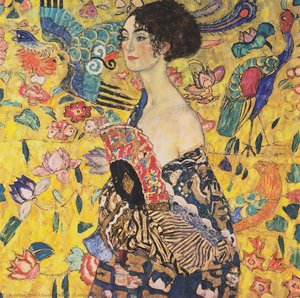 Lady with Fan - Gustav Klimt
Step into a realm of quiet contemplation – Gustav Klimt’s *Lady with Fan*, completed between 1917 and 1918, stands as a poignant culmination of his artistic journey—one of the last masterpieces created before his untimely death. This captivating portrait isn’t merely a depiction of a woman; it is an immersive experience into Klimt’s signature blend of Art Nouveau decadence, Japonism’s delicate aesthetic, and profound symbolism.
*Lady with Fan* stands as a testament to Klimt’s ability to capture a fleeting moment of connection—a shared glance, a whispered secret—within the vibrant cultural landscape of Vienna at the turn of the century. It’s not merely a portrait; it’s an evocation of a mood, a suggestion of shared secrets and the delicate bonds between women.
This preparatory sketch reveals Klimt's foundational skills honed at the Kunstgewerbeschule (School of Applied Arts) and during his collaborative work with his brother Ernst and Franz von Matsch as part of the Künstlercompagnie. The figure’s pose and proportions likely informed later works, demonstrating how Klimt meticulously planned compositions before applying the opulent details that define his signature style.
OriginalUniqueArt faithfully reproduces this beauty, allowing you to experience Klimt’s vision in your own home—a testament to his enduring legacy.”
Virgin, The - Gustav Klimt
 Virgin, The - Gustav Klimt
Step into a realm of quiet contemplation – Gustav Klimt’s *The Virgin*, painted in 1913, is far from a traditional depiction of motherhood or religious iconography. Instead, it presents an intimate and enigmatic scene—three intertwined female figures enveloped in a swirling embrace of color and pattern. This oil on canvas transcends mere portraiture; it’s a profound exploration of femininity, sensuality, and the cyclical nature of life itself.
*The Virgin* stands as a testament to Klimt’s ability to capture a fleeting moment of connection—a shared glance, a whispered secret—within the vibrant cultural landscape of Vienna at the turn of the century. It’s not merely a portrait; it’s an evocation of a mood, a suggestion of shared secrets and the delicate bonds between women.
This preparatory sketch reveals Klimt's foundational skills honed at the Kunstgewerbeschule (School of Applied Arts) and during his collaborative work with his brother Ernst and Franz von Matsch as part of the Künstlercompagnie. The figure’s pose and proportions likely informed later works, demonstrating how Klimt meticulously planned compositions before applying the opulent details that define his signature style.
OriginalUniqueArt faithfully reproduces this beauty, allowing you to experience Klimt’s vision in your own home—a testament to his enduring legacy.”
Sonja Knips - Gustav Klimt
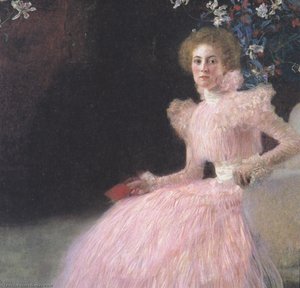 Sonja Knips - Gustav Klimt
Step into a realm of quiet contemplation – Gustav Klimt’s *Sonja Knips*, painted in 1898, is a captivating example of his burgeoning artistic style, poised between academic tradition and the revolutionary spirit of the Vienna Secession. This oil on canvas (145 x 145 cm) doesn’t merely depict a woman; it presents a psychological study imbued with symbolism and an air of modern sophistication.
*Sonja Knips* stands as a testament to Klimt’s ability to capture a fleeting moment of connection—a shared glance, a whispered secret—within the vibrant cultural landscape of Vienna at the turn of the century. It’s not merely a portrait; it’s an evocation of a mood, a suggestion of shared secrets and the delicate bonds between women.
This preparatory sketch reveals Klimt's foundational skills honed at the Kunstgewerbeschule (School of Applied Arts) and during his collaborative work with his brother Ernst and Franz von Matsch as part of the Künstlercompagnie. The figure’s pose and proportions likely informed later works, demonstrating how Klimt meticulously planned compositions before applying the opulent details that define his signature style.
OriginalUniqueArt faithfully reproduces this beauty, allowing you to experience Klimt’s vision in your own home—a testament to his enduring legacy.”
Life is a Struggle (The Golden Knight) - Gustav Klimt
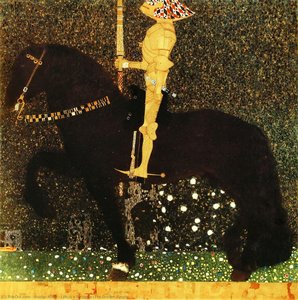 Life is a Struggle (The Golden Knight) - Gustav Klimt
Step into a realm of quiet contemplation – Gustav Klimt’s *Life is a Struggle (The Golden Knight)*, painted with an intensity that captures the soul, stands as a pivotal work in his artistic journey—a visual poem about perseverance amidst life's inevitable challenges. This oil on canvas isn’t merely a depiction of chivalry; it’s an evocative exploration of the human condition – a testament to Klimt’s ability to translate complex emotions into breathtaking beauty.
*Life is a Struggle (The Golden Knight)* exemplifies Klimt's celebrated ‘golden phase’. The painting centers on a solitary knight, clad in radiant golden armor, astride a powerful horse. He moves forward through a dense, textured landscape, his gaze directed upwards with unwavering determination. The composition is dynamically balanced; the dark silhouette of the rider and steed contrasts sharply with the shimmering gold leaf background, drawing the eye along the path of their journey. Two birds soar above, hinting at aspirations for freedom and transcendence.
OriginalUniqueArt faithfully reproduces this beauty, allowing you to experience Klimt’s vision in your own home—a testament to his enduring legacy.”
Gold Cavalier - Gustav Klimt
 Gold Cavalier - Gustav Klimt
Step into a realm of quiet contemplation – Gustav Klimt’s *Gold Cavalier*, painted with an intensity that captures the soul, stands as a pivotal work in his artistic journey—a visual poem about perseverance amidst life's inevitable challenges. This oil on canvas isn’t merely a depiction of chivalry; it’s an evocative exploration of the human condition – a testament to Klimt’s ability to translate complex emotions into breathtaking beauty.
*Gold Cavalier* exemplifies Klimt’s celebrated ‘golden phase’. The painting depicts a dark horse ridden by a figure adorned in gold. The composition is dominated by the horse’s silhouette against a dense, textured background of small, golden dots and foliage. The perspective appears shallow, compressing the space and emphasizing the central figures. There’s a strong sense of verticality due to the rider’s posture. The subject matter centers around a knight or warrior on horseback, suggesting themes of power, nobility, and perhaps conflict. The style leans towards Symbolism with elements of medieval illustration.
OriginalUniqueArt faithfully reproduces this beauty, allowing you to experience Klimt’s vision in your own home—a testament to his enduring legacy.”
Roses under the Trees - Gustav Klimt
 Roses under the Trees - Gustav Klimt
Step into a realm of quiet contemplation – Gustav Klimt’s *Roses Under the Trees*, painted with an intensity that captures the soul, stands as a pivotal work in his artistic journey—a visual poem about perseverance amidst life's inevitable challenges. This oil on canvas isn’t merely a depiction of chivalry; it’s an evocative exploration of the human condition – a testament to Klimt’s ability to translate complex emotions into breathtaking beauty.
*Roses Under the Trees* exemplifies Klimt’s celebrated ‘golden phase’. The painting depicts a dense, highly textured depiction of a blossoming tree in full bloom. It’s an impressionistic painting dominated by shades of green and yellow, punctuated with white blossoms. The composition is overwhelmingly vertical, emphasizing the height and mass of the foliage. There’s a strong sense of depth created through layering and varying intensities of color within the branches. The subject matter is purely botanical – a tree in springtime – but it evokes feelings of abundance, vitality, and perhaps even a slightly overwhelming natural force.
OriginalUniqueArt faithfully reproduces this beauty, allowing you to experience Klimt’s vision in your own home—a testament to his enduring legacy.”
Conclusion
As twilight descends upon our gallery, lingering amongst these echoes of Klimt’s genius, it's impossible not to feel a profound connection—a recognition that these aren’t merely paintings preserved in time, but living presences, still capable of stirring the soul and shaping our world. Each brushstroke, each carefully chosen hue, speaks directly to something within us – a yearning for beauty, a contemplation of life’s complexities, a quiet reverence for the natural order.
Klimt's vision transcends the confines of his era; it resonates with an enduring humanity. His ability to capture not just form but feeling—the dance between light and shadow, joy and sorrow, strength and vulnerability—remains remarkably potent today. And at OriginalUniqueArt, we believe in making this experience accessible to everyone.
We invite you to explore our full collection of Klimt reproductions here – a curated selection designed to bring the magic of his art into your home, your office, or any space where beauty and inspiration are desired. Whether you’re furnishing a luxurious hotel suite, designing a serene villa retreat, or simply seeking to elevate your everyday surroundings, we offer bespoke services: custom collections tailored to your vision, detailed digital mockups ensuring perfect integration, and museum-quality reproductions that capture the very essence of Klimt's artistry.
Let OriginalUniqueArt be your creative partner in transforming spaces into immersive experiences—a testament to the enduring power of art. We are honored to share these extraordinary works with you, ensuring that Klimt’s legacy continues to inspire and delight for generations to come.”