Introduction: The Enduring Power of Symbols
From the earliest cave paintings to the most avant-garde contemporary installations, art has never simply *represented* reality; it has interpreted it. This inherent act of interpretation births symbolism – a visual language that transcends time and culture, speaking directly to the human subconscious. For the discerning collector, understanding this language isn’t merely about identifying motifs; it's about unlocking layers of meaning, appreciating artistic intent, and connecting with the profound narratives woven into the fabric of each masterpiece. It is a journey beyond the purely aesthetic, delving into the intellectual and emotional world of both artist and audience.
Iconography vs. Symbolism: Defining the Visual Vocabulary
Iconography, as a branch of art history, studies the identification, description and interpretation of the content of images: the subjects depicted, the particular compositions and details used to do so, and other elements that are distinct from arti...
Often used interchangeably, iconography and symbolism represent distinct yet interconnected approaches to visual meaning. Iconography, at its core, is the study of identifying and describing the content of images – the subjects depicted, their attributes, and their conventional representations. Think of it as a cataloging system: Saint Peter is typically shown with keys, representing his role as keeper of heaven’s gates. Symbolism, however, goes deeper. It's concerned not just *what* is represented but *why*, exploring the underlying concepts and emotions that those representations evoke. A key might be an iconographic element, but its broader association with power, access, or secrets constitutes its symbolic weight. The relationship is hierarchical; iconography provides the building blocks, while symbolism constructs the narrative.
Northern Renaissance Allegory: Bosch, Provoost & Moral Narratives
 Allegory of Christianity
Explore Jan Provoost’s ‘Allegory of Christianity’ (1515). A stunning Northern Renaissance oil painting rich in symbolism & detail. Discover its complex composition & artistic significance at the Louvre.
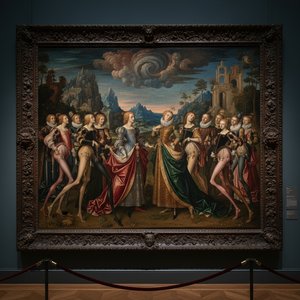
Nowhere is the potency of symbolism more vividly displayed than in the art of the Northern Renaissance. Artists like Hieronymus Bosch and Jan Provoost weren’t simply depicting scenes; they were constructing elaborate allegories – visual narratives designed to convey complex moral or spiritual truths. Consider Bosch’s “The Seven Deadly Sins,” a mesmerizing panel teeming with fantastical creatures and unsettling imagery. Each sin isn't merely illustrated but embodied, its consequences graphically rendered in a way that shocks and compels contemplation. Similarly, Jan Provoost’s “Allegory of Christianity” (1515) is a stunning example of detailed symbolism. The composition, rich with religious iconography—the Virgin Mary, saints, biblical scenes—functions as a visual catechism, reinforcing core Christian beliefs for the viewer. These works weren't intended as passive observations but active lessons in faith and morality.
The Evolution of Symbolic Meaning Across Art Movements
 Wikipedia: Symbolism (movement)
Symbolism was a late 19th-century art movement of French and Belgian origin in poetry and other arts seeking to represent absolute truths symbolically through language and metaphorical images, mainly as a reaction against naturalism and realism. In l...
Symbolic language isn’t static; it evolves alongside societal shifts and artistic innovation. The Romantic era saw a move away from classical restraint, embracing emotional intensity and subjective experience. Artists like Eugène Delacroix employed color and composition to evoke feelings rather than depict specific narratives, using symbolism to explore themes of passion, rebellion, and the sublime. The Symbolist movement of the late 19th century, reacting against realism and naturalism, explicitly sought to represent “absolute truths” through metaphorical images and evocative language. Artists like Gustave Moreau delved into mythology and dreamscapes, creating works that prioritized atmosphere and suggestion over literal representation. Even in the 20th century, Surrealism harnessed the power of subconscious imagery—Salvador Dalí’s melting clocks being a prime example—to unlock hidden psychological truths. Each movement reinterpreted existing symbols or invented new ones, reflecting its unique worldview.
Animals as Symbols: Ancient Mythologies to Modern Interpretations
 Animalia: Exploring the Enduring Presence of Animals in Art & Interior Design
Explore the rich history of animal symbolism in art, from ancient mythology to modern masterpieces. Discover how animals have inspired artists for centuries and learn how to incorporate these powerful motifs into your home décor.
Throughout art history, animals have served as potent symbolic vehicles, embodying qualities both revered and feared. In ancient Egypt, the jackal-headed god Anubis guided souls through the afterlife, representing protection and transformation. The lion has consistently symbolized courage and power across cultures, appearing in royal crests and mythological narratives. The snake, often associated with temptation and danger (as in the Garden of Eden), also represents healing and rebirth in other traditions. This duality highlights a crucial aspect of symbolism: meaning is rarely fixed. Even today, artists continue to draw upon animal archetypes—the fox representing cunning, the owl wisdom, the dove peace—infusing their work with layers of cultural resonance. Understanding these associations adds depth to our appreciation of artworks and reveals the enduring power of animal imagery.
Contextualizing Symbols: A Collector’s Guide to Interpretation
For the collector, deciphering symbolism isn't about finding a single “correct” answer; it’s about engaging in informed interpretation. Begin by researching the historical context—the era, location, and cultural milieu in which the artwork was created. What were the prevailing beliefs and values of the time? Next, delve into the artist’s biography: what were their personal influences and motivations? Consider the broader artistic movement to which they belonged. Don't overlook the importance of mythology and folklore—many symbols have roots in ancient stories and traditions. Finally, embrace ambiguity. Art is rarely didactic; it often invites multiple interpretations. A keen eye for detail, a willingness to research, and an open mind are your greatest assets. At OriginalUniqueArt.com, we believe that art appreciation is a lifelong journey of discovery—one fueled by curiosity, knowledge, and a passion for understanding the stories behind the masterpieces.