Ancient Roots: Trees as Sacred Symbols
The Pine Tree Flag (or the An Appeal to Heaven Flag) was one of the flags used during the American Revolution. The flag, which featured a pine tree with the motto "An Appeal to Heaven", or less frequently "An Appeal to God", was used by a squadron of...
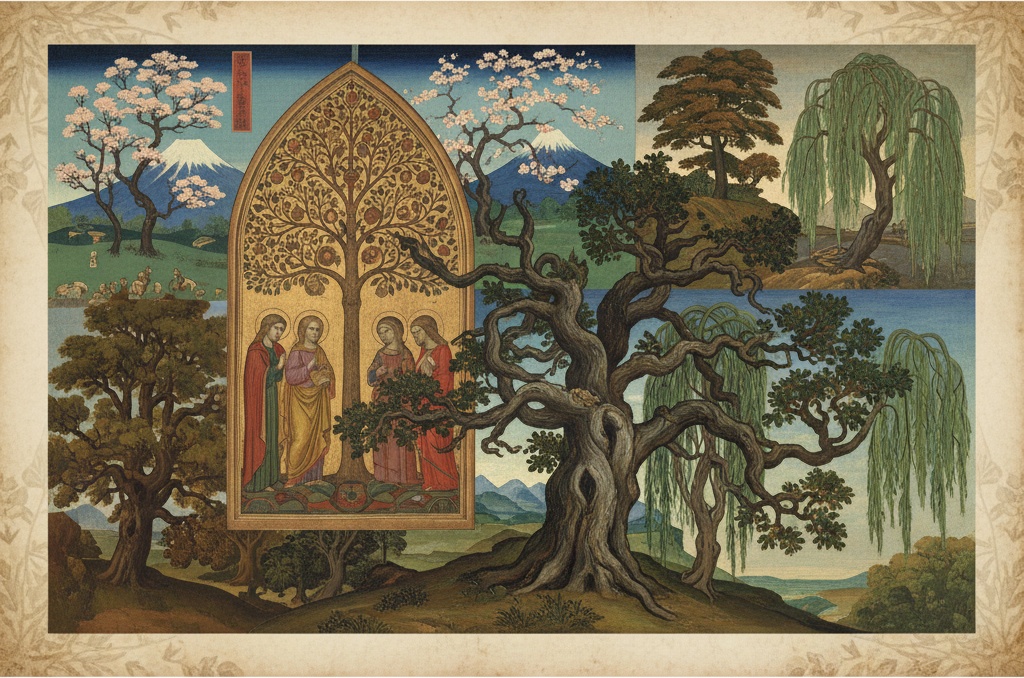
Long before landscape painting emerged as a distinct genre, trees held profound significance for humankind. They weren’t merely components of the natural world; they were embodiments of life itself, connecting the earthly realm to the divine. In ancient cultures across the globe – from the sacred groves venerated in Greece and Rome to the cosmic tree motifs found in Mesopotamian mythology – trees served as axis mundi, points of connection between heaven, earth, and the underworld. The very longevity of these silent witnesses fostered a sense of reverence; their rings chronicled the passage of time, offering a tangible link to ancestors and the cyclical rhythms of existence. Early artistic representations weren’t focused on realistic depictions but rather on conveying the tree's spiritual power – often stylized and imbued with symbolic meaning related to fertility, protection, or ancestral wisdom. The Egyptians associated specific trees, like the sycamore, with deities, further solidifying their sacred status. This deep-rooted connection between trees and spirituality laid the groundwork for their eventual prominence in Western art.
The Rise of Landscape & The Early Depiction of Trees
Landscape painting, also known as landscape art, is the depiction in painting of natural scenery such as mountains, valleys, rivers, trees, and forests, especially where the main subject is a wide view—with its elements arranged into a coherent compo...
The development of landscape painting as a recognized genre coincided with a growing appreciation for nature’s inherent beauty and its capacity to evoke emotional responses. While earlier artworks often featured trees as background elements, the 17th and 18th centuries witnessed a shift towards celebrating them as central subjects. This wasn't simply about aesthetic representation; it was intertwined with philosophical currents that emphasized observation, feeling, and the sublime. Artists began to meticulously study tree forms, capturing their unique textures, branching patterns, and responses to light. Reverend William Gilpin, an influential artist and cleric, eloquently described trees as “earth’s grandest productions,” highlighting their inherent majesty. This period saw a burgeoning interest in the picturesque – landscapes that weren't necessarily idealized but rather possessed a certain rugged charm and emotional resonance. Trees became crucial elements in constructing these evocative scenes, acting as framing devices, focal points, or symbols of solitude and contemplation.
Caspar David Friedrich: Nature, Spirituality, and the Romantic Tree
Romanticism (also known as the Romantic movement or Romantic era) was an artistic and intellectual movement that originated in Europe towards the end of the 18th century. The purpose of the movement was to advocate for the importance of subjectivity...
No artist embodies the profound connection between trees and spirituality quite like Caspar David Friedrich. A pioneer of German Romanticism, Friedrich elevated landscape painting to a new level of emotional intensity. His works aren’t merely depictions of nature; they are meditations on mortality, faith, and the sublime power of the natural world. The Solitary Tree, for example, is a masterpiece of atmospheric perspective and symbolic depth, capturing the isolation and vulnerability of an individual against the vastness of the cosmos. Similarly, Village Landscape in Morning Light (The Lone Tree) presents a scene imbued with quiet contemplation, where a single tree stands as a testament to resilience and enduring spirit. Friedrich’s trees are often stark and skeletal, yet they possess a haunting beauty that speaks to the cyclical nature of life and death. His monumental Cross in the Mountains (Tetschen Altar) further exemplifies his use of trees to convey spiritual themes, with the cross emerging from a dramatic landscape as a symbol of redemption and hope.
Symbolism in the 19th Century: Decoding Arboreal Meanings
The Romantic era saw an explosion of symbolic meaning attached to trees. Artists weren’t simply painting what they saw; they were imbuing their works with layers of hidden significance. Blasted trees, often depicted with fractured limbs and clinging leaves, represented the cycle of life and death, a poignant reminder of nature's fragility. Lone trees symbolized survival, endurance, and the individual’s struggle against adversity. Dead trees, frequently found in cemetery scenes, served as memento mori – reminders of mortality and the transience of earthly existence. The oak tree, with its strength and longevity, often represented nobility and steadfastness, while willows were associated with grief and mourning due to their drooping branches. This complex language of trees allowed artists to convey nuanced emotions and philosophical ideas without resorting to explicit narrative.
Beyond Romanticism: Modern Interpretations of Trees in Art
While the Romantic period established many of the enduring symbolic associations we have with trees today, their representation didn’t end there. Modern artists continued to explore arboreal themes, often through a more abstract lens. The tree became a metaphor for growth, interconnectedness, and the human psyche. Artists like Gustav Klimt incorporated stylized trees into his decorative compositions, emphasizing their ornamental qualities and symbolic power. Later, abstraction further removed the tree from literal representation, focusing instead on its essential forms and emotional resonance. The fragmented branches of a tree could represent fractured memories or the complexities of the subconscious mind. Even in contemporary art, where diverse media and conceptual approaches dominate, the tree persists as a powerful symbol—a testament to its enduring relevance.
The Enduring Legacy: Why Trees Continue to Inspire Artists
From ancient myths to modern masterpieces, trees have consistently captivated artists across cultures and eras. Their silent strength, their connection to the natural world, and their rich symbolic associations continue to resonate deeply with our collective consciousness. Perhaps it’s their ability to represent both life and death, growth and decay, that makes them such compelling subjects. Or perhaps it's simply their inherent beauty—the intricate patterns of their branches, the play of light through their leaves, the grounding presence they offer in a constantly changing world. Whatever the reason, trees remain a potent source of inspiration for artists seeking to explore fundamental questions about existence, spirituality, and our place within the natural order. At OriginalUniqueArt.com, we celebrate this enduring legacy by offering high-quality reproductions of iconic artworks featuring these majestic symbols, allowing you to bring the timeless beauty and profound meaning of trees into your own home.