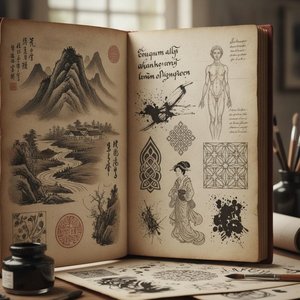
The Codex as Conduit: An Introduction to Literary Icon and Image
To encounter a book within a painting is rarely to witness a mere object of utility. Instead, the volume often functions as a portal, a signifier that directs the viewer toward truths residing beneath the surface of the visible world. In the history of fine art, the book has served as a stable anchor for complex ideas, providing a physical weight to the ephemeral nature of thought. When an artist places a closed tome upon a table or an open manuscript within a landscape, they are not simply documenting a library; they nonetheless invite a reading of the unseen.
This tradition finds its roots in the ancient symbolon, a Greek object broken into two halves to verify an alliance between parties. Just as these shards required reassembly to reveal their meaning, the symbols found within art require a certain intellectual reconstruction by the observer. The book acts as the medium for this reconnection, bridging the gap between the literal object and the abstract concept it represents.
Scriptural Weight: From Netherlandish Devotion to Modern Allegory
Early Netherlandish painting is the body of work by artists active in the Burgundian and Habsburg Netherlands during the 15th- and 16th-century Northern Renaissance period, once known as the Flemish Primitives. It flourished especially in the cities ...
The gravity of the written word is perhaps most profoundly felt in the Early Netherlandish tradition. In these 15th-century works, the book was often a central protagonist in religious narratives, its presence imbuing small portraits and devotional scenes with an air of profound sanctity. These painters did not rely on grand gestures; rather, they utilized the meticulous detail of a prayer book or a liturgical text to ground the divine within the domestic.
This historical reverence for the text finds a contemporary echo in the way modern artists utilize iconography to communicate spiritual or philosophical depth. Where the Flemish masters used the physical presence of a manuscript to signal piety, later movements like Symbolism sought to clothe the Ideal in a perceptible form. The intention remains remarkably consistent: to use a recognizable, tangible object to point toward an archetypal truth that defies simple description.
Tactile Narratives: The Alchemy of Paper, Texture, and Thread
A Legacy of Textured Narrative: The Artistry of Susan Allix In the delicate intersection where literature meets fine craft, the work of Susan Allix emerges as a profound testament to the power of the handmade. Born in 1943 in the United Kingdom, Alli...
Beyond the literal meaning of the text lies the physical reality of the medium itself. For many artists, the book is a sculptural entity, defined by the grain of the paper, the tension of the binding, and the weight of the cover. The materiality of the book allows for a sensory dialogue that transcends mere reading. Artists like Susan Allix demonstrate this through an alchemical approach to paper, where the very texture of the surface becomes a vehicle for storytelling, utilizing printmaking techniques to create layers of light and shadow.
This focus on the tactile finds its historical antecedent in the meticulous craftsmanship of the Middle Ages, where illuminated manuscripts were as much feats of engineering and luxury craft as they were vessels of scripture. The interplay of gold leaf, vellum, and pigment created a physical experience that mirrored the complexity of the divine word. Today, this same respect for material integrity allows contemporary book artists to transform the static page into an immersive, sensory environment.
Memory Bound: The Book as a Vessel for Personal History
Artist Xiu Zhen Yin is also extremely sensitive to her surroundings and has long focused on the relationship between personal experience, memory and the era in which she lives. She is particularly adept at taking objects that are perfectly ordinary i...
A book is often more than a collection of pages; it is a repository of traces. In the hands of Xiu-Zhen Yin, the concept of the book expands to include the very fabric of human existence. By utilizing second-hand clothing within her Books series, she imbues these volumes with the memories and identities of their original owners. Here, the book becomes a reliquary for the ephemeral, capturing the essence of an era or an individual through the physical remnants of their lives.
This practice mirrors the way historical archives and family bibles have functioned for centuries—as objects that hold the weight of lineage and personal experience. Just as a weathered ledger might speak of a merchant's life, Yin’s work uses the structural form of the book to preserve the intangible traces of human presence, ensuring that memory remains anchored in something tangible.
Kinetic Volumes: Redefining the Architecture of the Page
A Pioneer of Kinetic Books: The World of Susan Joy Share Susan Joy Share’s artistic journey is a testament to the boundless potential within the humble book – transforming it from a repository of words into a dynamic, sculptural experience. Born in S...
The evolution of the book in art has moved steadily away from the flat, static page toward a more architectural and kinetic form. Artists such as Karen Tuttle and Susan Joy Share have rejected the traditional boundaries of print, treating the book as a three-dimensional sculpture that breathes and moves. Tuttle, drawing upon her musical background, introduces a rhythmic vitality to her paper creations, using delicate materials like Japanese mulberry paper or even eggshell to explore themes of transformation.
This movement toward the sculptural finds its historical parallel in the way Renaissance artists viewed the universe itself—as a great book written in mathematical and geometric symbols. Just as Galileo suggested that we cannot comprehend the cosmos without understanding its underlying symbolic language, these kinetic artists suggest that we cannot understand the essence of the book without engaging with its physical movement and structural depth.
The Esoteric Alphabet: Decoding Subconscious Symbolism
The Book of Revelation belongs to the biblical texts whose interpretation has always posed many challenges, leading to the development of various interpretative systems. Ancient Eastern exegesis was prophetic in nature and favored allegorical interpr...
Finally, we must consider the book as a tool for exploring the irrational and the unseen. The Symbolist movement of the late 19th century utilized the imagery of books to delve into the realms of dreams, mysticism, and the occult. For these artists, the book was not a source of literal information but a way to represent absolute truths through metaphor. They sought to capture the "effect" of an object rather than the object itself, much like the poets who influenced them.
This pursuit of the esoteric finds its most ancient expression in the various interpretations of the Book of Revelation. From the allegorical methods of Origen to the complex theological layers applied by later scholars, the text has always been viewed as a multi-layered entity containing literal, moral, and spiritual truths. In both the ancient exegete and the modern Symbolist painter, there exists a shared belief that the most profound meanings are never found on the surface, but are hidden within the symbols we choose to decode.
For those seeking to acquire high-quality reproductions of these profound traditions, OriginalUniqueArt.com offers an extensive catalog of hand-painted oils and museum-grade prints, ranging from classical landscapes to contemporary sculptural explorations.
Master the use of acrylic on paper in hospitality design. This expert guide covers texture, substrate durability, and professional application for high-traffic hotel and corporate spaces. Ideal for procurement managers seeking impactful, long-lasting art solutions for commercial projects.
Journey through history with 10 legendary ink on paper masterpieces. From Zen-inspired Sumi-e to iconic sketches, explore the stories behind these timeless works. Find museum-quality art reproductions and curated decor inspiration at OriginalUniqueArt.com. Explore the full collection online.
დაბნეულობთ ტილოს ტიპებით? ჩვენი ხელოვნების ექსპერტები ადარებენ 100%-იან ტილოს, მათლოვან საარქივო ქაღალდს, ბზინვარე ბამბის და მათლოვან ბამბას. აღმოაჩინეთ საუკეთესო საფუძველი ზეთის საღებავებით შესრულებული ნახატებისა და პრინტებისათვის რეალური ფასებით, ტექნიკური მახასიათებლებითა და პროფესიონალური რჩევებით, რათა თქვენი ხელოვნება მთელი სიცოცხლის მანძილზე შენარჩუნდეს.
შეწყვიტეთ ვარაუდი იმის შესახებ, არის თუ არა თქვენი ხელოვნება მუზეუმის დონის. ისწავლეთ „ლუპის ტესტი“ OriginalUniqueArt-ის ექსპერტებისგან, რათა შეძლოთ ნამდვილი ჟიკლეს (giclée) პრინტებისა და იაფფასიანი პოსტერების გარჩევა მელნის, ქაღალდისა და პიგმენტის შემოწმებით. დაეუფლეთ თვრამეტ მასალურ შემოწმებას, რომელიც ყველა კოლექციონერს სჭირდება ნივთის ხანგრძლივი ღირებულებისა და სილამაზის დასაცავად.

 Early Netherlandish painting
 Susan Allix
 Books No.5, Books No.6, Books No.11, Books No.12, Books No.18, Books No.19
 Susan Joy Share