Symbolist Expressionism · 1895
The Skeleton Painter (ჯეიმზ კენსორი, 1895)
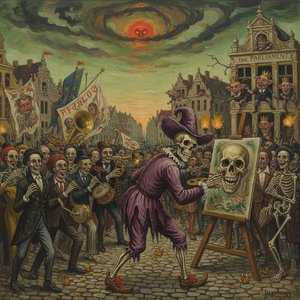
ჯეიმზ კენსორი (1860–1949)-მა შექმნა The Skeleton Painter. ის შექმნილ არის 1895 წელს. ის Symbolist Expressionism მიძღვნილ სტილს მიეკუთვნება. შესრულებულია Acrylic On Canvas-ით. ნახატი დაცულია Koninklijk Museum voor Schone Kunsten-ში, ანტვერპენი, ბელგია-ში.
- 1895
- Acrylic On Canvas
- Koninklijk Museum voor Schone Kunsten, ანტვერპენი

 წინასწარი ნახვა

 ხელით შესრულებული ზეთប្រეწერი
 გაგზავნა
 გაზიარება
 სპეცფიკაცია


 ჩამოტვირთვა
 მსგავსები
 რენტგენოგრაფიული კვლევა
 სლაიდშოუ
 კითხვა-პასუხი

 სტატისტიკა
The Skeleton Painter, მოკლედ
- სათაური
- The Skeleton Painter
- ავტორი
- ჯეიმზ კენსორი (1860–1949)
- ხატვის წელი და ადგილი
- ოსტენდი, ბელგია
- თარიღი
- 1895
- ტექნიკა
- Acrylic On Canvas
- სად ნახვა შეგიძლიათ
- Koninklijk Museum voor Schone Kunsten, ანტვერპენი, ბელგია
- მოძრაობა
- Symbolist Expressionism
- სუბიექტი
- skeleton, artist, death, masks, paintings, room
რა არის გამოსახული The Skeleton Painter-ში?
A Dance with Mortality: James Ensor’s “The Skeleton Painter”
James Ensor's "The Skeleton Painter," completed in 1895, is not merely a painting; it’s an unsettling plunge into the subconscious, a meticulously crafted tableau of morbidity and artistic obsession. The image, rendered with a distinctive and increasingly personal style, immediately confronts the viewer with a scene both bizarre and profoundly familiar – a room overflowing with art, dominated by a central figure: a skeleton diligently wielding a paintbrush. This isn’t a morbid spectacle intended to shock for shock's sake; rather, it’s a complex meditation on life, death, creativity, and the inescapable nature of artistic endeavor. Ensor, born in Ostend, Belgium, in 1860, cultivated an intensely individual vision, one deeply rooted in his upbringing amidst the vibrant chaos of a seaside resort town and fueled by a fascination with masks, disguise, and the theatricality of human experience.
The Artist’s Studio – A Realm of Shadows
The setting itself is crucial to understanding the painting's power. The room is crammed with canvases, each bearing witness to Ensor’s restless hand. A dining table, laden with objects—a clock, a partially consumed meal—suggests an interrupted life, a space where sustenance and creation intertwine. The presence of other skeletons, scattered amongst the chairs and leaning against walls, reinforces the pervasive theme of mortality. These aren't simply decorative elements; they are active participants in the scene, almost as if they’re observing or even contributing to the artist’s work. The inclusion of a cat, curled up near the left edge, adds an element of domesticity and perhaps a subtle critique – a creature of instinct and survival nestled within this world of intellectual pursuit.
Symbolism and Technique: A Palette of Unease
Ensor’s technique is immediately recognizable. He employed a thick, impasto application of paint, building up layers of color to create a tactile surface that seems almost sculptural. The palette is deliberately muted – browns, greys, ochres, and deep blues dominate—contributing to the painting's somber mood. The skeletal figure itself is rendered with remarkable detail, highlighting the fragility of bone while simultaneously conveying a sense of focused determination. Notice how Ensor uses strong diagonals – particularly in the arrangement of the chairs and paintings – to create a feeling of unease and instability. The use of color is not about beauty; it’s about evoking emotion, creating a visual atmosphere of melancholy and contemplation. His style evolved significantly throughout his career, moving away from academic influences towards a highly expressive, often unsettling, approach that anticipated the Symbolist movement.
Ensor's Exploration of Artistic Identity
"The Skeleton Painter" can be interpreted as an exploration of Ensor’s own artistic identity and his relationship to mortality. The skeleton artist represents not just death but also the inevitable end of creative endeavor, the fading of inspiration with time. It speaks to the paradox of the artist – someone who often seems detached from the everyday realities of life, yet is ultimately defined by their engagement with them. Ensor’s own struggles with artistic recognition and his rejection of traditional academic training likely fueled this preoccupation with themes of isolation and the ephemeral nature of existence. The painting isn't a celebration of art; it’s a questioning of its purpose and its ultimate significance in the face of oblivion. It invites us to consider what drives an artist to create, knowing that their work, like their own physical form, will eventually succumb to time.
OriginalUniqueArt offers exquisite, hand-painted reproductions of James Ensor’s “The Skeleton Painter,” allowing you to bring this haunting masterpiece into your home or office. Each reproduction is created with the same meticulous attention to detail and expressive technique as the original, capturing the painting's unique atmosphere and emotional depth. Explore our collection today and experience the unsettling beauty of Ensor’s vision.
რომელ მუზეუმში ინახება The Skeleton Painter?
Koninklijk Museum voor Schone Kunsten
ანტვერპენი, ბელგია
Origins and History of the Museum The Koninklijk Museum voor Schone Kunsten was established in 1810. Its foundation is rooted in the legacy of the Antwerp Guild of Saint Luke, an institution that was active from the late 14th century until 1773. The museum's collection began with the artworks owned by this guild, establishing a direct link between the city's mercantile past and its artistic development.


The Skeleton Painter-ის მაღალი გარ Auflხ resolución-ის გამოსახულებები

საჯარო საკუთრება: მხატვარი გარდაიცვალა 1949 წელს.
სხვა ზომები, კადრისრები და ციტირება →ჯეიმზ კენსორი, The Skeleton Painter (1895), Koninklijk Museum voor Schone Kunsten. საჯარო საკუთრება
კითხვები The Skeleton Painter-ზე, პასუხები
სად შემიძლია ვნახო ჯეიმზ კენსორი-ის „The Skeleton Painter“ ორიგინალი?
ორიგინალი „The Skeleton Painter“ შეგიძლიათ ნახოთ Koninklijk Museum voor Schone Kunsten, ანტვერპენი, ბელგია-ში.
რა წელს შეიქმნა ჯეიმზ კენსორი-ის „The Skeleton Painter“?
The Skeleton Painter შექმნილია 1895 წელს. ეს თარიღი ნამუშევარს ჯეიმზ კენსორი-ის შემოქმედებითი კარიერისა და იმ ეპოქის კონტექსტში ათავსებს.
რა მასალისგან არის შესრულებული ჯეიმზ კენსორი-ის „The Skeleton Painter“?
ჯეიმზ კენსორი-ის „The Skeleton Painter“-ის მასალა არის Acrylic On Canvas. რეპროდუქციების მიზანია ამ ტექნიკის ვიზუალური მხარის ზუსტი გადმოცემა.
რა თემებია გამოსახული ნამუშევარში ჯეიმზ კენსორი-ის „The Skeleton Painter“?
ჯეიმზ კენსორი-ის „The Skeleton Painter“-ში წარმოდგენილი თემები მოიცავს skeleton, artist, death, masks, paintings, room, cat, decay-ს, რაც ერთობლიობაში ასახავს ნამუშევრის შინაარსს.
არის თუ არა "The Skeleton Painter" საავტორო უფლებებისგან თავისუფალი?
რაც შეეხება საავტორო უფლებებს, „The Skeleton Painter“ არის საჯარო საკუთრებაშია — საავტორო უფლებები ამოწდა.
რომელ ხელოვანს მიეწერება "The Skeleton Painter"?
„The Skeleton Painter“ მიკუთვნებულია ჯეიმზ კენსორი-ს.
რომელ სტილს მიეკუთვნება "The Skeleton Painter"?
"The Skeleton Painter" არის Symbolist Expressionism სტილის ნამუშევარი. აღნიშნული მიმდინარეობა ასახავს იმ მხატვრულ ტრადიციას, რომლის ნაწილიცაა ეს ნამუშევარი.
ჯეიმზ კენსორი-ის შემოქმედების რომელ პერიოდს მიეკუთვნება „The Skeleton Painter“?
"The Skeleton Painter" ჯეიმზ კენსორი-ის შემოქმედებითი კარიერის Late Period პერიოდს განეკუთვნება. ეს კლასიფიკაცია ნამუშევარს ხელოვანის შემოქმედებითი განვითარების ეტაპთან აკავშირებს.
რა ასაკში შექმნა ჯეიმზ კენსორი-მა „The Skeleton Painter“?
როდესაც 1895 წელს შექმნა „The Skeleton Painter“, ჯეიმზ კენსორი — რომელიც 1860-ში დაიბადა — 35 წლის იყო.
ხელပاتარში: ჯეიმზ კენსორი

1860–1949, ბელგია
ჯეიმზ კენსორი
Early Life, Family and Artistic Training James Ensor was born on April 13, 1860, in Ostend, Belgium. His identity was shaped by a specific cultural intersection: his father, James Frederic Ensor, was born in Brussels to English parents, while his mother, Maria Catherina Haegheman, was Belgian. This dual heritage provided a foundation for a perspective that often sat outside the narrow confines of local tradition. Growing up, the artist lived within the walls of a souvenir shop operated by his parents in Ostend.
ჯეიმზ კენსორი-ის შესახებ ჯეიმზ კენსორი-ის გამორჩეული ნამუშევრები
ასევე ჯეიმზ კენსორი-ის მიერ
 ქრისტეს შემოხ სი ბრიუსელი1888
 სამ별დებულება ნიღლებით1899
 ოსტენდის ბანები
 ჩონჩხები, რომლებიც თავს እთბობენ1889

ესეები The Skeleton Painter-ის შესახებ
 Beauty in Mortality: Capturing the Soul of the Skull through the Luminous Lens of Impressionist ArtExplore the profound beauty of mortality through Impressionism. Discover how masters like Monet and Renoir transformed the Memento Mori tra…
 The Psychology of Playful Imagery: Exploring Humorous and Whimsical Paintings as Catalysts for Emotional Wellbeing and Social ConnectionExplore the psychology of playful art! Discover how humorous & whimsical paintings foster emotional wellbeing & connection. Expert insights…
 James Ensor's Grotesque Visions: Social Commentary & Artistic InnovationExplore the unsettling yet captivating world of James Ensor, a pioneer of Expressionism. Discover his satirical masterpieces, symbolic imag…