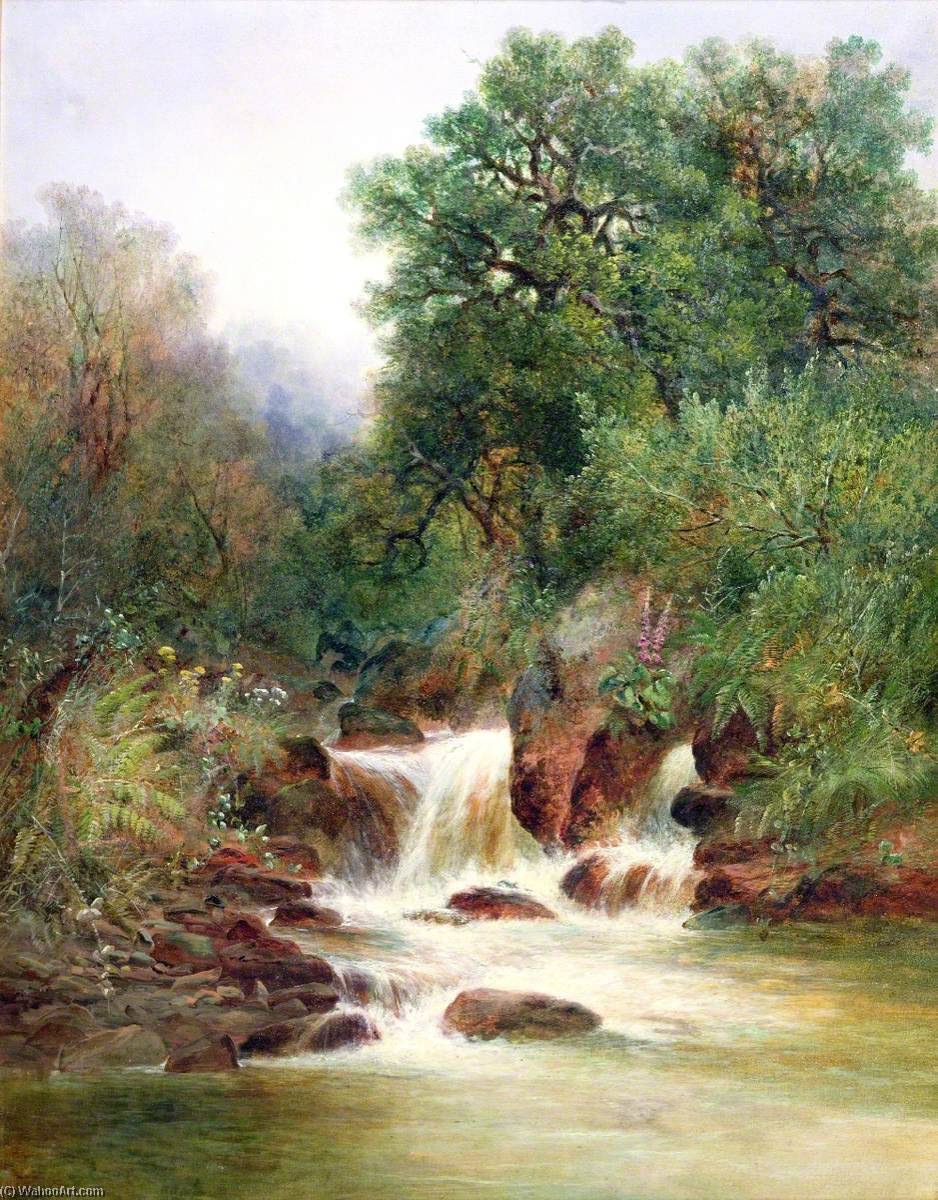
William Widgeryの肖像画

William Widgeryの絵画:ギャラリーの視点で選ぶ、最も有名な25作品

11月 2026 更新 · 当サイトの人気スコア(各作品の検索数、閲覧数、注文数)に基づくランキング · 25点の William Widgeryの作品がカタログにあります

要約すると

ギャラリーの視点では、William Widgeryの最も有名な作品はCheddar Gorge, Somerset (1860)であり、その原画はバースのVictoria Art Galleryに展示されています。 Burdocks, Brambles and Furze (1868)とLandscape with Figures by a Waterfall (1858)が加わり、誰もが一度は目にしたことのある至高のトリオが完成します。 当カタログに含まれるWilliam Widgeryの作品25点の中から、特に有名な25点を厳選してご紹介します。各作品は、制作年、所蔵美術館、そしてその作品ならではの魅力とともに、一点物のオリジナル作品として掲載されています。

1822 – 1893 Romanticism 最多収蔵館: Royal Albert Memorial Museum

ギャラリーが選ぶWilliam Widgeryのトップ10作品

1
Cheddar Gorge, Somerset (1860) による William Widgery

Cheddar Gorge, Somerset

1860 · Oil On Canvas · Victoria Art Gallery, バース

The composition centers on the vertical limestone ranges of Cheddar Gorge, which rise on either side of the scene. These crags form a narrow passage where light and shadow define the rugged textures of the rock faces. In the middle ground, a river flows through the valley, its surface reflecting the sky. Small cottages are situated along the banks, appearing nestled against the base of the cliffs. Groups of people…

2
Burdocks, Brambles and Furze (1868) による William Widgery

Burdocks, Brambles and Furze

1868 · Oil · Royal Albert Memorial Museum, エクセター

The composition focuses on a dense, tangled arrangement of botanical life. Burdock plants, wild brambles, and the thick, prickly texture of furze shrub occupy the frame. This oval-canvas work captures the unmanicured reality of the British countryside, moving away from idealized garden scenes toward the rugged, overlapping layers of the hedgerow. The arrangement emphasizes the structural complexity of these plants, where thorns and broad leaves intersect in a natural, chaotic…

3
Landscape with Figures by a Waterfall (1858) による William Widgery

Landscape with Figures by a Waterfall

1858 · Oil On Canvas

There is a certain stillness that settles over this 1858 oil on canvas, a sense of a moment caught in the soft, diffused light of an overcast day. In this landscape, we find ourselves looking upon a picturesque valley where a meandering river carves its way through rolling hills. The composition draws the eye inward, moving from the immediate presence of the foreground toward the pale, receding shapes of the…

4
On the Lyd, Devon (1873) による William Widgery

On the Lyd, Devon

1873 · Oil On Canvas · Royal Albert Memorial Museum, エクセター

A vertical stream cuts through the heart of a wooded Devon landscape. The water moves with a soft, diffused light, suggesting the cool air of an overcast morning. Thick tree trunks rise like pillars, their bark rendered with a heavy, tactile layering of oil paint. A small, solitary figure rests near the bank, a tiny presence amidst the overwhelming weight of the foliage. The scene feels still, caught in a…

William Widgeryの絵画、ランキング11位から25位

William Widgeryが心を惹かれた主題

これらのオリジナル作品に繰り返し描かれている4つの主題と、それぞれの最高傑作。

William Widgeryの原画を所蔵する美術館

このページに掲載されている絵画を最も多く所蔵している 4 の美術館

美術館 都市 William Widgeryの作品 このリストの絵画
Royal Albert Memorial Museum, エクセターRoyal Albert Memorial Museum エクセター 12 Burdocks, Brambles and Furze, On the Lyd, Devon, Edward Adams (1823–1892), of Crediton
Torre Abbey Historic House And Gardens, TorquayTorre Abbey Historic House And Gardens Torquay 7 Stepping Stones, Ponies on Dartmoor, Cattle on Dartmoor
Victoria Art Gallery, バースVictoria Art Gallery バース 2 Cheddar Gorge, Somerset, Leigh Woods, Bristol
University of Exeter, ExeterUniversity of Exeter Exeter 1 River Scene

William Widgery、10年ごとに1枚の代表作

年代別作品数

その時代を象徴する名作を見るために、年代を選択してください。

William Widgeryの絵画:ギャラリーの回答

William Widgeryの作品の中で、最も有名な絵画は何ですか?答えを見る

Cheddar Gorge, Somerset (1860)(Victoria Art Gallery, バース)。次いでBurdocks, Brambles and Furze (1868)、Landscape with Figures by a Waterfall (1858)が続きます。

William WidgeryがCheddar Gorge, Somersetを完成させた時の年齢は?答えを見る

38歳:Cheddar Gorge, Somersetは1860年の作品で、William Widgeryの生年は1822年です。

William Widgeryの代表的な絵画トップ10は?答えを見る

Cheddar Gorge, Somerset, Burdocks, Brambles and Furze, Landscape with Figures by a Waterfall, On the Lyd, Devon, Edward Adams (1823–1892), of Crediton, Fingle Bridge, Devon, Swiss Lake Scene, Scene near Holy Street Mill, Chagford, Devon, Bowerman’s Nose, Dartmoor, Devon と View in Gidley Park, Devon。上記のランキングには、それぞれの制作年と所蔵美術館が記載されています。

William Widgeryの作品数は?答えを見る

当カタログには、1856年から1873年にかけて制作されたWilliam Widgeryによる25点の作品が収められています。

William Widgeryの最も有名なオリジナル作品はどこに展示されていますか?答えを見る

主にRoyal Albert Memorial Museum (エクセター), Torre Abbey Historic House And Gardens (Torquay) と Victoria Art Gallery (バース)に所蔵されています。上記の美術館一覧にすべて記載されています。

William Widgeryが最も有名な作品を描いたのはいつですか?答えを見る

1860s年:このページにある全25作品のうち、6作品がその時期に制作されました。そのうちCheddar Gorge, Somerset作品が含まれます。

William Widgeryの初期および後期の代表作は何ですか?答えを見る

このページでは、最も古い作品はEdward Adams (1823–1892), of Crediton (1856)、最新の作品はOn the Lyd, Devon (1873)です。

William Widgery が最も多く描いた主題は何ですか?答えを見る

このページに掲載されている25点の作品におけるBritish countryside (3), Landscape (3) と Rural (3)

William Widgery が最も多く用いた技法は何ですか?答えを見る

このページに掲載されている全25作品のうち、3作品のOil On Canvas

William Widgeryはどの芸術運動に関連していますか?答えを見る

このページに掲載されているオリジナル作品から判断すると、Romanticismです。

Royal Albert Memorial Museumが所蔵するWilliam Widgeryのオリジナル作品は何ですか?答えを見る

Burdocks, Brambles and Furze, On the Lyd, Devon と Edward Adams (1823–1892), of Crediton:Royal Albert Memorial Museum, エクセターには、このページに掲載されている作品のうち12点が所蔵されています。

William Widgery:アーティスト

A Life Rooted in the British Landscape: William Widgery (1822-1893)

William Widgery, born in 1822 in Uppercot, Northmolton, Devonshire, embodies a compelling narrative of self-taught artistic dedication blossoming amidst humble beginnings. His story isn’t one of privileged academies and early patronage, but rather a testament to the enduring power of observation and an innate connection to the natural world. Initially working as a mason, Widgery pursued painting in his spare time, driven by an internal compulsion that would ultimately redefine his life's path. The encouragement of friends proved pivotal, yet it was the guidance of Mr. Thomas Hex of St. Thomas who truly catalyzed his transformation, urging him to abandon his trade and wholeheartedly embrace his artistic calling. This leap of faith—a commitment to a future solely dependent on his creative abilities—speaks volumes about Widgery’s unwavering belief in his own potential.

The Self-Made Aesthetic: Developing a Unique Vision

Remarkably, Widgery received no formal art instruction. In an era where artistic training often dictated style and subject matter, he forged his own path, relying solely on Nature as his master. Exeter, at the time, lacked a significant art gallery to provide guidance; instead, Widgery ventured directly into the fields, meticulously studying light, color, and form. This direct engagement with the landscape fostered a distinctive aesthetic—one characterized by bold brushwork, atmospheric effects, and an acute sensitivity to the nuances of rural life. Early works often involved skillful reproductions of popular artists like Landseer, providing him with a foundation in technique while simultaneously allowing him to develop his own unique voice. Dr. W.R. Scott, a keen art critic, consistently praised Widgery’s exceptional eye for color—a quality that would become a hallmark of his mature style. He didn't adhere to any particular school or movement; rather, he created a style uniquely his own, inspiring a generation of painters in Exeter who sought to emulate his approach.

Dartmoor and Beyond: Subjects and Style

Widgery’s artistic focus centered on the beauty of the British countryside, particularly the dramatic landscapes of Dartmoor. He captured the wildness and untamed spirit of the moor with a remarkable ability to convey both its grandeur and its intimate details. While Dartmoor remained his primary muse, he also explored coastal scenes in Devon and Cornwall, skillfully depicting rugged iron-bound coasts battered by crashing waves. His paintings are not merely representations of places; they are evocative experiences—imbued with atmosphere, light, and a palpable sense of place. He was equally adept at portraying animals, integrating them seamlessly into his landscapes to create harmonious compositions. His work is characterized by its directness and lack of excessive finish, prioritizing the emotional impact of the scene over meticulous detail. Over three thousand paintings were produced during his lifetime, each one eagerly sought after even before it left his easel—a testament to his growing reputation and the enduring appeal of his vision.

Legacy and Influence: A Family Tradition

William Widgery’s influence extended beyond his own prolific output; he also profoundly impacted his son, Frederick John Widgery (1861-1942). While William was largely self-taught, Frederick received formal training at Exeter Cathedral School, the Royal Albert Memorial Museum, and academies in London and Antwerp. This difference in education led to a more precise draughtsmanship in Frederick’s work, particularly suited for smaller-scale paintings and illustrations. Both father and son shared a deep connection to Dartmoor, but their individual styles reflect distinct approaches to capturing its essence. The family's artistic legacy is further cemented by the numerous works they left behind, now cherished collections within institutions like the Royal Albert Memorial Museum (RAMM) in Exeter. William Widgery’s story serves as an inspiring example of how passion, dedication, and a profound connection to nature can overcome adversity and create a lasting artistic impact. His paintings continue to resonate with audiences today, offering a glimpse into the beauty of 19th-century Britain and the enduring power of landscape art.