William Garl Brownの肖像画

世界的に有名なWilliam Garl Brownの名作5点、そのすべてが唯一無二の芸術品

11月 2026 更新 · 当サイトの人気スコア(各作品の検索数、閲覧数、注文数)に基づくランキング · 5点の William Garl Brownの作品がカタログにあります

要約すると

William Ellery (1835)はWilliam Garl Brownの作品の中で最も注目を集めている絵画です。原画はニューヨークのメトロポリタン美術館に所蔵されています。 その後、視線はZachary Taylor at Walnut Springs (1847)とJohn Buchanan Floyd (1800)へと移ります。 当カタログに含まれるWilliam Garl Brownの5点の作品のうち、これら5点は最も有名な作品です。制作年、所蔵美術館、そして時代を超えて愛される理由とともに、一点もののオリジナル作品をご紹介します。

1823 – 1894, Leicester 最多収蔵館: Library of Virginia

ギャラリーの視点で選ぶ、William Garl Brownによるトップ10作品

1
William Ellery (1835) による William Garl Brown

William Ellery

1835 · Watercolor · メトロポリタン美術館, ニューヨーク

A quiet presence emerges from the pale, mottled background. This portrait miniature captures William Ellery in a moment of stillness, his gaze fixed directly upon the viewer. The light falls from the upper left, carving the architecture of his face with soft shadows. It is a study of bone and skin rendered in a monochromatic palette. Deep blacks define the heavy fabric of his clothing, while luminous whites catch the…

2
Zachary Taylor at Walnut Springs (1847) による William Garl Brown

Zachary Taylor at Walnut Springs

1847 · Oil On Canvas · 国立肖像画美術館, Washington, D.C.

Zachary Taylor at Walnut Springs by William Garl Brown presents a wide, landscape-oriented view of an organized military encampment. On the right, a group of military officers gathers around a large canvas tent, their presence anchored by the structural poles of the shelter. To the left, the composition finds balance through a white horse tethered near several smaller tents, where a soldier stands nearby. The arrangement emphasizes a sense of…

3
John Buchanan Floyd (1800) による William Garl Brown

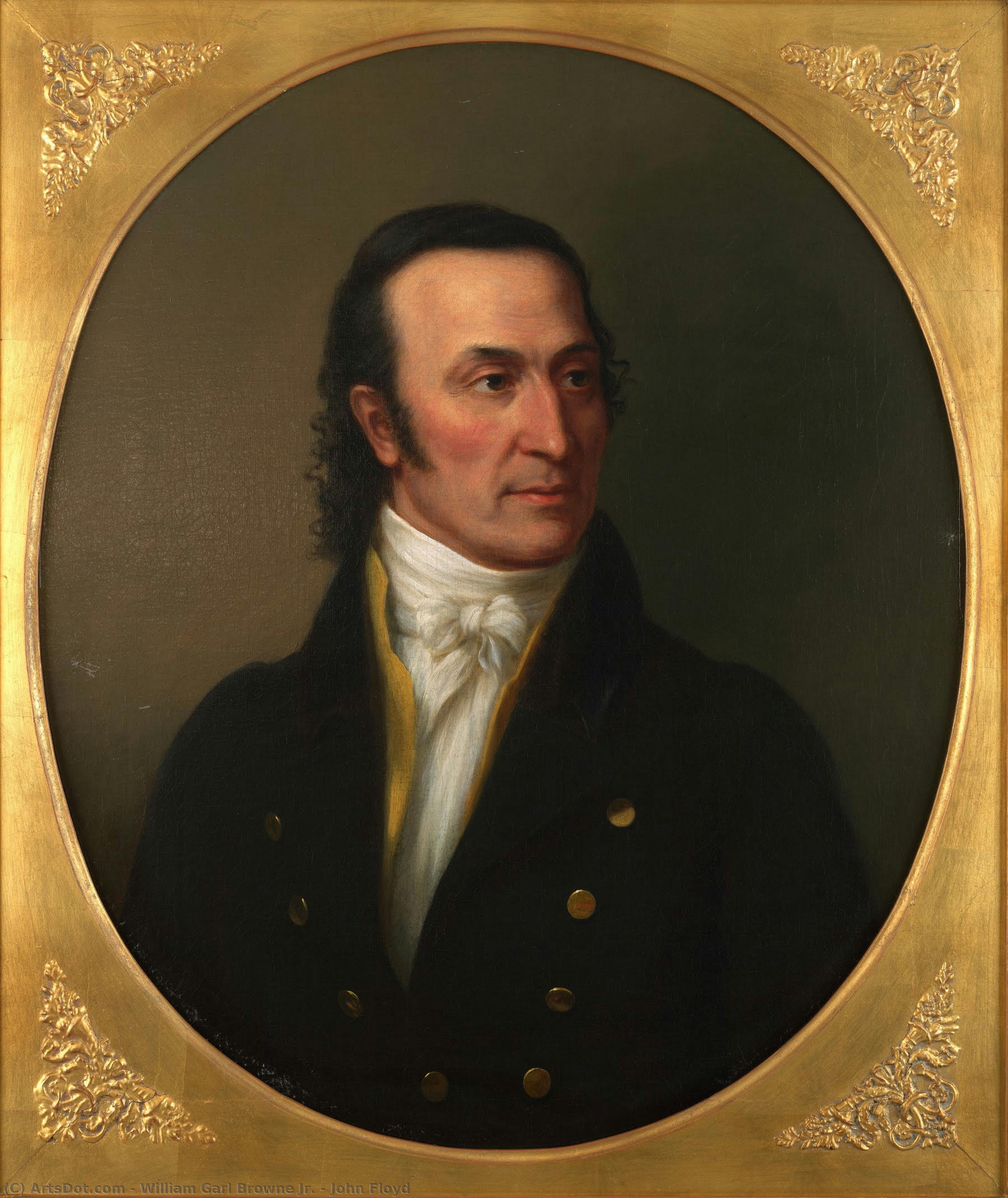
John Buchanan Floyd

1800 · Oil · Library of Virginia, リッチモンド

In the quiet dignity of this masterful portrait, we encounter the commanding presence of John Buchanan Floyd, the 34th Governor of Virginia. Painted by the skilled hands of William Garl Browne Jr., the work transcends a mere photographic likeness to become an evocative study of leadership and historical weight. The subject, an elder statesman with a meticulously groomed beard and mustache, gazients directly at the viewer, establishing an immediate and…

4
Rutherford B. Hayes (1878) による William Garl Brown

Rutherford B. Hayes

1878 · Oil On Canvas · The Abraham Lincoln Foundation of The Union League of Philadelphia, フィラデルフィア

This full-length, life-size portrait on canvas presents Rutherford B. Hayes, the 19th President of the United States. Painted by William Garl Brown in 1878, the work captures the statesman in a moment of quiet, formal presence. The scale of the canvas meets the man in his early fifties, offering a direct encounter with the figure of the presidency.

5
John Floyd (1872) による William Garl Brown

John Floyd

1872 · Oil · Library of Virginia, リッチモンド

William Garl Brown painted this portrait of John Floyd, a man who held the office of governor from March 4, 1830, to March 31, 1834. The work, dating from about 1872, captures a significant figure from Virginia's political history. Brown, who lived from 1823 to 1894, was a prolific chronicler of the American South, often focusing on the leadership and social hierarchies of the nineteenth century.

William Garl Brownが心を惹かれた主題

これらのオリジナル作品に繰り返し描かれている4つの主題と、それぞれの最高傑作。

William Garl Brownの原画を所蔵する美術館

このページに掲載されている絵画を最も多く所蔵している 4 の美術館

美術館 都市 William Garl Brownの作品 このリストの絵画
Library of Virginia, リッチモンドLibrary of Virginia リッチモンド 2 John Buchanan Floyd, John Floyd
メトロポリタン美術館, ニューヨークメトロポリタン美術館 ニューヨーク 1 William Ellery
国立肖像画美術館, Washington, D.C.国立肖像画美術館 Washington, D.C. 1 Zachary Taylor at Walnut Springs
The Abraham Lincoln Foundation of The Union League of Philadelphia, フィラデルフィアThe Abraham Lincoln Foundation of The Union League of Philadelphia フィラデルフィア 1 Rutherford B. Hayes

William Garl Brownの数十年にわたる軌跡:それぞれに唯一無二のオリジナル作品を

年代別作品数

その時代を象徴する名作を見るために、年代を選択してください。

William Garl Brownの絵画:ギャラリーへの質問

William Garl Brownの最も有名な作品は何ですか?答えを見る

William Ellery (1835)(メトロポリタン美術館, ニューヨーク)。次いでZachary Taylor at Walnut Springs (1847)、John Buchanan Floyd (1800)が続きます。

William Garl BrownがWilliam Elleryを制作したのは何歳の時ですか?答えを見る

12歳:William Elleryは1835年の作品で、William Garl Brownの生年は1823年です。

William Garl Brownの既知の作品数は?答えを見る

当カタログには、1835年から1878年にかけて制作されたWilliam Garl Brownによる5点の作品が収められています。

最も有名なWilliam Garl Brownのオリジナル作品はどこで見ることができますか?答えを見る

主にLibrary of Virginia (リッチモンド), メトロポリタン美術館 (ニューヨーク) と 国立肖像画美術館 (Washington, D.C.)に所蔵されています。上記の美術館一覧にすべて記載されています。

William Garl Brownが最も有名な作品を制作したのは、どの時期ですか?答えを見る

1870s年:このページにある全5作品のうち、2作品がその時期に制作されました。そのうちRutherford B. Hayes作品が含まれます。

William Garl Brownの有名な絵画の中で、最も古い作品と最も新しい作品はどれですか?答えを見る

このページでは、最も古い作品はWilliam Ellery (1835)、最新の作品はRutherford B. Hayes (1878)です。

William Garl Brownが好んだ主題は何ですか?答えを見る

このページに掲載されている5点の作品におけるMan (3), Portrait (3) と Suit (2)

William Garl Brownが最も多く使用した画材は何ですか?答えを見る

このページに掲載されている全5作品のうち、2作品のOil On Canvas

Library of Virginiaでは、William Garl Brownのオリジナル作品を何点鑑賞できますか?答えを見る

John Buchanan Floyd と John Floyd:Library of Virginia, リッチモンドには、このページに掲載されている作品のうち2点が所蔵されています。

William Garl Brown:アーティストの肖像画

A Legacy of Likeness: The Life and Art of William Garl Browne Jr.

In the grand tapestry of nineteenth-century portraiture, few threads are as intricately woven into the fabric of American history as those left by William Garl Browne Jr. Born in Leicester, England, in October 1823, Browne was a man whose artistic destiny was inextricably linked to the shifting landscapes of both continents. He did not merely paint faces; he captured the very essence of an era defined by expansion, conflict, and the burgeoning identity of the American South. His journey from the traditional artistic circles of the United Kingdom to the battlefields and parlors of the United States allowed him to develop a style that was as much about psychological depth as it was about technical precision.

The foundations of his mastery were laid under the watchful eye of his father, William G. Browne Sr., an accomplished landscape and genre painter. This early immersion in the meticulous traditions of English art instilled in the younger Browne a profound reverence for detail and a luminous approach to color. As he traveled with his father to the United States, the young artist began to absorb the rugged vitality of the New World. His early exhibitions, including a notable appearance at the National Academy in 1840, hinted at a burgeoning talent that would soon transcend mere imitation, moving toward a realism that could convey the weight of command and the quiet dignity of civilian life.

The Crucible of Fame: From Mexico to the American South

The defining moment of Browne’s career arrived amidst the smoke and fervor of the Mexican-American War. In 1847, at the remarkably young age of twenty-four, Browne undertook a commission that would cement his place in the annals of historical art. Stationed at the U.S. Army headquarters in Mexico, he painted a series of portraits featuring General Zachary Taylor and his staff. These works were far more than mere military records; they were vibrant, breathing documents of leadership. When these portraits were exhibited in Washington, New York, and Baltimore, they ignited a national sensation. Critics were captivated by the lifelikeness of the subjects, noting how Browne managed to capture the moral fortitude and commanding presence of Taylor—a man who embodied the republican virtues of the age.

Following this meteoric rise to fame, Browne made a deliberate choice that would shape his entire oeuvre: he turned his gaze toward the American South. While his contemporaries might have sought the established art markets of the North, Browne found inspiration in the complex social hierarchies and storied landscapes of the Southern states. His itinerant career took him through North Carolina, Virginia, and beyond, where he became a prolific chronicler of the region's most influential figures. It is estimated that during his time in North Carolina alone, he produced over a thousand portraits, creating a vast, though often fragmented, visual record of Southern society.

Artistic Mastery and Historical Significance

The technique of William Garl Browne Jr. was characterized by a sophisticated use of light and a palette that felt both rich and naturalistic. Drawing inspiration from the meticulousness of artists like John Smart, he possessed an uncanny ability to render textures—the heavy wool of a military uniform, the delicate lace of a lady's gown, or the weathered skin of a veteran. His work often bridged the gap between formal portraiture and narrative storytelling, imbuing his subjects with a sense of their own personal histories.

Beyond the aesthetic beauty of his canvases, Browne’s historical significance lies in his role as a visual biographer of a vanishing world. His portraits of political leaders, such as Rutherford B. Hayes and John Buchanan Floyd, serve as windows into the character of the nineteenth-century leadership. Through his brush, we see the faces of those who navigated the turbulent waters of American politics and war. Though much of his work remains scattered due to his wandering life, the surviving pieces stand as a testament to a painter who possessed the rare gift of capturing not just the likeness of a person, but the very spirit of an age.