


1


11月 2026 更新 · 当サイトの人気スコア(各作品の検索数、閲覧数、注文数)に基づくランキング · 33点の William Edward Stottの作品がカタログにあります
要約すると
William Edward Stottが遺したオリジナル作品の中で最も有名なものは、プレストンのHarris Museum - Art Galleryに収蔵されているA Cottage Madonna (1907)です。 それに次いで、There Was No Room in the Inn (1910)とSunrise in Winter (1891)が続きます。 William Edward Stottによる33点の作品をカタログに掲載しています。当ギャラリーでは、世界が称賛する21点を選定し、制作年、所蔵美術館、そしてその背景にある物語とともにご紹介しています。

In the quiet, shadowed corners of William Edward Stott’s There Was No Room in the Inn, we find a moment frozen in time, where the weight of history meets the tenderness of a single breath. This evocative oil on canvas, dating from approximately 1910, invites the viewer into a rustic wooden stable that feels less like a mere setting and more like a sanctuary of profound humility. The composition is…


The Approaching Night painting by William Edward Stott is a beautiful representation of rural life, showcasing the artist's ability to capture the essence of nature. Created in 1917, this oil on canvas piece measures 28 x 41 cm and is currently housed at the Touchstones Rochdale museum in Rochdale, United Kingdom. Composition and Style The painting depicts a scene of a herd of cattle standing in front of a house…
 Ploughing, Early Spring1890 · Touchstones Rochdale
12
 Sheep in Snow
13
 The Turnip Field
14
 The Patriarch
15
 The Young Cowherd
16
 Self PortraitTouchstones Rochdale
17
 Study of a Girl's HeadBolton Museum And Art Gallery
18
 Lambing TimeTowner
19
 Saturday NightTowner
20
 The Watering Placeナショナル・トラスト
21
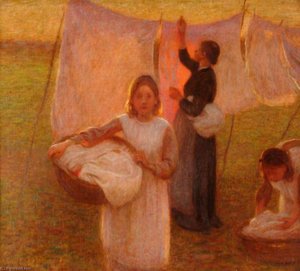 Washing DayWatts Gallery – Artists' Village
これらのオリジナル作品に繰り返し描かれている4つの主題と、それぞれの最高傑作。
このページに掲載されている絵画を最も多く所蔵している 8 の美術館
| 美術館 | 都市 | William Edward Stottの作品 | このリストの絵画 |
|---|---|---|---|
 Touchstones Rochdale |
ロッチデール | 5 | There Was No Room in the Inn, Sunrise in Winter, Approaching Night |
 ナショナル・トラスト |
イースト・グリンステッド | 2 | Red Roses, The Watering Place |
 Towner |
Eastbourne | 2 | Lambing Time, Saturday Night |
 Harris Museum - Art Gallery |
プレストン | 1 | A Cottage Madonna |
 レイング・アート・ギャラリー |
ニューカッスル・アポン・タイン | 1 | The Widow's Acre |
 Ferens Art Gallery |
Hull | 1 | The Good Samaritan |
 Bolton Museum And Art Gallery |
Bolton | 1 | Study of a Girl's Head |
 Watts Gallery – Artists' Village |
ギルフォード | 1 | Washing Day |
A Cottage Madonna (1907)(Harris Museum - Art Gallery, プレストン)。次いでThere Was No Room in the Inn (1910)、Sunrise in Winter (1891)が続きます。
A Cottage Madonna, There Was No Room in the Inn, Sunrise in Winter, Red Roses, Changing Pastures, The Widow's Acre, Noonday, The Watering Place, The Good Samaritan と Approaching Night。上記のランキングには、それぞれの制作年と所蔵美術館が記載されています。
当カタログにはWilliam Edward Stottによる作品が33点ございます。
主にTouchstones Rochdale (ロッチデール), ナショナル・トラスト (イースト・グリンステッド) と Towner (Eastbourne)に所蔵されています。上記の美術館一覧にすべて記載されています。
このページに掲載されている21点の作品におけるRural landscape (3), British countryside (3) と Rural life (2)
このページに掲載されているオリジナル作品から判断すると、Impressionism と Barbizon schoolです。
There Was No Room in the Inn, Sunrise in Winter と Approaching Night:Touchstones Rochdale, ロッチデールには、このページに掲載されている作品のうち5点が所蔵されています。
In the tapestry of late Victorian art, few threads possess the quiet, evocative strength of William Edward Stott. Born in 1855 amidst the industrial landscape of Wardleworth, near Rochdale, Stott emerged from a world defined by the rhythmic toil of Lancashire’s cotton mills. While his father, Samuel Stott, presided over a successful mill, the young artist’s gaze was frequently drawn away from the smoke of industry toward the enduring beauty of the natural world. This early exposure to the stark contrasts between industrial progress and rural tradition would become a cornerstone of his artistic identity, instating in him a profound empathy for the lives of those tethered to the land.
Stott’s journey was one of significant geographical and stylistic evolution. His formal training took him to the heart of the art world in Paris, where he studied under the esteemed academic painter Carolus Duran. While this period provided him with a rigorous foundation in meticulous technique and classical composition, it also placed him at the epicenter of a burgeoning revolution. The whispers of Impressionism and the soulful, earth-bound realism of the Barbizon School began to permeate his consciousness. He found himself deeply moved by the work of Jules Bastien-Lepage, whose ability to marry naturalistic detail with an atmospheric, almost poetic sense of light offered Stott a new vocabulary for his own explorations.
As his style matured, Stott transitioned from the rigid constraints of academicism toward a more fluid, emotive approach. His canvases became windows into a vanishing way of life, capturing the subtle shifts of light that define the English countryside. He did not merely paint landscapes; he painted atmospheres. Whether it was the soft, encroaching shadows in Approaching Night or the warm, sun-drenched serenity found in The Watering Place, Stott possessed a rare gift for rendering the ephemeral qualities of the air and the earth.
His subject matter often centered on the dignity of rural labor and the quiet rhythms of pastoral existence. In works such as Ploughing, Early Spring, one can sense the connection between the artist and his subjects—a shared understanding of the seasonal cycles and the physical reality of the landscape. His technique utilized a sophisticated palette to evoke mood, often employing:
Though Stott may not have attained the global celebrity of his contemporaries like Monet or Renoir, his contribution to the British aesthetic remains vital. He stood at a pivotal historical crossroads, navigating the transition from the structured traditions of the 19th century to the more experimental sensibilities of the early 20th century. His work serves as a poignant historical record, preserving the essence of an English landscape and a social order that were rapidly being transformed by the very industrial forces he witnessed in his youth.
Today, Stott’s paintings continue to resonate with a modern audience, offering a sense of tranquility and a nostalgic connection to the pastoral. His ability to imbue ordinary scenes with extraordinary emotional weight ensures his place in the canon of British Naturalism. To view a Stott painting is to experience a moment of stillness—a chance to witness the quiet dignity of the earth and the enduring, beautiful melancholy of the passing light.


