Wilhelm Sonmansの肖像画

世界的に有名なWilhelm Sonmansの名作29点、そのすべてが唯一無二の芸術品

10月 2026 更新 · 当サイトの人気スコア(各作品の検索数、閲覧数、注文数)に基づくランキング · 29点の Wilhelm Sonmansの作品がカタログにあります

要約すると

Dervorguilla of Galloway (d.1290), Lady of Balliol (1670)はWilhelm Sonmansの作品の中で最も注目を集めている絵画です。原画はオックスフォードのボドリアン図書館に所蔵されています。 その後、視線はJohn de Balliol (d.1269) (1670)とRichard Wightwick (1547 –1629) (1670)へと移ります。 当カタログに含まれるWilhelm Sonmansの29点の作品のうち、これら29点は最も有名な作品です。制作年、所蔵美術館、そして時代を超えて愛される理由とともに、一点もののオリジナル作品をご紹介します。

1650 – 1708 Baroque 最多収蔵館: ボドリアン図書館

ギャラリーの視点で選ぶ、Wilhelm Sonmansによるトップ10作品

1
Dervorguilla of Galloway (d.1290), Lady of Balliol (1670) による Wilhelm Sonmans

Dervorguilla of Galloway (d.1290), Lady of Balliol

1670 · Oil On Canvas · ボドリアン図書館, オックスフォード

The room feels heavy with the weight of centuries as the woman sits, her hands clasped in a quiet, steady gesture of composure. She wears a white veil that catches the light, framing a face that carries the gravity of her station. This is Dervorguilla of Galloway, a figure of substance from a vanished age, captured here in the soft, luminous glazes that define the Baroque style. Around her, the…

2
John de Balliol (d.1269) (1670) による Wilhelm Sonmans

John de Balliol (d.1269)

1670 · Oil On Canvas · ボドリアン図書館, オックスフォード

The portrait depicts John de Balliol, a man who held the title of King of Scotland from 1292 to 1306. He is positioned in a standing posture, clad in a suit of metal armor. A helmet and a sword are visible as part of his attire. The subject is situated near a structure composed of brick, which resembles a castle wall. Two other figures occupy the periphery of the composition;…

3
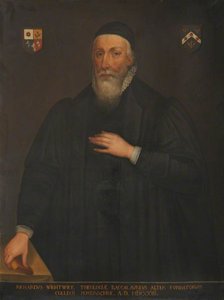
Richard Wightwick (1547 –1629) (1670) による Wilhelm Sonmans

Richard Wightwick (1547 –1629)

1670 · Oil On Canvas · ボドリアン図書館, オックスフォード

In this portrait, we encounter Richard Wightwick, a man whose life was deeply intertwined with the foundations of Pembroke College, Oxford. He is presented as an elderly figure, his presence defined by a long, white beard that flows over a dark robe. There is a quiet gravity in his gaze, suggesting a life spent in study and religious devotion. He holds a book in his left hand, a gesture that…

4
William of Waynflete (1398–1486) (1670) による Wilhelm Sonmans

William of Waynflete (1398–1486)

1670 · Oil On Canvas · ボドリアン図書館, オックスフォード

The figure of William of Waynflete commands the space, his presence heavy and dignified within the frame. He sits as a man of immense ecclesiastical weight, his gaze steady and serious, reflecting a life spent navigating the corridors of power and prayer. Light spills from the upper left, washing over the intricate folds of his robes and catching the metallic glint of his insignia. This illumination does more than reveal…

5
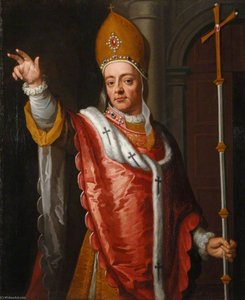
Walter de Stapledon (1261–1326) (1670) による Wilhelm Sonmans

Walter de Stapledon (1261–1326)

1670 · Oil On Canvas · ボドリアン図書館, オックスフォード

A figure of ecclesiastical power occupies the center of this oil on canvas portrait. Dressed in heavy, layered robes, the subject is presented in a frontal pose that demands immediate recognition of his status. The lighting is directional, carving deep shadows into the folds of the fabric and defining the contours of a face marked by gravity. A prominent mitre sits atop the head, while a crosier is held as…

6
Richard Fleming (d.1431) (1670) による Wilhelm Sonmans

Richard Fleming (d.1431)

1670 · Oil On Canvas · ボドリアン図書館, オックスフォード

The portrait of Richard Fleming (d.1431) emerges from the canvas as a presence that commands the space it occupies. Created by Wilhelm Sonmans, this oil on canvas work captures the likeness of the subject with a focused intensity. The figure of Richard Fleming (d.1431) remains fixed in a moment of quiet dignity, his presence felt through the careful application of pigment that defines his form. It is a work that…

Wilhelm Sonmansの名作、11〜29点目

Wilhelm Sonmansが心を惹かれた主題

これらのオリジナル作品に繰り返し描かれている4つの主題と、それぞれの最高傑作。

Wilhelm Sonmansの原画を所蔵する美術館

このページに掲載されている絵画を最も多く所蔵している 5 の美術館

美術館 都市 Wilhelm Sonmansの作品 このリストの絵画
ボドリアン図書館, オックスフォードボドリアン図書館 オックスフォード 20 Dervorguilla of Galloway (d.1290), Lady of Balliol, John de Balliol (d.1269), Richard Wightwick (1547 –1629)
Wadham College, オックスフォードWadham College オックスフォード 3 Mrs Alice George (1582 –1691), Dorothy Wadham (1534–1618), Nicholas Wadham (1532–1609)
The Library And Museum of Freemasonry, LondonThe Library And Museum of Freemasonry London 1 William Talman (c.1650–1719)
Oriel College, オックスフォードOriel College オックスフォード 1 John Hudson, Librarian and Principal of St Mary's Hall
ナショナル・トラスト, ヨークナショナル・トラスト ヨーク 1 Portrait of an Unknown Virtuoso Holding a Drawing over a Plinth with the Relief of a River God

Wilhelm Sonmansの数十年にわたる軌跡:それぞれに唯一無二のオリジナル作品を

年代別作品数

その時代を象徴する名作を見るために、年代を選択してください。

Wilhelm Sonmansの絵画:ギャラリーへの質問

Wilhelm Sonmansの最も有名な作品は何ですか?答えを見る

Dervorguilla of Galloway (d.1290), Lady of Balliol (1670)(ボドリアン図書館, オックスフォード)。次いでJohn de Balliol (d.1269) (1670)、Richard Wightwick (1547 –1629) (1670)が続きます。

Wilhelm SonmansがDervorguilla of Galloway (d.1290), Lady of Balliolを制作したのは何歳の時ですか?答えを見る

20歳:Dervorguilla of Galloway (d.1290), Lady of Balliolは1670年の作品で、Wilhelm Sonmansの生年は1650年です。

Wilhelm Sonmansの最も有名な10作品は何ですか?答えを見る

Dervorguilla of Galloway (d.1290), Lady of Balliol, John de Balliol (d.1269), Richard Wightwick (1547 –1629), William of Waynflete (1398–1486), Walter de Stapledon (1261–1326), Richard Fleming (d.1431), Thomas Tesdale (1547–1610), Nicholas Wadham (1532–1609), Dorothy Wadham (1534–1618) と Richard Fox (1448 –1528)。上記のランキングには、それぞれの制作年と所蔵美術館が記載されています。

Wilhelm Sonmansの既知の作品数は?答えを見る

当カタログには、1670年から1705年にかけて制作されたWilhelm Sonmansによる29点の作品が収められています。

最も有名なWilhelm Sonmansのオリジナル作品はどこで見ることができますか?答えを見る

主にボドリアン図書館 (オックスフォード), Wadham College (オックスフォード) と The Library And Museum of Freemasonry (London)に所蔵されています。上記の美術館一覧にすべて記載されています。

Wilhelm Sonmansが最も有名な作品を制作したのは、どの時期ですか?答えを見る

1670s年:このページにある全29作品のうち、17作品がその時期に制作されました。そのうちDervorguilla of Galloway (d.1290), Lady of Balliol作品が含まれます。

Wilhelm Sonmansの有名な絵画の中で、最も古い作品と最も新しい作品はどれですか?答えを見る

このページでは、最も古い作品はDervorguilla of Galloway (d.1290), Lady of Balliol (1670)、最新の作品はWelbore Ellis (1651–1734), Bishop of Meath (1705)です。

Wilhelm Sonmansが好んだ主題は何ですか?答えを見る

このページに掲載されている29点の作品におけるPortrait (3), Religious figure (3) と People (2)

Wilhelm Sonmansが最も多く使用した画材は何ですか?答えを見る

このページに掲載されている全29作品のうち、6作品のOil On Canvas

Wilhelm Sonmansの作品は、どの芸術運動に属していますか?答えを見る

このページに掲載されているオリジナル作品から判断すると、Baroqueです。

ボドリアン図書館では、Wilhelm Sonmansのオリジナル作品を何点鑑賞できますか?答えを見る

Dervorguilla of Galloway (d.1290), Lady of Balliol, John de Balliol (d.1269) と Richard Wightwick (1547 –1629):ボドリアン図書館, オックスフォードには、このページに掲載されている作品のうち20点が所蔵されています。

Wilhelm Sonmans:アーティストの肖像画

The Baroque Visionary: The Life and Legacy of Wilhelm Sonmans

In the grand, sweeping tapestry of European art history, certain names flicker with a particular, haunting brilliance, even if they remain tucked within the shadows of more famous contemporaries. Wilhelm Sonmans (1650–1708) is such a figure—a painter whose work serves as a profound window into the spiritual and dramatic essence of the Baroque era. Born in Cologne, Germany, Sonmans emerged from an age defined by movement, light, and intense emotionality. While much of his early life remains shrouded in the mists of time, his artistic journey is anchored by his formative apprenticeship under Johann Baptist Lingwerde, a distinguished painter in Düsseldorf. This period of rigorous training provided the foundation for a career defined by technical mastery and an uncanny ability to breathe life into both the human countenance and the natural landscape.

The stylistic DNA of Sonmans’ work is a sophisticated dialogue between the masters who preceded him. Through his lineage of training, he absorbed the dramatic chiaroscuro—the interplay of deep shadow and brilliant light—that defined the Dutch master Rembrandt, alongside the muscular dynamism and fluid energy characteristic of Rubens. This synthesis allowed Sonmans to develop a technique that was uniquely his own: a method of applying glazes to achieve luminous, skin-like surfaces and an atmospheric depth that seems to pull the viewer into the canvas. His brushwork, while precise enough to capture the intricate textures of ecclesiastical vestments, never lost the rhythmic vitality required to convey the spiritual fervor of the seventeenth century.

Mastery of Portraiture and the Sacred Landscape

Sonmans found his greatest acclaim in the realms of portraiture and religious iconography, where he could utilize his command of symbolism to communicate power and piety. His portraits of the nobility and high-ranking clergy were more than mere likenesses; they were carefully constructed narratives of authority and grace. A preeminent example is his 1705 depiction of Bishop Welbore Ellis. In this work, Sonmans achieves a level of neoclassical realism that borders on the transcendent, using rich textures and symbolic elements to underscore the subject's ecclesiastical importance. The painting stands as a testament to his ability to marry the physical reality of a sitter with the metaphysical weight of their office.

Beyond the structured confines of the portrait studio, Sonmans possessed a deeply contemplative relationship with the natural world. His landscapes, particularly those capturing the serene and mist-laden valleys of the Rhine, reveal an artist seeking the divine within the earthly. These works are characterized by:

  • Atmospheric Depth: A masterful use of light to create a sense of infinite distance and seasonal mood.
  • Spiritual Quietude: Landscapes that function as sites of meditation rather than mere topographical records.
  • Technical Precision: The delicate rendering of foliage, water, and sky through sophisticated glazing techniques.

A Lasting Influence on the Düsseldorf School

The historical significance of Wilhelm Sonmans extends far beyond the frames of his individual masterpieces. He was a pivotal figure in the cultural evolution of Düsseldorf, helping to transform the city into a vital hub for Baroque art production. By establishing a workshop that functioned as a crucible for talent, he ensured that the stylistic innovations of his apprenticeship—the blend of German precision and Flemish energy—would be disseminated to a new generation of artists. His legacy is not merely found in museums across Cologne, Düsseldorf, and Munich, but in the very fabric of the regional artistic identity he helped weave. Through his devotion to capturing the interplay of light, shadow, and soul, Sonmans remains an essential voice for those seeking to understand the profound spiritual landscape of the Baroque period.