ウォルター・オズボーン

1859 - 1903

概要

  • Creative periods: mature period
  • Lifespan: 44 years
  • Also known as:
    • ウォルター・フレデリック・オズボーン
    • オズボーン
    • Walter Frederick Osborne
    • Osborne
  • Art period: 19世紀
  • Copyright status: Public domain
  • Born: 1859, ダブリン, アイルランド
  • Topics explored:
    • irish art
    • gardens and parks
  • Top 3 works:
    • Portrait of Stephen Gwynn (1864-1950), Author
    • Portrait of Violet Osborne (1866-1893), Artist's Sister
    • Apple Gathering, Quimperlé

Early Life and Artistic Foundations

Walter Frederick Osborne, born in Rathmines, Ireland, in 1859, emerged from a family deeply rooted in the artistic world. His father, William Osborne, was a successful animal painter, providing young Walter with an early immersion into the sights, smells, and techniques of a working artist’s life. This foundational exposure proved pivotal, nurturing a talent that would blossom into a significant contribution to Irish art. Osborne's formal training began at Rathmines School before progressing to the prestigious Royal Hibernian Academy (RHA) Schools in Dublin. His dedication and skill were quickly recognized; he garnered numerous prizes, culminating in the esteemed Taylor scholarship (£50) – a testament to his exceptional promise even in those early years. This financial support enabled him to broaden his horizons and seek further education abroad, setting the stage for a period of crucial artistic development.

European Influences and Artistic Development

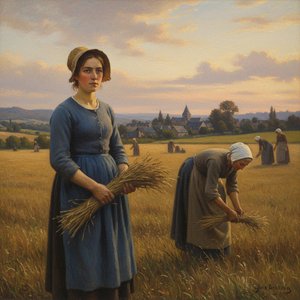
Osborne’s journey took him to Antwerp in 1881, where he studied at the Académie Royale des Beaux-Arts under Charles Verlat. This experience immersed him in realist traditions, honing his technical skills and emphasizing meticulous observation. However, it was a subsequent sojourn to Brittany between 1883 and 1884 that proved transformative. Working in locations like Dinan, Pont-Aven, and Quimperlé, Osborne encountered the *plein air* style championed by Jules Bastien-Lepage. This marked a turning point, encouraging him to capture nature directly, responding to light and atmosphere with an immediacy previously absent from his work. The influence of Flemish master Rubens also lingered in his artistic consciousness, evident in his later compositions. These diverse influences – the realism of Verlat, the naturalism of Bastien-Lepage, and the compositional strength of Rubens – coalesced into a unique artistic voice that would define Osborne’s career. His time in England followed, working alongside artists like Nathaniel Hill and Augustus Burke, further refining his skills in landscape and genre scenes depicting rural life.

A Return to Dublin and Portraiture Success

Family circumstances prompted Osborne's return to Dublin in 1892, where he established a thriving portrait practice. While landscapes and genre scenes remained central to his artistic interests, the demand for portraits provided financial stability and recognition. He had already become a full member of the RHA in 1886, solidifying his position within the Irish art establishment. Osborne’s style continued to evolve during this period, gradually moving away from strict realism towards Impressionism. This shift manifested in looser brushwork, a more adventurous palette, and an increased emphasis on capturing fleeting moments of light and atmosphere. His portraiture gained considerable acclaim, culminating in the bronze medal awarded for “Mrs Noel Guinness and her Daughter Margaret” at the Exposition Universelle in 1900 – a significant international honor.

Themes, Legacy, and Lasting Impact

Walter Osborne’s artistic legacy rests on his sensitive and insightful depictions of everyday life, particularly his documentary portrayals of Dublin's working class. He possessed an exceptional ability to capture the dignity and resilience of ordinary people, offering a poignant glimpse into their world. Beyond these compelling social commentaries, he painted numerous evocative landscapes and genre scenes depicting rural Ireland and England. His notable works, including “Feeding the Chickens,” “Mother and Child,” “The Return Of The Flock”, "Small Girl With A Cat", and “Cherry Ripe,” showcase his mastery of light, color, and composition. Tragically, Osborne’s life was cut short by pneumonia in 1903 at the age of just 43, leaving many to speculate about the artistic heights he might have reached. Despite his premature death, he is now rightfully regarded as a major figure in Irish art history. His work provides invaluable insights into the social conditions and daily lives of late 19th-century Ireland, and his blend of realism and Impressionism continues to inspire subsequent generations of artists. He wasn’t part of any formal movement but his influence on later Irish painters is undeniable, a testament to the enduring power of his vision and skill.

クイズ

各質問の正解は1つのみです。

設問 1:
ウォルター・オズボーンが最初に王立ヒバーニアン・アカデミー(RHA)校で学んだ都市はどこですか?
設問 2:
ブリタニー滞在中のオズボーンの作品に大きな影響を与え、彼をプレネール(戸外)画法へと導いた芸術家は誰ですか?
設問 3:
ウォルター・オズボーンがダブリンに戻り、肖像画制作を確立したのは何年ですか?
設問 4:
オズボーンが描いたものとして最もよく知られている主題は何ですか?
設問 5:
1900年の万国博覧会でブロンズメダルを獲得したウォルター・オズボーンの作品はどれですか?

アーティストへのQ&A

ウォルター・オズボーンは、どの時代に活動していましたか?

ウォルター・オズボーンは19世紀に活動していました。この時代背景は、その画家の足跡を歴史の中に位置づけるものです。

ウォルター・オズボーンの作品はどこで見ることができますか?

ウォルター・オズボーンの作品はNational Gallery of Ireland, ナショナル・ポートレート・ギャラリー 、および Finnish National Galleryにてご覧いただけます。

ウォルター・オズボーンの代表的な作品は何ですか?

ウォルター・オズボーンは、ウォルター・オズボーンの代表作ランキングに掲載されている作品で知られています。

ウォルター・オズボーンはどのような画風で描いていますか?

ウォルター・オズボーンは、他の有名なImpressionismの画家と同様に、Impressionism様式で描いています。

ウォルター・オズボーンによる作品「Portrait of Stephen Gwynn (1864-1950), Author」に関する詳細情報はどこで確認できますか?

Portrait of Stephen Gwynn (1864-1950), Authorに関する詳細は、印刷可能なスタディガイドにまとめられています。

ウォルター・オズボーンの作品をムード別に探すことはできますか?

ウォルター・オズボーンの作品をムード別に表示:それぞれの作品をその雰囲気に基づいて分類しています。

ウォルター・オズボーンの作品はパブリックドメインですか?

はい。ウォルター・オズボーンは1903年に没しており、作品はパブリックドメインとなっています。

ウォルター・オズボーンの生涯は?

ウォルター・オズボーンは1859年から1903年まで、約44年の生涯を過ごしました。

ウォルター・オズボーンの出生地と誕生年はいつですか?

ウォルター・オズボーンは1859年、ダブリンに生まれました。