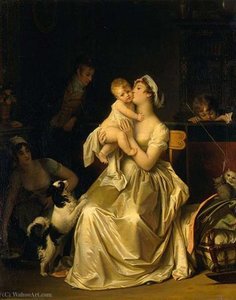
マルグリート・ジェラルドの肖像画

世界的に有名なマルグリート・ジェラルドの名作43点、そのすべてが唯一無二の芸術品

11月 2026 更新 · 当サイトの人気スコア(各作品の検索数、閲覧数、注文数)に基づくランキング · 45点の マルグリート・ジェラルドの作品がカタログにあります

要約すると

A Young Woman who has just Received a Letter from her Husband. Her Father is looking on a Globe for the Distance from Which the Letter Came (1808)はマルグリート・ジェラルドの作品の中で最も注目を集めている絵画です。原画はストックホルムの国立美術館に所蔵されています。 その後、視線はThe Reader (1817)とThe Reader (1783)へと移ります。 当カタログに含まれるマルグリート・ジェラルドの45点の作品のうち、これら43点は最も有名な作品です。制作年、所蔵美術館、そして時代を超えて愛される理由とともに、一点もののオリジナル作品をご紹介します。

1761 – 1837, グラス Neoclassicism 最多収蔵館: Villa Fragonard

ギャラリーの視点で選ぶ、マルグリート・ジェラルドによるトップ10作品

1
A Young Woman who has just Received a Letter from her Husband. Her Father is looking on a Globe for the Distance from Which the Letter Came (1808) による マルグリート・ジェラルド

A Young Woman who has just Received a Letter from her Husband. Her Father is looking on a Globe for the Distance from Which the Letter Came

1808 · Oil On Canvas · 国立美術館, ストックホルム

The air in the room feels heavy with the weight of unspoken words. A young woman stands poised, her silhouette framed by the soft, luminous glow of an unseen light source. She holds a letter, her fingers brushing the paper as she absorbs the news within. Her expression is serene, yet there is a quiet intensity in her gaze that suggests the contents of the parchment have momentarily stilled the…

3
The Reader (1783) による マルグリート・ジェラルド

The Reader

1783 · Oil On Canvas · Fitzwilliam Museum

The Reader is an oil on canvas painted by Marguerite Gérard. Executed in Paris about 1817, the work captures a quiet moment within a refined indoor setting. A woman sits amidst the stillness, her presence anchored by a table laden with papers and a book. Nearby, a child and a cat inhabit this private sphere, their forms softened by the domestic atmosphere. The scene is a study of texture and…

4
Portrait of a Man in his Study (1785) による マルグリート・ジェラルド

Portrait of a Man in his Study

1785 · Oil On Panel · ボストン美術館, ボストン

In Marguerite Gérard's Portrait of a Man in his Study, a young man sits within a quiet, scholarly sanctuary. The composition presents a full-length view, positioning the subject slightly off-center to create a balanced yet dynamic arrangement between the figure and the objects of his study. He is surrounded by the tools of a curious mind, specifically a globe and a large, open book. These elements suggest a life dedicated…

5
The Triumph of Minette (1785) による マルグリート・ジェラルド

The Triumph of Minette

1785 · Oil · プーシキン美術館, モスクワ

The Triumph of Minette is a Neoclassical genre painting by Marguerite Gérard. Executed around 1785, the work reflects the artist's established reputation as a gifted painter of domestic scenes. Gérard, born in Grasse, France, achieved significant recognition during this period, becoming one of the first French women to specialize in the genre of everyday life.

6
Presumed Portrait of Jean-Jacques Lagrenée, also known as Portrait of a Man in a Double-Breasted Coat (1787) による マルグリート・ジェラルド

Presumed Portrait of Jean-Jacques Lagrenée, also known as Portrait of a Man in a Double-Breasted Coat

1787 · Oil On Canvas · Musée Cognacq-Jay, パリ

A single light source descends from the upper left, carving a face out of the darkness. The man sits in a green upholstered chair, his body angled toward a wooden desk. He is draped in a heavy, double-breasted coat, the fabric catching the light in thick, sculptural folds. His hands rest near a large, open book, the white pages acting as a bright anchor amidst the surrounding gloom. This is…

7
Portrait of Læticia Bonaparte with Her Two Daughters (1786) による マルグリート・ジェラルド

Portrait of Læticia Bonaparte with Her Two Daughters

1786 · Oil On Canvas

The oil on canvas titled Portrait of Læticia Bonaparte with Her Two Daughters captures a quiet moment of domesticity. Painted by Marguerite Gérard in 1786, the work centers on a mother and her two young children. The scene is set within an intimate interior, where the figures are gathered in a soft, shared space. It is a study of familial connection through the lens of Neoclassical poise.

8
Portrait of Claude-Nicolas Ledoux (1787) による マルグリート・ジェラルド

Portrait of Claude-Nicolas Ledoux

1787 · Oil On Board · Musée Cognacq-Jay, パリ

The Portrait of Claude-Nicolas Ledoux presents a formal encounter with the celebrated architect, capturing him in a moment of professional poise. Marguerite Gérard, the artist behind this work, renders the subject with a clarity that speaks to his intellectual stature. The sitter is positioned within a studio setting, surrounded by the tools of his trade that hint at the structural precision of his life's work. Every line of his period…

9
Portrait of Jean-Honoré Fragonard (1788) による マルグリート・ジェラルド

Portrait of Jean-Honoré Fragonard

1788 · Oil On Canvas

In this three-quarter length portrait of Jean-Honoré Fragonard, Marguerite Gérard presents the sitter in a moment of quiet, intellectual repose. Seated slightly off-center, the subject gazes toward the viewer with a slight, knowing smile. He holds a writing implement, a detail that suggests an artistic or scholarly persona. The composition is set against a dark, atmospheric background that pushes the figure into the foreground, creating a sense of immediate presence.

10
I Reread them with Pleasure (1787) による マルグリート・ジェラルド

I Reread them with Pleasure

1787 · Oil On Canvas · バイエルン州立絵画コレクション, ミュンヘン

The air in the room feels heavy with the scent of old paper and the soft rustle of satin. A young man and woman sit in a shared, intimate silence, their bodies angled toward one another in a gentle triangular arrangement that pulls the viewer into their private world. They are lost in the act of reading, perhaps sharing the same letters or perhaps lost in their own separate reflections…

マルグリート・ジェラルドの名作、11〜43点目

11The Song (1795) による マルグリート・ジェラルドThe Song1795 · Villa Fragonard 12Portrait of doctor François Thiery (1787) による マルグリート・ジェラルドPortrait of doctor François Thiery1787 13A Young Lady and a Little Girl (1790) による マルグリート・ジェラルドA Young Lady and a Little Girl1790 · Holburne Museum 14Head of a Blond Child (Évariste Fragonard) (1800) による マルグリート・ジェラルドHead of a Blond Child (Évariste Fragonard)1800 · Villa Fragonard 15Portrait of Madame Gérard, wife of Henri Gérard (1799) による マルグリート・ジェラルドPortrait of Madame Gérard, wife of Henri Gérard1799 · Villa Fragonard 16A Woman Seated Holding a Young Girl on Her Lap (1799) による マルグリート・ジェラルドA Woman Seated Holding a Young Girl on Her Lap1799 · ディジョン美術館 17Unknown woman (1800) による マルグリート・ジェラルドUnknown woman1800 · 国立美術館 18Bad news (1804) による マルグリート・ジェラルドBad news1804 19The Nursing Mother (1804) による マルグリート・ジェラルドThe Nursing Mother1804 20Portrait of Henri Gérard, the artist's brother (1799) による マルグリート・ジェラルドPortrait of Henri Gérard, the artist's brother1799 · Villa Fragonard 21Jeune femme à la rose (1797) による マルグリート・ジェラルドJeune femme à la rose1797 · Musée Antoine Vivenel 22Petite fille au panier de fleurs (1797) による マルグリート・ジェラルドPetite fille au panier de fleurs1797 · Musée Antoine Vivenel 23The Hussar and His Family (1800) による マルグリート・ジェラルドThe Hussar and His Family1800 · デンバー美術館 24Clemency of Napoleon (1806) による マルグリート・ジェラルドClemency of Napoleon1806 · Musée national de Malmaison et Bois-Préau 25Portrait of a Young Girl (1820) による マルグリート・ジェラルドPortrait of a Young Girl1820 26La Lecture d'une lettre (1817) による マルグリート・ジェラルドLa Lecture d'une lettre1817 · Musée Thomas-Henry 27La Visite (1815) による マルグリート・ジェラルドLa Visite1815 · Musée des Augustins 28The Summer (1820) による マルグリート・ジェラルドThe Summer1820 · Musée Hyacinthe Rigaud 29Artist Painting a Portrait of a Musician (1803) による マルグリート・ジェラルドArtist Painting a Portrait of a Musician1803 · エルミタージュ美術館 30Artist Painting a Portrait of a Musician (1796) による マルグリート・ジェラルドArtist Painting a Portrait of a Musician1796 · エルミタージュ美術館 31An Architect and His Family による マルグリート・ジェラルドAn Architect and His Familyボルチモア美術館 32Lady Reading in an Interior (1795) による マルグリート・ジェラルドLady Reading in an Interior1795 33The Beloved Child (L (1790) による マルグリート・ジェラルドThe Beloved Child (L1790 34Portrait of Maréchale Lannes, Duchesse de Montebello with Her Children (1814) による マルグリート・ジェラルドPortrait of Maréchale Lannes, Duchesse de Montebello with Her Children1814 · ヒューストン美術館 35The Drawing Lesson による マルグリート・ジェラルドThe Drawing LessonVilla Fragonard 36Sleep my child による マルグリート・ジェラルドSleep my childシュタットリッヒェ・クンストハレ・カールスルーエ 37Gift (1788) による マルグリート・ジェラルドGift1788 · エルミタージュ美術館 38The Duchess of Abrantes and General Junot による マルグリート・ジェラルドThe Duchess of Abrantes and General Junot 39Motherhood による マルグリート・ジェラルドMotherhood 40Madame de Stael and her daughter による マルグリート・ジェラルドMadame de Stael and her daughter 41The first steps による マルグリート・ジェラルドThe first stepsエルミタージュ美術館 42Young Girl Giving Milk to Her Cat による マルグリート・ジェラルドYoung Girl Giving Milk to Her CatVilla Fragonard 43The Interesting Student (1786) による マルグリート・ジェラルドThe Interesting Student1786

マルグリート・ジェラルドが心を惹かれた主題

これらのオリジナル作品に繰り返し描かれている4つの主題と、それぞれの最高傑作。

マルグリート・ジェラルドの原画を所蔵する美術館

このページに掲載されている絵画を最も多く所蔵している 8 の美術館

美術館 都市 マルグリート・ジェラルドの作品 このリストの絵画
Villa Fragonard, GrasseVilla Fragonard Grasse 6 The Song, Head of a Blond Child (Évariste Fragonard), Portrait of Madame Gérard, wife of Henri Gérard
エルミタージュ美術館, サンクトペテルブルクエルミタージュ美術館 サンクトペテルブルク 4 Artist Painting a Portrait of a Musician, Artist Painting a Portrait of a Musician, Gift
国立美術館, ストックホルム国立美術館 ストックホルム 2 A Young Woman who has just Received a Letter from her Husband. Her Father is looking on a Globe for the Distance from Which the Letter Came, Unknown woman
Musée Cognacq-Jay, パリMusée Cognacq-Jay パリ 2 Presumed Portrait of Jean-Jacques Lagrenée, also known as Portrait of a Man in a Double-Breasted Coat, Portrait of Claude-Nicolas Ledoux
Musée Antoine Vivenel, CompiègneMusée Antoine Vivenel Compiègne 2 Jeune femme à la rose, Petite fille au panier de fleurs
Barber Institute of Fine Arts, バーミンガムBarber Institute of Fine Arts バーミンガム 1 The Reader
Fitzwilliam MuseumFitzwilliam Museum 1 The Reader
ボストン美術館, ボストンボストン美術館 ボストン 1 Portrait of a Man in his Study

マルグリート・ジェラルドの数十年にわたる軌跡:それぞれに唯一無二のオリジナル作品を

年代別作品数

その時代を象徴する名作を見るために、年代を選択してください。

マルグリート・ジェラルドの絵画:ギャラリーへの質問

マルグリート・ジェラルドの最も有名な作品は何ですか?答えを見る

A Young Woman who has just Received a Letter from her Husband. Her Father is looking on a Globe for the Distance from Which the Letter Came (1808)(国立美術館, ストックホルム)。次いでThe Reader (1817)、The Reader (1783)が続きます。

マルグリート・ジェラルドがA Young Woman who has just Received a Letter from her Husband. Her Father is looking on a Globe for the Distance from Which the Letter Cameを制作したのは何歳の時ですか?答えを見る

47歳:A Young Woman who has just Received a Letter from her Husband. Her Father is looking on a Globe for the Distance from Which the Letter Cameは1808年の作品で、マルグリート・ジェラルドの生年は1761年です。

マルグリート・ジェラルドの最も有名な10作品は何ですか?答えを見る

A Young Woman who has just Received a Letter from her Husband. Her Father is looking on a Globe for the Distance from Which the Letter Came, The Reader, The Reader, Portrait of a Man in his Study, The Triumph of Minette, Presumed Portrait of Jean-Jacques Lagrenée, also known as Portrait of a Man in a Double-Breasted Coat, Portrait of Læticia Bonaparte with Her Two Daughters, Portrait of Claude-Nicolas Ledoux, Portrait of Jean-Honoré Fragonard と I Reread them with Pleasure。上記のランキングには、それぞれの制作年と所蔵美術館が記載されています。

マルグリート・ジェラルドの既知の作品数は?答えを見る

当カタログには、1783年から1820年にかけて制作されたマルグリート・ジェラルドによる45点の作品が収められています。

最も有名なマルグリート・ジェラルドのオリジナル作品はどこで見ることができますか?答えを見る

主にVilla Fragonard (Grasse), エルミタージュ美術館 (サンクトペテルブルク) と 国立美術館 (ストックホルム)に所蔵されています。上記の美術館一覧にすべて記載されています。

マルグリート・ジェラルドが最も有名な作品を制作したのは、どの時期ですか?答えを見る

1780s年:このページにある全43作品のうち、11作品がその時期に制作されました。そのうちThe Reader作品が含まれます。

マルグリート・ジェラルドの有名な絵画の中で、最も古い作品と最も新しい作品はどれですか?答えを見る

このページでは、最も古い作品はThe Reader (1783)、最新の作品はPortrait of a Young Girl (1820)です。

マルグリート・ジェラルドが好んだ主題は何ですか?答えを見る

このページに掲載されている43点の作品におけるWoman (24), Man (13) と Child (11)

マルグリート・ジェラルドが最も多く使用した画材は何ですか?答えを見る

このページに掲載されている全43作品のうち、23作品のOil On Canvas

マルグリート・ジェラルドの作品は、どの芸術運動に属していますか?答えを見る

このページに掲載されているオリジナル作品から判断すると、Neoclassicismです。

Villa Fragonardでは、マルグリート・ジェラルドのオリジナル作品を何点鑑賞できますか?答えを見る

The Song, Head of a Blond Child (Évariste Fragonard) と Portrait of Madame Gérard, wife of Henri Gérard:Villa Fragonard, Grasseには、このページに掲載されている作品のうち6点が所蔵されています。

マルグリート・ジェラルド:アーティストの肖像画

A Life Dedicated to Art

Marguerite Gérard emerged as a remarkable figure in late 18th and early 19th-century France, a pioneering woman who carved out a successful career as a genre painter at a time when the art world was largely dominated by men. Born in the fragrant town of Grasse in 1761, her path to artistic recognition began not within the hallowed halls of an academy – access denied to most women of her era – but through family connections and the generous mentorship of her brother-in-law, the celebrated Rococo master Jean-Honoré Fragonard. At just eight years old, a move to Paris with her sister Marie-Anne, who was married to Fragonard, irrevocably altered the course of young Marguerite’s life. This relocation placed her at the heart of the Parisian art scene and provided an invaluable opportunity to learn from one of its leading lights.

Formative Years and Artistic Collaboration

The atmosphere within the Fragonard household was undoubtedly stimulating, a crucible where artistic talent could flourish. Marguerite quickly became an unofficial apprentice, initially honing her skills by studying Fragonard’s drawings and creating etchings based on his work. This early period of collaboration culminated in 1778 with the production of nine etchings, a project now understood to be largely driven by Gérard herself. Historians believe she was the primary artist behind five of these works, with Fragonard likely offering guidance or producing duplicates for instructional purposes. This collaborative spirit wasn’t merely technical; it fostered a deep artistic kinship that would shape Gérard's style and subject matter. However, lacking formal academic training – specifically, access to life drawing – she consciously steered away from historical or mythological subjects, instead focusing on the intimate world of everyday life.

A Distinctive Style: Domesticity and Dutch Influences

Gérard’s artistic development was uniquely informed by her circumstances. Unable to study the nude form, she turned towards genre scenes – depictions of domestic interiors, familial interactions, and moments of quiet contemplation. Her style reveals a clear debt to 17th-century Dutch masters like Gerard ter Borch and Gabriel Metsu, artists renowned for their meticulous attention to detail, subtle use of light, and finely blended brushstrokes. Unlike many female painters who sought legitimacy through references to classical antiquity, Gérard deliberately chose to portray scenes from earlier centuries, evoking a sense of nostalgia and intimacy. Recurring motifs in her work – domestic cats and dogs, musical instruments, books – underscore themes of motherhood, childhood, female companionship, and the simple pleasures of home life. Her paintings are not grand statements but rather quiet observations, imbued with warmth and psychological insight.

Recognition and Legacy

Marguerite Gérard’s career spanned over fifty years, a testament to her dedication and talent. She exhibited regularly at the Paris Salon from 1799 to 1824, earning three medals for her artwork and gaining recognition among prominent patrons. Notably, Emperor Napoleon himself purchased *The Clemency of Napoleon* in 1808, a significant endorsement of her growing reputation. Her paintings were highly sought after by wealthy collectors, while engravings of her works broadened her audience considerably. Works like *Lady Reading in an Interior* (1795), with its neoclassical elegance and quiet intellectualism, and *Portrait of Maréchale Lannes, Duchesse de Montebello with Her Children* (1814) demonstrate her skill in both genre painting and portraiture. Perhaps one of the most touching examples of her style is *Sleep my child*, an oil painting portraying motherhood and music with neoclassical elegance. Gérard’s historical significance lies not only in her artistic achievements but also in breaking down barriers for women artists. She proved that success was possible outside the confines of the traditional academic system, paving the way for future generations to pursue their creative ambitions. Her influence extended even within her family; she mentored her nephew, Alexandre-Évariste Fragonard, nurturing his talent with the same care and dedication that had been shown to her. Marguerite Gérard’s legacy endures as a testament to the power of perseverance, artistic vision, and the enduring appeal of intimate scenes from everyday life.