河鍋暁斎の肖像画

世界的に有名な河鍋暁斎の名作72点、そのすべてが唯一無二の芸術品

11月 2026 更新 · 当サイトの人気スコア(各作品の検索数、閲覧数、注文数)に基づくランキング · 72点の 河鍋暁斎の作品がカタログにあります

要約すると

Three Kyōgen Dancers (801)は河鍋暁斎の作品の中で最も注目を集めている絵画です。原画はニューヨークのメトロポリタン美術館に所蔵されています。 その後、視線はSketches of East Asian Legendary Figures (801)とYang Guifei Adjusting her Hair (1850)へと移ります。 当カタログに含まれる河鍋暁斎の72点の作品のうち、これら72点は最も有名な作品です。制作年、所蔵美術館、そして時代を超えて愛される理由とともに、一点もののオリジナル作品をご紹介します。

1831 – 1889, 古河市 Ukiyo-e 最多収蔵館: メトロポリタン美術館

ギャラリーの視点で選ぶ、河鍋暁斎によるトップ10作品

1
Three Kyōgen Dancers (801) による 河鍋暁斎

Three Kyōgen Dancers

801 · Ink · メトロポリタン美術館, ニューヨーク

A preliminary ink drawing captures three performers in the midst of a kyōgen dance. These figures, rendered with a fluid and spontaneous energy, embody the comedic essence of traditional Japanese theater. Each dancer is frozen in a distinct, expressive pose that suggests movement and rhythmic timing. One figure holds a drum, another a fan, and the third a bag, marking the specific roles and props essential to the performance. The…

2
Sketches of East Asian Legendary Figures (801) による 河鍋暁斎

Sketches of East Asian Legendary Figures

801 · Ink · メトロポリタン美術館, ニューヨーク

The ink flows across the paper, capturing a moment of quietude and myth. In this black and white drawing, figures from the realm of legend emerge from the shadows of the everyday. We see Japanese figures like Daikoku and Urashima Tarō sharing space with Chinese immortals and the Twenty-Four Paragons of Filial Piety. There is a strange, casual intimacy to the scene, as if these divine and legendary beings have…

3
Yang Guifei Adjusting her Hair (1850) による 河鍋暁斎

Yang Guifei Adjusting her Hair

In "Yang Guifei Adjusting her Hair" by Kawanabe Kyōsai, the brush captures a moment of quiet preparation. The subject is Yang Guifei, a woman known to history as Lady Yang. She was the beloved consort of Emperor Xuanzong of Tang and remains celebrated as one of the Four Beauties of ancient China. Here, she is a figure of grace, focused on the delicate task of arranging her hair.

4
Yamauba and Kintarō (1850) による 河鍋暁斎

Yamauba and Kintarō

In this vertical composition, Kawanabe Kyōsai presents a dynamic encounter between two figures from Japanese folklore. The work, created about 1850, centers on the mountain hag Yamauba and the superhuman child Kintarō. A large, standing female figure dominates the space, her presence defined by the voluminous folds of her robes. Beside her, a smaller, crouching male figure provides a sense of scale and tension. The arrangement of these two bodies…
5
Hell Courtesan (1870) による 河鍋暁斎

Hell Courtesan

1870 · クリーブランド美術館, クリーブランド

The scene unfolds within the delicate confines of a hanging scroll, where the figure of the Hell Courtesan, known in Japanese as Jigoku Tayū, emerges from the silk. This work, titled Hell Courtesan, captures a moment of profound stillness and spiritual weight. The artist, Kawanabe Kyōsai, brings this legendary character to life through a composition that balances the elegance of a high-ranking courtesan with the unsettling imagery of the afterlife.…

6
Frolicking Figures and Animals (1870) による 河鍋暁斎

Frolicking Figures and Animals

1870 · Ink On Paper · メトロポリタン美術館, ニューヨーク

In this horizontal handscroll from 1870, we find a quiet, almost whispered dialogue between human presence and the natural world. The composition relies heavily on the use of negative space, a deliberate emptiness that allows the viewer to focus entirely on the gestural energy of the brushstrokes. It is a work of profound restraint, where the absence of color speaks more loudly than a full palette could. The monochromatic shades…

7
Calligraphy and Painting Party (1877) による 河鍋暁斎

Calligraphy and Painting Party

1877 · Ink On Paper

Calligraphy and Painting Party is a hanging scroll created by the Japanese painter and caricaturist Kawanabe Kyōsai. Born in 1831 in Koga, Japan, the artist navigated the shifting tides of the Edo and Meiji periods. This work dates to 1880, a moment when his brush captured the restless energy of a changing nation. His hand moved with the precision of a trained scholar and the wit of a satirist.

8
Wisteria Maiden and Demon Priest (1872) による 河鍋暁斎

Wisteria Maiden and Demon Priest

1872 · Ink · Minneapolis Institute of Art, ミネアポリス

In this work, Wisteria Maiden and Demon Priest, Kawanabe Kyōsai presents a dramatic encounter between a maiden and a demon priest. The composition is centered on a woman dressed in an ornate, multi-colored kimono featuring red, blue, and white patterns. She appears to dance or float gracefully above a crouching, monstrous figure. This figure, the demon priest, is depicted with a weathered, muscular, and grotesque face, wearing dark, heavy robes…

9
Painting Party (1880) による 河鍋暁斎

Painting Party

1880 · Woodblock Print · クリーブランド美術館, クリーブランド

Painting Party is a traditional Japanese ukiyo-e woodblock print by Kawanabe Kyōsai. The artist, born in 1831 in Koga, Japan, lived until 1889. This work emerged from a life defined by the shifting currents of the Meiji era. It captures a specific moment of social gathering through the precision of the woodblock medium.

10
Night Procession of One Hundred Demons (1880) による 河鍋暁斎

Night Procession of One Hundred Demons

1880 · Ink

Kawanabe Kyōsai painted Night Procession of One Hundred Demons about 1880. The work captures a Hyakki Yagyō, a traditional Japanese Night Parade of One Hundred Demons. This supernatural event brings a chaotic procession of various yokai into the light of the viewer's gaze. It is a rhythmic movement of spirits passing through the dark.

河鍋暁斎の名作、11〜72点目

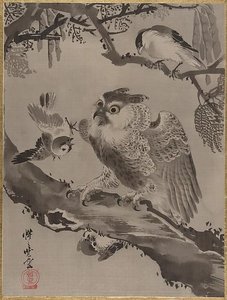
11Hell Courtesan (1880) による 河鍋暁斎Hell Courtesan1880 12Jurōjin [center of a triptych] (1884) による 河鍋暁斎Jurōjin [center of a triptych]1884 · Minneapolis Institute of Art 13Theatre Curtain of Shintomi-za, with an Impromputu Sketch Monster (1880) による 河鍋暁斎Theatre Curtain of Shintomi-za, with an Impromputu Sketch Monster1880 14Squirrels Eating Chestnuts (1886) による 河鍋暁斎Squirrels Eating Chestnuts1886 · ロサンゼルス・カウンティ・ミュージアム・オブ・アート 15A Beauty in Front of King Enma's Mirror (1887) による 河鍋暁斎A Beauty in Front of King Enma's Mirror1887 16Urashima Tarō Riding on a Tortoise (1888) による 河鍋暁斎Urashima Tarō Riding on a Tortoise1888 · メトロポリタン美術館 17Two Children Playing with Goldfish (1887) による 河鍋暁斎Two Children Playing with Goldfish1887 · メトロポリタン美術館 18Two Birds on a Branch (1887) による 河鍋暁斎Two Birds on a Branch1887 · メトロポリタン美術館 19Singing Bird on a Branch (1887) による 河鍋暁斎Singing Bird on a Branch1887 · メトロポリタン美術館 20滝に燕図 Swallows by a Waterfall (1887) による 河鍋暁斎滝に燕図 Swallows by a Waterfall1887 · メトロポリタン美術館 21Tale of the Tongue-cut Sparrow (1800) による 河鍋暁斎Tale of the Tongue-cut Sparrow1800 · ロサンゼルス・カウンティ・ミュージアム・オブ・アート 22Sketches of Birds and Animals (1870) による 河鍋暁斎Sketches of Birds and Animals1870 · メトロポリタン美術館 23Three Crossbills on a Leafless Tree (1878) による 河鍋暁斎Three Crossbills on a Leafless Tree1878 · Minneapolis Institute of Art 24Chinese-style Landscape with Man Fishing from a Boat by Moonlight [right of a triptych] (1884) による 河鍋暁斎Chinese-style Landscape with Man Fishing from a Boat by Moonlight [right of a triptych]1884 · Minneapolis Institute of Art 25Landscape with River in Mountainous Country [left of a triptych] (1884) による 河鍋暁斎Landscape with River in Mountainous Country [left of a triptych]1884 · Minneapolis Institute of Art 26猿を襲う鷲図 Eagle Attacking a Monkey (1885) による 河鍋暁斎猿を襲う鷲図 Eagle Attacking a Monkey1885 · メトロポリタン美術館 27兎を追う鷲図 Eagle Pursuing Rabbit (1885) による 河鍋暁斎兎を追う鷲図 Eagle Pursuing Rabbit1885 · メトロポリタン美術館 28Eagle Attacking a Mountain Lion (1885) による 河鍋暁斎Eagle Attacking a Mountain Lion1885 · メトロポリタン美術館 29White Eagle Eyeing a Mountain Lion (1885) による 河鍋暁斎White Eagle Eyeing a Mountain Lion1885 · メトロポリタン美術館 30Rocky Landscape (1887) による 河鍋暁斎Rocky Landscape1887 · メトロポリタン美術館 31Crow on a Branch (1887) による 河鍋暁斎Crow on a Branch1887 · メトロポリタン美術館 32Untitled (D2X7KF) (1887) による 河鍋暁斎Untitled (D2X7KF)1887 · メトロポリタン美術館 33Fox Catching Bird (1887) による 河鍋暁斎Fox Catching Bird1887 · メトロポリタン美術館 34Bird and Frog (1887) による 河鍋暁斎Bird and Frog1887 · メトロポリタン美術館 35松に鴉図 Two Crows on a Pine Branch (1887) による 河鍋暁斎松に鴉図 Two Crows on a Pine Branch1887 · メトロポリタン美術館 36Cranes in Marsh (1887) による 河鍋暁斎Cranes in Marsh1887 · メトロポリタン美術館 37Buffalo and Herdsman (1887) による 河鍋暁斎Buffalo and Herdsman1887 · メトロポリタン美術館 38柳に鴉図 Crow and Willow Tree (1887) による 河鍋暁斎柳に鴉図 Crow and Willow Tree1887 · メトロポリタン美術館 39岩に鴉図 Crow on a Rock (1887) による 河鍋暁斎岩に鴉図 Crow on a Rock1887 · メトロポリタン美術館 40Owl Mocked by Small Birds (1887) による 河鍋暁斎Owl Mocked by Small Birds1887 · メトロポリタン美術館 41木に鴉図 Crow on a Branch (1887) による 河鍋暁斎木に鴉図 Crow on a Branch1887 · メトロポリタン美術館 42竹に鴉図 Crow on a Bamboo Branch (1887) による 河鍋暁斎竹に鴉図 Crow on a Bamboo Branch1887 · メトロポリタン美術館 43旭に群鴉図 Flock of Crows at Dawn (1887) による 河鍋暁斎旭に群鴉図 Flock of Crows at Dawn1887 · メトロポリタン美術館 44ムクドリ図 Starlings on a Branch (1887) による 河鍋暁斎ムクドリ図 Starlings on a Branch1887 · メトロポリタン美術館 45Fish in a Whirlpool (1887) による 河鍋暁斎Fish in a Whirlpool1887 · メトロポリタン美術館 46富士図 Mount Fuji (1887) による 河鍋暁斎富士図 Mount Fuji1887 · メトロポリタン美術館 47Rocky Landscape (1887) による 河鍋暁斎Rocky Landscape1887 · メトロポリタン美術館 48瓜に鼠図 Mice in a Melon (1887) による 河鍋暁斎瓜に鼠図 Mice in a Melon1887 49Eagle Attacking Fish (1887) による 河鍋暁斎Eagle Attacking Fish1887 · メトロポリタン美術館 50Squirrels Gathering Chestnuts (1887) による 河鍋暁斎Squirrels Gathering Chestnuts1887 · メトロポリタン美術館 51Monkey Hanging from Grapevines (1887) による 河鍋暁斎Monkey Hanging from Grapevines1887 · メトロポリタン美術館 52雪中鴉図 Crow Flying in the Snow (1887) による 河鍋暁斎雪中鴉図 Crow Flying in the Snow1887 · メトロポリタン美術館 53Waterfall, Eagle and Monkey (1887) による 河鍋暁斎Waterfall, Eagle and Monkey1887 · メトロポリタン美術館 54月に鴉図 Crow and the Moon (1887) による 河鍋暁斎月に鴉図 Crow and the Moon1887 · メトロポリタン美術館 55Pheasant Caught by a Snake (1887) による 河鍋暁斎Pheasant Caught by a Snake1887 · メトロポリタン美術館 56Shakyamuni Conquering the Demons (Shaka Gōma zu) (1888) による 河鍋暁斎Shakyamuni Conquering the Demons (Shaka Gōma zu)1888 · メトロポリタン美術館 57Eagle Holding Small Bird (1887) による 河鍋暁斎Eagle Holding Small Bird1887 · メトロポリタン美術館 58Monkeys (1888) による 河鍋暁斎Monkeys1888 · メトロポリタン美術館 59Deer and Monkeys (1887) による 河鍋暁斎Deer and Monkeys1887 · メトロポリタン美術館 60Rabbits (1887) による 河鍋暁斎Rabbits1887 · メトロポリタン美術館 61Cat Catching a Frog (1887) による 河鍋暁斎Cat Catching a Frog1887 · メトロポリタン美術館 62水辺に鴉図 Crow and Reeds by a Stream (1887) による 河鍋暁斎水辺に鴉図 Crow and Reeds by a Stream1887 · メトロポリタン美術館 63白衣観音図 White Robed Kannon (1887) による 河鍋暁斎白衣観音図 White Robed Kannon1887 · メトロポリタン美術館 64Playful Demon による 河鍋暁斎Playful DemonYale University Art Gallery 65Frolicking Animals, Nekomata and Tanuki Badger による 河鍋暁斎Frolicking Animals, Nekomata and Tanuki Badger 66Long Arms [right of a pair of Long Legs and Long Arms] による 河鍋暁斎Long Arms [right of a pair of Long Legs and Long Arms]Minneapolis Institute of Art 67Long Legs [left of a pair of Long Legs and Long Arms] による 河鍋暁斎Long Legs [left of a pair of Long Legs and Long Arms]Minneapolis Institute of Art 68Seven Otafukus による 河鍋暁斎Seven OtafukusMinneapolis Institute of Art 69Tanuki (Racoon Dog) Viewing Its Reflection in Water (801) による 河鍋暁斎Tanuki (Racoon Dog) Viewing Its Reflection in Water801 · メトロポリタン美術館 70Boy’s Day Carp Streamer and Shōki Banner (1870) による 河鍋暁斎Boy’s Day Carp Streamer and Shōki Banner1870 · メトロポリタン美術館 71Figure Sketches による 河鍋暁斎Figure Sketches 72Frolicking Figures and Animals による 河鍋暁斎Frolicking Figures and Animals

河鍋暁斎の代表作、時代別一覧

河鍋暁斎が心を惹かれた主題

これらのオリジナル作品に繰り返し描かれている4つの主題と、それぞれの最高傑作。

河鍋暁斎の原画を所蔵する美術館

このページに掲載されている絵画を最も多く所蔵している 5 の美術館

美術館 都市 河鍋暁斎の作品 このリストの絵画
メトロポリタン美術館, ニューヨークメトロポリタン美術館 ニューヨーク 48 Three Kyōgen Dancers, Sketches of East Asian Legendary Figures, Frolicking Figures and Animals
Minneapolis Institute of Art, ミネアポリスMinneapolis Institute of Art ミネアポリス 8 Wisteria Maiden and Demon Priest, Jurōjin [center of a triptych], Three Crossbills on a Leafless Tree
ロサンゼルス・カウンティ・ミュージアム・オブ・アート, ロサンゼルスロサンゼルス・カウンティ・ミュージアム・オブ・アート ロサンゼルス 4 Yang Guifei Adjusting her Hair, Yamauba and Kintarō, Squirrels Eating Chestnuts
クリーブランド美術館, クリーブランドクリーブランド美術館 クリーブランド 2 Hell Courtesan, Painting Party
Yale University Art Gallery, ニューヘイブンYale University Art Gallery ニューヘイブン 1 Playful Demon

河鍋暁斎の数十年にわたる軌跡:それぞれに唯一無二のオリジナル作品を

年代別作品数

その時代を象徴する名作を見るために、年代を選択してください。

河鍋暁斎の絵画:ギャラリーへの質問

河鍋暁斎の最も有名な作品は何ですか?答えを見る

Three Kyōgen Dancers (801)(メトロポリタン美術館, ニューヨーク)。次いでSketches of East Asian Legendary Figures (801)、Yang Guifei Adjusting her Hair (1850)が続きます。

河鍋暁斎の最も有名な10作品は何ですか?答えを見る

Three Kyōgen Dancers, Sketches of East Asian Legendary Figures, Yang Guifei Adjusting her Hair, Yamauba and Kintarō, Hell Courtesan, Frolicking Figures and Animals, Calligraphy and Painting Party, Wisteria Maiden and Demon Priest, Painting Party と Night Procession of One Hundred Demons。上記のランキングには、それぞれの制作年と所蔵美術館が記載されています。

河鍋暁斎の既知の作品数は?答えを見る

当カタログには、1850年から1888年にかけて制作された河鍋暁斎による72点の作品が収められています。

最も有名な河鍋暁斎のオリジナル作品はどこで見ることができますか?答えを見る

主にメトロポリタン美術館 (ニューヨーク), Minneapolis Institute of Art (ミネアポリス) と ロサンゼルス・カウンティ・ミュージアム・オブ・アート (ロサンゼルス)に所蔵されています。上記の美術館一覧にすべて記載されています。

河鍋暁斎が最も有名な作品を制作したのは、どの時期ですか?答えを見る

1880s年:このページにある全72作品のうち、52作品がその時期に制作されました。そのうちPainting Party作品が含まれます。

河鍋暁斎の有名な絵画の中で、最も古い作品と最も新しい作品はどれですか?答えを見る

このページでは、最も古い作品はYang Guifei Adjusting her Hair (1850)、最新の作品はUrashima Tarō Riding on a Tortoise (1888)です。

河鍋暁斎が好んだ主題は何ですか?答えを見る

このページに掲載されている72点の作品におけるAnimals (8), Woman (6) と Black ink (6)

河鍋暁斎が最も多く使用した画材は何ですか?答えを見る

このページに掲載されている全72作品のうち、8作品のInk

河鍋暁斎の作品は、どの芸術運動に属していますか?答えを見る

このページに掲載されているオリジナル作品から判断すると、Ukiyo-eです。

メトロポリタン美術館では、河鍋暁斎のオリジナル作品を何点鑑賞できますか?答えを見る

Three Kyōgen Dancers, Sketches of East Asian Legendary Figures と Frolicking Figures and Animals:メトロポリタン美術館, ニューヨークには、このページに掲載されている作品のうち48点が所蔵されています。

河鍋暁斎:アーティストの肖像画

墨と反逆の生涯

河鍋暁斎は1831年、武家の一族として古河に生を受けた。彼の幼少期を決定づけたのは、死というものとの、あまりにも突然で生々しい遭遇であった。当時9歳だった彼は、神田川で死体から切り離された人間の首を発見したのである。この幼い頃の衝撃は、後に彼が狩野派の師匠たちや歌川国芳のもとで本格的な教育を受ける前触れとなった。伝統が求める緻密な筆致を習得する一方で、彼の魂はより自由な様式を持つ浮世絵などの流行派へと惹かれていった。江戸へと移り住んだ後、父が幕府の火消しとなったことで、暁斎は自身のキャリアを決定づけることになる独自のペルソナを形成し始める。

彼の歩みは、決して静かな順応の道ではなかった。江戸時代から明治時代へと移り変わる激動の政治情勢の中で、彼は人々を魅了すると同時に、摩擦を生む存在となった。幕府の当局によって3度も逮捕されているが、その多くは政府高官を風刺し、当時の政策を批判した作品の社会的な影響によるものであった。こうした法との衝突は、彼の創作意欲を削ぐどころか、むしろ独立した思想家としての名声を確固たるものにした。彼の芸術は、封建国家から近代国家へと変貌を遂げようとする国家の混沌を、そのまま映し出していたのである。

筆の鬼

暁斎の卓越した技術は、野生的な、制御しがたいエネルギーと共鳴していた。彼は自身の作品に様々な印を用いることで、「画狂」とも称される「絵の鬼」という異名を自ら受け入れた。その題材は、宗教的なものから奇怪なものまで、広大かつ奇妙な領域に及んだ。妖怪、骸骨、蛙、そして動物たちでキャンバスを埋め尽くし、それらに人間的なユーモアや政治的な意味を宿らせた。特に、巻物形式の傑作『放屁図(The battle of the farts)』は、純粋な風刺を通じて、当時の政治的な動乱を見事に描き出している。

彼の創造的なプロセスは、描かれる主題と同じくらい伝説的であった。一晩中酒を飲んだ後でも、筆が本能的な速さで動く無我の境地に入り、描き続けることができると言い伝えられている。この即興的なスタイルは、時に「狂画」とも呼ばれ、生命感あふれる流麗な筆運びを可能にした。狩野派の技術的基礎を持ちながらも、彼の作品は静かな崇敬よりも、混沌と喜劇へと傾倒していた。また、優れた木版画師でもあり、『暁斎百図』や、民衆の共感を集めた様々な「鯰絵」などの作品を生み出した。

線が紡いだ遺産

個々の絵画作品の枠を超えて、暁斎は視覚的なストーリーテリングの進化にも寄与した。1874年、彼は金子北斗(仮名:金子北斗/金子北斗)と共に、日本初の漫画雑誌とされる『画報新報(Eshinbun Nipponchi)』の創刊に携わった。刊行はわずか3号に留まったものの、それはグラフィックメディアという新しい形態への初期の挑戦であった。彼の多大な影響力は日本国内に留まらず、その作品は大英博物館やパリのギメ美術館といった世界的なコレクションへと収められていった。ジョサイア・コンダーのような建築家を含む西洋の来訪者たちも、彼の並外れた才能を記録している。

この芸術家は1889年、胃癌によりこの世を去った。彼が遺した膨大な作品群は、版画、スケッチ、画帖などを含めると1万点を超えると推定されている。その生涯は、彼が生きた時代そのものの鏡であった。激動し、変容し、そして深く複雑な時代。彼の墨を通じて、中世から近代産業社会への転換期は、最も雄弁な表現を見出したのである。