松林の朝
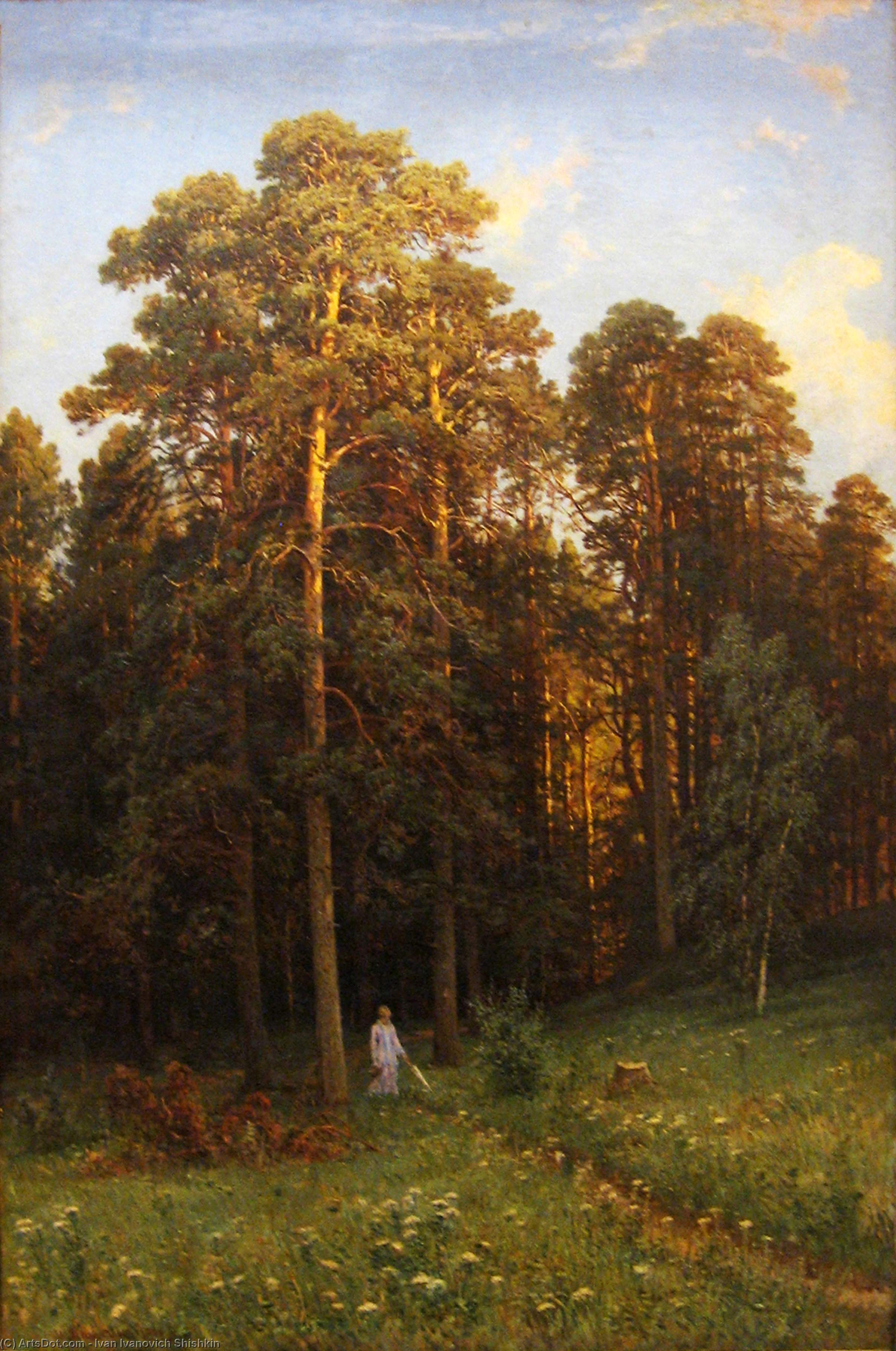
ロシア写実主義の巨匠イヴァン・シャシーキンの「ある松林の朝」は、1886年に描かれた作品でありながら、今なお見る者の心を捉え放しません。画面いっぱいに広がるのは、深く静まり返った松林の一角。光と影が織りなすコントラスト、そして緻密に描き込まれた木々の質感は、シャシーキンの卓越した観察眼と技術力を物語っています。この作品は単なる風景画ではなく、ロシアの大自然の魂を捉えようとした芸術家の情熱と、そこに潜む深遠な精神性を表現した傑作と言えるでしょう。
In short
松林の朝 (1886) is the イヴァン・シーシキン painting that draws the most eyes; the original belongs to the トレトヤコフ美術館, モスクワ. After it, the eye goes to A Rye Field (1877) and Morning in a Pine Forest (1889). Among the 706 works of イヴァン・シーシキン in our catalog, these 100 are the most famous, each a unique original presented with its year, its museum and the reason it endures.
ロシア写実主義の巨匠イヴァン・シャシーキンの「ある松林の朝」は、1886年に描かれた作品でありながら、今なお見る者の心を捉え放しません。画面いっぱいに広がるのは、深く静まり返った松林の一角。光と影が織りなすコントラスト、そして緻密に描き込まれた木々の質感は、シャシーキンの卓越した観察眼と技術力を物語っています。この作品は単なる風景画ではなく、ロシアの大自然の魂を捉えようとした芸術家の情熱と、そこに潜む深遠な精神性を表現した傑作と言えるでしょう。
In the vast, sweeping expanse of 19th-century Russian realism, few names resonate with as much profound reverence as Ivan Ivanovich Shishkin. His masterpiece, A Rye Field, painted in 1877, serves as a breathtaking window into the heart of the Russian countryside, capturing a moment of eternal stillness. The painting presents a sprawling vista where tall, golden grasses sway in an invisible breeze, intersected by a humble dirt road that invites…
In the quiet, amber-hued moments of dawn, Ivan Ivanovich Shishkin’s Morning in a Pine Forest breathes life into the very essence of the Russian landscape. This 1889 masterpiece is not merely a depiction of trees and light; it is an immersive experience that invites the viewer to step into a primordial world where nature remains untouched by the frantic pace of modernity. The painting captures a profound sense of tranquility,…
In the quiet depths of the late nineteenth century, Ivan Ivanovich Shishkin captured something far more profound than mere scenery; he captured the very heartbeat of the Russian landscape. His masterpiece, Oak Grove, painted in 1887, serves as a breathtaking window into a world of ancient strength and silent majesty. As one stands before this oil on canvas, the immediate sensation is one of total immersion. The viewer is not…
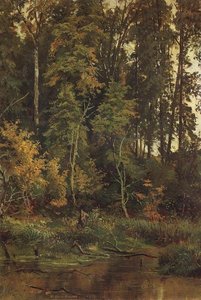
The scene captures the forest at the precise moment when the sun has slipped below the horizon. Trees in the foreground and background create layers of depth, framing a quiet expanse of water. A single bird rests upon a branch, providing a solitary point of movement within the stillness. The atmosphere is defined by the fading light of dusk, where the sky and landscape begin to merge into soft shadows.
To gaze upon Ivan Ivanovich Shishkin's "The Path through the Woods" is not merely to observe a landscape; it is to step directly into the profound, breathing heart of Russia itself. Painted in 1880, this oil on canvas captures that quintessential moment when humanity pauses within nature’s embrace. The scene unfolds along a dirt path, inviting the viewer to follow the gentle rhythm of two women strolling deeper into the…
A Symphony in Emeralds and Shadow: Exploring Ivan Shishkin’s “Backwoods” Ivan Ivanovich Shishkin stands as an undisputed titan of Russian landscape painting, his canvases capturing not merely visual representations but profound meditations on the spirit of the wilderness. Among his oeuvre, "Backwoods," completed in 1872, reigns supreme—a monumental work measuring 209 x 161 cm housed within the Tretyakov Gallery in Moscow, Russia, and embodying Shishkin’s unwavering dedication to portraying the…
To gaze upon Ivan Ivanovich Shishkin's depiction, "At the edge of a pine forest," is not merely to observe a landscape; it is to step through a veil and into the very soul of the Russian wilderness. This painting captures that sublime moment where civilization gently yields to nature’s overwhelming majesty. The composition draws the viewer deep into a verdant embrace, guided by the figures meandering through the undergrowth. Shishkin,…
Rain in the Oak Forest is an oil on canvas work by Ivan Shishkin. Created in 1891, the painting captures an oak grove during a warm summer rain. The scene focuses on the specific atmosphere of a woodland setting under a seasonal downpour.
To gaze upon Ivan Ivanovich Shishkin's depiction of a fir forest is not merely to observe trees; it is to step across the threshold and into the very soul of the Russian wilderness. This painting captures that profound, almost spiritual encounter one has with an ancient woodland—a place where time seems to slow its breath and the air itself feels thick with the scent of pine sap and damp earth.…
The four subjects that come back most often in these originals, each with its finest example.
このページに掲載されている絵画を最も多く所蔵している 5 の美術館
| 美術館 | 都市 | イヴァン・シーシキンの作品 | このリストの絵画 |
|---|---|---|---|
| モスクワ | 51 | 松林の朝, A Rye Field, Morning in a Pine Forest | |
| サンクトペテルブルク | 36 | The Path through the Woods, 1880 (oil on canvas), Gathering Mushrooms, Mast Tree Grove | |
| Kazan | 21 | Deciduous Forest, In Krippen. The man on the Doorstep, Swiss landscape | |
| Kyiv | 9 | Oak Grove, Winter in a forest (Rime) | |
| Perm | 11 | Fir forest on the river Kama |
Pick a decade to see the original that defines it.
In this work, titled Oaklets near Sestroretsk, we encounter a serene lakeside vista rendered by the Russian artist Ivan Shishkin. Completed in 1857, the piece captures a quiet moment within the natural landscape. It reflects the artist's early focus on the specific textures and forms found in the Russian wilderness.
To stand before Ivan Ivanovich Shishkin’s In Grove is not merely to observe a painting; it is to step through a veil and into the deep, breathing heart of the Russian forest. This masterpiece from 1869 captures more than just trees and sunlight—it encapsulates a profound sense of pastoral tranquility, a moment suspended in time where humanity harmonizes with nature’s enduring rhythm. Shishkin, the master chronicler of Russia's vast natural…
In the vast, sweeping expanse of 19th-century Russian realism, few names resonate with as much profound reverence as Ivan Ivanovich Shishkin. His masterpiece, A Rye Field, painted in 1877, serves as a breathtaking window into the heart of the Russian countryside, capturing a moment of eternal stillness. The painting presents a sprawling vista where tall, golden grasses sway in an invisible breeze, intersected by a humble dirt road that invites…
ロシア写実主義の巨匠イヴァン・シャシーキンの「ある松林の朝」は、1886年に描かれた作品でありながら、今なお見る者の心を捉え放しません。画面いっぱいに広がるのは、深く静まり返った松林の一角。光と影が織りなすコントラスト、そして緻密に描き込まれた木々の質感は、シャシーキンの卓越した観察眼と技術力を物語っています。この作品は単なる風景画ではなく、ロシアの大自然の魂を捉えようとした芸術家の情熱と、そこに潜む深遠な精神性を表現した傑作と言えるでしょう。
Rain in the Oak Forest is an oil on canvas work by Ivan Shishkin. Created in 1891, the painting captures an oak grove during a warm summer rain. The scene focuses on the specific atmosphere of a woodland setting under a seasonal downpour.
松林の朝 (1886), トレトヤコフ美術館, モスクワ. A Rye Field (1877) and Morning in a Pine Forest (1889) come next.
55 years old: 松林の朝 dates from 1886, and イヴァン・シーシキン was born in 1831.
松林の朝, A Rye Field, Morning in a Pine Forest, Oak Grove, Twilight. After Sunset, The Path through the Woods, 1880 (oil on canvas), Backwoods, At the edge of a pine forest, Rain in the Oak Forest と Fir forest. The ranking above gives each one's year and museum.
Our catalog holds 706 works by イヴァン・シーシキン, dated from 1854 to 1898.
Mostly in トレトヤコフ美術館 (モスクワ), ロシア国立美術館 (サンクトペテルブルク) と The State Museum of Fine Arts of Tatarstan Republic (Kazan). The museum table above lists them all.
In 1880s: 34 of the 100 works on this page were made then, 松林の朝 among them.
On this page, the earliest is Self-portrait (1854) and the latest Pond in an old park (1898).
Forests (33), Trees (25) と Landscape (24), across the 100 works on this page.
Oil On Canvas, for 33 of the 100 works on this page.
Realism, judging by the originals on this page.
松林の朝, A Rye Field と Morning in a Pine Forest: the トレトヤコフ美術館, モスクワ holds 15 of the works on this page.
Yes, as a reproduction: the original stays in its museum, but any painting on this page can be painted by hand for you, made to order one at a time, from the painting's own page.
イワン・イヴァノヴィッチ・シシキンは、1832年1月25日、ヴャトカ県のイェラブルガに生を受けました。彼は商人として名を馳せたイワン・ヴァシーリエヴィチ・シシキンの息子として、商人一家の中で育ちました。彼の血筋はこの地に深く根ざしており、その系譜を遡れば、宮廷農民から後にイェラブルガの第三ギルド商人となった祖父、ヴァシーリー・アナフヤシーヴィチ・シシキン=セレブリャコフへと辿り着きます。
彼の学問的な歩みは、12歳で第一カザン男子ギムナジウムに入学したことから始まりました。この幼少期の教育は、後に彼が自然界を鋭く観察し続けるための、揺るぎない精神的土台となったのです。カザンでの学びを終えた彼は、より専門的な芸術の道へと進み、1852年にはモスクワ絵画彫刻建築学校に入学しました。そこで4年間にわたり、技術的な研鑽を積み重ねた彼は、1857年にサンクトペテルブルク帝国芸術アカデミーへと進みます。そして1860年、彼はアカデミーでの学業を全うすることとなりました。
学問の基礎を築いた後、イワン・シシキンはサンクトペテルブルク帝国芸術アカデミーへと進み、1857年から1860年にかけて研鑽を積みました。そこでは風景画の大家であるソクラト・ヴォロビョフ教授の指導を仰ぎ、彼の芸術的土台となる卓越した技術を形作っていきました。その並外れた献身的な姿勢は、卒業時にアカデミーから金メダルを授与されるという形で結実し、この輝かしい成果が、ロシアの国境を越えたさらなる学びへの扉を大きく開くこととなったのです。
アカデミーから授与された帝室奨学金は、彼を未知なる世界へと誘い、3年間にわたる海外での生活と創作の旅を可能にしました。この放浪の期間は、彼の芸術的進化において欠かすことのできない、極めて重要なプロセスとなりました。1861年にはドイツのミュンヘンを訪れ、名だたる巨匠たちの作品をその目で確かめ、深い感銘を受けました。その後、旅路はスイスやドイツへと続き、彼はその大半の時間を、自然の息吹を直接感じながらスケッチや写生に捧げました。故郷を離れて過ごしたこれらの歳月は、自然界の細部を驚異的な精度で描き出す、彼の類まれなる表現力を磨き上げるための、かけがえのない時間となったのです。
イワン・シシキンのキャンバスへのアプローチは、自然界に対する深く、分析的な探求に根ざしていました。彼は単に森を眺めるのではなく、古木の切り株の質感から、大地に横たわる流木の在り方に至るまで、その極めて細かな機微を観察し続けたのです。この写実主義への徹底したこだわりこそが、ロシアの風景が持つ物理的な実在感を、作品へと昇華させることを可能にしました。彼の技法は極めて精密であり、野生の自然の中で光と形が実際にどのように振る舞うのかを理解しようとする切実な欲求に突き動かされていました。また、彼は筆を執るだけでなく、ペンを用いた描写においても卓越した技術を誇り、多様な手段を通じて細部を捉えきる、稀代の素描家であり版画家としての真価を証明しました。
その技術的なレパートリーは、油彩画、水彩画、そしてペン画と、極めて広範に及びます。さらに、高度な技術的制御を要する王水を用いたエッチングの実験にも挑みました。彼の作品において最も際立っている要素の一つは、色彩の扱い、とりわけ森の中に存在する無限とも言える「緑」の変奏です。この表現を実現するために、彼はパーマネント・グリーン、ヴェローネゼ・グリーン、コバルト・グリーン、クロム・グリーン、シナバー・グリーン、グリーン・アース、そしてエメラルド・グリーンといった多種多様な顔料を駆使しました。これらを様々な色調の黄色や青色と混ざり合わせることで、森の地面に差し込む移ろいゆく光や、茂みの奥に潜む深い影を、見事に再現してみせたのです。
情景の空気感を描き出す彼の能力は、こうした緻密な色彩設計と、細部への圧倒的な習熟によって支えられていました。枝の間から差し込む木漏れ日を描くときも、雨上がりの森の湿り気を描くときも、彼の作品は常に、その土地が持つありのままの姿に深く根ざしていました。樹皮の質感、草の一本一本、そして光の特有の性質といった、自然界の触知できる要素に焦点を当てることで、彼は力強い構図を築き上げていったのです。
イワン・シシキンの筆先は、しばしば森の最も静かな片隅へと導かれました。1869年に生み出された森の散策は、時が止まったかのような静謐な樹木の情景を映し出し、見る者を穏やかな森の奥深くへと誘います。自然の静寂を写し取る彼の卓越した手腕は、1884年の作品冬の森において、より鮮明な輝きを放ちます。雪に覆われた風景が持つ静かなる壮大さは、見る者を圧倒的な沈黙の中へと没入させるのです。これらの作品からは、樹木の複雑な細部や、枝の間を通り抜ける光の移ろいを観察するために、彼がどれほど膨大な時間を自然に捧げてきたかが伝わってきます。
ロシアの風景に対する彼の深い結びつきが、最も鮮烈に感じられるのは、1878年の油彩画ライ麦でしょう。この作品は、イェラブルガの西に位置するレカレヴォ村の近くに広がる、黄金色に実ったライ麦畑を描いています。霞がかった夏の空の下、どこまでも続く平原の広大さが、見事に描き出されています。そして、彼の遺した最も有名な傑作である針葉樹林の朝は、今なお彼の芸術的功績の核心として語り継がれています。そびえ立つ松の木々の間から差し込む朝の光は、静寂の中に力強さを宿し、見る者の心に安らぎを与えます。
また、ヨーロッパを旅した日々の中で、彼は山岳地帯の劇的な景観にも目を向けました。美術館の常設展示として親しまれているラウターブルンネン渓谷のシュタウバッハの滝は、海外滞在中に彼が目にしたスイスの風景が与えた影響を色濃く反映しています。彼の芸術的探求は極めて広範であり、自然界の多種多様な側面を以下のような作品群として描き出しました。
イワン・シシキンの芸術に対する献身的な姿勢は、彼が関わった数々の影響力ある芸術団体を通じて、その深さが示されています。彼は、芸術をアカデミーという閉ざされた世界から解き放ち、民衆の元へ直接届けようとした「ペレヴィズニキ(移動芸術家団)」の一員として活動しました。その影響力は専門的な領域にも及び、サンクトペテルブルクの移動芸術家協会やロシア銅版画協会、さらにはロシア水彩画協会にも名を連ねていました。こうした数々の所属は、彼がロシア芸術界のダイナミックな変遷のただ中に、深く根を下ろしていたことを物語っています。
彼の卓越した知見は、自らのキャンバスの上だけに留まるものではありませんでした。1873年から1898年にかけて、彼は絵画教授としての重責を担い、サンクトペテルブルクの最高美術学校では風景画クラスの責任者として教鞭を執りました。これらの教育活動を通じて、彼は自らが長年のキャリアの中で研鑽を積んできた緻密な技法を次世代へと継承し、多くの学生たちの技術的な礎を築き上げました。彼は学術的・専門的な芸術構造のなかで常に中心的な存在であり続け、次世代を担う画家たちが、その技術の奥深さを探求していく過程を導き続けたのです。
イワン・シシキンの人生の終盤は、サンクトペテルブルクの地で、変わることなく創作活動に没頭する日々として過ぎ去っていきました。歳を重ねてもなお、自然を深く探求しようとする彼の情熱が揺らぐことはありませんでした。1898年3月20日、彼はこの街でその生涯を閉じます。その最期の間際まで、彼は新たな作品の制作に心血を注いでいました。その事実は、静かなアトリエの中で絶え間なく続けられてきた、彼の真摯な芸術家としての営みを物語っています。
彼の死は、自らが丹念に観察し続けてきた森の営みと共に生きた、一つの時代の終焉を意味していました。没後、彼はまずスモレンスク正教墓地に埋葬されました。それから数十年後の1950年、彼の遺骸は「芸術家たちのネクロポリス」に位置するティフヴィン墓地へと移されました。
イワン・シシキンが描き出した森の静謐な息吹を肌で感じるには、ロシア各地に点在する重要な美術館を訪ねるのが最善の道でしょう。モスクワのトレチャコフ美術館には、穀物や森林を緻密に描き出した数多くの傑作が収蔵されています。これらの作品を前にすれば、ライ麦畑のどこまでも続くような広がりから、松林の奥深くに潜む濃密な影に至るまで、ロシアの風景が持つ豊かな質感に、間近で触れることができるはずです。
また、彼の芸術的遺産を語る上で欠かせない場所として、ヤロスラヴリ美術館やタンボフのカルティンナヤ・ガレリヤが挙げられます。これらの美術館は、彼が生涯をかけて見つめ続けた風景の視覚的な歴史を、今に伝えています。さらにロシアのヴォロネジでは、クラムスコイ美術館も彼の作品を大切に守り続けており、自然界を独自の眼差しで捉えたシシキンの精神は、今もなお、それを求める人々を待ち続けているのです。