フランティセック・クプカの肖像画

ギャラリー厳選、フランティセック・クプカによる最も有名な100の絵画

11月 2026 更新 · 当サイトの人気スコア(各作品の検索数、閲覧数、注文数)に基づくランキング · 287点の フランティセック・クプカの作品がカタログにあります

要約すると

フランティセック・クプカが遺した数多くのオリジナル作品の中で、最も有名なものはAround a Pointです。 それに次いで、Disks of Newton, Study for Fugue in Two Colors (1911)とThe Cathedral (1913)が続きます。 フランティセック・クプカによる287点の作品をカタログに掲載しています。当ギャラリーでは、世界が称賛する100点を選定し、制作年、所蔵美術館、そしてその背景にある物語とともにご紹介しています。

1871 – 1957, オポチノ Abstract expressionism 最多収蔵館: ソロモン・R・グッゲンハイム美術館

フランティセック・クプカの代表作10選:ギャラリー厳選の作品集

1
Around a Point による フランティセック・クプカ

Around a Point

Oil On Canvas

František Kupka, a pivotal figure in early abstract art and Orphic Cubism, presents "Around a Point," a captivating work housed within the Paris Museum of Modern Art. This painting isn't merely an image; it’s an exploration of cosmic forces translated onto canvas through defined borders and a vibrant interplay of colors.

2
Disks of Newton, Study for Fugue in Two Colors (1911) による フランティセック・クプカ

Disks of Newton, Study for Fugue in Two Colors

1911 · Painting

To stand before František Kupka's "Disks of Newton, Study for Fugue in Two Colors" is to step across the threshold into a realm where mathematics dissolves into pure, ecstatic color. This painting is not merely an arrangement of circles; it is a visual symphony, a meticulously orchestrated exploration of rhythm and light that speaks directly to the nascent spirit of abstraction. The composition immediately arrests the viewer with its vibrant…

3
The Cathedral (1913) による フランティセック・クプカ

The Cathedral

1913 · Tempera · Museum Kampa, プラハ

In the quiet transition between day and night, František Kupka’s 1913 masterpiece, “The Cathedral,” emerges as a profound meditation on the intersection of the earthly and the divine. This work is far more than a mere architectural study; it is a window into a soul seeking transcendence. The composition presents a deceptively simple depiction of a cathedral set against an expansive twilight sky, where the soaring spire and sturdy roof…

4
Planes by Colors, Large Nude (1910) による フランティセック・クプカ

Planes by Colors, Large Nude

1910 · Oil On Canvas · ソロモン・R・グッゲンハイム美術館, ニューヨーク市

The painting depicts a nude woman seated on a couch in a contemplative or introspective pose. Her left arm rests upon the back of the couch, while her right hand is placed against her chin. The figure's body is rendered through a vibrant palette of various hues: her head is composed of shades of purple and red, her torso and arms are painted in yellow and green tones, and her…

5
Babylon (1906) による フランティセック・クプカ

Babylon

1906 · Oil

The painting presents a wide view of a body of water where several figures stand along the edge. In the middle distance, a single boat rests upon the surface. Scattered throughout the composition are various statues, some positioned near the shoreline and others situated further back from the water. The figures in the foreground appear to be gathered at the water's edge, their presence contributing to a sense of stillness.…

6
Piano Keys Lake (1905) による フランティセック・クプカ

Piano Keys Lake

1905 · Oil On Canvas

In the dawn of the twentieth century, as the boundaries of reality began to dissolve under the influence of new philosophical currents, František Kupka captured a moment of profound transition in his 1905 masterpiece, Piano Keys Lake. This work is far more than a mere depiction of a tranquil landscape; it is a cornerstone of Orphism, a movement that dared to reject the literal constraints of representation in favor of…

7
Water. The Bather. (1907) による フランティセック・クプカ

Water. The Bather.

1907 · Oil On Canvas

Water. The Bather. is an oil on canvas painting created in 1907. The artwork measures 63 x 80 cm and is a work of Symbolism. The composition features a serene woman depicted floating on her back in the water, surrounded by rocks. Her arms are outstretched, and her body occupies most of the canvas, serving as a focal point within the tranquil environment.

8
The Lotus Soul (1898) による フランティセック・クプカ

The Lotus Soul

1898 · Oil On Canvas

The triptych format of The Lotus Soul by František Kupka divides the scene into three distinct narrative segments, creating a sense of progression or an unfolding story. The left panel features a luminous, ethereal figure emerging from a bed of water lilies, bathed in soft light. The central panel depicts the lily pads themselves, rendered with loose brushstrokes and varying shades of blue-green. On the right, a group of figures…

9
The Wave (1902) による フランティセック・クプカ

The Wave

1902 · Oil On Canvas

Created about 1902, The Wave by František Kupka presents a dynamic encounter between humanity and the natural world. The composition is dominated by a massive, swirling wave that occupies the majority of the canvas. This surge of water moves with a sense of momentum, characterized by fluid lines and distorted forms that prioritize movement over realistic representation.

10
Woman Picking Flowers (1909) による フランティセック・クプカ

Woman Picking Flowers

1909 · Pastel

In this 1909 work, František Kupka explores the nuances of movement and form through the lens of Orphism. The piece, titled Woman Picking Flowers, belongs to the category of female portraits, yet it moves beyond simple representation. It captures a specific, fleeting sequence of motion, focusing on the way a figure transitions through space.

フランティセック・クプカのセレクションが続きます、11から100まで

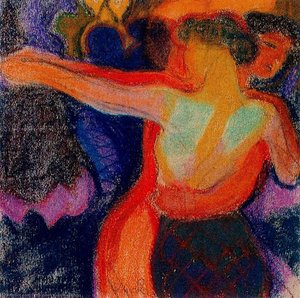
11Planes by Colors (Great Nude) (1909) による フランティセック・クプカPlanes by Colors (Great Nude)1909 12The shape of zul による フランティセック・クプカThe shape of zul 13Color drawings による フランティセック・クプカColor drawings 14Positioning of Mobile Graphic Elements (1913) による フランティセック・クプカPositioning of Mobile Graphic Elements1913 15Location of mobile graphics による フランティセック・クプカLocation of mobile graphics 16The colored (1920) による フランティセック・クプカThe colored1920 · ソロモン・R・グッゲンハイム美術館 17The Conqueror Worm による フランティセック・クプカThe Conqueror Worm 18Girl with a Ball による フランティセック・クプカGirl with a Ball 19The Book Lover I による フランティセック・クプカThe Book Lover I 20Ballad of Epona (1900) による フランティセック・クプカBallad of Epona1900 21Ms. Kupka between vertical による フランティセック・クプカMs. Kupka between vertical 22Self-Portrait with Wife (1908) による フランティセック・クプカSelf-Portrait with Wife1908 23The Way of Silence による フランティセック・クプカThe Way of Silence 24Drill (1926) による フランティセック・クプカDrill1926 25Twisted black lines による フランティセック・クプカTwisted black lines 26The Book Lover (1897) による フランティセック・クプカThe Book Lover1897 27Lying naked, Gabrielle (1898) による フランティセック・クプカLying naked, Gabrielle1898 28'Study for ''Autumn Sun''' (1905) による フランティセック・クプカ'Study for ''Autumn Sun'''1905 29Prometheus in chains (1905) による フランティセック・クプカPrometheus in chains1905 30Report (1903) による フランティセック・クプカReport1903 31The man and the earth (1904) による フランティセック・クプカThe man and the earth1904 32Money (1899) による フランティセック・クプカMoney1899 33The Song of Songs (1904) による フランティセック・クプカThe Song of Songs1904 34Autumn Sun (1906) による フランティセック・クプカAutumn Sun1906 · 国立プラハ美術館 35Bathers (1906) による フランティセック・クプカBathers1906 36The Way of Silence II による フランティセック・クプカThe Way of Silence II 37Nocturne (1910) による フランティセック・クプカNocturne1910 38Tango (1909) による フランティセック・クプカTango1909 39Study in black and white 3 による フランティセック・クプカStudy in black and white 3 40Amorpha. Fugue in Two Colors 22 による フランティセック・クプカAmorpha. Fugue in Two Colors 22 41Blue and red vertical planes による フランティセック・クプカBlue and red vertical planes 42Admiration (1899) による フランティセック・クプカAdmiration1899 43Only a trace of brown による フランティセック・クプカOnly a trace of brown 44The First Step による フランティセック・クプカThe First Step 45Composition in Blue による フランティセック・クプカComposition in Blue 46philosophical architecture による フランティセック・クプカphilosophical architecture 47Autour d'un point による フランティセック・クプカAutour d'un point 48Amorpha. Fugue in Two Colors による フランティセック・クプカAmorpha. Fugue in Two Colors 49Tale of pistils and stamens による フランティセック・クプカTale of pistils and stamens 50Mouvement による フランティセック・クプカMouvement 51Elevation IV, serie C II による フランティセック・クプカElevation IV, serie C II 52Woman before a mirror による フランティセック・クプカWoman before a mirror 53In degradation (vertical) による フランティセック・クプカIn degradation (vertical) 54Disks of Newton 1 による フランティセック・クプカDisks of Newton 1 55Tale of pistils and stamens 1 による フランティセック・クプカTale of pistils and stamens 1 56View from a Carriage Window による フランティセック・クプカView from a Carriage Window 57Serie C VIII による フランティセック・クプカSerie C VIII 58The Gallien girl (1910) による フランティセック・クプカThe Gallien girl1910 59Three blue and three red による フランティセック・クプカThree blue and three red 60The Black Idol (Resistance) (1903) による フランティセック・クプカThe Black Idol (Resistance)1903 61Danse Macabre (1896) による フランティセック・クプカDanse Macabre1896 62Procession (1905) による フランティセック・クプカProcession1905 63Prometheus in chains (1905) による フランティセック・クプカPrometheus in chains1905 64The victorious dragon (1900) による フランティセック・クプカThe victorious dragon1900 65The Way of Silence (1903) による フランティセック・クプカThe Way of Silence1903 66Prometheus in chains (1905) による フランティセック・クプカPrometheus in chains1905 67Sleeping Face (1902) による フランティセック・クプカSleeping Face1902 68The novelist (1903) による フランティセック・クプカThe novelist1903 69Self-Portrait (1905) による フランティセック・クプカSelf-Portrait1905 70Prometheus in chains (1905) による フランティセック・クプカPrometheus in chains1905 71The forest, illustration project による フランティセック・クプカThe forest, illustration project 72Sphinx による フランティセック・クプカSphinx 73Portrait of a woman による フランティセック・クプカPortrait of a woman 74Untitled による フランティセック・クプカUntitled 75Prometheus Bound 5 による フランティセック・クプカPrometheus Bound 5 76Reclining nude による フランティセック・クプカReclining nude 77Aguatinta による フランティセック・クプカAguatinta 78untitled (4992) による フランティセック・クプカuntitled (4992) 79Wave による フランティセック・クプカWave 80Prometheus Bound 4 による フランティセック・クプカPrometheus Bound 4 81Eva による フランティセック・クプカEva 82Study for 'The oval mirror' による フランティセック・クプカStudy for 'The oval mirror' 83Study for chapter による フランティセック・クプカStudy for chapter 84Portrait of young girl, head in profile による フランティセック・クプカPortrait of young girl, head in profile 85Women in the tavern による フランティセック・クプカWomen in the tavern 86Self-portrait 1 による フランティセック・クプカSelf-portrait 1 87Girl with a ball 1 による フランティセック・クプカGirl with a ball 1 88Freedom. Cover for L'Assiette au beurre 1 による フランティセック・クプカFreedom. Cover for L'Assiette au beurre 1 89Women in the triangles による フランティセック・クプカWomen in the triangles 90Head of a slut による フランティセック・クプカHead of a slut 91Baby steel による フランティセック・クプカBaby steel 92Study for ''Sol de otoño'' による フランティセック・クプカStudy for ''Sol de otoño'' 93Bather (1906) による フランティセック・クプカBather1906 94Woman picking flowers 2 による フランティセック・クプカWoman picking flowers 2 95The Money による フランティセック・クプカThe Money 96Oval mirror (1911) による フランティセック・クプカOval mirror1911 97Lipstick (1908) による フランティセック・クプカLipstick1908 98The Crowning of Helen (1906) による フランティセック・クプカThe Crowning of Helen1906 99The chestnut tree in blossom (1906) による フランティセック・クプカThe chestnut tree in blossom1906 100The guy (1910) による フランティセック・クプカThe guy1910

フランティセック・クプカの代表作、時代別一覧

Early Period

1898 – 1906 · 5作品がこのリストに含まれています

フランティセック・クプカが心を惹かれた主題

これらのオリジナル作品に繰り返し描かれている4つの主題と、それぞれの最高傑作。

フランティセック・クプカの原画を所蔵する美術館

このページに掲載されている絵画を最も多く所蔵している 3 の美術館

美術館 都市 フランティセック・クプカの作品 このリストの絵画
ソロモン・R・グッゲンハイム美術館, ニューヨーク市ソロモン・R・グッゲンハイム美術館 ニューヨーク市 2 Planes by Colors, Large Nude, The colored
Museum Kampa, プラハMuseum Kampa プラハ 1 The Cathedral
国立プラハ美術館, プラハ国立プラハ美術館 プラハ 1 Autumn Sun

フランティセック・クプカの年代別名作:各時代を象徴するオリジナル作品

年代別作品数

その時代を象徴する名作を見るために、年代を選択してください。

フランティセック・クプカの絵画に関するコレクターからの質問

フランティセック・クプカの代表作は何ですか?答えを見る

Around a Point。続いてDisks of Newton, Study for Fugue in Two Colors (1911)、The Cathedral (1913)が続きます。

フランティセック・クプカの最も有名な10作品とは?答えを見る

Around a Point, Disks of Newton, Study for Fugue in Two Colors, The Cathedral, Planes by Colors, Large Nude, Babylon, Piano Keys Lake, Water. The Bather., The Lotus Soul, The Wave と Woman Picking Flowers。上記のランキングには、それぞれの制作年と所蔵美術館が記載されています。

フランティセック・クプカが遺した作品数は?答えを見る

当カタログには、1896年から1926年にかけて制作されたフランティセック・クプカによる287点の作品が収められています。

フランティセック・クプカの名作は、どの美術館に収蔵されていますか?答えを見る

主にソロモン・R・グッゲンハイム美術館 (ニューヨーク市), Museum Kampa (プラハ) と 国立プラハ美術館 (プラハ)に所蔵されています。上記の美術館一覧にすべて記載されています。

フランティセック・クプカが最も有名な作品を多く描いたのは何年ですか?答えを見る

1900s年:このページにある全100作品のうち、30作品がその時期に制作されました。そのうちBabylon作品が含まれます。

フランティセック・クプカによる最初と最後の代表的なオリジナル作品は何ですか?答えを見る

このページでは、最も古い作品はDanse Macabre (1896)、最新の作品はDrill (1926)です。

フランティセック・クプカ が最も多く描いた主題は何ですか?答えを見る

このページに掲載されている100点の作品におけるNudes (13), Geometric forms (9) と Symbols (8)

フランティセック・クプカ が最も多く使用した技法は何ですか?答えを見る

このページに掲載されている全100作品のうち、15作品のOil On Canvas

フランティセック・クプカはどの芸術運動に属していますか?答えを見る

このページに掲載されているオリジナル作品から判断すると、Abstract expressionismです。

ソロモン・R・グッゲンハイム美術館にはどのフランティセック・クプカの作品が展示されていますか?答えを見る

Planes by Colors, Large Nude と The colored:ソロモン・R・グッゲンハイム美術館, ニューヨーク市には、このページに掲載されている作品のうち2点が所蔵されています。

フランティセック・クプカ:生涯と作品

生い立ちとアカデミックな研鑽

フランティセック・クプカは、1871年9月23日、オーストリア=ハンガリー帝国の辺境、ボヘミア東部のオポチノに生を受けました。彼の幼少期を形作ったのは、この地の豊かな風景であり、その自然の営みは、後に彼が辿り着くことになる、より複雑で非具象的な形態への探求の先触れとなりました。1889年から1892年にかけて、彼はプラハ美術アカデミーで研鑽を積みます。この修行時代、彼の筆致は歴史的な主題や愛国的なテーマに向けられており、故郷の物語を深く掘り下げながら、アカデミックな訓練における技術的な要件を一つひとつ着実に習得していきました。

その後、彼はウィーン美術アカデミーへと進み、学びを深めていきます。この正規の教育課程の中で、彼の関心は目に見える世界を超えた「見えざるもの」へと、静かに、しかし確実にシフトし始めました。神智学や東洋哲学との出会いは、キャンバスの物理的な表面の向こう側にある真理を求める彼に、新たな視座を与えたのです。こうした精神的な探求は、彼の思考に深遠な精神性を吹き込み、初期の訓練で培った写実的な描写から、より深く、隠された現実を追い求める芸術家としての歩みへと彼を導いていきました。

パリでの目覚めと芸術的進化

1894年のパリへの移住は、彼の芸術の歩みを決定的に変える転換点となりました。アカデミー・ジュリアンで研鑽を積んだ後、彼はエコール・デ・ボザールにてジャン=ピエール・ローランに師事します。世紀末の熱気に満ちたパリでの日々、彼は単に技法を吸収していたわけではありませんでした。むしろ、目に見えるものの背後に潜む、言葉にしがたい何かを表現するための道を、懸命に模索していたのです。その関心は、初期の修行時代に描いていた歴史的・愛国的な主題から、より内面的で精神的な領域へと、静かに、しかし確実にシフトしていきました。

1906年、彼はパリ近郊のプティに居を構えます。この時期は、彼が自身の作品を公に提示する手法において、極めて重要な変容を遂げた時代でもありました。同年、彼はサロン・ドートンヌで初めての出品を果たします。この時代の作品群を紐解くと、プラハやウィーンで培った具象的なスタイルからの鮮やかな脱却が見て取れます。彼は、認識可能な対象を描写することに頼らず、色彩と形態の相互作用によって意味を伝えるという、より個人的で独自の視覚言語へと、その歩みを進めていったのです。

技法と抽象の言語

1910年から1911年にかけて、それまでの作品に見られた認識可能な形態は、次第にその姿を消し始めました。フランティセック・クプカは、対象物をありのままに描写することから離れ、代わりに線や形を用いることで、内面的な思想を表現する道を選んだのです。この転換は、決して構造の放棄ではなく、むしろ異なる次元の真理を追い求める探求でした。彼は色彩の本質を鋭く見つめ、キャンバスの上で異なる色調がいかに相互作用し、互いに影響を及ぼし合うのかを深く研究しました。そこには、絵具の特有な塗布方法こそが、鑑賞者を根源的な存在のあり方へと導くことができるという、彼の強い信念がありました。

素材の扱いも、ますます意図的で洗練されたものへと進化していきます。1910年の作品Nocturneにおいて、彼は油彩を幾重にも塗り重ねることで、光の輝きと質感の深みを生み出しました。この技法により、まるで光が顔料そのものの中から溢れ出しているかのような視覚効果がもたらされたのです。彼は色彩が単なる記述的な要素ではなく、それ自体が独立した力として機能する可能性に焦点を当て、単なる描写を超越した、純粋な感覚の視覚言語を創り上げようと試みたのでした。

  • Nocturne (1910)

オルフィック・キュビスムの誕生とオルフィズムの展開

1912年を迎える頃、彼の作品の焦点は、全く新しい「視覚」のあり方へと劇的な転換を遂げていました。サロン・デ・パンデパンダンで開催された「黄金比キュビスム展」において、彼の描く絵画は、もはや現実世界における認識可能な形態を脱ぎ捨て始めていたのです。この時期、色彩と光のダイナミックな構成が、対象物の描写に優先して現れる「オルフィズム」という運動が産声を上げました。彼の作品は、伝統的な具象表現の境界を越えようとするこの新しい様式を象徴する、極めて重要な先駆的事例となったのです。

純粋な抽象へと向かうこの変容は、色彩の扱い方に鮮明に表れていました。1912年の傑作Amorpha, Fugue en deux couleursにおいて、主題はもはや人物でも風景でもなく、色彩そのものが織りなす相互作用へと昇華されています。この作品は、完全なる非具象絵画の最初期の例として、しばしば美術史の中で言及されます。幾重にも塗り重ねられた顔料の層は、特定の場面を説明するためではなく、物理的なモデルから独立して存在する、光と動きのリズムを創り出しているのです。

  • Amorpha, Fugue en deux couleurs (1912)

主要な作品と芸術的里程標

フランティセック・クプカの表現が新たな視覚言語へと変貌を遂げていく様は、その構図から具体的な主題が剥ぎ取られていくプロセスに鮮明に現れています。1907年に生み出されたThe Yellow Scaleは、彼の芸術的発展における中心的な到達点としてしばしば挙げられる重要な作品です。さらに1909年、絵画Piano Keyboard/Lakeは、それまでの具象的なスタイルからの決別を告げ、よりリズムを帯びた色彩の配置へと踏み出しました。抽象へのこうした初期の歩みによって、彼は具体的な対象物に頼ることなく、光と形態がいかにして自律的に存在し得るかという探求へと漕ぎ出したのです。

動きと色彩に関する実験が深まるにつれ、彼のキャンバスはより構造的で複雑なものへと進化していきました。1911年の傑作Disks of Newton, Study for Fugue in Two Colorsには、科学的な観察と音楽的なリズムが交差する地点への深い関心が示されています。この熱烈な探求の時期は1913年へと続き、The CathedralやVertical and Diagonal Planesといった作品が誕生しました。後者はニューヨークのMetropolitan Museum of Artに収蔵されています。これらの作品は、物理的な対象を描写することによってではなく、純粋なエネルギーを通じて、いかにして線や平面が空間を組織化し得るかという、彼の飽くなき挑戦を雄弁に物語っています。

遺産と国際的な評価

フランティセック・クプカの作品が放つ影響力は、彼が芸術界において果たした能動的な役割を通じて、モダニズムの礎へと深く刻み込まれていきました。1931年、彼は抽象芸術の振興を目的とした国際的な組織「抽象-創造(Abstraction-Création)」の創設メンバーの一人となりました。この活動は、具象的な表現の枠組みを超えて活動するアーティストたちにとって、体系化された表現の場を確立する上で極めて重要な役割を果たしました。彼の芸術的プレゼンスは、ニューヨーク近代美術館をはじめとする主要な美術館によって高く評価され、抽象とキュビスムの歴史を概観する重要な展示においても、その作品が紹介されることとなりました。

キャンバスに対する彼の独創的なアプローチは、絵画の限界を再定義した他の偉大な巨匠たちと肩を並べるものでした。認識可能なイメージに頼るのではなく、線や形態を用いて思想を表現しようとするその手法は、美術史における抽象絵画の先駆者としての地位を不動のものにしました。彼の創造的な足跡は、しばしばピエト・モンドリアンやワシリー・カンディンスキーの作品と並べて語られることが多く、それは物理的な世界の描写よりも、色彩と形の相互作用を優先させるという、新たな視覚言語への歴史的な転換を象徴しているのです。

今日、彼の作品に触れるために

フランティセック・クプカの魂が宿るキャンバスをその目で確かめるなら、ニューヨークへの旅が最適かもしれません。ソロモン・R・グッゲンハイム美術館には、The Colored OneやPlanes by Colors, Large Nudeといった傑作を含む、数々の重要な作品が収蔵されています。また、ニューヨークのメトロポリータン美術館にも、彼の抽象化が進んだ時期の重要な作品であるVertical and Diagonal Planesが大切に保管されています。

一方、ヨーロッパに目を向ければ、パリやプラハの街並みの中に彼の芸術の息吹を感じることができます。フランスのパリ近代美術館では、色彩と光が幾重にも重なり合うその筆致を、間近で静かに観察することができるでしょう。そして、チェコ共和国のプラハにあるカンパ美術館には、The Cathedralをはじめとする、美術史に燦然と輝く革新的な作品群がコレクションされています。

  • Amorpha, Fugue en Two Colors(1912年頃)
  • Disks of Newton, Study for Fugue in Two Colors(1911年頃)
  • The Colored One(1920年頃)