


1

ナポレオン、イタリア王
アンドレア・アッパニの「ナポレオン、イタリア王」は単なる肖像画を超えた作品です。1796年に描かれたこの壮大な絵画は、ナポレオンがイタリアで権力を確立する瞬間の精神を捉え、彼の威厳と栄光を表現しています。ロココの軽妙さを批判する時代の intelektual な熱情を反映した芸術スタイルであり、ナポレオンが理性と徳を統治の基礎と信じていたことを示しています。

11月 2026 更新 · 当サイトの人気スコア(各作品の検索数、閲覧数、注文数)に基づくランキング · 41点の アンドレア・アッピアーニの作品がカタログにあります
要約すると
アンドレア・アッピアーニが遺したオリジナル作品の中で最も有名なものは、エクス=アン=プロヴァンスのMusée Napoléonienに収蔵されているナポレオン、イタリア王です。 それに次いで、Head of Laocoon (1790)とHead of Laocoon (1790)が続きます。 アンドレア・アッピアーニによる41点の作品をカタログに掲載しています。当ギャラリーでは、世界が称賛する40点を選定し、制作年、所蔵美術館、そしてその背景にある物語とともにご紹介しています。
アンドレア・アッパニの「ナポレオン、イタリア王」は単なる肖像画を超えた作品です。1796年に描かれたこの壮大な絵画は、ナポレオンがイタリアで権力を確立する瞬間の精神を捉え、彼の威厳と栄光を表現しています。ロココの軽妙さを批判する時代の intelektual な熱情を反映した芸術スタイルであり、ナポレオンが理性と徳を統治の基礎と信じていたことを示しています。

Andrea Appiani’s Head of Laocoon, created about 1790, focuses on the expressive head of an elderly man, likely the mythological Laocoon. The composition utilizes a tight close-up, positioning the subject in a direct, intimate view that brings the viewer into immediate proximity with the figure's suffering. This proximity emphasizes the furrowed brow and the pained expression held within the eyes. The subject's face is set against a dark, indistinct background,…

In this intimate portrait study, titled Head of Laocoon, the artist Andrea Appiani turns his attention to a moment of profound human suffering. Created about 1790, the work focuses on the intense emotionality of the classical figure Laocoön. Rather than a grand narrative, we are presented with a concentrated study of a face caught in a state of acute agony.

A young man sits in a three-quarter view, his gaze drifting slightly toward the viewer with a calm, contemplative expression. He is a figure of stillness, caught in a moment of pause. The deep black of his coat absorbs the light, creating a sharp contrast against the pale, smooth tones of his skin. A white shirt collar cuts a crisp line across his neck, a bright punctuation in a composition…

The Baptism of Christ by Andrea Appiani presents an expansive and crowded scene centered on a religious and ceremonial event. The composition utilizes a multi-layered arrangement of figures to organize the biblical narrative. At the heart of the work, Jesus Christ stands in the water being baptized by John the Baptist. This central focus is immediately surrounded by a dense crowd of onlookers, creating a sense of scale and movement…

The canvas captures a young woman, Ms. Hamelin, in a moment of quietude. She is positioned in a three-quarter view, her body angled slightly away while her gaze drifts toward the right, as if caught by a passing thought. Her dark, voluminous hair falls in tight, sculpted curls around a face of pale, luminous skin. A creamy white garment covers her shoulders, edged with a delicate band of red and…

In this work, titled Apollo and Daphne, Andrea Appiani captures a singular, frantic moment of mythological transition. Created about 1797, the painting focuses on the precise instant where the nymph Daphne begins her metamorphosis to escape the pursuit of the god Apollo. There is a palpable tension held within the figures, a struggle between the physical drive of the chase and the sudden, supernatural change of her very nature.

In the heart of the Neoclassical era, few works capture the intersection of political triumph and divine myth as profoundly as Andrea Appiani’s Allegory on the Peace of Pressburg. Completed in 1808, this monumental masterpiece serves as more than a mere historical record; it is a breathtaking theatrical performance rendered in oil. The painting commemorates the Treaty of Pressburg, a pivotal moment that solidified Napoleon Bonaparte's dominion over Lombardy and…

In "Two Children of the Artist" by Andrea Appiani, the Neoclassical gaze settles upon a close-up, centered arrangement of two figures. A slightly older child embraces a younger one, pulling the viewer into an intimate, familial circle. The girl wears a white, high-waisted Empire-style gown with puffed sleeves that catch the light. Beneath her protective hold, the younger child is dressed in a light-colored jacket layered over a yellow waistcoat.…

This work is a Self-portrait by the Italian Neoclassical painter Andrea Appiani. Created about 1790, the piece offers a quiet moment of introspection from the artist himself. It captures the subject in a three-quarter view, presenting a sense of psychological depth through a somber and contemplative expression.
 Jupiter and Mercury at Philemon and Baucis, oil on canvas
12
 General Desaix1800 · ヴェルサイユ宮殿
13
 Apollo and Daphne1794
14
 Portrait of Napoleon Bonaparte (1769-1821), as a General of the Army of the RevolutionNational Gallery of Ireland
15
 The Death of Adonisピナコテカ・ディ・ブレラ
16
 Portrait of Achille Fontanelli
17
 Portrait of Vincenzo Monti
18
 LOUIS CHARLES ANTOINE DESAIX, GENERAL DE DIVISION (1768 1800)
19
 Il generale Bonaparte e il genio della Vittoria, peinture d'Andrea Appiani (1796)
20
 Portrait du Prince Eugène de Beauharnais, vice roi d'Italie
21
 LAURE DE GUESNON DE BONNEUIL, MADAME REGNAULT DE SAINT JEAN D'ANGELY (1776 1856)
22
 Napoleon Bonaparte at the Battle of Lodi (May 10, 1796)ミラノ近代美術館
23
 Psyche Worshipped as the Personification of BeautyFondazione Cariplo
24
 Psyche Asking Proserpine for Her Box of BeautyFondazione Cariplo
25
 Portrait of Ugo Foscoloピナコテカ・ディ・ブレラ
26
 The Wrath of Mars Checked by Venusピナコテカ・ディ・ブレラ
27
 The Diversions of Venus and Marsピナコテカ・ディ・ブレラ
28
 Portrait of Kazimierz Rzewuski.
29
 Venus Fastens the Girdle for Juno
30
 Ritratto di Giulia Beccaria e suo figlio Alessandro Manzoni bambino
31
 Juno Dressed by the GracesMusei Civici d'Arte e Storia
32
 Portrait de l'Impératrice Joséphine (1763-1814), en costume de Reine d'Italie
33
 Bonaparte à Milan
34
 Portrait de Nicolas, comte Frochot, ou, Portrait de Pierre Etienne, comte Mejanバーミンガム博物館・美術館
35
 Parnassus
36
 Vicerè d'Italia sotto Napoleone Bonaparte.
37
 Portrait of Joséphine de Beauharnais
38
 The Olympusピナコテカ・ディ・ブレラ
39
 Portrait of the set-designer\nPaolo Landriani (1755-1839)Teatro alla Scala
40
 Giambattista Bodoni1799 · Galleria Nazionale
これらのオリジナル作品に繰り返し描かれている4つの主題と、それぞれの最高傑作。
このページに掲載されている絵画を最も多く所蔵している 8 の美術館
| 美術館 | 都市 | アンドレア・アッピアーニの作品 | このリストの絵画 |
|---|---|---|---|
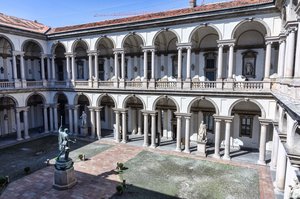 ピナコテカ・ディ・ブレラ |
ミラノ | 7 | Apollo and Daphne, Self-portrait, The Death of Adonis |
 インディアナポリス美術館 |
インディアナポリス | 2 | Head of Laocoon, Head of Laocoon |
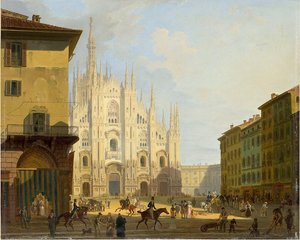 Fondazione Cariplo |
ミラノ | 2 | Psyche Worshipped as the Personification of Beauty, Psyche Asking Proserpine for Her Box of Beauty |
 Musée Napoléonien |
エクス=アン=プロヴァンス | 1 | ナポレオン、イタリア王 |
 クリーブランド美術館 |
クリーブランド | 1 | Portrait of a Musician |
 Walters Art Museum |
ボルチモア | 1 | The Baptism of Christ |
 カルナヴァレ博物館 |
パリ | 1 | Ms. Hamelin, born Jeanne Geneviève Fortunée Lormier-Lagrave |
 プーシキン美術館 |
モスクワ | 1 | Allegory on the Peace of Pressburg |
1790年から1808年にわたり、アンドレア・アッピアーニは19年間にわたって創作活動を続けてきました。その長いキャリアを辿り、最高傑作のオリジナル作品を厳選したセレクションです。
年代を選択して、当時のオリジナル作品を見る
Andrea Appiani’s Head of Laocoon, created about 1790, focuses on the expressive head of an elderly man, likely the mythological Laocoon. The composition utilizes a tight close-up, positioning the subject in a direct, intimate view that brings the viewer into immediate proximity with the figure's suffering. This proximity emphasizes the furrowed brow and the pained expression held within the eyes. The subject's face is set against a dark, indistinct background,…
1790のその他の作品

In this work, titled Apollo and Daphne, Andrea Appiani captures a singular, frantic moment of mythological transition. Created about 1797, the painting focuses on the precise instant where the nymph Daphne begins her metamorphosis to escape the pursuit of the god Apollo. There is a palpable tension held within the figures, a struggle between the physical drive of the chase and the sudden, supernatural change of her very nature.
The canvas captures a young woman, Ms. Hamelin, in a moment of quietude. She is positioned in a three-quarter view, her body angled slightly away while her gaze drifts toward the right, as if caught by a passing thought. Her dark, voluminous hair falls in tight, sculpted curls around a face of pale, luminous skin. A creamy white garment covers her shoulders, edged with a delicate band of red and…

A young man sits in a three-quarter view, his gaze drifting slightly toward the viewer with a calm, contemplative expression. He is a figure of stillness, caught in a moment of pause. The deep black of his coat absorbs the light, creating a sharp contrast against the pale, smooth tones of his skin. A white shirt collar cuts a crisp line across his neck, a bright punctuation in a composition…
1800のその他の作品
In the heart of the Neoclassical era, few works capture the intersection of political triumph and divine myth as profoundly as Andrea Appiani’s Allegory on the Peace of Pressburg. Completed in 1808, this monumental masterpiece serves as more than a mere historical record; it is a breathtaking theatrical performance rendered in oil. The painting commemorates the Treaty of Pressburg, a pivotal moment that solidified Napoleon Bonaparte's dominion over Lombardy and…
1808のその他の作品
ナポレオン、イタリア王(Musée Napoléonien, エクス=アン=プロヴァンス)。次いでHead of Laocoon (1790)、Head of Laocoon (1790)が続きます。
ナポレオン、イタリア王, Head of Laocoon, Head of Laocoon, Portrait of a Musician, The Baptism of Christ, Ms. Hamelin, born Jeanne Geneviève Fortunée Lormier-Lagrave, Apollo and Daphne, Allegory on the Peace of Pressburg, Two Children of the Artist と Self-portrait。上記のランキングには、それぞれの制作年と所蔵美術館が記載されています。
当カタログには、1790年から1808年にかけて制作されたアンドレア・アッピアーニによる41点の作品が収められています。
主にピナコテカ・ディ・ブレラ (ミラノ), インディアナポリス美術館 (インディアナポリス) と Fondazione Cariplo (ミラノ)に所蔵されています。上記の美術館一覧にすべて記載されています。
1790年:このページにある全40作品のうち、3作品がその時期に制作されました。そのうちHead of Laocoon作品が含まれます。
このページでは、最も古い作品はHead of Laocoon (1790)、最新の作品はAllegory on the Peace of Pressburg (1808)です。
このページに掲載されている40点の作品におけるMan (5), Portraits (5) と Napoleon bonaparte (3)
このページに掲載されている全40作品のうち、7作品のOil On Canvas
このページに掲載されているオリジナル作品から判断すると、Neoclassical styleです。
Apollo and Daphne, Self-portrait と The Death of Adonis:ピナコテカ・ディ・ブレラ, ミラノには、このページに掲載されている作品のうち7点が所蔵されています。
1754年、ミラノに生を受けたアンドレア・アッピアニは、18世紀後半から19世紀初頭にかけてのイタリア新古典主義美術界において、極めて重要な役割を果たした人物です。当初、彼は父の職業を継ぎ医学の道へ進む運命にありましたが、その芸術的な情熱が彼を突き動かしました。私塾にてカルロ・マリア・ジュディチに師事したことが、彼の輝かしいキャリアの礎となりました。その後、アンブロジアーナ絵画館でのアントニオ・デ・ジョルジによる指導や、マルティン・クノラーとの研鑽を通じて、油彩技法への理解をより深めていきました。こうした多様な教育的背景に加え、詩人ジュゼッペ・パリーニによって育まれた古典的美学への傾倒が、アッピアニ独自の芸術的ヴィジョンを形作りました。こうして彼は、優雅な肖像画や壮大なフレスコ画、そしてナポレオン・ボナパルトのような権力者たちからの依頼で知られる、名高い画家へと登り詰めたのです。
アッピアニの初期のキャリアは、あらゆる技法を極めようとする飽くなき探求心に彩られていました。1776年の聖ジェルヴァーシオとプロタシオのフレスコ画を皮切りに、アローナのサンタ・マリア・ナシェンテ教会の祭壇画(1忘82年)や、ミラノのマッジョーレ病院のための「降誕」(1784年)など、次々と作品を残していきます。また、モンツァ大聖堂の主祭壇における建築設計(1786-1798年)では、芽生えつつあった彼の才能が遺憾なく発揮され、フィレンツェでの舞台美術の仕事(1783-1784年)は、彼の表現の幅広さを証明しました。さらに、彫刻家ガエターノ・モンティと共にマッジョーレ病院で行った解剖学的研究は、人体構造に対する決定的な理解をもたらしました。この経験こそが、後に彼の描く驚くほど生命感あふれる肖像画や、ダイナミックな構図の源泉となったのです。
1790年代、ミラノを占領したフランス軍の存在は、アッピアニにとって人生を変える転換点となりました。彼は瞬く間にナポレオン・ボナパルトの寵愛を受け、宮廷画家としての地位を確立し、その名声を飛躍的に高める依頼を次々と受けることになります。この時期、彼は皇帝や政権の重要人物たちの肖像画を数多く手掛けました。現存はしていませんが記録に残る象徴的な「ロディのナポレオン」をはじめ、「ヴィーナスと愛」や「アルミダの庭のアルディーノ」といった優美な作品群が誕生しました。彼の芸術的才能は、メダルの設計や政府の布告のための視覚資料作成といった公的な任務にも活用されました。この時代、彼の創作活動は爆発的な勢いを見せ、それは彼自身の野心と、受けた庇護の両方を反映したものでした。
この時代におけるアッピアニの最も野心的なプロジェクトには、ローマのヴィラ・ファルネジーナにあるラファエロの作品に触発された、モンツァ王宮ロトンダ内の精緻なフレスコ画(1789-1790年)や、ミラノのカーサ・サンナザーロにおけるアポロン神話の大規模な連作(1795-1796年)が含まれます。これらのフレスコ画は、遠近法、色彩、そして物語的な構成における彼の卓越した技量を示し、彼を新古典主義装飾の第一人者として不動のものにしました。特に王宮の食堂の天井に描かれた、アポロンとミューズを象徴する「パルナッソス」は、彼の芸術的技能を示す極めて名高い傑作として今なお語り継がれています。
アッピアニの遺産は、その記念碑的なフレスコ画の中に深く刻まれています。サンタ・マリア・プレッソ・サン・チェルソ教会のドームやペンデンティヴに描かれた、四福音書記者と教会博士の連作(1795年)は、彼の技術的熟練度と物語構成力の証です。同様に、王宮の食堂にあるフレスコ画「パルナッソス」も、古典神話のエッセンスを驚くべき細部と躍動感で捉えた傑作と見なされています。また、ミラノ王宮における、ナポレオンを讃える美徳の寓意画や歴史的出来事の描写は、卓越した技術を持つ宮廷画家としての彼の評価をさらに確固たるものにしました。
こうした壮大な依頼にとどまらず、アッピアニの芸術的探求は、より小規模ながらも同様に重要な作品へと広がっていました。ジュリア・ベッカリアとその息子アレッサンドロ・マンゾーニの幼少期の肖作(1790年)は、人間の感情や家族の絆を捉える彼の能力を示す、胸を打つような例です。また、アルザーノの教会のために描かれた「ラケルとヤコブの出会い」(179なる年頃、現在はブレラ美術館所蔵)は、構図の支配力と劇的な物語性を鮮明に示しています。さらに、劇場や私邸の装飾要素のデザインに至るまで、彼の活動は多岐にわたり、芸術家としての真の多才さを物語っています。
ナポレオン時代における輝かしい成功にもかかわらず、1814年のナポレオン失脚後、アッピアニの運命は劇的に暗転しました。イタリア王国からの手当は打ち切られ、彼は困窮の淵へと突き落とされました。帝国の宮廷に人生の多くを捧げてきた芸術家にとって、この時期は極めて大きな挫折となりました。しかし、アッピアニは筆を置くことはありませんでした。かつてのような称賛や経済的支援を得ることは叶わなかったものの、彼は肖像画や小規模な作品の制作を続け、その魂を表現し続けたのです。
アンドレア・アッピアニが遺した芸術的遺産は、個々の傑作という枠を超えて存在しています。ローマで活躍した従甥のアンドレア・アッピアニと区別するため、彼はしばしば「長兄(the elder)」と呼ばれます。彼の作品は、その優雅さ、技術的な精緻さ、そして新古典主義の理想を体現するものとして、今なお研究され、称賛され続けています。ミラノのブレラ美術館には、「オリンポス」のフレスコ画を含む彼の重要なコレクションが収蔵されており、訪れる人々はこの稀代のイタリア人画家の生涯と芸術に触れることができるのです。彼の足跡は、その後の世代の芸術家たちの作品の中にも、脈々と受け継がれています。


