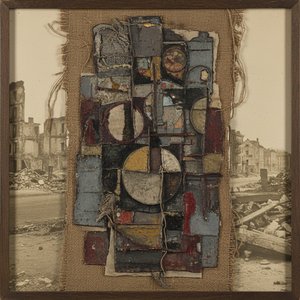
スタニスワフ・シュカルスキ

1893 - 1987

概要

  • Also known as: Stanisław Szukalski
  • Top-ranked work: David
  • Top 3 works:
    • David
    • In Bondage of One's Muse
    • My Blacksmith Father
  • Movements: art deco
  • Copyright status: Under copyright
  • Nationality: ポーランド
  • Born: 1893, ヴァルタ, ポーランド

A Life Forged in Clay and Myth: The Singular Vision of Stanisław Szukalski

Stanisław Szukalski, a name resonating with increasing force within the annals of 20th-century art, was an artist whose life mirrored the tumultuous currents of his time. Born in 1893 in Warta, Poland, young Stanisław displayed an astonishing aptitude for sculpting from a remarkably early age—an anecdote about a perfectly carved pencil figure captivating local attention speaks volumes about the innate talent that would define his path. This gift propelled him towards formal training, yet Szukalski’s artistic journey was destined to be anything but conventional. In 1907, he immigrated with his mother and stepfather to Chicago, a city poised to become both a crucible and a catalyst for his unique aesthetic development. While briefly enrolled at the School of the Art Institute of Chicago, Szukalski largely remained self-taught, forging an intensely personal style that defied easy categorization. He wasn’t merely learning technique; he was constructing a worldview, one deeply rooted in ancient civilizations and fueled by a restless imagination.

Bent Classicism and the Echoes of Antiquity

Szukalski's artistic fingerprint is immediately recognizable: a style dubbed “Bent Classicism.” This wasn’t simply a revival of classical forms; it was a deliberate distortion, a dynamic reimagining that imbued traditional figures with an unsettling energy. His sculptures and paintings alike feature powerfully muscled bodies contorted in dramatic poses, often set against fragmented architectural backdrops or swirling, chaotic landscapes. The influences informing this distinctive vision were remarkably diverse. He drew inspiration from the monumental grandeur of Egyptian art, the intricate symbolism of Slavic folklore, and the raw power of Aztec sculpture. These ancient sources weren’t merely stylistic touchstones; they fed into a broader fascination with origins, with the search for a primal source of human culture. He absorbed elements of Art Nouveau's flowing lines and early 20th-century European movements like Cubism, Expressionism, and Futurism, yet synthesized them into something wholly his own. He frequently approached painting *through* sculpture, imbuing his two-dimensional works with a palpable sense of volume and physicality—a testament to his foundational training as a sculptor.

The Chicago Renaissance and the Seeds of Zermatism

During the 1920s and 30s, Szukalski became a central figure in the vibrant artistic community known as the Chicago Renaissance. He was lauded by his peers—artists like Ruth Van Sickle Ford and Edgar Miller recognized the originality and power of his work—and even hailed as Poland’s “greatest living artist.” This period saw significant recognition for Szukalski, with solo exhibitions at the Art Institute of Chicago and widespread critical acclaim. However, it was also during this time that he began to develop *Zermatism*, a complex and idiosyncratic theory that would come to dominate his later work. Zermatism posited that all human culture originated from post-deluge Easter Island, and that humanity was locked in an eternal struggle against the “Sons of Yeti” (Yetinsyny), monstrous offspring of Yetis and humans. While undeniably pseudoscientific, this theory wasn’t merely a fantastical construct; it provided Szukalski with a framework for interpreting history, mythology, and the human condition. It became the lens through which he viewed the world, shaping his artistic themes and iconography in profound ways.

Obscurity, Rediscovery, and Lasting Legacy

Despite the initial acclaim, Szukalski’s career experienced periods of relative obscurity. Following a return to Poland in the 1930s—a journey tragically interrupted by the outbreak of World War II and the subsequent loss of much of his early work—he eventually settled in California, where he lived a largely reclusive life. He continued to create art prolifically, driven by his unwavering belief in Zermatism, but struggled for recognition. It wasn’t until recent years that there has been a significant resurgence of interest in his work, fueled in part by the 2018 documentary *Struggle: The Life and Lost Art of Szukalski*. This renewed attention has brought his unique vision to a wider audience, revealing an artist who was far ahead of his time. Szukalski’s influence can now be seen in contemporary artists exploring themes of mythology, folklore, and alternative histories. His art continues to challenge viewers, prompting us to question our assumptions about cultural origins and the very nature of human existence. He remains a compelling figure—a visionary whose work transcends categorization, leaving an indelible mark on the landscape of 20th-century art. His legacy is not merely one of artistic innovation, but of unwavering conviction in the power of imagination.

クイズ

各質問の正解は1つのみです。

設問 1:
スタニスワフ・シュカルスキは、アメリカへの移住後、どの都市で最初にアーティストとしての地位を確立しましたか?
設問 2:
シュカルスキの独特な芸術スタイルは、しばしば何と呼ばれますか?
設問 3:
シュカルスキの芸術的テーマに強い影響を与えた擬似科学的理論は何ですか?
設問 4:
シュカルスキが芸術界の著名な人物となったのは、どの時期ですか?
設問 5:
シュカルスキが晩年に比較的無名の状態となった主な理由の一つは何ですか?

アーティストへのQ&A

スタニスワフ・シュカルスキはどの芸術運動に属していましたか?

スタニスワフ・シュカルスキは、有名なArt Decoの芸術家の一人です。

スタニスワフ・シュカルスキの没年はいつですか?

スタニスワフ・シュカルスキは1987年に逝去、享年は94歳前後です。

スタニスワフ・シュカルスキの出生地と誕生年はいつですか?

スタニスワフ・シュカルスキは1893年、ヴァルタに生まれました。

スタニスワフ・シュカルスキの作品は、どのようなムードを表現していますか?

スタニスワフ・シュカルスキの作品をムード別に表示:それぞれの作品をその雰囲気に基づいて分類しています。

スタニスワフ・シュカルスキの作品はパブリックドメインですか?

いいえ、スタニスワフ・シュカルスキの作品は現在も著作権の保護対象となっています。

スタニスワフ・シュカルスキの作品の中で、最も閲覧数が多いのはどれですか?

スタニスワフ・シュカルスキは、どの時代に活動していましたか?

スタニスワフ・シュカルスキは近代美術に活動していました。この時代背景は、その画家の足跡を歴史の中に位置づけるものです。

スタニスワフ・シュカルスキの代表的な作品は何ですか?

スタニスワフ・シュカルスキは、スタニスワフ・シュカルスキの代表作ランキングに掲載されている作品で知られています。

スタニスワフ・シュカルスキには他にどのような名で知られているものがありますか?

スタニスワフ・シュカルスキは、Stanisław Szukalskiという別名でも表記されます。