


1


10月 2026 更新 · 当サイトの人気スコア(各作品の検索数、閲覧数、注文数)に基づくランキング · 44点の Robert Hopeの作品がカタログにあります
要約すると
当ギャラリーの視点では、Robert Hopeの最も有名な作品はThe Presentation by King James III and Queen Margaret of the Banner Known as the Blue Blanket to the Craftsmen in the Year 1482 (1912)です。 KilmenyとEdinburgh from Craiglockhartが加わり、誰もが一度は目にしたことのある至高のトリオが完成します。 当カタログに含まれるRobert Hopeの作品44点の中から、特に有名な40点を厳選してご紹介します。各作品は、制作年、所蔵美術館、そしてその作品ならではの魅力とともに、一点物のオリジナル作品として掲載されています。


In the quiet intimacy of 1924, Robert Hope captured a scene of profound serenity that transcends the mere depiction of a person. Glints of Gold (Miss Dorothy Salvesen) is more than a portrait; it is an invitation into a private sanctuary of thought and repose. The painting presents a woman draped in a luminous yellow dress, reclining gracefully upon a bed with her head resting softly against a pillow. As…


 Portrait of a Lady with a Motoring Veil1915 · Harris Museum - Art Gallery
12
 A Victorian Debutante1922
13
 A Pageant of the Sea1929
14
 Alderman Eaton1944
15
 Lord Leverhulme and Alderman R. Williams, Mayor of Bebington1945
16
 Melrose
17
 Idle Hours
18
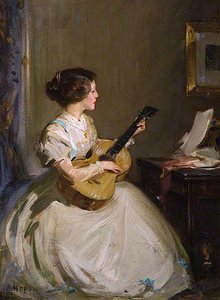 The Guitar Lesson
19
 The Fountain, Princes Street Gardens, EdinburghMcmanus: Dundee's Art Galleries And Museums
20
 A Quiet Pool, Evening
21
 Edinburgh from the ArboretumCity Art Centre
22
 Melrose
23
 The Guitar Lesson
24
 The Blue Veil
25
 Stream in Galloway
26
 An Old Herd
27
 No.8 Howard Place, Edinburgh, 1914
28
 Back of Standing Female NudeEdinburgh College of Art
29
 The Silken Gown
30
 The Glee Maiden
31
 Willows, East LintonJohn Muir House
32
 The Charm
33
 Before the Looking GlassThe Stirling Smith Art Gallery - Museum
34
 The Vanity GlassThe National Trust For Scotland
35
 The Return of the Sardine Fishers, Concarneau
36
 Swanston Cottage, Edinburgh
37
 The Green Door, CulrossThe Stewartry Museum
38
 The Remnant Stall
39
 Woman with BasketJohn Muir House
40
 Workers in a Hay FieldThe Stewartry Museum
これらのオリジナル作品に繰り返し描かれている4つの主題と、それぞれの最高傑作。
このページに掲載されている絵画を最も多く所蔵している 8 の美術館
| 美術館 | 都市 | Robert Hopeの作品 | このリストの絵画 |
|---|---|---|---|
 City Art Centre |
Edinburgh | 2 | Edinburgh from Craiglockhart, Edinburgh from the Arboretum |
 John Muir House |
Haddington | 2 | Willows, East Linton, Woman with Basket |
 The Stewartry Museum |
Cairns | 2 | The Green Door, Culross, Workers in a Hay Field |
 Borders Textile Townhouse |
Hawick | 1 | Kilmeny |
 Royal Scottish Academy of Art - Architecture |
エディンバラ | 1 | Glints of Gold (Miss Dorothy Salvesen) |
 Paisley Art Institute Collection |
Paisley | 1 | The Golden Apple |
 Harris Museum - Art Gallery |
プレストン | 1 | Portrait of a Lady with a Motoring Veil |
 Mcmanus: Dundee's Art Galleries And Museums |
Dundee | 1 | The Fountain, Princes Street Gardens, Edinburgh |
その時代を象徴する名作を見るために、年代を選択してください。
In the quiet intimacy of 1924, Robert Hope captured a scene of profound serenity that transcends the mere depiction of a person. Glints of Gold (Miss Dorothy Salvesen) is more than a portrait; it is an invitation into a private sanctuary of thought and repose. The painting presents a woman draped in a luminous yellow dress, reclining gracefully upon a bed with her head resting softly against a pillow. As…
The Presentation by King James III and Queen Margaret of the Banner Known as the Blue Blanket to the Craftsmen in the Year 1482 (1912)。続いてKilmeny、Edinburgh from Craiglockhartが続きます。
43歳:The Presentation by King James III and Queen Margaret of the Banner Known as the Blue Blanket to the Craftsmen in the Year 1482は1912年の作品で、Robert Hopeの生年は1869年です。
The Presentation by King James III and Queen Margaret of the Banner Known as the Blue Blanket to the Craftsmen in the Year 1482, Kilmeny, Edinburgh from Craiglockhart, Glints of Gold (Miss Dorothy Salvesen), Inverkeithing, Inverkeithing, The Fountain, Princes Street Gardens, Edinburgh, The Glee Maiden, The Golden Apple と Swanston Farm, Edinburgh。上記のランキングには、それぞれの制作年と所蔵美術館が記載されています。
当カタログには、1905年から1929年にかけて制作されたRobert Hopeによる44点の作品が収められています。
主にCity Art Centre (Edinburgh), John Muir House (Haddington) と The Stewartry Museum (Cairns)に所蔵されています。上記の美術館一覧にすべて記載されています。
1910s年:このページにある全40作品のうち、3作品がその時期に制作されました。そのうちThe Presentation by King James III and Queen Margaret of the Banner Known as the Blue Blanket to the Craftsmen in the Year 1482作品が含まれます。
このページでは、最も古い作品はInverkeithing (1905)、最新の作品はA Pageant of the Sea (1929)です。
このページに掲載されている40点の作品におけるElegant woman (3), Victorian era (3) と Scottish landscape (2)
このページに掲載されているオリジナル作品から判断すると、Academic realism と Impressionismです。
Edinburgh from Craiglockhart と Edinburgh from the Arboretum:City Art Centre, Edinburghには、このページに掲載されている作品のうち2点が所蔵されています。

