


1

本を持つ少女
「本を持つ少女」と題されたこの傑作は、芸術家 ピエトロ・ロータリの手によるものです。キャンバスに描かれた油彩によって表現されたこの肖像画は、読書に耽る静かなひとときを見事に捉えています。制作時期は、画家のキャリアの中でも成熟期にあたる1756年から1762年頃のものです。描かれた女性が手にしている一冊の本は、構図の要として存在感を放ち、彼女が今この瞬間に何に心を砕いているのかを雄弁に物語っています。

11月 2026 更新 · 当サイトの人気スコア(各作品の検索数、閲覧数、注文数)に基づくランキング · 56点の ピエトロ・ロータリの作品がカタログにあります
要約すると
ピエトロ・ロータリが遺した数多くのオリジナル作品の中で、最も有名なものは本を持つ少女です。 それに次いで、Alexander the Great and Roxane (1756)とPortrait of Maria Josepha of Austria (1755)が続きます。 ピエトロ・ロータリによる56点の作品をカタログに掲載しています。当ギャラリーでは、世界が称賛する51点を選定し、制作年、所蔵美術館、そしてその背景にある物語とともにご紹介しています。
「本を持つ少女」と題されたこの傑作は、芸術家 ピエトロ・ロータリの手によるものです。キャンバスに描かれた油彩によって表現されたこの肖像画は、読書に耽る静かなひとときを見事に捉えています。制作時期は、画家のキャリアの中でも成熟期にあたる1756年から1762年頃のものです。描かれた女性が手にしている一冊の本は、構図の要として存在感を放ち、彼女が今この瞬間に何に心を砕いているのかを雄弁に物語っています。

The painting titled Alexander the Great and Roxane was executed by the artist Pietro Rotari. Completed in 1756, this oil on canvas work depicts a specific historical pairing. The subject matter focuses on Alexander III, the King of Macedon, and Roxana, his Persian princess wife. These two figures occupy the central space of the composition.

In this 1755 oil portrait, we encounter Maria Josepha of Austria, the wife of King Augustus III of Poland. The sitter is presented in a three-quarter length view, her posture conveying a quiet, steady authority. There is a certain stillness to her presence, a composure that suggests the weight of her station without the need for overt drama. The light, descending from the upper left, gently sculpts the contours of…

A young boy rests in the center of the frame, his head tilted in the heavy stillness of sleep. The composition is tight, focusing on the soft curve of his neck and the gentle rise of his shoulders. He wears a vest of muted brown over a creamy white shirt, the fabric rendered with a smooth, painterly touch. His hair falls in wavy, dark locks across his forehead, catching a…

A single gaze meets the observer from the year 1746. Jerzy August Mniszech sits in a three-quarter pose, his body angled toward the left while his eyes remain fixed upon us. He is a man of the mid-18th century, draped in a heavy red coat that holds the light in its deep folds. A blue sash cuts across his torso, a cool stripe of color against the warmth of his…

A young boy sits in a space of profound stillness, his presence filling the frame with a quiet, heavy introspection. He is caught in a moment of deep thought, his chin resting near his hand as he gazes out with eyes that seem to hold a weight beyond his years. The light, soft and directional, spills from the upper left, brushing against the gentle contours of his face and the…

Old woman with fur hat is an oil on canvas portrait by the artist Pietro Rotari. Executed about 1754, the work is a close-up bust portrait that focuses on the character and physical presence of the subject.

A single moment of stillness defines this portrait. A young woman rests in a three-quarter profile, her eyes closed against the world. Her skin possesses a porcelain quality, luminous and pale under a soft light that descends from the upper left. This light traces the gentle curve of her neck and the soft folds of her white linen collar. A red cap sits upon her head, its plush fur trim…

In the grand tapestry of eighteenth-century portraiture, few works capture the intersection of sovereign power and delicate femininity as exquisitely as Pietro Antonio Rotari’s 1755 masterpiece, Queen Maria Josepha, Wife of King Augustus III of Poland. This commanding portrait is far more than a mere likeness; it is a profound exploration of Baroque grandeur, designed to evoke an immediate sense of awe in any viewer. As the eye meets the…

The painting titled Girl Looking through a Telescope is a work by the Italian artist Pietro Rotari. Created in the late 1750s, this portrait captures a singular moment of observation. The work was commissioned by Queen Lovisa Ulrika, who possessed a known interest in the study of natural history and scientific instruments.
 Electoral Prince Friedrich Christian of Saxony1758 · バイエルン州立絵画コレクション
12
 Portrait of a Lady1734 · バイエルン州立絵画コレクション
13
 Crown Princess Maria Antonia of Sachsen1734 · バイエルン州立絵画コレクション
14
 Electress Maria Antonia of Sachsen, Daughter of Emperor Karl VII1734 · バイエルン州立絵画コレクション
15
 Boy on a pedestal1734 · ドレスデン州立美術館
16
 Man with fur cap1734 · ドレスデン州立美術館
17
 Smiling girl with pearl necklace1734 · ドレスデン州立美術館
18
 Slumbering girl1734 · ドレスデン州立美術館
19
 A Girl in a Blue Dress1755 · El Paso Museum of Art
20
 A Girl in a Red Dress1755 · El Paso Museum of Art
21
 The pentiting Magdalena1754 · ドレスデン州立美術館
22
 Princess Kunigunde of Saxony1755 · ドレスデン州立美術館
23
 Young Woman Reading A Letter, Her Head Propped Up1750 · ドレスデン州立美術館
24
 Girl with a Flower in Her Hair1759 · エカテリンブルク美術館
25
 Young Woman with Bonnet, White Shawl, and Book, known as “The Virtuous Girl"1760
26
 Young Woman with Black Collar and Flowers in her Hair, Known as "The Frivolous Girl"1760
27
 Young Russian Woman1759 · Walters Art Museum
28
 Young Girl Writing a Love Letter1757 · ノートン・サイモン美術館
29
 King Augustus III of Poland1755 · Gemäldegalerie Alte Meister
30
 Portrait of Countess A.M. Vorontsova1759 · エルミタージュ美術館
31
 Princess Elisabeth of Saxe1755 · ドレスデン州立美術館
32
 Woman with a Fan and a Woman with a Roseクラクフ国立美術館
33
 A young Woman, Pietro Rotari, 1756 - 17621762 · 国立美術館
34
 A Young Woman with a Book, Pietro Rotari, 1756 - 17621762 · 国立美術館
35
 Penitent girl
36
 Weeping Girlバイエルン州立絵画コレクション
37
 Young Woman with a Fan1750 · J・ポール・ゲティ美術館
38
 Portrait of a maid.ワルシャワ国立博物館
39
 Portrait of the nuncio at the Dresden court, Ignazio Accoramboniベルリン絵画館
40
 Girl with Needle-work国立美術館
41
 Sleeping Girlアルテ・ピナコテーク
42
 Young Girl with Distaffブダペスト美術館
43
 Portrait of Elena Kurakina
44
 Young Woman with a Fan
45
 Portrait of Anna Galitzine
46
 Portrait of Natalya Alexeevna of Russia
47
 Portrait of Catherine Petrovna Holstein-Beck
48
 Portrait of Franciszek Michał Rzewuski.ワルシャワ王宮
49
 Portrait of a Woman
50
 Portrait of Francesco Bartolomeo Rastrelli
51
 A Girl with a Flower in Her Hair1762 · ナショナル・ギャラリー・オブ・アート
これらのオリジナル作品に繰り返し描かれている4つの主題と、それぞれの最高傑作。
このページに掲載されている絵画を最も多く所蔵している 8 の美術館
| 美術館 | 都市 | ピエトロ・ロータリの作品 | このリストの絵画 |
|---|---|---|---|
 ドレスデン州立美術館 |
ドレスデン | 11 | Sleeping boy, Young boy, Old woman with fur hat |
 バイエルン州立絵画コレクション |
ミュンヘン | 5 | Electoral Prince Friedrich Christian of Saxony, Portrait of a Lady, Crown Princess Maria Antonia of Sachsen |
 ワルシャワ国立博物館 |
ワルシャワ | 3 | Portrait of Maria Josepha of Austria, Portrait of Jerzy August Mniszech (1715–1778), his own coat of arms, Portrait of a maid. |
 エルミタージュ美術館 |
サンクトペテルブルク | 2 | Alexander the Great and Roxane, Portrait of Countess A.M. Vorontsova |
 ナショナル・ギャラリー・オブ・アート |
ワシントン | 2 | A Sleeping Girl, A Girl with a Flower in Her Hair |
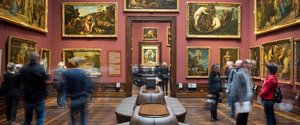 Gemäldegalerie Alte Meister |
ドレスデン | 2 | Queen Maria Josepha, Wife of King Augustus III of Poland, King Augustus III of Poland |
 国立美術館 |
ストックホルム | 2 | Girl Looking through a Telescope, Girl with Needle-work |
 El Paso Museum of Art |
エルパソ | 2 | A Girl in a Blue Dress, A Girl in a Red Dress |
その時代を象徴する名作を見るために、年代を選択してください。
A young boy rests in the center of the frame, his head tilted in the heavy stillness of sleep. The composition is tight, focusing on the soft curve of his neck and the gentle rise of his shoulders. He wears a vest of muted brown over a creamy white shirt, the fabric rendered with a smooth, painterly touch. His hair falls in wavy, dark locks across his forehead, catching a…
A single gaze meets the observer from the year 1746. Jerzy August Mniszech sits in a three-quarter pose, his body angled toward the left while his eyes remain fixed upon us. He is a man of the mid-18th century, draped in a heavy red coat that holds the light in its deep folds. A blue sash cuts across his torso, a cool stripe of color against the warmth of his…
The painting titled Alexander the Great and Roxane was executed by the artist Pietro Rotari. Completed in 1756, this oil on canvas work depicts a specific historical pairing. The subject matter focuses on Alexander III, the King of Macedon, and Roxana, his Persian princess wife. These two figures occupy the central space of the composition.
A single moment of stillness defines this portrait. A young woman rests in a three-quarter profile, her eyes closed against the world. Her skin possesses a porcelain quality, luminous and pale under a soft light that descends from the upper left. This light traces the gentle curve of her neck and the soft folds of her white linen collar. A red cap sits upon her head, its plush fur trim…
本を持つ少女。続いてAlexander the Great and Roxane (1756)、Portrait of Maria Josepha of Austria (1755)が続きます。
本を持つ少女, Alexander the Great and Roxane, Portrait of Maria Josepha of Austria, Sleeping boy, Portrait of Jerzy August Mniszech (1715–1778), his own coat of arms, Young boy, Old woman with fur hat, A Sleeping Girl, Queen Maria Josepha, Wife of King Augustus III of Poland と Girl Looking through a Telescope。上記のランキングには、それぞれの制作年と所蔵美術館が記載されています。
当カタログには、1734年から1762年にかけて制作されたピエトロ・ロータリによる56点の作品が収められています。
主にドレスデン州立美術館 (ドレスデン), バイエルン州立絵画コレクション (ミュンヘン) と ワルシャワ国立博物館 (ワルシャワ)に所蔵されています。上記の美術館一覧にすべて記載されています。
1750s年:このページにある全51作品のうち、18作品がその時期に制作されました。そのうちAlexander the Great and Roxane作品が含まれます。
このページでは、最も古い作品はSleeping boy (1734)、最新の作品はA young Woman, Pietro Rotari, 1756 - 1762 (1762)です。
このページに掲載されている51点の作品におけるWoman (27), Portrait (11) と Skin tones (9)
このページに掲載されている全51作品のうち、29作品のOil On Canvas
このページに掲載されているオリジナル作品から判断すると、Baroqueです。
Sleeping boy, Young boy と Old woman with fur hat:ドレスデン州立美術館, ドレスデンには、このページに掲載されている作品のうち11点が所蔵されています。
ピエトロ・アントニオ・ロタリは、1707年、バロックの伝統が深く根を下ろしながらも、イタリア絵画の進化する潮流に開かれた街、ヴェローナの活気ある芸術的風景の中から誕生しました。アントニオ・バレストラの指導の下で受けた初期の修行は、古典的な構図と技法の強固な基礎を彼に授けました。これこそが、後に彼独自のスタイルを築き上げる礎となったのです。この形成期において、ロタリは細部への緻りとしたこだわりと、形態に対する洗練されたアプローチを身につけました。これらの資質は、彼の作品の代名詞となることになります。その後、1725年から1727年にかけてのヴェネツィア滞在は、彼の芸術的視野を大きく広げました。ヴェネツィア特有の色彩感覚とドラマチックな華やかさが融合した、比類なき影響に触れたことは、彼の感性を形作り、さらなる研鑽へと向かわせる決定的な転機となりました。
ロタリの野心は彼をさらなる高みへと導きました。1728年から1732年にかけて訪れたローマでは、フランチェスコ・トレヴィザーニの教えの下でその腕を磨きました。トレヴィザーニの影響は、光と影の繊細な扱いや、肖像画における心理的深みの追求といったロタリの初期作品に鮮明に表れています。続くナポリでのフランチェスコ・ソリメーナとの共同作業(1731-1734年)は、彼の芸術的語彙をさらに豊かなものにしました。ナポリ・バロックの巨匠であるソリメーナは、ロタリに壮大さと劇的な強烈さを伝え、それが彼のキャリアを通じて響き渡ることになります。
ヴェローナへと戻ったピエトロ・アントニオ・ロタリは、瞬く間に独立した芸術家としての地位を確立し、自身のスタジオを開設して顧客を増やしていきました。彼は、驚くべき写実性に優雅さと洗練された感性を添えた、彼にしか成し得ない独自のスタイルを築き上げ始めたのです。バロックの伝統にしっかりと根ざしながらも、ロタリの作品は、当時の主流であった過度に劇的な様式とは一線を画す、軽やかな筆致とニュアンスへの鋭い感受性を備えていました。初期の依頼には、ヴェローナのサン・ジャコモ教会にある「四人の殉教者」(1745年)のような地元の教会のための大規模な祭壇画も含まれており、複雑な構図を操り、宗教的な場面に感情的な力を吹き込む彼の卓越した能力を示しています。
しかし、ロタリが真にその才能を遺憾なく発揮したのは、肖像画の領域でした。彼は、描かれる人物の外見的な似姿だけでなく、その人物の個性、内なる気品、そして社会的地位までも捉える類まれな才能を持っていました。彼の肖察は単なる再現に留まりませんでした。それは人物の本質を深く探求する研究であり、人間の感情の機微を驚くほど繊細に描き出していたのです。この才能は、北イタリアの貴族社会において瞬く間に彼を認めさせることとなりました。
1750年、ロタリのキャリアは大きな転換点を迎えます。彼は帝国の宮廷での機会を求め、北方のウィーンへと足を踏み入れました。成功への道はすぐには開かれなかったものの、それが後の輝かしい勝利への布石となりました。そして1756年、運命が彼をロシアの女帝エリザヴェータ・ペトロヴナの目に留めさせたのです。サンクトペテルブルクへと招かれたロタリは、瞬く間にロシア貴族層の間で寵児的な肖像画家となりました。写実性を保ちつつも、被写体を美化し、称える彼の技法は、宮廷の人々にとって抗いがたい魅力を持っていたのです。
ロタリの才能はロシアに留まりませんでした。彼はドレスデンのポーランド王アウグスト3世のためにも活動し、ヨーロッパの王侯貴族を代表する肖像画家としての名声を不動のものにしました。その後、彼は再びサンクトペテルブルクに戻り、エカチェリーナ2世に仕え、ロシア宮廷の豪華絢爛さと権力を象徴する肖像画を制作し続けました。彼の依頼には、大公女や伯爵、その他の著名な人物が含まれており、その一つひとつが、貴族的なエチケットへの深い理解と、精緻な細部描写によって描き出されていました。
宮廷画家としてのピエトロ・アントニオ・ロタリの成功は、18世紀における肖像画の絶大な重要性を反映しています。この時代、肖像画は単に個人を記念するだけでなく、権力、地位、そして正統性を誇示するための手段でもありました。彼の肖察は、政治的・社会的な激動の時代におけるヨーロッパの貴族階級や宮廷生活を知る上で、極めて貴重な歴史的記録となっています。
ロタリは、美術史の流れを劇的に変えた革命的な人物ではありませんでしたが、その洗練された様式は、バロックの伝統の中で活動する他の芸術家たちに、繊細ながらも永続的な影響を与えました。写実性、優雅さ、そして心理的洞察へのこだわりは、肖像画における高い規範を打ち立て、後世の画家たちが同様の技術と感性を追求するためのインスピレーションとなったのです。
1762年、ロタリはサンクトペテルブルクでその生涯を閉じましたが、時代が切望した肖像画家の一人としての遺志は、今もなお受け継がれています。彼の作品は、その美しさと気品、そしてヨーロッパの王侯貴族に対する洞察に満ちた描写によって、観る者を魅了し続けています。ペテルゴフ宮殿の「ファッションと優雅のギャラリー」を彩る、ロタリによる数百点もの小肖像画は、彼の驚異的な才能と、芸術界への不朽の貢献を物語る生きた証として、今もそこに存在しています。


