


1

11月 2026 更新 · 当サイトの人気スコア(各作品の検索数、閲覧数、注文数)に基づくランキング · 12点の Jonathan Parkerの作品がカタログにあります
要約すると
Mrs Patricia Jennings (b.1915), on Her 80th Birthday, March 1995 (1995)はJonathan Parkerの作品の中で最も注目を集めている絵画です。原画はウォリントンのナショナル・トラスト・ウォリントンに所蔵されています。 その後、視線はSir George Trevelyan (1906–1996), 4th Bt, on the Wrekin (1997)とMy Dad (2001)へと移ります。 当カタログに含まれるJonathan Parkerの12点の作品のうち、これら9点は最も有名な作品です。制作年、所蔵美術館、そして時代を超えて愛される理由とともに、一点もののオリジナル作品をご紹介します。


このページに掲載されている絵画を最も多く所蔵している 3 の美術館
| 美術館 | 都市 | Jonathan Parkerの作品 | このリストの絵画 |
|---|---|---|---|
 ナショナル・トラスト・ウォリントン |
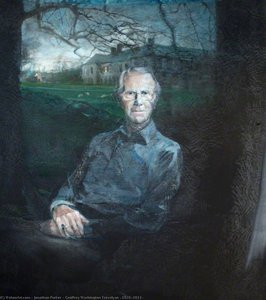
ウォリントン | 4 | Mrs Patricia Jennings (b.1915), on Her 80th Birthday, March 1995, Sir George Trevelyan (1906–1996), 4th Bt, on the Wrekin, Geoffrey Washington Trevelyan (1920–2011) |
 Durham University |
ダーラム | 4 | Deborah Lavin, Robert Trevelyan, The Twelve Tribes of Israel |
 Orleans House Gallery |
Riverside | 1 | My Dad |
その時代を象徴する名作を見るために、年代を選択してください。
Mrs Patricia Jennings (b.1915), on Her 80th Birthday, March 1995 (1995)(ナショナル・トラスト・ウォリントン, ウォリントン)。次いでSir George Trevelyan (1906–1996), 4th Bt, on the Wrekin (1997)、My Dad (2001)が続きます。
27歳:Mrs Patricia Jennings (b.1915), on Her 80th Birthday, March 1995は1995年の作品で、Jonathan Parkerの生年は1968年です。
当カタログには、1995年から2011年にかけて制作されたJonathan Parkerによる12点の作品が収められています。
主にナショナル・トラスト・ウォリントン (ウォリントン), Durham University (ダーラム) と Orleans House Gallery (Riverside)に所蔵されています。上記の美術館一覧にすべて記載されています。
2010s年:このページにある全9作品のうち、5作品がその時期に制作されました。そのうちDeborah Lavin作品が含まれます。
このページでは、最も古い作品はMrs Patricia Jennings (b.1915), on Her 80th Birthday, March 1995 (1995)、最新の作品はDeborah Lavin (2011)です。
Mrs Patricia Jennings (b.1915), on Her 80th Birthday, March 1995, Sir George Trevelyan (1906–1996), 4th Bt, on the Wrekin と Geoffrey Washington Trevelyan (1920–2011):ナショナル・トラスト・ウォリントン, ウォリントンには、このページに掲載されている作品のうち4点が所蔵されています。
In the quiet, evocative realm of contemporary portraiture, few artists command the viewer's attention with such profound psychological depth as Jonathan Parker. Born in Belfast in 1968 and raised amidst the suburban landscapes of Twickenham, Middlesex, Parker’s journey is one defined by a relentless pursuit of the human essence. His artistic lineage is a tapestry woven from diverse geographical and academic influences, stretching from his early training at King’s College School, Wimbledon, to the rigorous creative atmosphere of the Camberwell School of Arts and Crafts in London. This foundation as a fine draughtsman allowed him to master the structural nuances of the human form, yet it was his later wanderings—including a transformative period in Zaragoza, Spain, where he embraced the spontaneity of plein air painting—that infused his work with a unique sensitivity to light and atmosphere.
Parker’s technical evolution is marked by an extraordinary ability to blend traditional mastery with experimental textures. While many contemporary artists lean toward abstraction, Parker remains anchored in the tradition of figurative realism, yet he transcends mere likeness through a sophisticated use of medium. He is renowned for his meticulous creation of oil paintings on muslin stretched over wood, a technique that lends a tactile, organic quality to his subjects. By integrating elements such as encaustic wax into his oil layers, he achieves a luminous depth that seems to radiate from within the canvas itself. This layering process does more than create visual interest; it mirrors the complexity of the human psyche, suggesting that beneath every visible expression lies a hidden reservoir of memory and emotion.
The heart of Parker’s oeuvre lies in his ability to transform the portrait from a static image into a narrative vessel. His celebrated series, “My Dad,” serves as a poignant exploration of familial bonds, vulnerability, and the indelible marks left by lineage. In these works, Parker moves beyond the superficiality of a face to capture the weight of history and the intimacy of connection. This dedication to psychological realism places him in conversation with masters such as Rembrandt and Lucian Freud, artists who famously prioritized the inner state of being over mere anatomical accuracy. Whether he is rendering the subtle tension in a gesture or the melancholic light in an eye, Parker’s subjects possess a palpable presence that invites the viewer into a silent dialogue.
Beyond the intimate sphere of family, Parker has demonstrated a remarkable versatility in his subject matter. His explorations have ranged from the rhythmic vitality of the River Thames—captured in his River Collection—to more speculative and culturally resonant portraits. There is an inherent storytelling quality to his work; even when he utilizes photographs as a structural starting point, the final image emerges from a place of deep intuition. This ability to breathe life into the unknown allows his paintings to function as biographical windows, where each brushstroke contributes to a larger, unwritten history of the individual portrayed.
Throughout his career, Parker’s contributions to the fine art world have been recognized through prestigious accolades and significant exhibitions. His early promise was cemented when he was named the winner of The Royal Academy Richard Ford Award, a distinction that signaled his arrival as a formidable talent in the London art scene. His exhibition history is equally impressive, spanning from solo shows at the Mercury Gallery in Mayfair to large-scale installations such as the nine-year engagement with Lloyds Private Bank. Furthermore, his work has found a permanent home in esteemed collections, including notable pieces held by the National Trust, where his portraits of the Trevelyan family have been viewed by millions.
The significance of Jonathan Parker’s work lies in its refusal to retreat from the complexities of human emotion. In an era often dominated by digital detachment, his paintings serve as a profound reminder of the power of the physical mark and the enduring relevance of the human face. Through his mastery of texture, light, and psychological insight, Parker continues to bridge the gap between the seen and the felt, ensuring that his portraits remain not just images of people, but enduring monuments to the human spirit.