1


11月 2026 更新 · 当サイトの人気スコア(各作品の検索数、閲覧数、注文数)に基づくランキング · 14点の Jock Macdonaldの作品がカタログにあります
要約すると
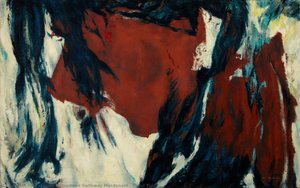
ギャラリーの視点では、Jock Macdonaldの最も有名な作品はRust of Antiquity (1958)であり、その原画はOshawaのThe Robert McLaughlin Galleryに展示されています。 Pilgrimage (1937)とFormative Colour Activity (1934)が加わり、誰もが一度は目にしたことのある至高のトリオが完成します。 当カタログに含まれるJock Macdonaldの作品14点の中から、特に有名な13点を厳選してご紹介します。各作品は、制作年、所蔵美術館、そしてその作品ならではの魅力とともに、一点物のオリジナル作品として掲載されています。


A red circle with a yellow center anchors the composition, acting as a focal point amidst a field of shifting shapes. Surrounding this central form, various colors and dark, black elements create a sense of tension and contrast. The arrangement suggests a sudden release of energy, a visual pulse captured in 1955. The work moves away from literal representation, favoring a language of pure color and form to communicate movement…

In the captivating realm of James Williamson Galloway Macdonald, known affectionately as Jock Macdonald, the boundaries between reality and imagination dissolve into a vibrant tapestry of life. His 1946 masterpiece, Music Hour, serves as a profound testament to his ability to weave disparate elements into a singular, rhythmic composition. At first glance, the eye is immediately drawn to the central protagonist: a luminous yellow fish, its presence commanding and bold…


このページに掲載されている絵画を最も多く所蔵している 2 の美術館
| 美術館 | 都市 | Jock Macdonaldの作品 | このリストの絵画 |
|---|---|---|---|
 The Robert McLaughlin Gallery |
Oshawa | 7 | Rust of Antiquity, Orange Impulse, Music Hour |
 カナダ国立美術館 |
オタワ | 6 | Pilgrimage, Formative Colour Activity, Lytton Church, British Columbia |
その時代を象徴する名作を見るために、年代を選択してください。
In the captivating realm of James Williamson Galloway Macdonald, known affectionately as Jock Macdonald, the boundaries between reality and imagination dissolve into a vibrant tapestry of life. His 1946 masterpiece, Music Hour, serves as a profound testament to his ability to weave disparate elements into a singular, rhythmic composition. At first glance, the eye is immediately drawn to the central protagonist: a luminous yellow fish, its presence commanding and bold…

Rust of Antiquity (1958)(The Robert McLaughlin Gallery, Oshawa)。次いでPilgrimage (1937)、Formative Colour Activity (1934)が続きます。
61歳:Rust of Antiquityは1958年の作品で、Jock Macdonaldの生年は1897年です。
Rust of Antiquity, Pilgrimage, Formative Colour Activity, Orange Impulse, Music Hour, Lytton Church, British Columbia, Rain, Thunder Clouds over Okanagan Lake, The Butterfly と Birds Dreaming。上記のランキングには、それぞれの制作年と所蔵美術館が記載されています。
当カタログには、1930年から1960年にかけて制作されたJock Macdonaldによる14点の作品が収められています。
主にThe Robert McLaughlin Gallery (Oshawa) と カナダ国立美術館 (オタワ)に所蔵されています。上記の美術館一覧にすべて記載されています。
1930s年:このページにある全13作品のうち、4作品がその時期に制作されました。そのうちPilgrimage作品が含まれます。
このページでは、最も古い作品はLytton Church, British Columbia (1930)、最新の作品はAll Things Prevail (1960)です。
Rust of Antiquity, Orange Impulse と Music Hour:The Robert McLaughlin Gallery, Oshawaには、このページに掲載されている作品のうち7点が所蔵されています。
James Williamson Galloway Macdonald, known affectionately to the art world as Jock Macdonald, stands as a monumental figure in the evolution of Canadian modernism. Born in the rugged, atmospheric landscape of Thurso, Scotland, in 1897, his early life was steeped in the dramatic textures of his homeland. This foundational connection to nature would later become the heartbeat of his abstract explorations. After honing his technical prowess at the prestigious Glasgow School of Art, Macdonald embarked on a transformative journey across the Atlantic in 1926. Arriving in Canada, he did not merely join an existing art scene; he arrived to ignite a revolution, bringing with him a sophisticated understanding of European avant-garde movements such as Cubism and Surrealism that would eventually dismantle the boundaries of representational painting in North America.
As his career unfolded, Macdonald’s work underwent a profound metamorphosis, moving away from the literal depiction of the world toward a deeper, more spiritualized abstraction. He became a master of capturing the intangible, seeking to translate the very essence of movement, time, and cosmic energy onto the canvas. His palette was as diverse as his imagination, utilizing traditional oils and watercolors alongside experimental industrial materials like Duco and Lucite. This willingness to embrace new media allowed him to achieve a unique sense of depth and luminosity. In masterpieces such as Orange Impulse, one witnesses a vibrant explosion of red and yellow shapes that pulse with the dynamic energy of mid-century modernism, inviting the viewer into a realm where color itself becomes a language of pure emotion.
Macdonald’s contribution to art history extends far beyond his individual canvases; he was a pivotal educator and a catalyst for collective change. Through his influential teaching positions at the Vancouver School of Decorative and Applied Arts and the Ontario College of Art, he nurtured a new generation of Canadian artists, encouraging them to look inward and toward the abstract. As a prominent member of the Painters Eleven, he helped establish a movement that challenged the dominance of landscape painting in Canada, pushing the national identity toward a more universal, modernist dialogue.
His thematic preoccupations often revolved around the organic rhythms of life, frequently utilizing motifs such as birds and aquatic forms to explore the concept of space, time, and motion. Whether it is the whimsical, mid-century charm found in Music Hour, where a vibrant yellow fish serves as a captivating centerpiece, or the more somber, textured reflections in works like Rust of Antiquity, Macdonald’s oeuvre remains a testament to the power of abstraction to touch upon the profound. His ability to blend the organic with the geometric created a visual vocabulary that continues to resonate, ensuring his place as a pioneer who redefined the limits of Canadian art.