James Bellの肖像画

世界的に有名なJames Bellの名作8点、そのすべてが唯一無二の芸術品

11月 2026 更新 · 当サイトの人気スコア(各作品の検索数、閲覧数、注文数)に基づくランキング · 8点の James Bellの作品がカタログにあります

要約すると

St Peter's Cathedral, East Road, Lancaster (1880)は、James Bellの作品の中で最も注目を集めている絵画です。 その後、視線はLancaster from the Aqueduct Bridge (1880)とSS 'Shandon', Cardiffへと移ります。 当カタログに含まれるJames Bellの8点の作品のうち、これら8点は最も有名な作品です。制作年、所蔵美術館、そして時代を超えて愛される理由とともに、一点もののオリジナル作品をご紹介します。

1850 – 1910 最多収蔵館: Sunderland Museum - Winter Gardens

ギャラリーの視点で選ぶ、James Bellによるトップ10作品

1
St Peter's Cathedral, East Road, Lancaster (1880) による James Bell

St Peter's Cathedral, East Road, Lancaster

1880 · Oil

This 1880 painting, titled St Peter's Cathedral, East Road, Lancaster, captures a bustling urban scene centered around a church. The composition features a large steeple and a prominent clock tower rising in the background. The architecture of the church appears old-fashioned, serving as the focal point of the streetscape.

2
Lancaster from the Aqueduct Bridge (1880) による James Bell

Lancaster from the Aqueduct Bridge

1880 · Oil On Canvas

An elevated perspective from the Aqueduct Bridge looks down upon the landscape of Lancaster. A winding river meanders through the terrain, its surface reflecting a soft, overcast sky. The composition is defined by the interplay of light and shadow across rolling hills and lush green fields. Dense vegetation and scattered trees provide a sense of depth, leading the eye toward the distant outskirts of the city where subtle architectural forms…

3
SS 'Shandon', Cardiff による James Bell

SS 'Shandon', Cardiff

Oil

In this intimate maritime portrait, the steamship 'SS Shandon' is captured mid-voyage, its hull cutting through a sea of muted blue-grey. The vessel, rendered in soft beige and cream tones, occupies the center of a circular, decorative frame that lends the piece the character of a commemorative souvenir. There is a quiet dignity in the way the ship is positioned, its mast flying a single flag against a pale, diffused…

4
SS 'Consols', Liverpool による James Bell

SS 'Consols', Liverpool

Oil On Canvas

This circular decorative painting depicts the steamship SS 'Consols' sailing upon the sea. The vessel is positioned centrally, appearing to move across the water with the city of Liverpool visible in the background. The composition is enclosed within an ornate wreath frame that incorporates floral elements and heraldic details. Within this wreath, the text ‘W.T. & Co. Consols’ and ‘Liverpool’ is prominently displayed. The scene is rendered with a flattened…

5
SS 'J. W. Taylor', Sunderland による James Bell

SS 'J. W. Taylor', Sunderland

Oil · Sunderland Museum - Winter Gardens, サンダーランド

The painting depicts the SS 'J. W. Taylor' while it is docked in Sunderland. The ship is the central subject, rendered in a color scheme of blue and white with gold accents. Two guns are visible in the composition, one positioned on the left side and another toward the bottom right corner. The scene is presented within a decorative border that features blue flowers and the name N. D. McIntyre.…

6
RMS 'Boulama' による James Bell

RMS 'Boulama'

Painting

The RMS 'Boulama' rests heavily in the waters of Liverpool, a massive presence of iron and steam held steady against the tide. There is a stillness here, the kind that exists only when a great vessel is momentarily relieved of its duty to the open sea. The ship dominates the view, its dark hull cutting a formidable silhouette against the sky. A blue border frames the scene, carrying the name…

7
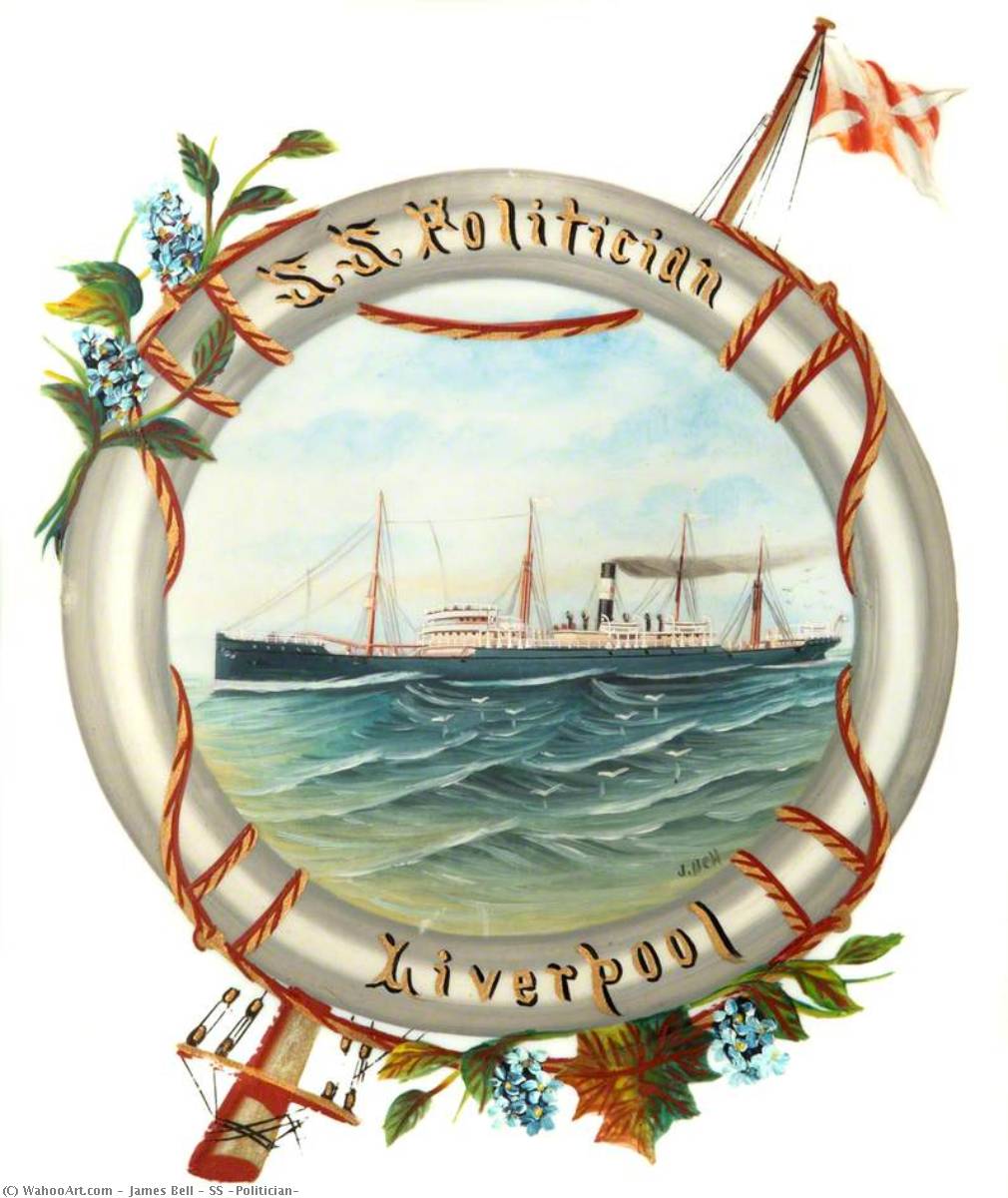
SS 'Politician' による James Bell

SS 'Politician'

Oil

The painting depicts the SS 'Politician', a vessel currently displayed at the Merseyside Maritime Museum in Liverpool, United Kingdom. The artwork features a large ship characterized by multiple masts and sails. A notable detail on the side of the ship is a clock. The composition is presented in color, showcasing the intricate details of the ship and its surrounding environment.

8
RMS 'Atlantic' による James Bell

RMS 'Atlantic'

Oil

To stand before this oil painting is to encounter the sheer scale of the RMS 'Atlantic'. James Bell captures the vessel not as a static object, but as a living entity navigating the vastness of the sea. The work focuses on the imposing silhouette of the ocean liner, emphasizing its massive proportions and the way it commands the space around it. There is a certain weight to the composition, a…

James Bellが心を惹かれた主題

これらのオリジナル作品に繰り返し描かれている4つの主題と、それぞれの最高傑作。

James Bellの原画を所蔵する美術館

このページに掲載されている絵画を最も多く所蔵している 1 の美術館

美術館 所在都市 James Bellの作品 このリストの絵画
Sunderland Museum - Winter Gardens, サンダーランドSunderland Museum - Winter Gardens サンダーランド 1 SS 'J. W. Taylor', Sunderland

James Bellの歩み:それぞれの作品が持つ唯一無二のオリジナル

ここに表示されているJames Bellの年代別オリジナル作品はすべて1880年のもので、知名度の高い順に並んでいます。

年別作品数

年代を選択して、当時のオリジナル作品を見る

James Bellの絵画:ギャラリーへの質問

James Bellの最も有名な作品は何ですか?答えを見る

St Peter's Cathedral, East Road, Lancaster (1880)。続いてLancaster from the Aqueduct Bridge (1880)、SS 'Shandon', Cardiffが続きます。

James BellがSt Peter's Cathedral, East Road, Lancasterを制作したのは何歳の時ですか?答えを見る

30歳:St Peter's Cathedral, East Road, Lancasterは1880年の作品で、James Bellの生年は1850年です。

James Bellの既知の作品数は?答えを見る

当カタログにはJames Bellによる作品が8点ございます。

最も有名なJames Bellのオリジナル作品はどこで見ることができますか?答えを見る

主にSunderland Museum - Winter Gardens (サンダーランド)に所蔵されています。上記の美術館一覧にすべて記載されています。

James Bellが最も有名な作品を制作したのは、どの時期ですか?答えを見る

1880年:このページにある全8作品のうち、2作品がその時期に制作されました。そのうちSt Peter's Cathedral, East Road, Lancaster作品が含まれます。

James Bellが好んだ主題は何ですか?答えを見る

このページに掲載されている8点の作品におけるWater (6), Ship (5) と Sea (4)

James Bellが最も多く使用した画材は何ですか?答えを見る

このページに掲載されている全8作品のうち、5作品のOil

James Bell:アーティストの肖像画

James Bell: The Master of the Moving Sea

James Bell (1850-1910) wasn’t merely a marine artist; he was a conduit to the very soul of the sea. Born in Glasgow, Scotland, into a family steeped in trade and commerce – his father a customs collector – Bell's early life instilled within him an appreciation for ships, their journeys, and the vital role they played in connecting nations. This foundation, coupled with a keen observational eye and a masterful understanding of light and atmosphere, propelled him to become one of the most celebrated depictions of maritime life in 19th-century Britain. His canvases aren’t simply records of vessels; they are imbued with a palpable sense of motion, drama, and the raw power of nature – elements that continue to resonate deeply with viewers today.

Bell's artistic journey began modestly, likely influenced by the prevailing trends of academic painting at the time. However, he quickly developed a distinctive style characterized by loose brushwork, vibrant color palettes, and an almost obsessive attention to detail when it came to capturing the nuances of weather and wave action. Unlike many of his contemporaries who favored idealized or romanticized scenes, Bell embraced the often-turbulent realities of seafaring – the spray of the waves, the billowing sails, the weathered faces of the crew. This commitment to realism, combined with a deep understanding of light’s transformative effects on water, created an unparalleled sense of immediacy and authenticity in his work.

A Career Defined by Vessels

Bell's career blossomed primarily during the late Victorian era, a period marked by significant expansion of British maritime trade. He established himself as a prolific artist, producing hundreds of paintings depicting a diverse range of vessels – from elegant clipper ships and sturdy merchantmen to imposing warships and humble fishing boats. His subjects weren’t limited to grand naval engagements; he frequently captured scenes of everyday life aboard ships, offering intimate glimpses into the routines, challenges, and camaraderie of sailors. Notable amongst his commissions were numerous paintings for shipping companies, illustrating their vessels and promoting trade routes – a testament to his commercial success and recognition within the industry.

Among his most iconic works are depictions of the ‘Politician’ and ‘Atlantic’, two legendary ships that played pivotal roles in British naval history. The ‘Politician,’ a swift and agile warship, is rendered with breathtaking dynamism, capturing its speed and maneuverability as it cuts through the waves. Similarly, Bell's portrayal of the ‘Atlantic’ – a massive ocean liner – conveys both its imposing size and the sense of adventure associated with transatlantic voyages. These paintings are not merely illustrations; they are powerful evocations of the ships themselves, imbued with a life force that transcends their static representation on canvas.

Technique and Influence

Bell’s technique was characterized by a remarkable ability to blend observation with artistic license. He meticulously studied his subjects – often sketching directly from life aboard ships – but he wasn't afraid to exaggerate or simplify forms to achieve the desired effect. His brushwork is loose and expressive, creating a sense of movement and texture that is particularly evident in his depictions of water. He employed a vibrant color palette, utilizing shades of blue, green, and gray to capture the shifting moods of the sea. The use of light was central to his approach; he skillfully manipulated highlights and shadows to create depth, drama, and a sense of atmosphere.

Bell’s influence on subsequent generations of marine artists is undeniable. His emphasis on realism, dynamic composition, and atmospheric effects paved the way for later painters such as Albert Goodson and William Frederick Richmond. His work also demonstrated the potential of painting to capture not just the physical appearance of a ship but also its spirit – its history, its purpose, and its connection to the vastness of the ocean.

A Legacy on Canvas

James Bell’s legacy extends far beyond his individual paintings. His work provides invaluable insights into the maritime world of the Victorian era, offering a glimpse into the lives of sailors, shipbuilders, and merchants who shaped Britain's global empire. His paintings are housed in major collections around the world – including the National Maritime Museum in Greenwich and the Glasgow City Archives – ensuring that his artistic vision continues to inspire and captivate audiences today. Bell’s ability to translate the raw power and beauty of the sea onto canvas solidifies his place as a true master of maritime art, a painter who truly understood the soul of the moving sea.