James Aumonierの肖像画

James Aumonierの絵画:ギャラリーの視点で選ぶ、最も有名な44作品

11月 2026 更新 · 当サイトの人気スコア(各作品の検索数、閲覧数、注文数)に基づくランキング · 48点の James Aumonierの作品がカタログにあります

要約すると

当ギャラリーの視点では、James Aumonierの最も有名な作品はGathering Bait (1878)です。 An Easter Holiday, the Children of Bloomsbury Parochial School in a Wood at Watford (1874)とThe Labourer's Home (1879)が加わり、誰もが一度は目にしたことのある至高のトリオが完成します。 当カタログに含まれるJames Aumonierの作品48点の中から、特に有名な44点を厳選してご紹介します。各作品は、制作年、所蔵美術館、そしてその作品ならではの魅力とともに、一点物のオリジナル作品として掲載されています。

1832 – 1911, Camberwell Realism 最多収蔵館: Sheffield City Art Galleries

ギャラリーが選ぶJames Aumonierのトップ10作品

1
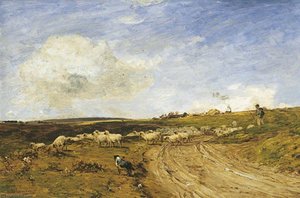
Gathering Bait (1878) による James Aumonier

Gathering Bait

1878 · Oil

In Gathering Bait, James Aumonier presents a quiet, observational study of coastal life. Painted about 1878, the work captures a group of individuals on the beach, each absorbed in the specific labors of their fishing endeavors. Some figures stand near the water's edge, while others are positioned further back on the shore, creating a sense of natural, unforced movement across the landscape. There is a rhythmic quality to their presence,…

2
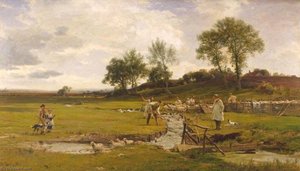
An Easter Holiday, the Children of Bloomsbury Parochial School in a Wood at Watford (1874) による James Aumonier

An Easter Holiday, the Children of Bloomsbury Parochial School in a Wood at Watford

1874 · Oil On Canvas · Touchstones Rochdale, ロッチデール

In the dappled light of a woodland setting, a quiet moment unfolds within An Easter Holiday, the Children of Bloomsbury Parochial School in a Wood at Watford. Painted by James Aumonier about 1874, the scene captures a sense of seasonal transition as a group gathers amidst the lush vegetation. The air feels heavy with the stillness of the forest, where large, imposing trees frame the figures and create a deep…

3
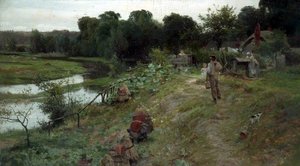
The Labourer's Home (1879) による James Aumonier

The Labourer's Home

1879 · Oil On Canvas

The Labourer's Home is an oil painting by James Aumonier. Created about 1879, the work captures a quiet moment in a rural landscape. It focuses on the daily existence of working-class individuals within a countryside setting. A man and a young girl move along a path toward a modest dwelling near the water's edge.

4
A Nook in Nature's Garden (1879) による James Aumonier

A Nook in Nature's Garden

1879 · Oil On Canvas · バーミンガム博物館・美術館, バーミンガム

A Nook in Nature's Garden is a work by James Aumonier, painted in 1879. This piece offers a quiet glimpse into the artist's approach to the English landscape, capturing a specific moment of repose within a wooded setting. The painting reflects the sensibilities of a man deeply attuned to the subtle shifts of the natural world.

5
When the Tide is Out (1895) による James Aumonier

When the Tide is Out

1895 · Oil On Canvas

The canvas presents a wide coastal scene viewed from a slightly elevated vantage point. In the foreground, a muddy tidal flat extends toward the viewer, its surface marked by irregular forms and the textures of wet silt. Small boats are positioned within this landscape, their shapes defined by loose, expressive lines. In the distance, a town sits along the horizon, its rooftops appearing as simplified geometric shapes. The composition is…

7
Landscape による James Aumonier

Landscape

Oil On Canvas

The painting titled Landscape is a work by the British artist James Aumonier. It captures a quiet moment of the natural world, rendered in oil on canvas. The scene focuses on a single tree standing in a grassy field, set against a backdrop of distant mountains and a sky scattered with clouds.

James Aumonierの絵画、ランキング11位から44位

James Aumonierの代表作、時代別一覧

Late Medieval

1879 · 3作品がこのリストに含まれています

James Aumonierが心を惹かれた主題

これらのオリジナル作品に繰り返し描かれている4つの主題と、それぞれの最高傑作。

James Aumonierの原画を所蔵する美術館

このページに掲載されている絵画を最も多く所蔵している 8 の美術館

美術館 都市 James Aumonierの作品 このリストの絵画
Sheffield City Art Galleries, シェフィールドSheffield City Art Galleries シェフィールド 2 Lancing Mill, Sussex, An English Cottage Home
ナショナル・トラスト, イースト・グリンステッドナショナル・トラスト イースト・グリンステッド 2 Misty Sunrise, A Misty Morning
Touchstones Rochdale, ロッチデールTouchstones Rochdale ロッチデール 1 An Easter Holiday, the Children of Bloomsbury Parochial School in a Wood at Watford
バーミンガム博物館・美術館, バーミンガムバーミンガム博物館・美術館 バーミンガム 1 A Nook in Nature's Garden
Victoria Art Gallery, バースVictoria Art Gallery バース 1 In the West Country
ウォーカー・アート・ギャラリー, リバプールウォーカー・アート・ギャラリー リバプール 1 Gathering Bait
Touchstones Rochdale Arts And Heritage Centre, RochdaleTouchstones Rochdale Arts And Heritage Centre Rochdale 1 An Easter Holiday, the Children of Bloomsbury Parochial School in a Wood at Watford
Grundy Art Gallery, BlackpoolGrundy Art Gallery Blackpool 1 The Thames at Great Marlowe

James Aumonier、10年ごとに1枚の代表作

年代別作品数

その時代を象徴する名作を見るために、年代を選択してください。

James Aumonierの絵画:ギャラリーの回答

James Aumonierの作品の中で、最も有名な絵画は何ですか?答えを見る

Gathering Bait (1878)。続いてAn Easter Holiday, the Children of Bloomsbury Parochial School in a Wood at Watford (1874)、The Labourer's Home (1879)が続きます。

James AumonierがGathering Baitを完成させた時の年齢は?答えを見る

46歳:Gathering Baitは1878年の作品で、James Aumonierの生年は1832年です。

James Aumonierの代表的な絵画トップ10は?答えを見る

Gathering Bait, An Easter Holiday, the Children of Bloomsbury Parochial School in a Wood at Watford, The Labourer's Home, A Nook in Nature's Garden, When the Tide is Out, In the West Country, Landscape, Gathering Bait, An Easter Holiday, the Children of Bloomsbury Parochial School in a Wood at Watford と Hampshire Landscape。上記のランキングには、それぞれの制作年と所蔵美術館が記載されています。

James Aumonierの作品数は?答えを見る

当カタログには、1850年から1911年にかけて制作されたJames Aumonierによる48点の作品が収められています。

James Aumonierの最も有名なオリジナル作品はどこに展示されていますか?答えを見る

主にSheffield City Art Galleries (シェフィールド), ナショナル・トラスト (イースト・グリンステッド) と Touchstones Rochdale (ロッチデール)に所蔵されています。上記の美術館一覧にすべて記載されています。

James Aumonierが最も有名な作品を描いたのはいつですか?答えを見る

1870s年:このページにある全44作品のうち、10作品がその時期に制作されました。そのうちGathering Bait作品が含まれます。

James Aumonierの初期および後期の代表作は何ですか?答えを見る

このページでは、最も古い作品はIn the West Country (1850)、最新の作品はA Lonely Heath (1911)です。

James Aumonier が最も多く描いた主題は何ですか?答えを見る

このページに掲載されている44点の作品におけるEnglish countryside (4), Rural landscape (3) と Victorian era (3)

James Aumonier が最も多く用いた技法は何ですか?答えを見る

このページに掲載されている全44作品のうち、6作品のOil On Canvas

James Aumonierはどの芸術運動に関連していますか?答えを見る

このページに掲載されているオリジナル作品から判断すると、Realismです。

Sheffield City Art Galleriesが所蔵するJames Aumonierのオリジナル作品は何ですか?答えを見る

Lancing Mill, Sussex と An English Cottage Home:Sheffield City Art Galleries, シェフィールドには、このページに掲載されている作品のうち2点が所蔵されています。

James Aumonier:アーティスト

The Serene Vision of James Aumonier

James Aumonier (1832–1911) stands as a profound voice within the tradition of British landscape painting, a master whose brush captured the quiet, breathing soul of the English countryside. Born in Camberwell, London, Aumonier was shaped by a lineage of meticulous craftsmanship; as the son of a jeweller and the brother of an engraver, he possessed an innate sensitivity to detail and precision. This foundational appreciation for fine line and texture would later manifest in his ability to render the subtle shifts of light across a meadow or the heavy, moisture-laden atmosphere of a misty morning. His early years were defined by a rigorous pursuit of knowledge, attending evening classes at the Birkbeck Institution and South Keensington, where he honed his skills in design—a period that bridged the gap between decorative artistry and the grander ambitions of fine art.

The trajectory of Aumonier’s career is a beautiful study in artistic evolution. Before establishing himself as a celebrated painter of landscapes, he worked as a designer of calicoes, a role that required an intimate understanding of pattern and tonal harmony. However, the call of the natural world proved irresistible. Drawing inspiration from the picturesque vistas of Hampshire and Worcestershire, he transitioned into oil and watercolour painting, channeling the spirit of Victorian Romanticism. His work was deeply informed by the intellectual currents of his time, finding resonance in the poetic nature-worship of Tennyson and the aesthetic philosophies of Ruskin. Through these influences, Aumonier sought to do more than merely document topography; he aimed to capture a spiritual resonance, imbuing his landscapes with a sense of moral contemplation and emotional depth.

Mastery of Light and Atmosphere

Aumonier’s technical prowess is most evident in his command of atmospheric perspective and tonal balance. He possessed a rare ability to evoke the specific "feeling" of a season, particularly through his use of autumn tints and the soft, golden hues of late afternoon. His canvases often feature a delicate interplay between light and shadow, where the sun might struggle through a breaking cloud—a technique reminiscent of the great masters Turner and Constable. Whether depicting the rugged beauty of the Black Mountains or the tranquil, water-soaked plains of the Fen Country, his work maintains a consistent sense of peace and stillness.

His repertoire of subjects reflects a deep devotion to the rhythms of rural life and the changing English climate:

  • The Pastoral Ideal: Works such as Sheep Washing in Sussex demonstrate his ability to blend Realist detail with Impressionistic touches, capturing the labor and grace of country life.
  • Atmospheric Landscapes: In paintings like Misty Sunrise, he explores the ethereal qualities of twilight, using textured brushwork to create a sense of movement within the stillness.
  • Seasonal Narratives: His depictions of the English countryside often focus on specific moments in time, such as the warmth of an Easter Holiday or the quietude of Sunday Evening.

Legacy and Recognition

Throughout his long and productive career, Aumonier earned significant acclaim both in Britain and abroad. He was a prominent figure in the London art scene, exhibiting regularly at the Royal Academy from 1871 onwards. His contributions to the medium of watercolour were particularly noted, leading to his appointment as an associate of the Royal Institute of Painters in Water-colours in 1876. His talent garnered international honors, including a gold medal for watercolour in Paris and a bronze medal for oil painting in Adelaide, proving that his vision of the English landscape possessed a universal, emotive power.

The historical significance of James Aumonier lies in his ability to bridge the gap between the meticulousness of the decorative arts and the emotional expansiveness of Romanticism. By studying geological formations and topographical maps with the same intensity as he studied light, he created a body of work that is both scientifically grounded and poetically transcendent. Today, his paintings remain cherished for their ability to transport the viewer to a lost era of pastoral tranquility, serving as a timeless window into the heart of the Victorian landscape.