1

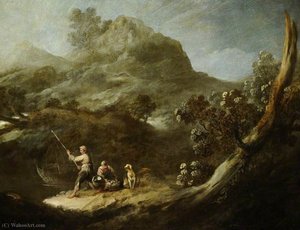
Landscape with Hunters, Ignacio de Iriarte, 1640 - 1685
Landscape with in the foreground hunters under a group of three trees. In the distance a city located at the foot of a mountain.

11月 2026 更新 · 当サイトの人気スコア(各作品の検索数、閲覧数、注文数)に基づくランキング · 6点の Ignacio de Iriarteの作品がカタログにあります
要約すると
ギャラリーの視点では、Ignacio de Iriarteの最も有名な作品はLandscape with Hunters, Ignacio de Iriarte, 1640 - 1685 (1685)であり、その原画はアムステルダムの国立美術館に展示されています。 Landscape with Figures (1660)とRiver Crossing (1665)が加わり、誰もが一度は目にしたことのある至高のトリオが完成します。 当カタログに含まれるIgnacio de Iriarteの作品6点の中から、特に有名な6点を厳選してご紹介します。各作品は、制作年、所蔵美術館、そしてその作品ならではの魅力とともに、一点物のオリジナル作品として掲載されています。
Landscape with in the foreground hunters under a group of three trees. In the distance a city located at the foot of a mountain.

The Landscape with Figures painting by Ignacio De Iriarte is a masterpiece of Baroque art, characterized by its dramatic use of light and shadow. Created in 1660, this oil on canvas painting measures 108 x 163 cm and is housed at the Museo de Bellas Artes in Bilbao, Spain. Artistic Composition The painting features a dense and complex landscape, with various elements arranged to form a diagonal composition. A group…

Ignacio de Iriarte (1620-1685), a name often overshadowed by the luminaries of his time – Murillo, Zurbarán – nonetheless occupies a crucial position in Spanish Baroque art. Unlike many artists preoccupied with religious commissions or portraiture, Iriarte dedicated himself almost entirely to capturing the untamed grandeur of the Iberian Peninsula’s rural vistas. This unwavering focus resulted in a distinctive artistic style that distinguishes him from his contemporaries and secures his…

イニャシオ・デ・イリアーテ:荒涼とした風景を描くスペインの画家 イニャシオ・デ・イリアーテは、ムリョやズバルランといった同時代の画家たちと比較してあまり知られる名前ではありませんが、17世紀スペイン美術において重要な人物の一人です。彼は1620年にアスコシアで生まれ、フアン・フェレスラール・シユエルダの工房に入り、当初は伝統的な絵画技法に焦点を当てました。しかし、彼のキャリアは驚くほど独特な道を歩み、他の画家たちとは異なり、風景画のみに専念しました。この選択は彼を「スペインのクロード・ローラン」と称えるのにふさわしいものであり、その作品は荒涼とした風景や孤独感を表現しています。彼の芸術的な遺産は今なお多くの人々を魅了し続けています。 イリアーテの初期教育は家庭で行われましたが、1642年にセビルに移住し、フェレスラール・シユエルダの工房で学びました。彼は当初はフアン・フェレスラール・シユエルダの指導のもとで絵画技法を習得しました。しかし、彼の情熱は風景画に向けられ、特にスペインの広大な土地における自然の美しさを表現することに傾倒しました。この時期にイリアーテは風景画家の技術を磨き上げ、独自のスタイルを確立していきました。彼は風景画において、他の画家たちとは異なる視点と技法を用い、その作品は単なる写実的な描写を超えた深い感動を与えます。彼の絵画はしばしば荒涼とした風景の中に人間の存在を描き出し、静寂と孤独感を表現することで見る人に特別な感情を呼び起こします。 イリアーテの作品の特徴は、その圧倒的な自然描写力にあります。彼はスペインの風景を詳細に観察し、その美しさを忠実に再現しようと努めました。彼の絵画技法は特に印象派の影響を受け、色彩豊かな筆使いと光の表現が特徴です。彼は風景の中に人間の活動や感情を描き出しながらも、自然の力強さと静寂さを表現することで見る人に感動を与えます。彼の作品は単なる美しい絵画以上の価値を持ち、見る人の心に深い感動と詩的な美しさを呼び起こします。イリアーテの風景画は、スペイン美術史における重要な位置を占めており、その芸術的な遺産は今なお多くの人々を魅了しています。彼は風景画家としての卓越した技術と芸術的感覚で、スペイン美術の歴史に名を刻みました。彼の作品は現代においても多くの人々にとってインスピレーションの源となっています。 スタイル:印象派の影響を受けた風景画技法 技法:色彩豊かな筆使いと光の表現が特徴 歴史的背景:17世紀スペイン美術における風景画の隆盛期 象徴性:荒涼とした風景は人間の孤独や精神的な探求を象徴する 感情的インパクト:見る人に静寂と感動を与え、自然の美しさを表現する 彼の作品は特に「Landscape with Shepherds」において、広大なスペインの風景の中に人間の活動を描き出しながらも、その静寂と孤独感を表現することで見る人に深い感動を与えます。この絵画は、イリアーテが風景画家としての卓越した技術と芸術的感覚でスペイン美術史に名を刻んだ証であり、彼の作品は現代においても多くの人々にとってインスピレーションの源となっています。


これらのオリジナル作品に繰り返し描かれている4つの主題と、それぞれの最高傑作。
このページに掲載されている絵画を最も多く所蔵している 5 の美術館
| 美術館 | 都市 | Ignacio de Iriarteの作品 | このリストの絵画 |
|---|---|---|---|
 国立美術館 |
アムステルダム | 1 | Landscape with Hunters, Ignacio de Iriarte, 1640 - 1685 |
 Museo de Bellas Artes |
ビルバオ | 1 | Landscape with Figures |
 エルミタージュ美術館 |
サンクトペテルブルク | 1 | River Crossing |
 プラド美術館 |
マドリード | 1 | 羊飼い風景」 |
 Nostell Priory |
ウェイクフィールド | 1 | An Extensive Mountain Landscape with Figures and Sheep |
6年間にわたる1660年から1665年までのIgnacio de Iriarteの全キャリアがこのページに集約されています。最も有名なオリジナル作品を通じて、その歩みを年ごとに辿ることができます。
年代を選択して、当時のオリジナル作品を見る
The Landscape with Figures painting by Ignacio De Iriarte is a masterpiece of Baroque art, characterized by its dramatic use of light and shadow. Created in 1660, this oil on canvas painting measures 108 x 163 cm and is housed at the Museo de Bellas Artes in Bilbao, Spain. Artistic Composition The painting features a dense and complex landscape, with various elements arranged to form a diagonal composition. A group…
Ignacio de Iriarte (1620-1685), a name often overshadowed by the luminaries of his time – Murillo, Zurbarán – nonetheless occupies a crucial position in Spanish Baroque art. Unlike many artists preoccupied with religious commissions or portraiture, Iriarte dedicated himself almost entirely to capturing the untamed grandeur of the Iberian Peninsula’s rural vistas. This unwavering focus resulted in a distinctive artistic style that distinguishes him from his contemporaries and secures his…
1665のその他の作品
Landscape with Hunters, Ignacio de Iriarte, 1640 - 1685 (1685)(国立美術館, アムステルダム)。次いでLandscape with Figures (1660)、River Crossing (1665)が続きます。
当カタログには、1660年から1665年にかけて制作されたIgnacio de Iriarteによる6点の作品が収められています。
主に国立美術館 (アムステルダム), Museo de Bellas Artes (ビルバオ) と エルミタージュ美術館 (サンクトペテルブルク)に所蔵されています。上記の美術館一覧にすべて記載されています。
1665年:このページにある全6作品のうち、2作品がその時期に制作されました。そのうちRiver Crossing作品が含まれます。
このページでは、最も古い作品はLandscape with Figures (1660)、最新の作品はRiver Crossing (1665)です。
Ignacio de Iriarte, a name perhaps less familiar than those of his contemporaries Murillo or Zurbarán, stands as a pivotal figure in 17th-century Spanish art. Born in Azcoitia, Gipuzcoa, in 1620, he carved out a unique and remarkably successful career dedicated almost exclusively to landscape painting – a path rarely trodden by his peers at the time. His work, characterized by rugged, dramatic scenes often imbued with a sense of wildness and solitude, reveals an artist deeply attuned to the power and beauty of the Spanish countryside, earning him the somewhat evocative title of “the Spanish Claude Lorraine.” This article delves into the life, artistic development, and lasting legacy of this largely unsung master.
Iriarte’s early education was primarily at home, a common circumstance for artists of his era. However, in 1642, he moved to Seville and entered the studio of Francisco Herrera the Elder, where he initially focused on traditional portraiture and religious scenes. While he learned the fundamentals of color theory under Herrera, Iriarte quickly recognized that his true passion lay elsewhere. He found himself drawn to the untamed landscapes surrounding Seville, particularly the mountains near Aracena, a region that would become the enduring subject of much of his work. It was here, in 1646, that he married Doña Francisca de Chaves, though their marriage proved tragically short-lived.
His artistic trajectory shifted dramatically after this early period. Iriarte deliberately distanced himself from the prevailing trends of the time, rejecting the highly polished and often idealized depictions favored by many of his contemporaries. Instead, he embraced a more raw and expressive style, drawing inspiration from the works of Salvator Rosa, another master of dramatic landscapes. His paintings are not serene vistas; they are imbued with an atmosphere of drama, tension, and even melancholy. He captured the essence of the Spanish wilderness – its rugged peaks, dense forests, and turbulent rivers – with a remarkable sense of realism and emotional depth.
Iriarte’s association with Bartolomé Esteban Murillo proved to be one of the most significant collaborations in 17th-century Spanish art. The two artists shared a deep respect for each other's talents, and they frequently worked together on large-scale projects. Murillo typically focused on the human figures within his compositions, while Iriarte meticulously rendered the landscapes that framed them. A particularly poignant example of this collaboration is an unfinished landscape painting depicting a scene from the life of David, where Murillo sketched in the figures and Iriarte left the background incomplete – a testament to their falling out over the project. This episode highlights the differing approaches of the two artists: Murillo’s emphasis on narrative and human emotion versus Iriarte's dedication to capturing the sublime beauty of nature.
Iriarte’s career was further solidified by his membership in the Academia de Bellas Artes de Sevilla, where he served as its first secretary from 1660 to 1669 and again from 1667 to 1669. His work gained recognition throughout Spain and beyond, attracting the attention of collectors and patrons alike. He was celebrated for his ability to evoke a sense of atmosphere and emotion through his landscapes, earning him comparisons to the renowned Italian landscape painter Claude Lorrain. While the comparison isn’t entirely accurate – Iriarte's style possessed a uniquely Spanish character—it underscored the profound impact he had on the development of landscape painting in Spain.
Iriarte’s artistic style is immediately recognizable by its dramatic use of light, shadow, and color. He employed a technique known as *sfumato*, creating hazy, atmospheric effects that blurred the boundaries between foreground and background. His landscapes are often characterized by strong diagonals and dynamic compositions, conveying a sense of movement and energy. He favored earthy tones – browns, greens, and grays – to depict the rugged terrain, punctuated by flashes of vibrant color in the sky or foliage.
Unlike many of his contemporaries who relied on meticulous detail and precise rendering, Iriarte often employed looser brushstrokes and a more expressive approach. He prioritized capturing the *feeling* of a landscape over its literal representation, allowing for a degree of ambiguity and interpretation. This willingness to deviate from established conventions set him apart from other artists of his time and contributed to the distinctive character of his work.
His use of perspective was particularly noteworthy. Iriarte frequently employed aerial perspective – diminishing the clarity and intensity of colors as they receded into the distance – to create a sense of depth and scale. This technique, combined with his masterful handling of light and shadow, allowed him to transform ordinary landscapes into breathtaking vistas.
Several of Iriarte’s paintings have survived to this day, offering valuable insights into his artistic practice. “Landscape with Hunters” (circa 1640-1685), housed in Madrid, exemplifies his ability to capture the drama and grandeur of the Spanish wilderness. “Landscape with Figures,” also from Madrid, showcases his skill in integrating human figures into a carefully constructed landscape composition. “River Crossing,” currently located in Madrid, demonstrates his mastery of atmospheric perspective and dynamic composition.
Despite his considerable talent and influence, Iriarte’s work was not fully appreciated during his lifetime. He largely operated outside the established artistic circles of Seville, focusing on a niche market of patrons who valued his unique vision. However, in recent decades, Iriarte has experienced a resurgence of interest among art historians and collectors. His landscapes are now recognized as masterpieces of Spanish Baroque painting, offering a powerful testament to the beauty and resilience of the Spanish countryside.
Iriarte’s legacy extends beyond his individual paintings. He is considered a pioneer in the development of landscape painting in Spain, paving the way for future generations of artists who sought to capture the spirit of the Spanish wilderness. His work continues to inspire awe and admiration, reminding us of the enduring power of nature and the transformative potential of art.
This information is provided by OriginalUniqueArt.com as of October 26, 2023.