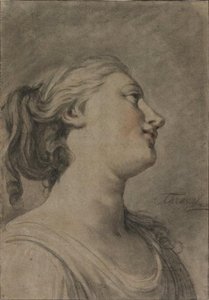
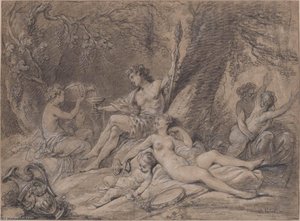
Hugues Taravalの肖像画

世界的に有名なHugues Taravalの名作26点、そのすべてが唯一無二の芸術品

11月 2026 更新 · 当サイトの人気スコア(各作品の検索数、閲覧数、注文数)に基づくランキング · 27点の Hugues Taravalの作品がカタログにあります

要約すると

The Infant Hercules Strangling Serpents in his Cradle (1785)は、Hugues Taravalの作品の中で最も注目を集めている絵画です。 その後、視線はHercules Strangling the Serpents in His Cradle (1750)とThe Triumph of Amphitrite (1775)へと移ります。 当カタログに含まれるHugues Taravalの27点の作品のうち、これら26点は最も有名な作品です。制作年、所蔵美術館、そして時代を超えて愛される理由とともに、一点もののオリジナル作品をご紹介します。

1729 – 1785, Paris 最多収蔵館: Musée Bonnat-Helleu

ギャラリーの視点で選ぶ、Hugues Taravalによるトップ10作品

1
The Infant Hercules Strangling Serpents in his Cradle (1785) による Hugues Taraval

The Infant Hercules Strangling Serpents in his Cradle

1785 · Oil

In this 1785 composition, we find ourselves witnessing a quiet yet profound moment of divine destiny. The scene captures the infant Hercules in his cradle, a setting that should suggest peace but instead holds a sudden, violent struggle. Two serpents, sent to end the hero's life before his legend could truly begin, find themselves caught in the grip of a child. There is a striking contrast between the vulnerability of…

2
Hercules Strangling the Serpents in His Cradle (1750) による Hugues Taraval

Hercules Strangling the Serpents in His Cradle

1750 · Oil On Canvas · Musée Bonnat-Helleu, バイヨンヌ

The oil painting titled Hercules Strangling the Serpents in His Cradle was executed by the French painter Hugues Taraval. Dated 1785, this work depicts a specific episode from classical mythology. The scene focuses on the infant Hercules as he engages in a struggle with serpents. These creatures were sent by the goddess Hera to threaten the child in his nursery.

3
The Triumph of Amphitrite (1775) による Hugues Taraval

The Triumph of Amphitrite

1775 · Oil On Canvas · Musée Des Beaux, Tours

The scene unfolds as The Triumph of Amphitrite, a work that captures a moment of divine consequence. Painted by Hugues Taraval in 1780, the canvas brings to life the heavy weight of Zeus’ judgment. This celestial decree follows the defiance of Poseidon, focusing on the fates of Amphitrite and Triton as they navigate the swirling currents of myth. The tension of the narrative hangs in the air, frozen in the…

4
Autumn (1769) による Hugues Taraval

Autumn

1769 · Fresco

In this large-scale neoclassical ceiling fresco, the season of Autumn unfolds across a vast, upward-looking expanse. Painted by Hugues Taraval around 1769, the mural captures a moment of mythological movement. Figures gather in a dynamic, pyramidal arrangement that draws the eye toward a central group, creating a sense of celestial activity. A chariot pulled by dark oxen moves through the scene, while a figure plays a flute, adding a silent…

6
The Triumph of Amphitrite (1777) による Hugues Taraval

The Triumph of Amphitrite

1777 · Oil On Canvas

In this large-scale oil on canvas, we find ourselves drawn into a swirling, mythological sea scene. The composition follows a pyramidal structure, centering on the figure of Amphitrite as she reclines amidst the movement of the tides. Around her, the ocean is alive with tritons and putti, their forms emerging from frothing waves and sea creatures. The atmosphere feels light, almost airy, achieved through a palette of soft pastels—pale blues,…

7
The Nativity (1781) による Hugues Taraval

The Nativity

1781 · Oil On Canvas

This oil painting, titled La Nativité de Jésus-Christ, was executed by the French artist Hugues Taraval. Created about 1781, the work represents a significant moment in the artist's career during the late eighteenth century. It is held within a collection identified by the inventory number F-2026.0.326.

8
The Cumaean Sibyl Predicts the Birth of Jesus Christ to Augustus and Shows Him a Virgin and a Child in the Sky (1781) による Hugues Taraval

The Cumaean Sibyl Predicts the Birth of Jesus Christ to Augustus and Shows Him a Virgin and a Child in the Sky

1781 · Oil On Canvas

The Cumaean Sibyl Predicts the Birth of Jesus Christ to Augustus and Shows Him a Virgin and a Child in the Sky is a large-scale oil painting by Hugues Taraval. Created about 1781, the work captures a moment of celestial revelation. The canvas holds a vision of a Virgin and a Child appearing in the sky, a sight directed toward Augustus by the prophetic Sibyl. It is a scene of…

9
The Waking of Cupid (1781) による Hugues Taraval

The Waking of Cupid

1781 · Oil · ウォレス・コレクション, ロンドン

In this oil painting, titled The Waking of Cupid, the artist Hugues Taraval captures a moment of mythological transition. Created about 1781, the work presents an allegorical scene that invites the viewer to wonder about the nature of love or the suddenness of an awakening. Three cherubic figures, known as putti, occupy the center of the composition, their soft forms appearing amidst a pastoral landscape that feels light and airy.

10
The Triumph of Amphitrite (1780) による Hugues Taraval

The Triumph of Amphitrite

1780 · Oil · Mead Art Museum, アムハースト

In this 1780 oil painting, we find ourselves drawn into a swirling, mythological drama centered on the goddess Amphitrite. The composition follows a dynamic pyramidal structure, pulling the eye upward toward the central figure as she reclines with a sense of divine grace. She is surrounded by a lively assembly of sea deities, tritons, and cherubs, all caught in a moment of movement. The palette relies heavily on soft pastels—sky…

Hugues Taravalの名作、11〜26点目

Hugues Taravalが心を惹かれた主題

これらのオリジナル作品に繰り返し描かれている4つの主題と、それぞれの最高傑作。

Hugues Taravalの原画を所蔵する美術館

このページに掲載されている絵画を最も多く所蔵している 6 の美術館

美術館 都市 Hugues Taravalの作品 このリストの絵画
Musée Bonnat-Helleu, バイヨンヌMusée Bonnat-Helleu バイヨンヌ 2 Hercules Strangling the Serpents in His Cradle, The Governor of the Seraglio Chosing the Concubines
国立美術館, ストックホルム国立美術館 ストックホルム 2 Venus and Adonis, Portrait of a Girl with a Birdcage
Musée Des Beaux, ToursMusée Des Beaux Tours 1 The Triumph of Amphitrite
ウォレス・コレクション, ロンドンウォレス・コレクション ロンドン 1 The Waking of Cupid
Mead Art Museum, アムハーストMead Art Museum アムハースト 1 The Triumph of Amphitrite
Château de Fontainebleau, フォンテーヌブローChâteau de Fontainebleau フォンテーヌブロー 1 The Nativity

Hugues Taravalの数十年にわたる軌跡:それぞれに唯一無二のオリジナル作品を

年代別作品数

その時代を象徴する名作を見るために、年代を選択してください。

Hugues Taravalの絵画:ギャラリーへの質問

Hugues Taravalの最も有名な作品は何ですか?答えを見る

The Infant Hercules Strangling Serpents in his Cradle (1785)。続いてHercules Strangling the Serpents in His Cradle (1750)、The Triumph of Amphitrite (1775)が続きます。

Hugues TaravalがThe Infant Hercules Strangling Serpents in his Cradleを制作したのは何歳の時ですか?答えを見る

56歳:The Infant Hercules Strangling Serpents in his Cradleは1785年の作品で、Hugues Taravalの生年は1729年です。

Hugues Taravalの最も有名な10作品は何ですか?答えを見る

The Infant Hercules Strangling Serpents in his Cradle, Hercules Strangling the Serpents in His Cradle, The Triumph of Amphitrite, Autumn, The Feast of Tantalus, The Triumph of Amphitrite, The Nativity, The Cumaean Sibyl Predicts the Birth of Jesus Christ to Augustus and Shows Him a Virgin and a Child in the Sky, The Waking of Cupid と The Triumph of Amphitrite。上記のランキングには、それぞれの制作年と所蔵美術館が記載されています。

Hugues Taravalの既知の作品数は?答えを見る

当カタログには、1750年から1785年にかけて制作されたHugues Taravalによる27点の作品が収められています。

最も有名なHugues Taravalのオリジナル作品はどこで見ることができますか?答えを見る

主にMusée Bonnat-Helleu (バイヨンヌ), 国立美術館 (ストックホルム) と Musée Des Beaux (Tours)に所蔵されています。上記の美術館一覧にすべて記載されています。

Hugues Taravalが最も有名な作品を制作したのは、どの時期ですか?答えを見る

1780s年:このページにある全26作品のうち、6作品がその時期に制作されました。そのうちThe Infant Hercules Strangling Serpents in his Cradle作品が含まれます。

Hugues Taravalの有名な絵画の中で、最も古い作品と最も新しい作品はどれですか?答えを見る

このページでは、最も古い作品はHercules Strangling the Serpents in His Cradle (1750)、最新の作品はThe Infant Hercules Strangling Serpents in his Cradle (1785)です。

Hugues Taravalが好んだ主題は何ですか?答えを見る

このページに掲載されている26点の作品におけるWoman (7), Women (4) と People (3)

Hugues Taravalが最も多く使用した画材は何ですか?答えを見る

このページに掲載されている全26作品のうち、7作品のOil On Canvas

Musée Bonnat-Helleuでは、Hugues Taravalのオリジナル作品を何点鑑賞できますか?答えを見る

Hercules Strangling the Serpents in His Cradle と The Governor of the Seraglio Chosing the Concubines:Musée Bonnat-Helleu, バイヨンヌには、このページに掲載されている作品のうち2点が所蔵されています。

Hugues Taraval:アーティストの肖像画

Hugues Taraval: A Pioneer of Rococo Decoration

Hugues Taraval (1729-1785) stands as a pivotal figure in the artistic landscape of 18th century France, particularly renowned for his contributions to decorative arts and mythological painting. Born in Paris amidst the burgeoning fervor of the Baroque era, Taraval’s artistic journey unfolded against the backdrop of a transformative period marked by aristocratic patronage and an embrace of opulent aesthetics—the Rococo style. His legacy resides not merely in individual canvases but in shaping the visual vocabulary of royal palaces and influencing generations of artists.
  • Early Life and Artistic Training:
  • Family Background: Guillaume Taraval, a painter himself, instilled in Hugues a passion for artistic pursuits from an early age.
  • Formal Education: Taraval’s studies commenced with Jean-Baptiste Marie Pierre and Charles-André van Loo at the Académie Royale de peinture et de sculpture, establishing him within the influential artistic circles of Paris.

The Triumph of Amphitrite: A Masterpiece of Rococo Composition

Taraval’s most celebrated work, “The Triumph of Amphitrite,” executed in 1780 for the Galerie d'Apollon at Versailles, exemplifies the stylistic hallmarks of Rococo. This monumental ceiling fresco depicts Zeus’ judgment over Amphitrite and Triton following Poseidon’s defiance—a narrative steeped in classical mythology rendered with breathtaking dynamism and intricate detail. The painting showcases Taraval’s masterful command of chiaroscuro, utilizing dramatic contrasts of light and shadow to heighten emotional impact and sculpt the figures within a swirling vortex of color and texture. Its grandeur reflects the aspirations of Louis XVI's court and cemented Taraval’s reputation as one of the era’s foremost decorators.

Royal Commissions and Architectural Decoration

Beyond his paintings, Taraval secured prestigious commissions throughout France, transforming spaces like Bellevue Château in Meudon and the École Militaire of Paris into opulent showcases of Rococo artistry. His meticulous attention to detail extended beyond mere ornamentation; he conceived entire architectural schemes—including chandeliers—that harmoniously blended artistic vision with structural engineering. These projects underscored his belief that decoration should serve as an integral component of the building’s overall character.

Influence and Legacy

Hugues Taraval's impact on French art extends far beyond his immediate output. He mentored younger artists, fostering a stylistic continuity that embraced the elegance and theatricality of Rococo. His work served as inspiration for subsequent generations of painters and decorators, shaping the visual culture of the late Enlightenment. Today, “The Triumph of Amphitrite” remains an enduring symbol of artistic achievement—a testament to Taraval’s ability to translate mythological narratives into visually arresting experiences.

Further Exploration

For deeper insights into Hugues Taraval's life and oeuvre, consult scholarly publications such as Lee, Simon (1996). “Taraval”, vol. 30, p. 343, in The Dictionary of Art (34 volumes), edited by Jane Turner. New York: Grove. Also at Oxford Art Online. Riot (Delphine), Hugues Taraval: a state of the art, Master Thesis, University of Lille III, Lille, 2001 (Unpublished). Riot (Delphine), Hugues Taraval (1729-1785): Painter Ordinary King. (Article in preparation). Sources include Carl G. Laurin, Konsthistoria, Stockholm, 1919; and Riot (Delphine), Hugues Taraval (1729-1785): Painter Ordinary King. (Article in preparation).