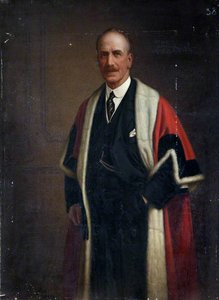
Harry R Douglasの肖像画

世界的に有名なHarry R Douglasの名作21点、そのすべてが唯一無二の芸術品

11月 2026 更新 · 当サイトの人気スコア(各作品の検索数、閲覧数、注文数)に基づくランキング · 26点の Harry R Douglasの作品がカタログにあります

要約すると

Lady M. A. Henderson (1861–1942) (1898)は、Harry R Douglasの作品の中で最も注目を集めている絵画です。 その後、視線はIsaac W. Ward (1834–1916) ('Belfastiensis') (1905)とProfessor James Cuming (1833–1899)へと移ります。 当カタログに含まれるHarry R Douglasの26点の作品のうち、これら21点は最も有名な作品です。制作年、所蔵美術館、そして時代を超えて愛される理由とともに、一点もののオリジナル作品をご紹介します。

1862 – 1934 最多収蔵館: クイーンズ大学ベルファスト

ギャラリーの視点で選ぶ、Harry R Douglasによるトップ10作品

1
Lady M. A. Henderson (1861–1942) (1898) による Harry R Douglas

Lady M. A. Henderson (1861–1942)

1898 · Oil On Canvas

An older woman sits in formal attire, her presence defined by a quiet, somber gravity. The composition centers her within a dark, indistinct background, a technique that pushes the subject forward and isolates her from the world. Soft, diffused light falls across her face and the heavy folds of her gown, creating a sense of three-dimensional depth through careful shading. Every detail, from the texture of her hair to the…

2
Isaac W. Ward (1834–1916) ('Belfastiensis') (1905) による Harry R Douglas

Isaac W. Ward (1834–1916) ('Belfastiensis')

1905 · Oil On Canvas

An elderly man sits anchored in the center of the frame, his presence heavy and certain. He is a figure of the Victorian era, draped in a dark coat that absorbs the light, leaving only the pale topography of his face and the crisp white of his collar to catch the eye. The shadows behind him are deep and indistinct, a void that pushes his form forward into the viewer's…

3
Professor James Cuming (1833–1899) による Harry R Douglas

Professor James Cuming (1833–1899)

The portrait depicts Professor James Cuming, a man who lived from 1833 to 1899. He is presented in a seated or upright position, facing the viewer directly. His facial features are defined by a mustache and a goatee, both rendered in dark tones. He wears spectacles that sit upon the bridge of his nose. His attire consists of a formal suit, likely composed of heavy fabric, which suggests a position…

4
Robert Barklie (1837–1910), FCS, MRIA (1895) による Harry R Douglas

Robert Barklie (1837–1910), FCS, MRIA

1895 · Oil

A man sits in a chair, positioned in a seated pose that suggests a moment of stillness. He wears a dark suit and a tie, with a hat resting upon his head. A mustache defines his upper lip. The figure is rendered with a focus on the textures of his attire and the specific contours of his facial features. The background remains out of focus, creating a soft, indistinct space…

5
Reverend George Hill (1810–1900) (1896) による Harry R Douglas

Reverend George Hill (1810–1900)

1896 · Oil On Canvas · クイーンズ大学ベルファスト, ベルファスト

The room feels heavy with the scent of old paper and the quiet weight of accumulated knowledge. Reverend George Hill sits at the center of this stillness, his hands crossed in a gesture of calm contemplation. He wears a dark suit that absorbs the light, a stark contrast to the pale, thoughtful lines of his face. A mustache frames his mouth, adding to the dignified air of a man who…

6
Judith Paul (1897) による Harry R Douglas

Judith Paul

1897 · Oil On Canvas

A woman sits at a table, her gaze lifted from the book held in her hands toward an unseen point above. The scene is set within a domestic interior, where the stillness of the room is punctuated by the presence of a chair to her left and a couch in the background. To the far right, a figure stands in the periphery, their features obscured by the shadows of the…

7
Harriet McCrum (1899) による Harry R Douglas

Harriet McCrum

1899 · Oil

In this 1899 portrait, a woman is captured in a moment of quiet contemplation. She is dressed in a gray gown, accented by a white lace collar and a formal tie, suggesting a sense of decorum and social standing. Her hands hold a piece of paper, a detail that implies she is engaged in reading or perhaps referencing a significant document. The composition focuses heavily on her facial features and…

8
Harriet McCrum (1899) による Harry R Douglas

Harriet McCrum

1899 · Oil

A woman sits in a quiet room, her presence anchored by the weight of Victorian elegance. She wears a dress defined by a delicate lace collar, a fine texture that catches the light against the darker tones of her attire. In her hands, she holds a piece of paper, perhaps a letter or a note, a small fragment of a private thought held amidst the stillness. Beside her, a piano…

9
Portrait of a Gentleman (1900) による Harry R Douglas

Portrait of a Gentleman

1900 · Oil On Canvas · Belfast Harbour Commissioners, ベルファスト

The Portrait of a Gentleman is an oil on canvas painting created in 1900. The work depicts a man dressed in formal attire, specifically a suit and tie. He is shown sitting in a chair, posed with his hands resting upon his chin. The subject's clothing suggests a sense of formality, consistent with the era of the piece.

10
Harry R. Douglas (1900) による Harry R Douglas

Harry R. Douglas

1900 · Oil · Carrickfergus Council, Belfast

This portrait, dating from 1900, presents a formal study of a man captured in a moment of direct engagement with the viewer. The subject is depicted with a mustache and a beard, dressed in a suit and tie that evokes the formal attire of a bygone era. His expression is characterized by a steadfast gaze, looking directly forward from the center of the composition.

Harry R Douglasの名作、11〜21点目

Harry R Douglasが心を惹かれた主題

これらのオリジナル作品に繰り返し描かれている4つの主題と、それぞれの最高傑作。

Harry R Douglasの原画を所蔵する美術館

このページに掲載されている絵画を最も多く所蔵している 7 の美術館

美術館 所在都市 Harry R Douglasの作品 このリストの絵画
クイーンズ大学ベルファスト, ベルファストクイーンズ大学ベルファスト ベルファスト 1 Professor James Cuming (1833–1899)
クイーンズ大学ベルファスト, ベルファストクイーンズ大学ベルファスト ベルファスト 1 Reverend George Hill (1810–1900)
Belfast Harbour Commissioners, ベルファストBelfast Harbour Commissioners ベルファスト 1 Portrait of a Gentleman
Carrickfergus Council, BelfastCarrickfergus Council Belfast 1 Harry R. Douglas
Belfast City Hall, ベルファストBelfast City Hall ベルファスト 1 Sir Robert Meyer, Town Clerk (1909–1935)
Tynwald, DouglasTynwald Douglas 1 William Farrant (1826–1891), Member of the House of Keys (1858–1890)
Newry Town Hall, ダンディークNewry Town Hall ダンディーク 1 Michael J. McCartan, Esq., MDJR, First Chairman of Newry Urban District Council

Harry R Douglasの数十年にわたる軌跡:それぞれに唯一無二のオリジナル作品を

年代別作品数

その時代を象徴する名作を見るために、年代を選択してください。

Harry R Douglasの絵画:ギャラリーへの質問

Harry R Douglasの最も有名な作品は何ですか?答えを見る

Lady M. A. Henderson (1861–1942) (1898)。続いてIsaac W. Ward (1834–1916) ('Belfastiensis') (1905)、Professor James Cuming (1833–1899)が続きます。

Harry R DouglasがLady M. A. Henderson (1861–1942)を制作したのは何歳の時ですか?答えを見る

36歳:Lady M. A. Henderson (1861–1942)は1898年の作品で、Harry R Douglasの生年は1862年です。

Harry R Douglasの最も有名な10作品は何ですか?答えを見る

Lady M. A. Henderson (1861–1942), Isaac W. Ward (1834–1916) ('Belfastiensis'), Professor James Cuming (1833–1899), Robert Barklie (1837–1910), FCS, MRIA, Reverend George Hill (1810–1900), Judith Paul, Harriet McCrum, Harriet McCrum, Portrait of a Gentleman と Harry R. Douglas。上記のランキングには、それぞれの制作年と所蔵美術館が記載されています。

Harry R Douglasの既知の作品数は?答えを見る

当カタログには、1895年から1924年にかけて制作されたHarry R Douglasによる26点の作品が収められています。

最も有名なHarry R Douglasのオリジナル作品はどこで見ることができますか?答えを見る

主にクイーンズ大学ベルファスト (ベルファスト), クイーンズ大学ベルファスト (ベルファスト) と Belfast Harbour Commissioners (ベルファスト)に所蔵されています。上記の美術館一覧にすべて記載されています。

Harry R Douglasが最も有名な作品を制作したのは、どの時期ですか?答えを見る

1890s年:このページにある全21作品のうち、6作品がその時期に制作されました。そのうちLady M. A. Henderson (1861–1942)作品が含まれます。

Harry R Douglasの有名な絵画の中で、最も古い作品と最も新しい作品はどれですか?答えを見る

このページでは、最も古い作品はRobert Barklie (1837–1910), FCS, MRIA (1895)、最新の作品はPortrait of an Unknown Man (1924)です。

Harry R Douglasが好んだ主題は何ですか?答えを見る

このページに掲載されている21点の作品におけるMan (8), Suit (7) と Tie (6)

Harry R Douglasが最も多く使用した画材は何ですか?答えを見る

このページに掲載されている全21作品のうち、7作品のOil On Canvas

Harry R Douglas:アーティストの肖像画

A Steadfast Gaze: The Life and Art of Harry R. Douglas

Harry R. Douglas, born in Belfast in 1862, wasn’t a painter who sought revolutionary change or flamboyant expression. Instead, he carved his niche as a meticulous chronicler of Victorian and Edwardian society, particularly within the burgeoning industrial heartland of Ulster. His life, though relatively undocumented compared to some artistic contemporaries, was one dedicated to the precise art of portraiture – capturing not just likenesses, but also the character and status of his sitters. Douglas’s early training remains somewhat obscure; however, it is believed he received instruction at the Belfast School of Art, a vital institution fostering local talent during this period. This foundation instilled in him a respect for academic technique, which would become the hallmark of his style. He quickly established himself as a sought-after portraitist, catering to the rising merchant class and prominent families who were shaping the landscape of Belfast’s prosperity.

The Brushstroke of Respectability: Style and Influences

Douglas's work is immediately recognizable for its unwavering realism and attention to detail. He wasn’t interested in impressionistic flourishes or abstract interpretations; his portraits are firmly rooted in observation, striving for an almost photographic accuracy. This dedication to verisimilitude was undoubtedly influenced by the prevailing artistic climate of the time. Sir Noel Paton, a leading figure in Scottish Victorian art known for his detailed historical and literary paintings, is often cited as a key influence. Like Paton, Douglas possessed a remarkable ability to render textures – from the sheen of silk gowns to the rough weave of tweed suits – with astonishing precision. However, while Paton frequently imbued his work with symbolic narratives, Douglas remained largely focused on the individual before him. His palette tends towards rich, subdued tones, creating an atmosphere of dignity and gravitas. He masterfully employed light and shadow to sculpt forms and emphasize facial features, revealing not only physical resemblance but also a sense of inner life within his subjects. The influence of John Singer Sargent, though perhaps less direct, can be seen in Douglas’s confident brushwork and ability to capture the personality of his sitters with economy and grace.

Chronicling an Era: Major Works and Themes

While a comprehensive catalogue raisonné of Douglas's work remains elusive, numerous examples survive in public and private collections throughout Ireland and beyond. His portraits frequently depict members of Belfast’s industrial elite – shipbuilders, linen merchants, and their families. These paintings aren’t merely representations of wealth; they are statements of social standing, carefully constructed images designed to project power and respectability. He excelled at portraying men in positions of authority, capturing their self-assurance and determination. However, Douglas also painted a significant number of female portraits, often depicting women adorned in elegant attire, reflecting the refined tastes of Victorian society. Beyond individual commissions, he undertook larger projects such as painting portraits for public institutions and commemorative works celebrating local figures. His ability to capture the essence of his sitters ensured a steady stream of patronage throughout his career. A recurring theme in Douglas’s work is the depiction of family – portraits of husbands and wives, parents and children – reflecting the importance placed on lineage and social continuity during this period.

A Legacy Preserved: Historical Significance

Harry R. Douglas may not be a household name, but his contribution to the artistic heritage of Ireland is significant. He served as a visual historian, documenting the lives and aspirations of a generation that shaped the modern landscape of Ulster. His portraits offer invaluable insights into the social customs, fashion, and values of Victorian and Edwardian society.
  • His meticulous technique provides a fascinating glimpse into the artistic practices of the time.
  • He captured the spirit of an era undergoing rapid industrialization and social change.
  • His work serves as a testament to the importance of portraiture in preserving individual and collective memory.
Although his style wasn’t groundbreaking, Douglas possessed a rare talent for capturing the essence of his sitters with honesty and skill. He died in 1934, leaving behind a body of work that continues to resonate today, offering a steadfast gaze into the past – a testament to the enduring power of portraiture and the artist who dedicated his life to its pursuit. His paintings are not simply images; they are windows into another time, allowing us to connect with the individuals who shaped the world we inhabit.