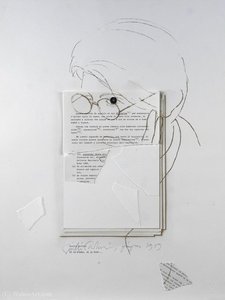
要約すると
Giulio Paoliniが遺した数多くのオリジナル作品の中で、最も有名なものはUntitled (771)です。 それに次いで、Untitled (755)とUntitled (758)が続きます。 Giulio Paoliniによる17点の作品をカタログに掲載しています。当ギャラリーでは、世界が称賛する17点を選定し、制作年、所蔵美術館、そしてその背景にある物語とともにご紹介しています。
Giulio Paoliniの代表作10選:ギャラリー厳選の作品集
L
Giulio Paolini's "L," created in 1984, isn’t merely a sculpture; it’s an invitation to contemplate the very nature of representation and the weight of history. The work immediately commands attention with its stark simplicity: two imposing marble busts of heads, rendered in a classical style reminiscent of Roman antiquity, stand on slender pedestals beneath a scattering of shattered fragments – a deliberate chaos that belies the inherent order of the…
Giulio Paoliniのセレクションが続きます、11から17まで
Giulio Paoliniの原画を所蔵する美術館
このページに掲載されている絵画を最も多く所蔵している 5 の美術館
| 美術館 | 都市 | Giulio Paoliniの作品 | このリストの絵画 |
|---|---|---|---|
| カッシーノ | 2 | Doppia Verità, senza titolo | |
| シドニー | 1 | L | |
| トリノ | 1 | Requiem | |
| Cold Spring | 1 | Mimesis | |
| トリノ | 1 | Untitled |
Giulio Paoliniの歩み:その時代を象徴するオリジナル作品
わずか10年余りの1976年から1984年にかけて、Giulio Paoliniによるこのセレクションに含まれるすべての年代のオリジナル作品が世界に発表されました。その軌跡を年ごとにご紹介します。
年別作品数
年代を選択して、当時のオリジナル作品を見る
Mimesis
Artist Giulio Paolini has long been interested in vision as a way to know the world. Mimesi belongs to a series in which Paolini made plaster casts of iconic classical sculptures. In the series, the artist plays with classicism in an avant-garde way. Mimesi is composed of two plaster casts of the Greek messenger god Hermes from the classical marble sculpture, Hermes with the Infant Dionysus (350–330 BCE) by Praxiteles.…
L
Giulio Paolini's "L," created in 1984, isn’t merely a sculpture; it’s an invitation to contemplate the very nature of representation and the weight of history. The work immediately commands attention with its stark simplicity: two imposing marble busts of heads, rendered in a classical style reminiscent of Roman antiquity, stand on slender pedestals beneath a scattering of shattered fragments – a deliberate chaos that belies the inherent order of the…
Giulio Paoliniの絵画に関するコレクターからの質問
Giulio Paoliniの代表作は何ですか?答えを見る
Untitled (771)。続いてUntitled (755)、Untitled (758)が続きます。
Giulio Paoliniの最も有名な10作品とは?答えを見る
Untitled (771), Untitled (755), Untitled (758), Untitled (936), Untitled (390), Doppia Verità, L, Untitled (421), Untitled (894) と Untitled (333)。上記のランキングには、それぞれの制作年と所蔵美術館が記載されています。
Giulio Paoliniが遺した作品数は?答えを見る
当カタログには、1976年から1984年にかけて制作されたGiulio Paoliniによる17点の作品が収められています。
Giulio Paoliniの名作は、どの美術館に収蔵されていますか?答えを見る
主にCAMUSAC Cassino Museum of Contemporary Art (カッシーノ), アートギャラリー・オブ・ニューサウスウェルス (シドニー) と Fondazione per l'Arte Moderna e Contemporanea CRT (トリノ)に所蔵されています。上記の美術館一覧にすべて記載されています。
Giulio Paoliniによる最初と最後の代表的なオリジナル作品は何ですか?答えを見る
このページでは、最も古い作品はMimesis (1976)、最新の作品はL (1984)です。
CAMUSAC Cassino Museum of Contemporary ArtにはどのGiulio Paoliniの作品が展示されていますか?答えを見る
Doppia Verità と senza titolo:CAMUSAC Cassino Museum of Contemporary Art, カッシーノには、このページに掲載されている作品のうち2点が所蔵されています。
Giulio Paolini:生涯と作品
Giulio Paolini: Bridging Arte Povera and Conceptual Thought
Giulio Paolini stands as a singular figure in Italian art, embodying the spirit of Arte povera while simultaneously delving into the intricacies of conceptual art. Born in Genoa in 1940, his artistic journey began amidst formative influences – a childhood spent in Bergamo instilled a deep appreciation for visual culture and fostered an early engagement with museums and galleries. His fascination extended beyond mere observation; he actively sought knowledge through art periodicals and meticulously studied the works of masters. This intellectual curiosity propelled him toward painting after graduating from the Giambattista Bodoni State Industrial Technical School of Graphics and Photography in 1959, specializing in graphic design.- Early Explorations: Paolini’s initial artistic endeavors centered on monochrome abstractions, reflecting a desire to distill visual experience into its purest form. The discovery of modern graphics – his brother Cesare's architectural pursuits – profoundly impacted his aesthetic sensibilities, shaping his approach to representation.
- The Pioneering Gesture: His breakthrough came with “ disegno geometrico” (geometric drawing), a seminal piece executed in 1960. This ambitious undertaking involved squaring a canvas painted entirely white tempera – an act of deliberate negation intended to liberate the image from preconceived notions and establish a foundational conceptual principle.
- Conceptual Foundations: Paolini’s artistic philosophy revolved around capturing “eternal recurrence,” recognizing that each creative moment holds inherent significance and contributes to the artist's self-discovery. This perspective underpinned his subsequent explorations into the very components of painting – tools and space—marking a decisive shift toward conceptual concerns.
The Rise of Arte Povera and Photographic Realism
Paolini’s artistic trajectory gained momentum in the early 1960s as he embraced photography, expanding his investigation into the relationship between artist and artwork. This collaboration with Carla Lonzi proved pivotal, introducing him to Marisa Volpi who would soon produce influential critical analyses of his burgeoning talent. The encounter solidified Paolini's connection to Arte povera—an artistic movement characterized by its use of humble materials and rejection of traditional techniques—and cemented his commitment to exploring the boundaries of visual perception.- Early Exhibitions: His debut solo exhibition at Gian Tommaso Liverani’s La Salita gallery in Rome in 1964 showcased “leant against or hanging on the wall” panels—a deliberate provocation designed to disrupt conventional notions of display and underscore the ongoing process of artistic creation. Critics like Carla Lonzi and Marisa Volpi recognized Paolini's innovative approach, establishing him as a voice within the burgeoning Arte povera movement.
- Material Exploration: Paolini’s subsequent works consistently prioritized raw materials—wood, plaster, photography—transforming them into evocative sculptures and images. These pieces eschewed polished surfaces and elaborate ornamentation, prioritizing textural qualities and conveying emotional resonance.
Notable Achievements and Artistic Legacy
Paolini’s artistic output demonstrates a remarkable sensitivity to both formal experimentation and conceptual depth. His exploration of photographic realism—evident in “senza titolo” (1965)—challenged viewers to confront the complexities of representation, prompting reflection on how images convey meaning beyond mere visual appearance. Furthermore, his sculptural endeavors, such as “Untitled (936),” exemplify Arte povera’s commitment to confronting existential themes through understated materials and forms.- Critical Recognition: Paolini's work garnered considerable acclaim from prominent art critics and curators who championed his distinctive aesthetic vision. Lonzi and Volpi’s initial assessments established him as a key figure in the Arte povera movement, securing his place within the history of Italian contemporary art.
- Continuing Relevance: Giulio Paolini's enduring influence stems from his unwavering dedication to artistic innovation—his refusal to adhere to conventional standards and his persistent pursuit of expressive truth. His legacy continues to inspire artists today who strive to forge new paths within the realm of visual art.