


1

最後の審判(細部)
「最後の審判(細部)」は、ジョルジョ・ヴァザーリの手による傑作です。この細部描写は、より巨大で記念碑的なフレスコ画の一部を、より深く、凝視するように捉えたものです。そこには「最後の審判」という主題を中心に据えた、極めて精神的な意義の深い瞬間が刻まれており、制作時期は1572年頃とされています。

11月 2026 更新 · 当サイトの人気スコア(各作品の検索数、閲覧数、注文数)に基づくランキング · 122点の ジョルジョ・ヴァザーリの作品がカタログにあります
要約すると
最後の審判(細部) (1572)はジョルジョ・ヴァザーリの作品の中で最も注目を集めている絵画です。原画はフィレンツェのドゥオーモに所蔵されています。 その後、視線はAllegory of Justice (1543)とThe Last Judgment (detail) (1572)へと移ります。 当カタログに含まれるジョルジョ・ヴァザーリの122点の作品のうち、これら100点は最も有名な作品です。制作年、所蔵美術館、そして時代を超えて愛される理由とともに、一点もののオリジナル作品をご紹介します。
「最後の審判(細部)」は、ジョルジョ・ヴァザーリの手による傑作です。この細部描写は、より巨大で記念碑的なフレスコ画の一部を、より深く、凝視するように捉えたものです。そこには「最後の審判」という主題を中心に据えた、極めて精神的な意義の深い瞬間が刻まれており、制作時期は1572年頃とされています。

Giorgio Vasari's 1543 fresco, “Allegory of Justice and Truth,” residing within the Palazzo Cancelleria in Rome, is far more than a mere decorative panel; it’s a meticulously constructed visual sermon on virtue, governance, and the very foundations of Renaissance ideals. Commissioned by Cardinal Alessandro Farnese, this monumental work transcends its initial purpose as a room decoration to become a profound meditation on the principles that underpinned the burgeoning power of…

Within the soaring dome of Florence’s Duomo, a monumental fresco unfolds – Giorgio Vasari and Federico Zuccari's “The Last Judgment,” completed between 1572 and 1579. More than just a depiction of biblical narrative, it is an immersive experience, a theatrical tableau of judgment, salvation, and the eternal consequences of earthly choices. The sheer scale—over 3,600 square meters—immediately overwhelms the viewer, drawing them into a world of swirling figures, dramatic light,…

The air in the room feels heavy with the scent of spilled wine and the heat of a crowded celebration. At the center of the commotion, a quiet miracle unfolds. Jesus Christ sits amidst the revelry, a calm presence in a sea of moving bodies and draped fabrics. Around him, the disciples and guests are caught in a moment of transition, their faces turned toward the sudden abundance of the…

A Florentine Spectacle: Witnessing Power and Faith Giorgio Vasari’s *Triumphant Entrance of Leone X in Florence* (1563) is a monumental oil painting that bursts with the energy of a civic celebration. This isn't merely a depiction of a procession; it’s a carefully constructed narrative of papal authority reasserting itself within the heart of Renaissance Florence. The scene unfolds with a deliberate chaos, teeming with figures – from the Pope himself…

Giorgio Vasari’s 1570 Annunciation, housed within the serene confines of the Morgan Library and Museum in New York City, isn't merely a depiction of a biblical narrative; it’s a profound meditation on divine grace, humility, and the transformative power of faith. Painted during the height of the Italian Renaissance, this fresco embodies the era’s fascination with classical ideals blended seamlessly with deeply rooted Christian symbolism. Vasari, a pivotal figure in…

The year is 1559, and Florence pulses with the ambition of the Renaissance under the shrewd guidance of Cosimo I de’ Medici. Within the walls of the Palazzo Vecchio, a masterpiece emerges – Giorgio Vasari’s “Cosimo il Vecchio as San Cosma,” a portrait that transcends mere likeness to become a potent symbol of power, piety, and the enduring legacy of the Medici dynasty. This isn't simply a depiction of a…
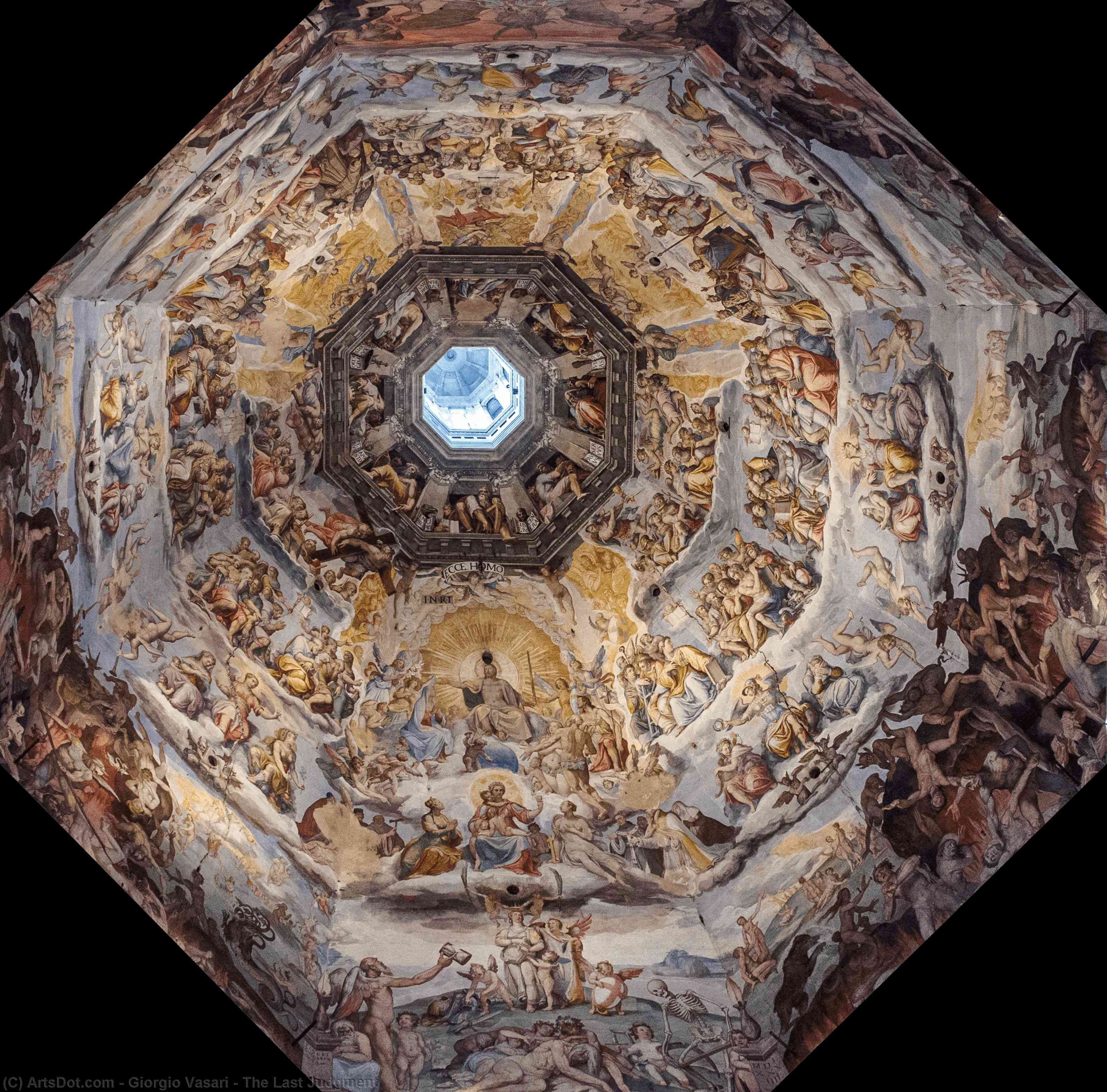
Within the soaring dome of Florence Cathedral, a monumental fresco—known as *The Last Judgment*—commands attention, not merely for its sheer scale (spanning over 3,600 square meters), but for the profound drama it embodies. Commissioned by Grand Duke Cosimo I de’ Medici in 1572 and completed a decade later through the collaboration of Giorgio Vasari and Federico Zuccari, this work represents a pivotal moment in Renaissance art, a visual articulation of…

Giorgio Vasari's "The Resurrection," painted in 1545, isn’t merely a depiction of a biblical event; it’s a visceral embodiment of faith and the promise of rebirth. Created during the height of the Italian Renaissance, this oil-on-canvas work transcends simple religious illustration, plunging the viewer into a world of intense drama and profound spiritual significance. Vasari, already establishing himself as a pivotal figure in art history through his “Lives of Artists,”…

The scene unfolds within a grand, red-toned chamber where Cosimo surrounded by artists and scholars gathers. This fresco, painted by Giorgio Vasari, captures a moment of intense intellectual exchange. The air seems thick with the quiet energy of collaboration. Figures move through the space, some standing in the foreground while others recede into the background. It is a world of shared purpose and deep thought.
 Perseus and Andromeda1570 · パラッツォ・ヴェッキオ
12
 Allegory of the Immaculate Conception1541 · ウフィツィ美術館
13
 Cosimo I de Medici surrounded by his Architects, Engineers and Sculptors1555 · パラッツォ・ヴェッキオ
14
 Façade on the Lungarno1560 · ウフィツィ美術館
15
 Ercole fanciullo strozza i serpenti1557 · パラッツォ・ヴェッキオ
16
 Lorenzo il Magnifico among philosophers and scholars1558 · パラッツォ・ヴェッキオ
17
 Tribute of the Nations to Paul III1546 · Palazzo della Cancellaria
18
 Interor view1542 · Casa Vasari
19
 Martyrdom of St Stephen1560 · バチカン・ピナコテカ
20
 Interor view1555 · パラッツォ・ヴェッキオ
21
 Filippo Brunelleschi and Lorenzo Ghiberti present to Cosimo the model for the San Lorenzo church1558 · パラッツォ・ヴェッキオ
22
 First fruits offered to Saturn1557 · パラッツォ・ヴェッキオ
23
 Sala del Cinquecentoパラッツォ・ヴェッキオ
24
 Ceiling of the Sala del Cinquecento (detail)パラッツォ・ヴェッキオ
25
 View of the Studiolo1570 · パラッツォ・ヴェッキオ
26
 Ceiling decoration1556 · パラッツォ・ヴェッキオ
27
 Holy Family with Saint Francis in a Landscape1542 · ロサンゼルス・カウンティ・ミュージアム・オブ・アート
28
 Judith and Holofernes1554 · セントルイス美術館
29
 Self-Portrait1550 · ウフィツィ美術館
30
 Saint Jerome in Meditation1550 · フェッシュ美術館
31
 Portrait of Bernardetto de' Medici1549 · Bode Museum
32
 Ceiling decoration1556 · パラッツォ・ヴェッキオ
33
 Piero de' Medici called the Gouty1556 · パラッツォ・ヴェッキオ
34
 Allegory of Romagna1660 · パラッツォ・ヴェッキオ
35
 Portrait of an old lady.1540 · ワルシャワ国立博物館
36
 Clement VII crowns Charles V in San Petronio in Bologna1559 · パラッツォ・ヴェッキオ
37
 The Temptation of Saint Jerome1544 · シカゴ美術館
38
 Apotheosis of Cosimo I1565
39
 The Adoration of the Magi1567 · スコットランド国立美術館
40
 Holy Family with John the Baptist as child1547 · バイエルン州立絵画コレクション
41
 Holy family with little John the Baptist1545 · バイエルン州立絵画コレクション
42
 Musicians1545 · イザベラ・スチュワート・ガードナー美術館
43
 Holy Family1546 · 美術史美術館
44
 Battle of Barbagianni, nearby Pisa1564 · パラッツォ・ヴェッキオ
45
 Volcano's forge1555
46
 The rout of the Pisans at Torre San Vincenzo1550
47
 The birth of Venus1555
48
 Don Giovanni and Don Garzia de' Medici1556
49
 Allegory of Volterra; to the bottom, view of Lucignano1556
50
 Allegory of Prato; to the bottom, view of Livorno1557
51
 Allegory of Pistoia; to the bottom, view of Piombino1557
52
 Allegory of Pisa; to the bottom, view of Siena1557
53
 Allegory of Cortona; to the bottom, view of Montecarlo1557
54
 Allegory of Borgo San Sepolcro; to the bottom, view of Scarperia1557
55
 Allegory of Arezzo; to the bottom, view of Florence1557
56
 Portrait of Cosimo I de' Medici1558 · パラッツォ・ヴェッキオ
57
 Lorenzo the Magnificent receives the tribute of the ambassadors1556
58
 Jacob's Dream1557 · Walters Art Museum
59
 The Calling of Saints Peter and Andrew1551
60
 Apostles Peter and John Blessing the People of Samaria1557 · ベルリン絵画館
61
 The Head of a Bishop (possibly St Ambrose or St Donato)1569
62
 Marriage at Cana1566 · ブダペスト美術館
63
 The storming of the fortress near Porta Camollia in Siena1570
64
 The storming of the fortress of Stampace in Pisa1569 · パラッツォ・ヴェッキオ
65
 The emperor Massimiliano lifts the siege from Livorno1569
66
 The battle of Marciano in Val di Chiana1570
67
 Capture of Porto Ercole1569
68
 Cerere loooks for Proserpina1558 · パラッツォ・ヴェッキオ
69
 Entombment1532 · Casa Vasari
70
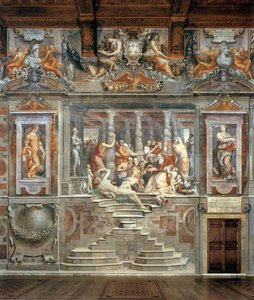 Paul III Farnese Names Cardinals and Distributes Benefices1546 · Palazzo della Cancellaria
71
 Three river godsクーパーシュティヒカビネット
72
 The Annunciation1850
73
 Calliope1558 · パラッツォ・ヴェッキオ
74
 Perseus and Andromeda (detail)1570 · パラッツォ・ヴェッキオ
75
 Death of Saint Peter martyr美術史美術館
76
 Portrait of Duke Alessandro de' Medici (detail)1534
77
 Temptations of St Jerome1541
78
 Deposition from the Cross1540 · Santi Donato e Ilariano
79
 Façade of the Palazzo dei Cavalieri1562 · Piazza dei Cavalieri
80
 Saint Mark1571 · ナショナル・ギャラリー・オブ・アート
81
 Saint Luke1571 · ナショナル・ギャラリー・オブ・アート
82
 Palazzo delle Logge1573
83
 Façade1560 · ウフィツィ美術館
84
 Summer1557 · パラッツォ・ヴェッキオ
85
 Incredulity of St Thomas1572 · サンタ・クロチェ美術館
86
 Pope Leo X Appointing Cardinals1556 · ブダペスト美術館
87
 The Nativity1546 · ボルゲーゼ美術館
88
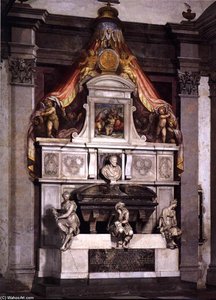 Monument to Michelangelo1570 · サンタ・クロチェ美術館
89
 Justice1542 · アカデミア美術館
90
 Childhood of Jupiter1556 · パラッツォ・ヴェッキオ
91
 The Studio of the Painter (detail)1563 · Casa Vasari
92
 Paul III Farnese Directing the Continuance of St Peter's1546 · Palazzo della Cancellaria
93
 Winter1557 · パラッツォ・ヴェッキオ
94
 The Virgin and Child with Saints Elizabeth and John the BaptistNational Gallery of Ireland
95
 Martyrdom of St Sigismund
96
 The 1530 Siege of Florence1558 · パラッツォ・ヴェッキオ
97
 Patience1542 · アカデミア美術館
98
 Annunciation1570 · Pierpont Morgan Library
99
 Foundation of Florentia, a Roman settlementパラッツォ・ヴェッキオ
100
 画家座1563 · Casa Vasari
これらのオリジナル作品に繰り返し描かれている4つの主題と、それぞれの最高傑作。
このページに掲載されている絵画を最も多く所蔵している 8 の美術館
| 美術館 | 都市 | ジョルジョ・ヴァザーリの作品 | このリストの絵画 |
|---|---|---|---|
 パラッツォ・ヴェッキオ |
フィレンツェ | 30 | Triumphant entrance of Leone X in Florence, Cosimo il Vecchio as San Cosma, Cosimo surrounded by artists and scholars |
 ウフィツィ美術館 |
フィレンツェ | 7 | Allegory of the Immaculate Conception, Façade on the Lungarno, Self-Portrait |
 ドゥオーモ |
フィレンツェ | 3 | 最後の審判(細部), The Last Judgment (detail), The Last Judgment |
 ブダペスト美術館 |
ブダペスト | 3 | Marriage at Cana, Marriage at Cana, Pope Leo X Appointing Cardinals |
 Palazzo della Cancellaria |
ローマ | 3 | Tribute of the Nations to Paul III, Paul III Farnese Names Cardinals and Distributes Benefices, Paul III Farnese Directing the Continuance of St Peter's |
 カポディモンテ美術館 |
ナポリ | 2 | Allegory of Justice, The Resurrection |
 Casa Vasari |
Arezzo | 2 | Interor view, Entombment |
 バイエルン州立絵画コレクション |
ミュンヘン | 2 | Holy Family with John the Baptist as child, Holy family with little John the Baptist |
その時代を象徴する名作を見るために、年代を選択してください。
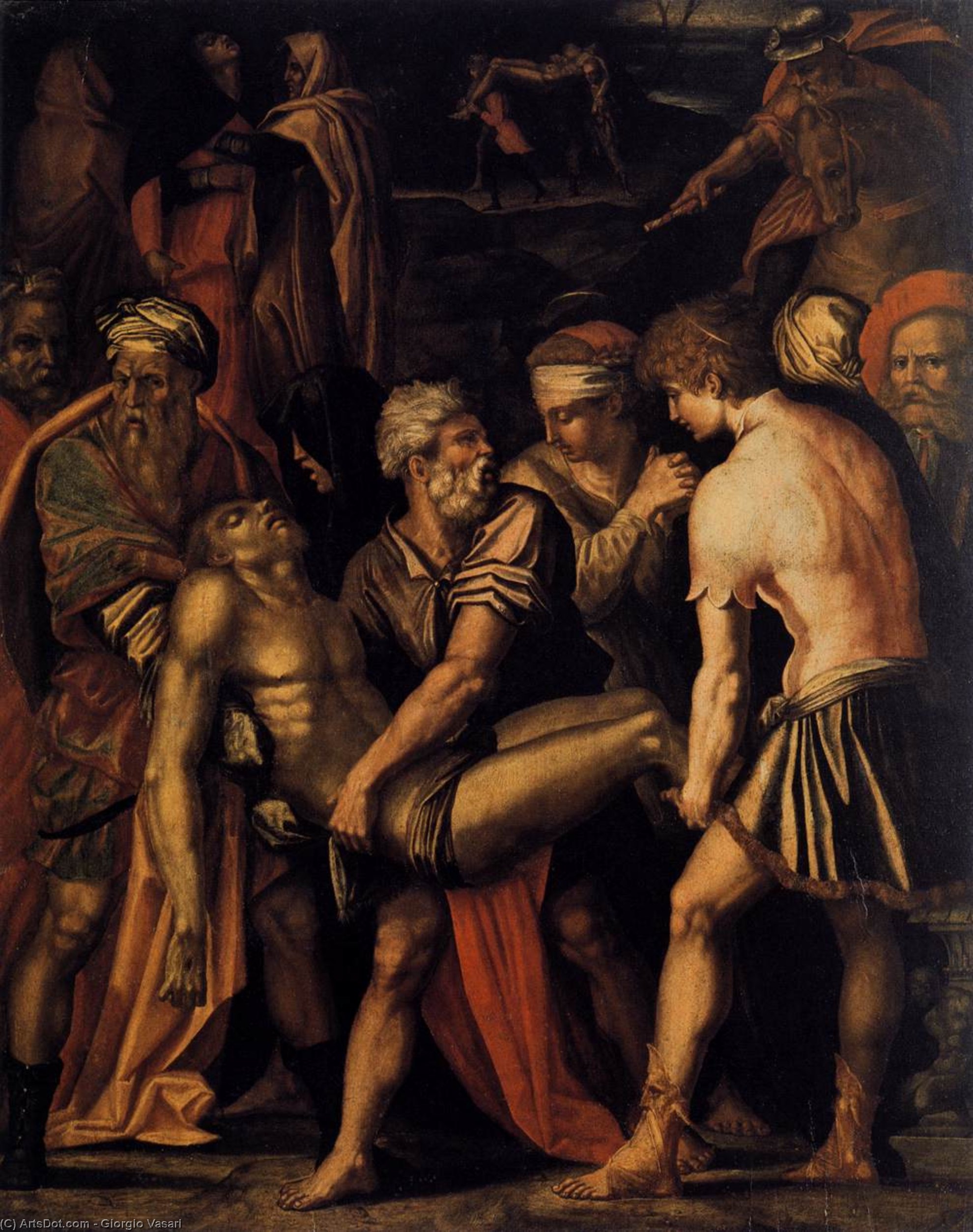
Created in 1532, Entombment by Giorgio Vasari represents a significant early work by the artist. This devotional painting was commissioned by Ippolito de' Medici. It was likely intended for installation within a private room in Florence, serving as a focal point for personal contemplation.
Giorgio Vasari's 1543 fresco, “Allegory of Justice and Truth,” residing within the Palazzo Cancelleria in Rome, is far more than a mere decorative panel; it’s a meticulously constructed visual sermon on virtue, governance, and the very foundations of Renaissance ideals. Commissioned by Cardinal Alessandro Farnese, this monumental work transcends its initial purpose as a room decoration to become a profound meditation on the principles that underpinned the burgeoning power of…
The year is 1559, and Florence pulses with the ambition of the Renaissance under the shrewd guidance of Cosimo I de’ Medici. Within the walls of the Palazzo Vecchio, a masterpiece emerges – Giorgio Vasari’s “Cosimo il Vecchio as San Cosma,” a portrait that transcends mere likeness to become a potent symbol of power, piety, and the enduring legacy of the Medici dynasty. This isn't simply a depiction of a…
The air in the room feels heavy with the scent of spilled wine and the heat of a crowded celebration. At the center of the commotion, a quiet miracle unfolds. Jesus Christ sits amidst the revelry, a calm presence in a sea of moving bodies and draped fabrics. Around him, the disciples and guests are caught in a moment of transition, their faces turned toward the sudden abundance of the…
最後の審判(細部) (1572)(ドゥオーモ, フィレンツェ)。次いでAllegory of Justice (1543)、The Last Judgment (detail) (1572)が続きます。
61歳:最後の審判(細部)は1572年の作品で、ジョルジョ・ヴァザーリの生年は1511年です。
最後の審判(細部), Allegory of Justice, The Last Judgment (detail), Marriage at Cana, Triumphant entrance of Leone X in Florence, Annunciation, Cosimo il Vecchio as San Cosma, The Last Judgment, The Resurrection と Cosimo surrounded by artists and scholars。上記のランキングには、それぞれの制作年と所蔵美術館が記載されています。
当カタログには、1532年から1573年にかけて制作されたジョルジョ・ヴァザーリによる122点の作品が収められています。
主にパラッツォ・ヴェッキオ (フィレンツェ), ウフィツィ美術館 (フィレンツェ) と ドゥオーモ (フィレンツェ)に所蔵されています。上記の美術館一覧にすべて記載されています。
1550s年:このページにある全100作品のうち、38作品がその時期に制作されました。そのうちCosimo il Vecchio as San Cosma作品が含まれます。
このページでは、最も古い作品はEntombment (1532)、最新の作品はPalazzo delle Logge (1573)です。
このページに掲載されている100点の作品におけるRenaissance (25), Man (24) と Woman (15)
このページに掲載されている全100作品のうち、24作品のFresco
このページに掲載されているオリジナル作品から判断すると、マニエリスムです。
Triumphant entrance of Leone X in Florence, Cosimo il Vecchio as San Cosma と Cosimo surrounded by artists and scholars:パラッツォ・ヴェッキオ, フィレンツェには、このページに掲載されている作品のうち29点が所蔵されています。


