Franz Ittenbachの肖像画

ギャラリー厳選、Franz Ittenbachによる最も有名な8の絵画

11月 2026 更新 · 当サイトの人気スコア(各作品の検索数、閲覧数、注文数)に基づくランキング · 8点の Franz Ittenbachの作品がカタログにあります

要約すると

Franz Ittenbachが遺した数多くのオリジナル作品の中で、最も有名なものはThe Holy Family (1868)です。 それに次いで、Portrait of Margarete von Soist (1849)とMadonna and Child (1855)が続きます。 Franz Ittenbachによる8点の作品をカタログに掲載しています。当ギャラリーでは、世界が称賛する8点を選定し、制作年、所蔵美術館、そしてその背景にある物語とともにご紹介しています。

1813 – 1879, Königswinter 最多収蔵館: Minneapolis Institute of Art

Franz Ittenbachの代表作10選:ギャラリー厳選の作品集

1
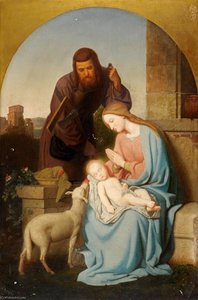
The Holy Family (1868) による Franz Ittenbach

The Holy Family

1868 · Oil On Panel

The air in the humble setting feels heavy with a stillness that only sacred moments possess. Mary cradles her child, Jesus, with a tenderness that pulls the viewer into her immediate circle of care. Nearby, Joseph watches, his presence a steady anchor in this simple environment. The scene unfolds with a quietude that suggests the world outside has ceased to turn. A few figures linger in the periphery, their presence…

2
Portrait of Margarete von Soist (1849) による Franz Ittenbach

Portrait of Margarete von Soist

1849 · Oil

Margarete von Soist sits with a quiet, heavy presence. She is draped in a deep blue dress, the fabric absorbing the light, while a fur-trimmed coat rests against her shoulders. A single strand of pearls circles her neck, catching a soft, pale glow. She looks directly at the viewer, her expression fixed in a serious, unyielding gaze. Behind her, the world is reduced to a few essential objects: two books…

3
Madonna and Child (1855) による Franz Ittenbach

Madonna and Child

1855 · Oil · Minneapolis Institute of Art, ミネアポリス

A serene landscape provides the backdrop for this Neoclassical oil painting, where a mother and infant are framed within a soft, arched composition. The Madonna is draped in a deep rose-colored tunic and a rich blue mantle, her pale skin contrasting against the light blue sky. She gazes gently at the child, establishing an intimate connection that anchors the entire scene. In the foreground, the meticulous rendering of white lilies…

4
Mother of the World (1872) による Franz Ittenbach

Mother of the World

1872 · Oil On Canvas · ミルウォーキー美術館, ミルウォーキー

The composition centers on the Virgin Mary seated upon an ornate throne, her form symmetrical and formal. She holds the Christ Child upon her lap, who in turn holds a globus cruciger, a symbol of sovereignty. This arrangement establishes a hierarchy of sacred authority. The palette relies on saturated primary tones: a cerulean blue mantle for Mary and a coral-pink tunic for the Child, set against a luminous gold background.…

5
Christ and the Samaritan by the well - Franz Ittenbach (2026) による Franz Ittenbach

Christ and the Samaritan by the well - Franz Ittenbach

2026 · アクリル絵具

Franz Ittenbach's depiction of Christ and the Samaritan woman is not merely a rendering of a biblical scene; it’s an intimate exploration of faith, redemption, and the breaking down of societal barriers. Painted in 1854, this work exemplifies the Düsseldorf School’s commitment to religious narrative, deeply rooted in the traditions of the Nazarene movement. Ittenbach, known for his dedication to church decoration, imbues this canvas with a quiet reverence that…

Franz Ittenbachが心を惹かれた主題

これらのオリジナル作品に繰り返し描かれている4つの主題と、それぞれの最高傑作。

Franz Ittenbachの原画を所蔵する美術館

このページに掲載されている絵画を最も多く所蔵している 3 の美術館

美術館 都市 Franz Ittenbachの作品 このリストの絵画
Minneapolis Institute of Art, ミネアポリスMinneapolis Institute of Art ミネアポリス 1 Madonna and Child
ミルウォーキー美術館, ミルウォーキーミルウォーキー美術館 ミルウォーキー 1 Mother of the World
ミネアポリス美術館, ミネアポリスミネアポリス美術館 ミネアポリス 1 Madonna and Child

Franz Ittenbachの年代別名作:各時代を象徴するオリジナル作品

年代別作品数

その時代を象徴する名作を見るために、年代を選択してください。

Franz Ittenbachの絵画に関するコレクターからの質問

Franz Ittenbachの代表作は何ですか?答えを見る

The Holy Family (1868)。続いてPortrait of Margarete von Soist (1849)、Madonna and Child (1855)が続きます。

The Holy Familyが制作されたとき、Franz Ittenbachは何歳でしたか?答えを見る

55歳:The Holy Familyは1868年の作品で、Franz Ittenbachの生年は1813年です。

Franz Ittenbachが遺した作品数は?答えを見る

当カタログには、1849年から1872年にかけて制作されたFranz Ittenbachによる8点の作品が収められています。

Franz Ittenbachの名作は、どの美術館に収蔵されていますか?答えを見る

主にMinneapolis Institute of Art (ミネアポリス), ミルウォーキー美術館 (ミルウォーキー) と ミネアポリス美術館 (ミネアポリス)に所蔵されています。上記の美術館一覧にすべて記載されています。

Franz Ittenbachが最も有名な作品を多く描いたのは何年ですか?答えを見る

1850s年:このページにある全8作品のうち、4作品がその時期に制作されました。そのうちMadonna and Child作品が含まれます。

Franz Ittenbachによる最初と最後の代表的なオリジナル作品は何ですか?答えを見る

このページでは、最も古い作品はPortrait of Margarete von Soist (1849)、最新の作品はMother of the World (1872)です。

Franz Ittenbach が最も多く描いた主題は何ですか?答えを見る

このページに掲載されている8点の作品におけるChild (3), Woman (3) と Blue mantle (2)

Franz Ittenbach が最も多く使用した技法は何ですか?答えを見る

このページに掲載されている全8作品のうち、2作品のOil

Franz Ittenbach:生涯と作品

The Spiritual Vision of Franz Ittenbach

In the heart of the nineteenth century, a period often defined by the rapid onset of industrialization and secularism, Franz Ittenbach emerged as a profound voice for spiritual continuity. Born in 1813 in the picturesque Königswinter, at the foot of the Drachenfels mountain range, Ittenbach’s early life was steeped in a reverence for faith that would later become the cornerstone of his artistic identity. The son of a modest wine shop owner, he grew up surrounded by the values of craftsmanship and religious conviction, a foundation that prepared him for a life dedicated to the pursuit of divine beauty through the medium of paint.

His journey into the upper echelons of European art began with rigorous formal training. After initial studies under Kaufmann, he moved to Cologne to refine his skills under Franz Katz, mastering the essential elements of draughtsmanship and technique. However, it was his arrival at the Düsseldorf Academy in 1832 that would irrevocably alter his destiny. Under the mentorship of Friedrich Wilhelm Schadow, the academy's president, Ittenbach found more than just technical instruction; he found a spiritual calling. This period marked his integration into the prestigious Düsseldorf school of painting, a movement renowned for its meticulous observation of nature and its deep commitment to emotional and spiritual contemplation.

The Nazarene Spirit and Italian Inspiration

Ittenbach was not merely a painter of scenes, but a member of a brotherhood. Alongside fellow students Karl Müller, Andreas Müller, and Ernst Deger, he formed a tight-knit quartet of artists who shared a common mission: to revive the purity of Christian art. This group became closely associated with the Nazarene movement, a group of German Romantic painters who sought to return to the sincerity and spiritual depth found in Late Medieval and Early Renaissance masterpieces. Their travels through Germany were characterized by a collective devotion to studying and replicating the great works of the past, fostering a style that rejected the superficial trends of their era in favor of timeless truth.

The years between 1839 and 1842 proved transformative as Ittenbach immersed himself in the artistic fervor of Italy. Living amidst the Roman art that had inspired the masters of old, he solidified a stylistic preference for academic realism blended with a profound sense of piety. This Italian sojourn infused his work with a classical grace and an appreciation for tonal harmonies. Upon his return to Germany, and eventually settling back in Düsseldorf in 1849, his work began to exhibit a unique ability to portray biblical narratives with an unwavering sincerity that resonated deeply with the Catholic faithful.

Mastery of Light and Sacred Narrative

The true brilliance of Ittenbach’s oeuvre lies in his ability to transform theological concepts into palpable, human experiences. His technique often utilized a restrained palette, prioritizing soft, ethereal light and earthy tones—rich reds, deep blues, and warm ochres—to create an atmosphere of both earthly groundedness and spiritual transcendence. In masterpieces such as Christ and the Samaritan by the Well, painted in 1854, one can witness his mastery of the human element. He does not merely depict a biblical encounter; he captures the subtle shift from skepticism to dawning understanding through nuanced facial expressions and expressive gestures.

His dedication to church decoration and religious subject matter left an indelible mark on the nineteenth-century landscape. Whether portraying the tender intimacy of the Madonna and Child or the solemnity of the Holy Family, Ittenbach’s work serves as a bridge between the historical past and the spiritual present. His legacy is defined by several key artistic contributions:

  • The Nazarene Ideal: A commitment to reviving the spiritual purity and technical precision of the Early Renaissance.
  • Düsseldorf School Excellence: The integration of meticulous naturalism with profound religious narrative.
  • Emotional Resonance: The use of light and color to convey complex theological themes like redemption, grace, and faith.

Though he passed away in Düsseldorf in 1879, the impact of Franz Ittenbach continues to be felt. He remains a pivotal figure for those who seek art that transcends the temporal, offering instead a window into the eternal through the delicate interplay of light, shadow, and sacred story.